
Coin Encyclopedia
Search and identify coins from around the world — with country, denomination, metal, mint, history, and how to tell them apart.
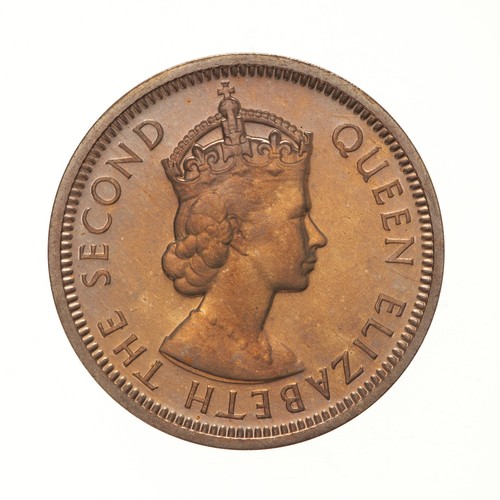
Belize 1 Cent
A small bronze one-cent coin from the Caribbean nation now called Belize, carrying a portrait of Queen Elizabeth II and dated 1954.
Circulation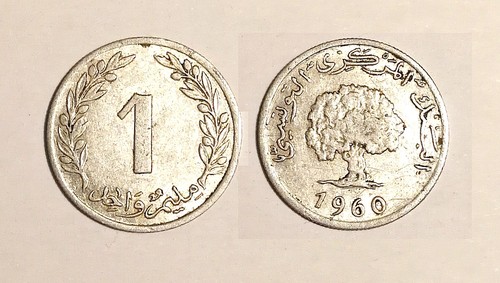
Tunisia 1 Millime
Tunisia's smallest post-independence coin, a tiny aluminum-bronze 1 millime of 1960 showing the value 1 framed by laurel and a numeral in profile.
World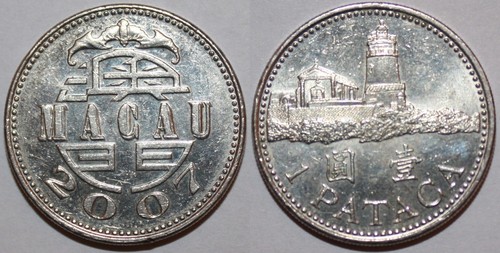
Macao 1 Pataca
A silver-colored 1 Pataca circulation coin of Macao dated 2007, showing Chinese characters and denomination on one face and a lighthouse-and-harbor scene on the other.
Circulation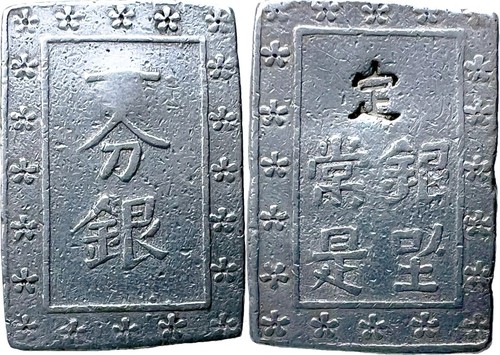
1 Bu Gin
A small rectangular Japanese silver coin, the ichibu gin, worth one bu (a quarter ryo), bearing beaded borders, paulownia crests and Ginza inscriptions.
Historic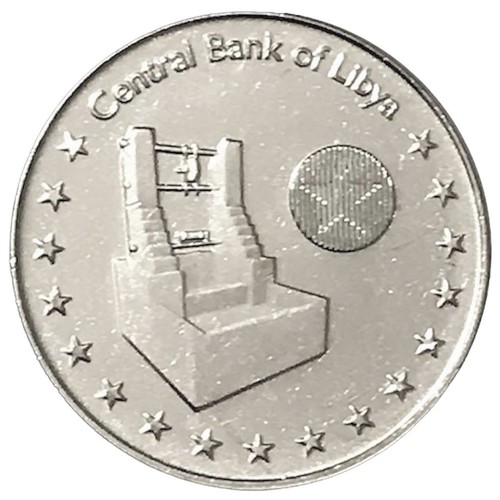
Libya 1 Dinar (Counterfeit)
A brass coin imitating Libyan 1 Dinar coinage, carrying Arabic legends and geometric ornament but identified as a counterfeit or non-official replica.
World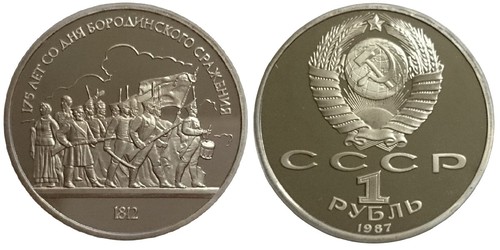
1 Rouble (1834)
An Imperial Russian silver 1 Rouble dated 1834, showing a right-facing imperial portrait with the Cyrillic ИМПЕРАТОРЪ legend and a crowned double-headed eagle.
Modern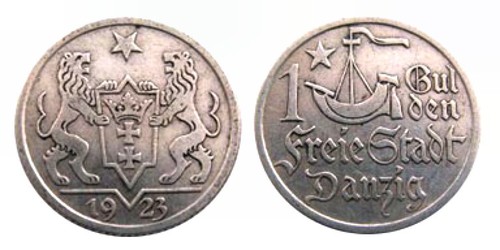
1 Gulden (Silver)
Silver 1 Gulden of the Free City of Danzig, dated 1923, carrying the city's coat of arms and its own short-lived currency between the World Wars.
Modern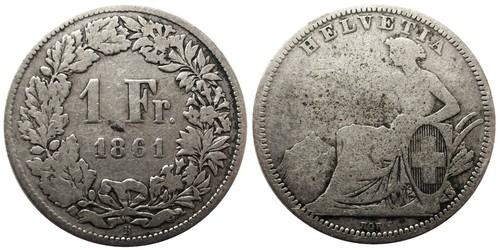
Swiss 1 Franc
A silver Swiss 1 Franc dated 1861, with the figure of Helvetia and the national coat of arms on one side and the value '1 Fr' in wreaths on the other.
Circulation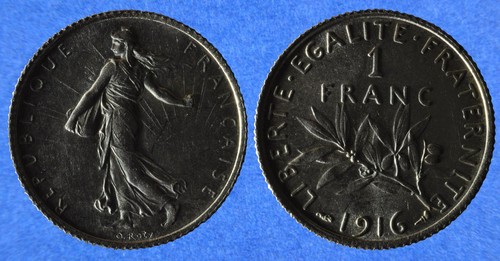
1 Franc Semeuse
A small silver French franc showing Roty's Semeuse, the striding Sower scattering seed at dawn, with the 1916 date on the LIBERTE EGALITE FRATERNITE reverse.
Circulation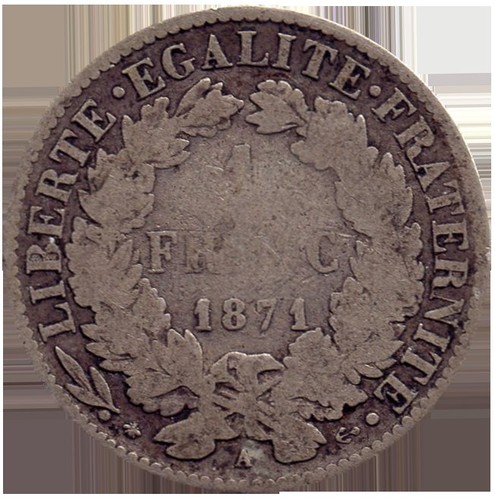
1 Franc Ceres
A small silver French franc showing the head of Cérès, goddess of the harvest, wearing wheat and a star, with the LIBERTE EGALITE FRATERNITE reverse dated 1871.
Circulation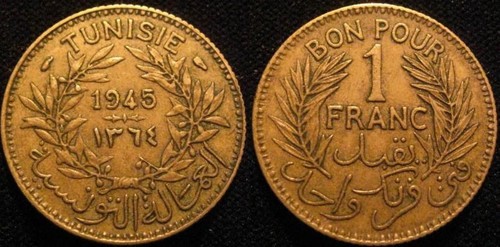
Tunisia 1 Franc
A small golden aluminum-bronze 1 franc of French-protectorate Tunisia, reading TUNISIE with a wreath and 'BON POUR 1 FRANC' beside Arabic script.
World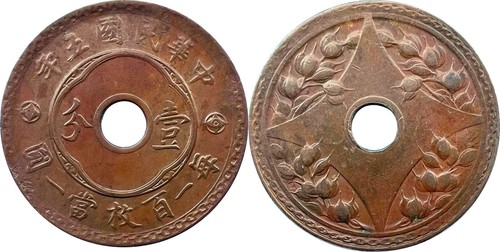
Republic 1 Fen
A holed copper 1 fen of Republican China, showing a numeral 1 with Chinese characters on one side and flowering plum blossoms on the other, around a central square-ish hole.
Circulation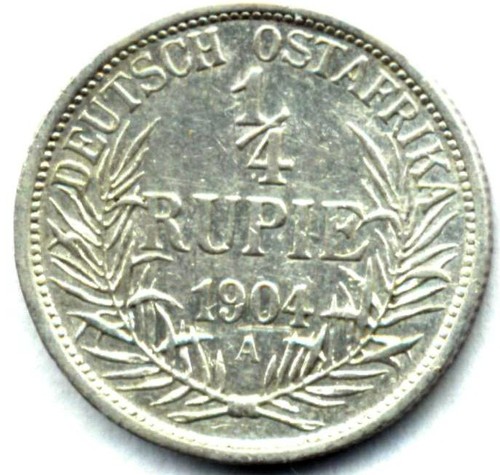
German East Africa 1/4 Rupie
A small colonial silver coin of German East Africa, inscribed DEUTSCH OSTAFRIKA and 1/4 RUPIE within a wreath, paired with the imperial eagle.
World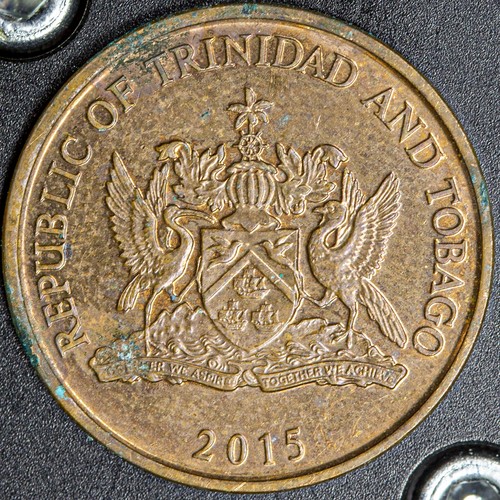
Trinidad and Tobago 1 Dollar
A nickel-plated steel one-dollar coin of Trinidad and Tobago, carrying the national coat of arms and heraldic emblems, dated 2015.
Circulation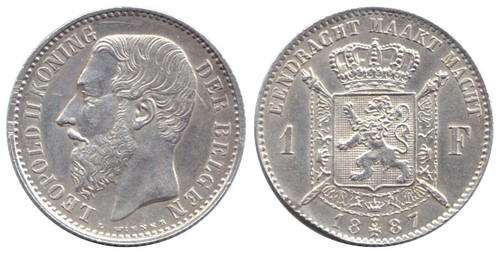
1 Franc (Leopold II)
A late-19th-century Belgian silver franc of King Leopold II, with his left-facing profile on the obverse and a crowned coat of arms on the reverse.
Modern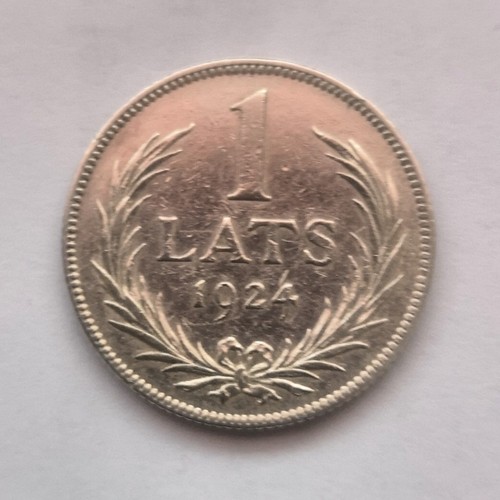
1 Lats (Christmas Bells)
Latvian 2012 commemorative 1 Lats showing Christmas bells with decorative ornament, paired with the national coat of arms on the obverse.
Commemorative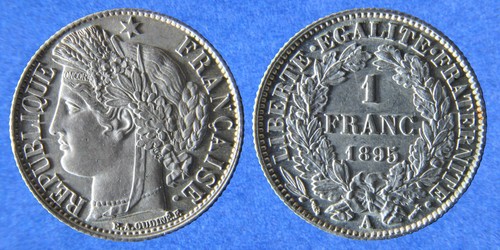
French Cérès 1 Franc
A .835 silver French 1 Franc showing the goddess Cérès in a liberty cap; this example is an 1895 Third Republic issue with a wreath-and-value reverse.
Circulation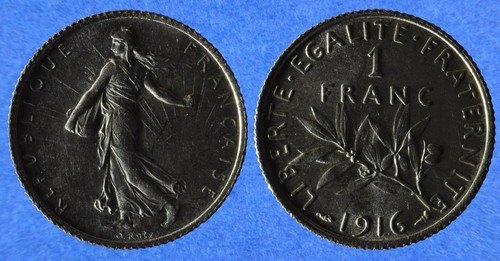
French Semeuse 1 Franc
France's classic silver 1 franc showing the Semeuse (Sower) with a liberty cap, backed by an oak-and-olive wreath around the value; this example is dated 1916.
Circulation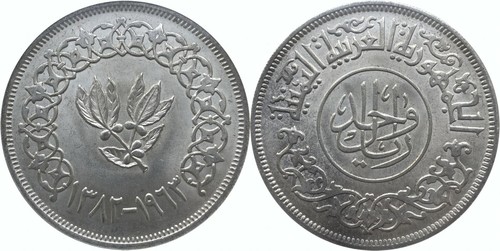
North Yemen 1 Rial
Silver 1 Rial of the Yemen Arab Republic (North Yemen), dated 1963, with a floral wreath obverse and an ornamental Arabic inscription on the reverse.
World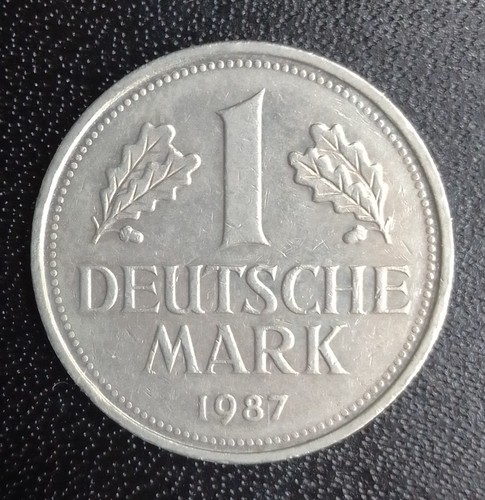
German 1 Deutsche Mark
The workhorse 1-Mark coin of West Germany and reunified Germany, showing a large numeral 1 framed by oak leaves and the words DEUTSCHE MARK.
Circulation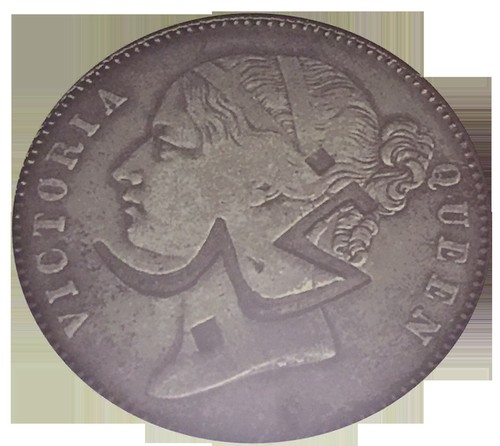
Najd Silver Coin
Silver trade coin catalogued to Najd, central Arabia, bearing a left-facing Victoria Queen bust and an 1862 date in the British India rupee style.
Arabia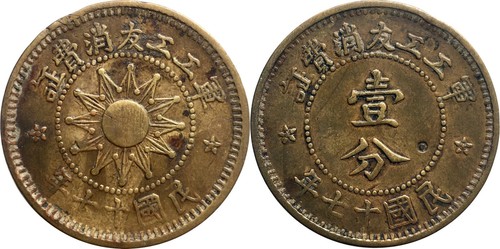
Shansi Arsenal 1 Fen
A holed copper 1 Fen struck by the Shansi Arsenal in 1928, with Chinese inscriptions and numeral '1' around a central square hole.
Circulation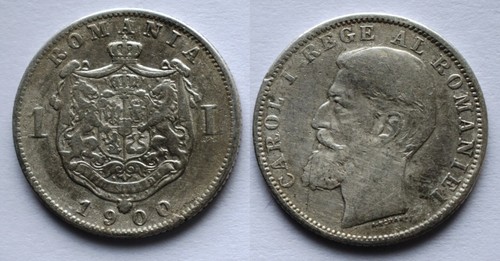
1 Leu (Carol I)
Silver 1 Leu of the Kingdom of Romania under King Carol I, with his left-facing portrait and the crowned national arms, dated 1900.
Modern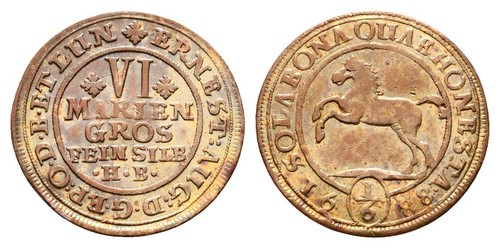
Hanover 1/6 Thaler
A German States silver 1/6 Thaler of Hanover (Brunswick-Luneburg) dated 1688, showing the leaping Saxon Steed and a fractional-denomination reverse.
German States