1 Gulden (Silver)
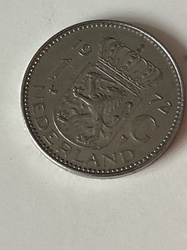
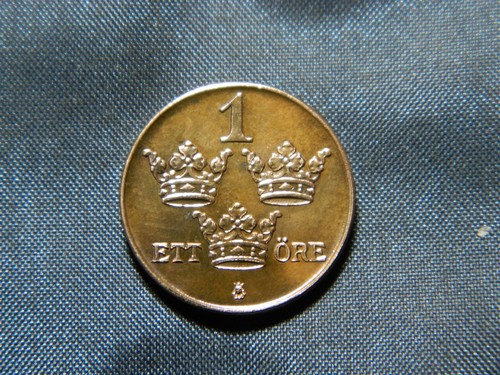
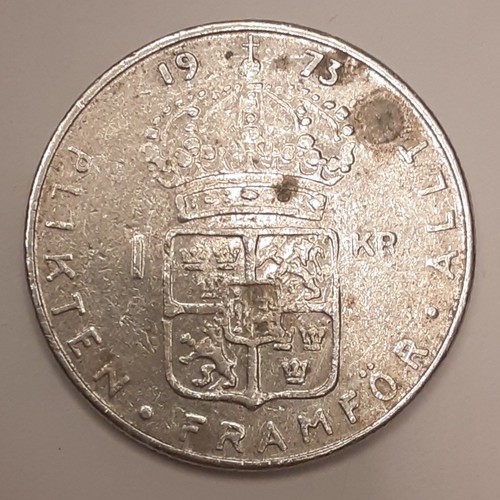
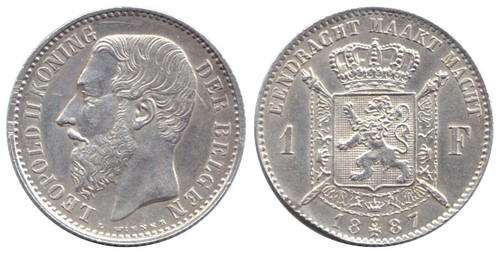
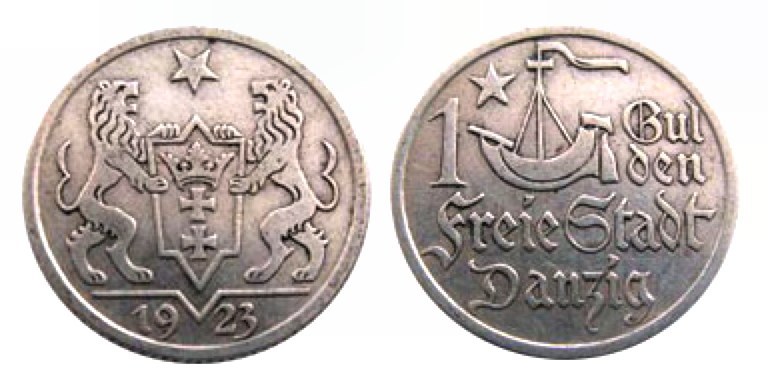
Silver 1 Gulden of the Free City of Danzig, dated 1923, carrying the city's coat of arms and its own short-lived currency between the World Wars.
- Country
- Free City of Danzig
- Denomination
- 1 Gulden
- Metal
- Silver
Got a coin like this?
Identify any coin from a photo, free.
Overview
The 1 Gulden is a silver coin of the Free City of Danzig (Freie Stadt Danzig), the semi-autonomous city-state on the Baltic that existed between the two World Wars. The 1923 issue is a genuine precious-metal piece and one of the flagship denominations of Danzig's own short-lived Gulden currency.
It is a small silver coin, roughly 23 mm across and about 5 grams, struck in a modest silver fineness. The design centers on the heraldic arms of Danzig, and the legends and denomination are given in German, reflecting the city's German-speaking population under an internationally guaranteed free-city status.
Because Danzig minted coins only for a brief window and in limited denominations, the 1923 silver Gulden is a popular type among collectors of German-area, Baltic, and interwar coinage. It survives as a tangible relic of a state that no longer exists.
History & Background
After the First World War, the Treaty of Versailles separated Danzig from Germany and established it in 1920 as the Free City of Danzig, a self-governing city-state under League of Nations protection with Poland holding certain economic rights. To assert its distinct status, the city introduced its own currency, the Danzig Gulden, divided into 100 Pfennig, in the early 1920s.
The silver 1 Gulden dated 1923 belongs to this first regular coinage. It was produced during the currency reform years when Danzig was moving away from the collapsing German mark toward a stable local unit, and the 1923-dated silver and base-metal pieces established the everyday money of the free city.
The Free City and its Gulden ended in 1939, when the coinage was withdrawn as the territory was absorbed into Germany at the outbreak of the Second World War. The 1923 silver Gulden therefore represents the money of a distinct interwar polity that lasted less than two decades.
How to Identify
This is a small silver coin about 23 mm in diameter and roughly 5 grams, struck in a low-to-medium silver fineness rather than a heavy crown. It should feel light but dense, with the muted tone of struck silver, and it is non-magnetic.
One side carries the coat of arms of Danzig, the design that the observed photo reads as a central emblem with crossed elements above and supporting figures, together with the legend naming the free city (FREIE STADT DANZIG). The other side gives the denomination, ONE GULDEN written in German, with the date 1923. Because the city name and the German-language value are the defining features, reading the legends is the surest way to confirm the type.
Key identifiers are the Danzig city name in the legend, the German denomination for one Gulden, the heraldic arms of the city, the 1923 date, and the small silver format. The combination of the free-city name and the Gulden denomination distinguishes it from German Empire, Weimar, or Polish coins of the same era.
Value & Collectibility
As a small interwar silver coin from a state that no longer exists, the 1923 Danzig 1 Gulden carries collector value beyond its modest silver content. Circulated examples commonly trade in the low-to-mid tens of dollars, while sharp, lightly worn, or lustrous pieces bring higher premiums as a desirable and historically distinctive type.
Condition and originality drive most of the price spread. Wear shows readily on the high points of the arms, so problem-free coins with clear detail and undisturbed surfaces are worth clearly more than heavily circulated, cleaned, or damaged pieces. Attractively toned original examples are especially sought after.
Exact prices depend on grade, eye appeal, and market demand for Danzig material, so treat these as general ranges rather than fixed quotes. Certified high-grade examples can command substantially more, while cleaned or problem coins trade below genuine problem-free pieces.
Frequently asked questions
What was the Free City of Danzig?
It was a semi-autonomous Baltic city-state that existed between the World Wars, created in 1920 under League of Nations protection and absorbed into Germany in 1939. It issued its own Gulden currency, including this silver 1 Gulden.
Is the 1923 Danzig 1 Gulden real silver?
Yes. It is a genuine silver coin, though of modest fineness rather than a heavy crown, which is why it is small and light for a silver piece. Its silver content adds to its collector value.
Why are the inscriptions in German?
Danzig had a largely German-speaking population, so its coins name the free city and state the denomination in German even though the city was politically separate from Germany during this period.
What is shown on the coin?
One side displays the heraldic coat of arms of the city of Danzig with the free-city legend, and the other gives the denomination of one Gulden together with the date 1923.
Is this coin rare?
Danzig coined only briefly and in limited denominations, so its coins are collectible, but the 1923 silver Gulden is obtainable. Value depends on grade and eye appeal rather than extreme rarity in worn condition.
1 Gulden (Silver) guides
In-depth guides for identifying, valuing, and collecting 1 Gulden (Silver).
1 Gulden (Silver) identified by the community
Real coins identified with Coin Identifier.