How to Identify the 1 Gulden (Silver)
A collector's guide to confirming the 1923 Free City of Danzig silver 1 Gulden by its legends, city arms, small silver format, and date.
Read the full 1 Gulden (Silver) encyclopedia entry →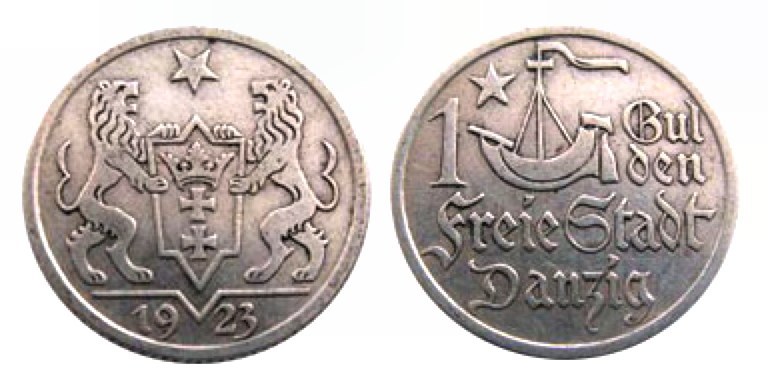
Read the Free-City Legend First
The single most decisive clue is the legend naming the issuer. A genuine coin of this type identifies the Free City of Danzig (FREIE STADT DANZIG) rather than the German Reich, the Weimar Republic, or Poland. If the legend names a different country or empire, it is not this coin, no matter how similar the arms look.
Confirm the Denomination and Date
This piece states its value as one Gulden in German and is dated 1923. Danzig used the Gulden and Pfennig system for only a short period, so a German-language Gulden denomination paired with the Danzig city name is a strong, specific marker. Read the date carefully and make sure it matches the 1923 type rather than a later Danzig issue.
Check the Arms and Both Sides
One side shows the heraldic coat of arms of the city of Danzig, the central emblem the photo captures with its crossed elements and supporters, surrounded by the free-city legend. The opposite side is the denomination-and-date side. Both must be present and consistent; a coin that shows a monarch's portrait or a national eagle instead of the city arms is a different type.
Verify Size, Weight, and Metal
Expect a small silver coin about 23 mm in diameter and roughly 5 grams. It is not a heavy crown, so do not expect great heft, but it should still feel dense for its size, be non-magnetic, and show the tone of genuine silver. A magnetic, oversized, or obviously base-metal piece of this design is a warning sign.
Rule Out Look-Alikes and Fakes
Danzig struck several denominations, including a smaller half Gulden and larger multi-Gulden silver pieces, that share the city arms but differ in size and stated value, so always read the denomination rather than trusting the design alone. As a coin from a vanished state, Danzig silver attracts counterfeits and altered dates; weigh and measure the piece, compare the arms and lettering to trusted references, and for higher-grade or higher-value examples consider third-party authentication.
Frequently asked questions
How do I know it is Danzig and not German or Polish?
Look for the free-city legend naming Danzig (FREIE STADT DANZIG) and the German Gulden denomination. German Reich and Polish coins name their own state and use different denominations such as Mark, Reichsmark, or Zloty.
What size and weight should it be?
Expect a small silver coin of roughly 23 mm and about 5 grams. It is not a heavy crown, but it should feel solid for its size, be non-magnetic, and show a genuine silver tone.
How can I tell it from other Danzig silver coins?
Read the denomination and date. This piece states one Gulden and 1923; related Danzig issues such as the half Gulden or larger multi-Gulden coins share the city arms but differ in size and stated value.
Is it worth authenticating?
For anything beyond a well-worn example, yes. Coins of the vanished Free City are faked and sometimes have altered dates, so verifying weight, diameter, and design details, or using certification, protects against counterfeits.
1 Gulden (Silver) identified by the community
Recent 1 Gulden (Silver) coins identified with Coin Identifier.