
Coin Encyclopedia
Search and identify coins from around the world — with country, denomination, metal, mint, history, and how to tell them apart.
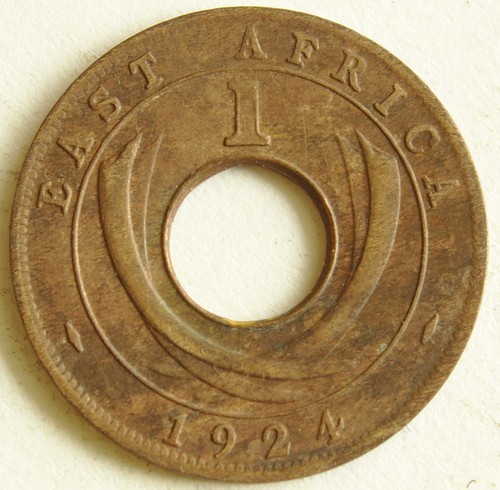
East African 1 Cent
A small holed copper 1 Cent of British East Africa dated 1924, with a crown and decorative rings on one face and the value framing the central hole on the other.
World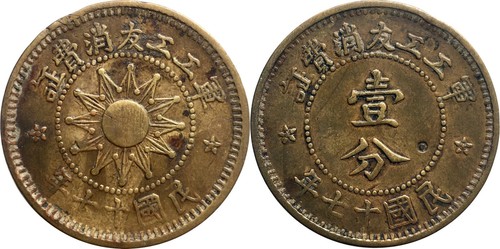
Shansi Arsenal 1 Fen
A holed copper 1 Fen struck by the Shansi Arsenal in 1928, with Chinese inscriptions and numeral '1' around a central square hole.
Circulation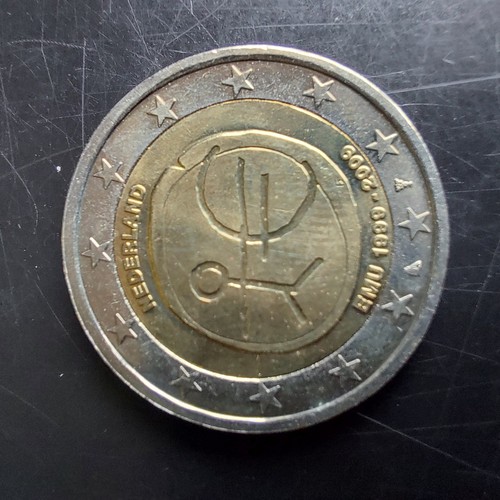
1 Euro (10 Years EMU)
Dutch bi-metallic 1 Euro marking ten years of Economic and Monetary Union, with a stylized integration design and the twin dates 1999 and 2009.
Commemorative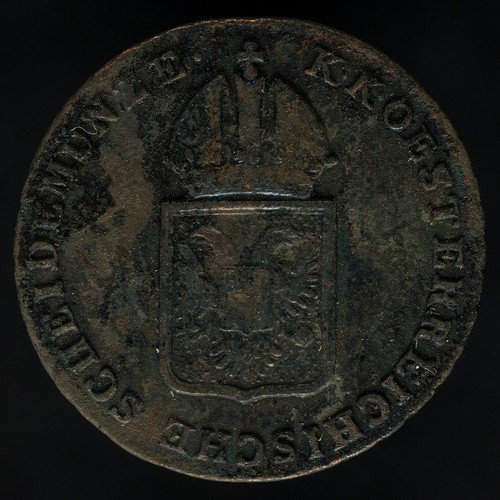
Austria-Hungary 1/4 Kreuzer
A small copper 1/4 Kreuzer of the Austrian Empire dated 1816, showing Emperor Franz I in crowned right-facing profile.
Circulation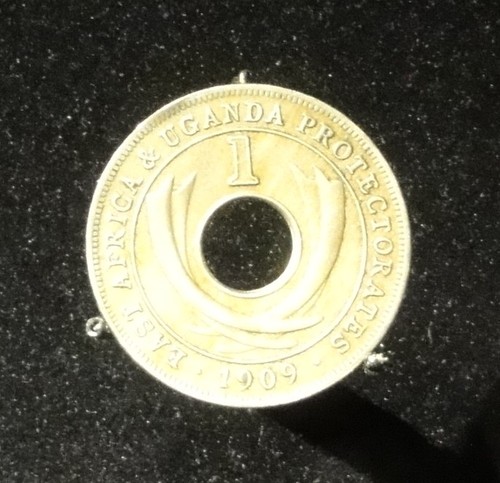
East Africa Protectorate 1 Cent
A small holed one-cent coin of the British East Africa Protectorate, struck in base metal with a crowned, portrait-free design around a central hole.
World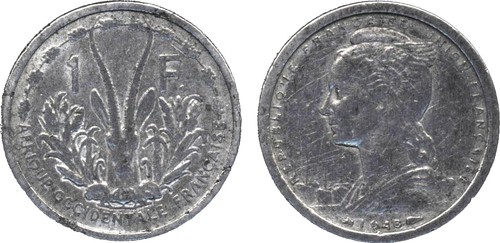
French West Africa 1 Franc
A lightweight aluminum 1 Franc dated 1948 for French West Africa, with an allegorical female head on the obverse and the value framed by AFRIQUE-OCCIDENTALE FRANCAISE on the reverse.
World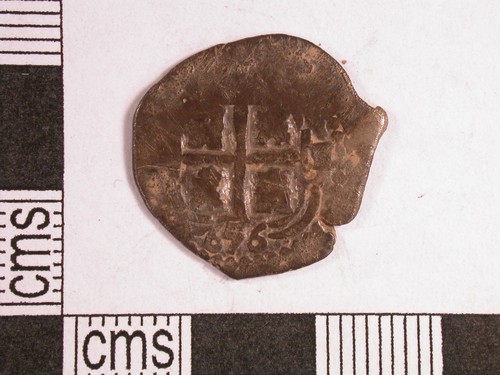
Spanish Colonial Cob 1 Real
A small, crudely hand-struck silver cob of one real, made in Spain's American colonies with heraldic shield-and-cross designs.
Cob Coinage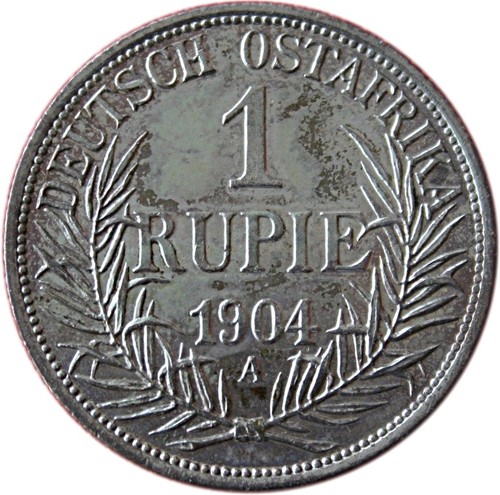
German East Africa 1 Rupie
A silver colonial rupee of German East Africa bearing the imperial eagle shield and the legend DEUTSCH OSTAFRIKA, struck for the German protectorate.
World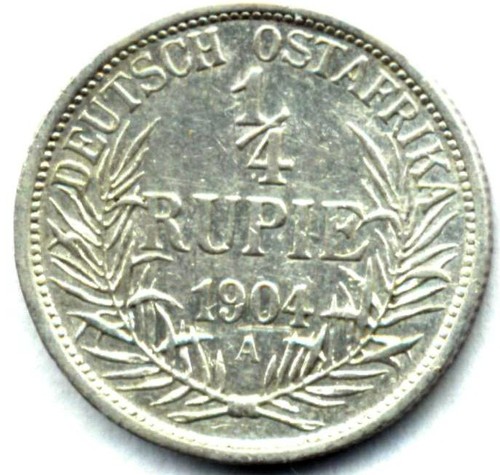
German East Africa 1/4 Rupie
A small colonial silver coin of German East Africa, inscribed DEUTSCH OSTAFRIKA and 1/4 RUPIE within a wreath, paired with the imperial eagle.
World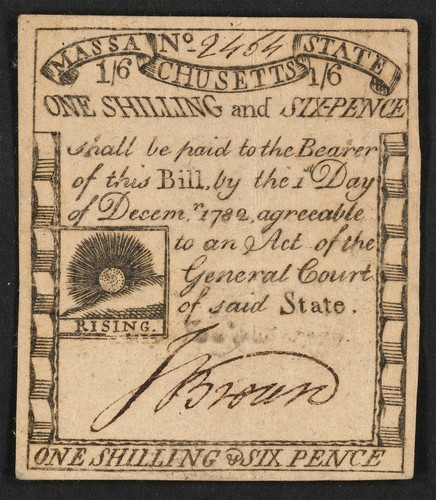
Massachusetts Shilling (1 Shilling 6 Pence)
A colonial-era Massachusetts silver piece valued at one shilling and sixpence, joining a pine-tree obverse with a rising-sun reverse and the date 1779.
Colonial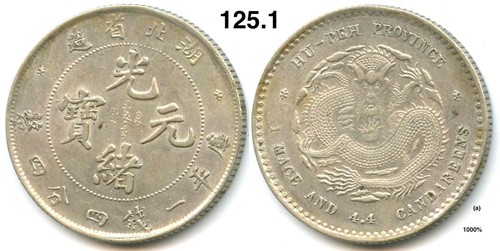
Guangxu Yuanbao 1 Mace 4.4 Candareens
A small silver dragon coin of Qing China from the Guangxu era, its face reading 1 Mace 4.4 Candareens and its back showing a coiled Chinese dragon.
Circulation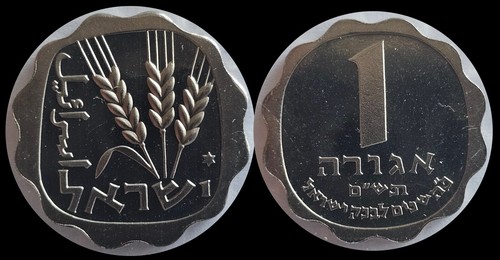
Israel 1 Agora (Bank of Israel 25th Anniversary)
A small 1980 aluminum-bronze 1 Agora of Israel, tied to the Bank of Israel's 25th anniversary, with grain ears on one face and the value 1 with Hebrew legend on the other.
World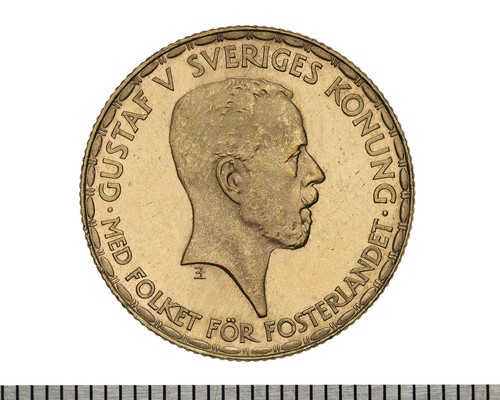
Swedish Gold Commemorative
An early-20th-century Swedish gold coin showing a right-facing royal profile with the legend SVERIGES KONUNG and the fatherland motto.
Commemorative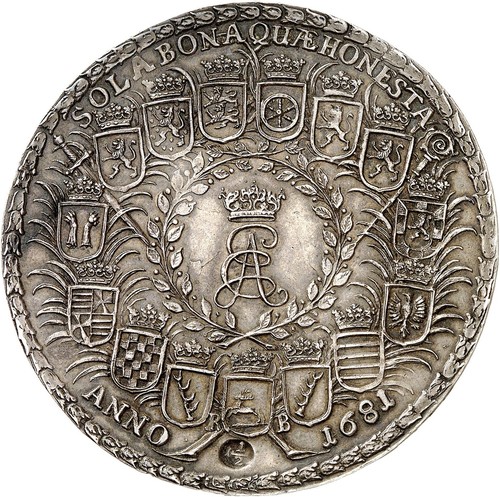
Hanover-Luneburg 1.5 Thaler
A large silver 1.5 Thaler of Brunswick-Luneburg (Hanover), dated 1681, with a busy multi-shield heraldic design and the motto SOL BONA QUE HONESTA.
German States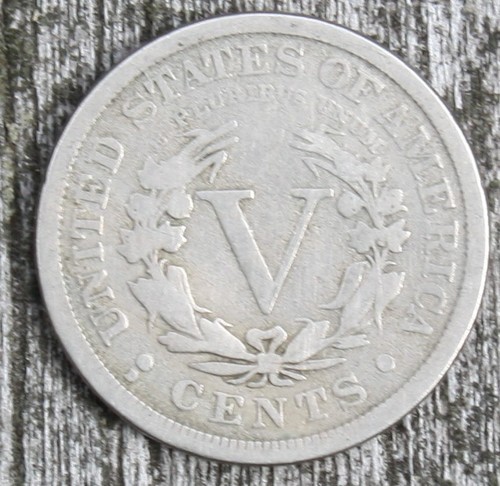
Liberty Head Nickel
U.S. five-cent piece struck 1883–1912, showing a left-facing Liberty head ringed by stars, with a Roman-numeral "V" reverse; the 1913 issue is a legendary rarity.
Nickel Five Cent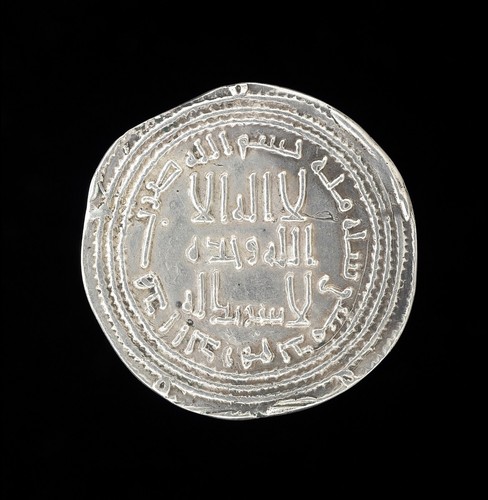
Silver Dirham (LACMA M.2002.1.437)
A thin, broad 8th-century Islamic silver dirham covered in Kufic Arabic inscriptions, with no portrait or image — only religious legends and decorative flourishes.
Islamic (Medieval)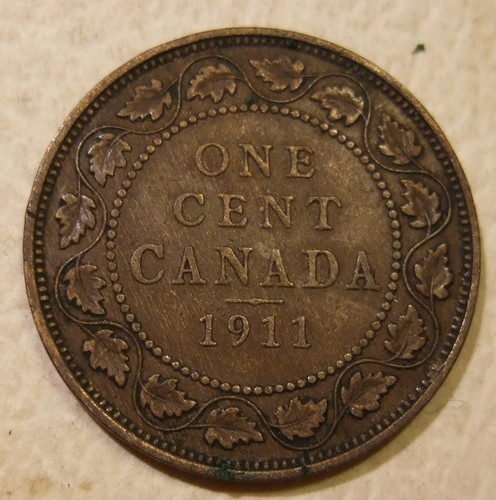
Canadian One Cent
Bronze Canadian large cent with a maple-leaf wreath reverse; the 1911 issue is the famous first-year 'Godless' cent lacking DEI GRATIA.
Canadian & Provincial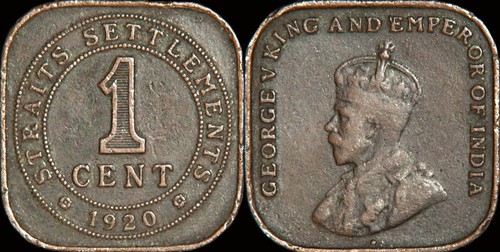
Straits Settlements One Cent
A round bronze one-cent coin of the British Straits Settlements bearing the crowned profile of King George V, dated 1920.
Colonial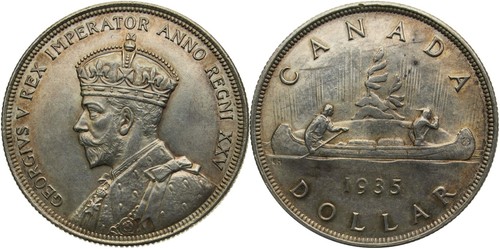
Canadian Silver Dollar
Canada's first circulating silver dollar, the 1935 Voyageur type, showing George V and a canoe with paddlers on the reverse.
Canadian & Provincial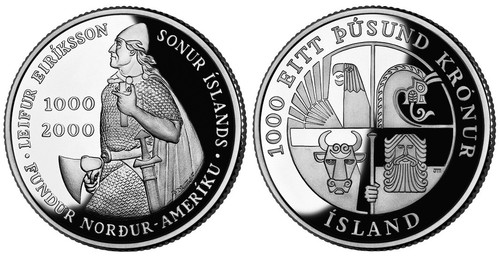
Leif Erikson Commemorative 1000 Króna
Icelandic silver commemorative dated 2000, marking the millennium of Leif Erikson's voyage and the Norse discovery of North America.
Commemorative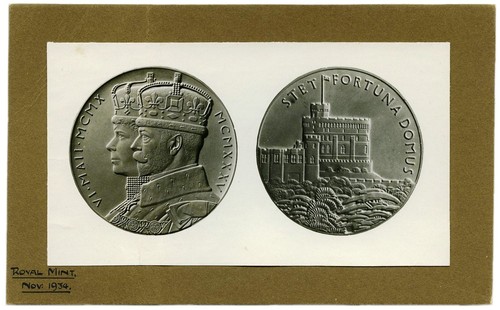
King's Silver Jubilee Medal
British 1935 commemorative medal with overlaid profiles of King George V and Queen Mary and a castle reverse marking the Silver Jubilee.
Medals & Tokens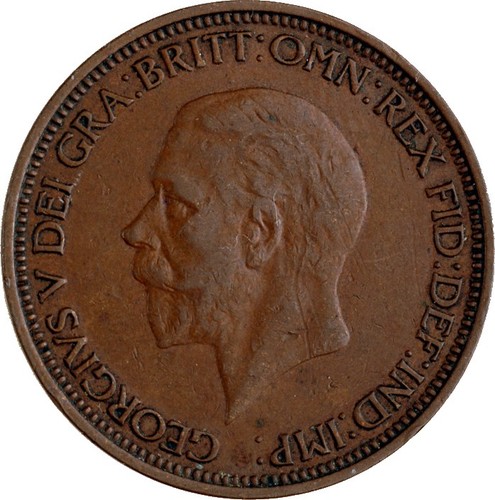
British Pre-Decimal Halfpenny
Bronze British halfpenny worth 1/480 of a pound. The George V type shows the king's profile and a seated Britannia with trident.
British Isles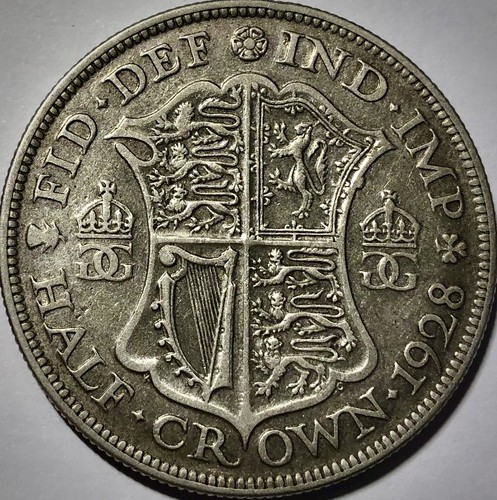
British Half Crown
British silver half crown of King George V, worth two shillings and sixpence, with the king's bare left-facing head and a crowned shield of arms.
British Isles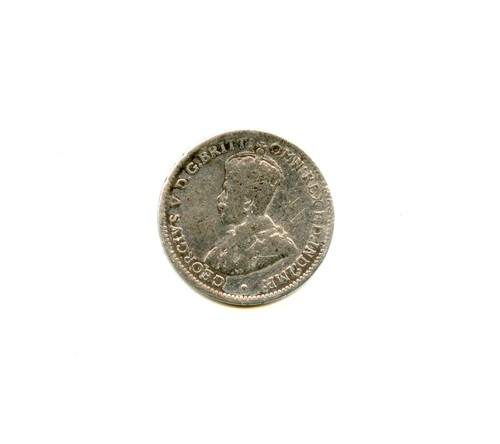
Australian Threepence
Australia's small pre-decimal silver threepence (3d), the country's tiniest coin, struck 1910-1964. The example shown carries a George V portrait.
Australian