
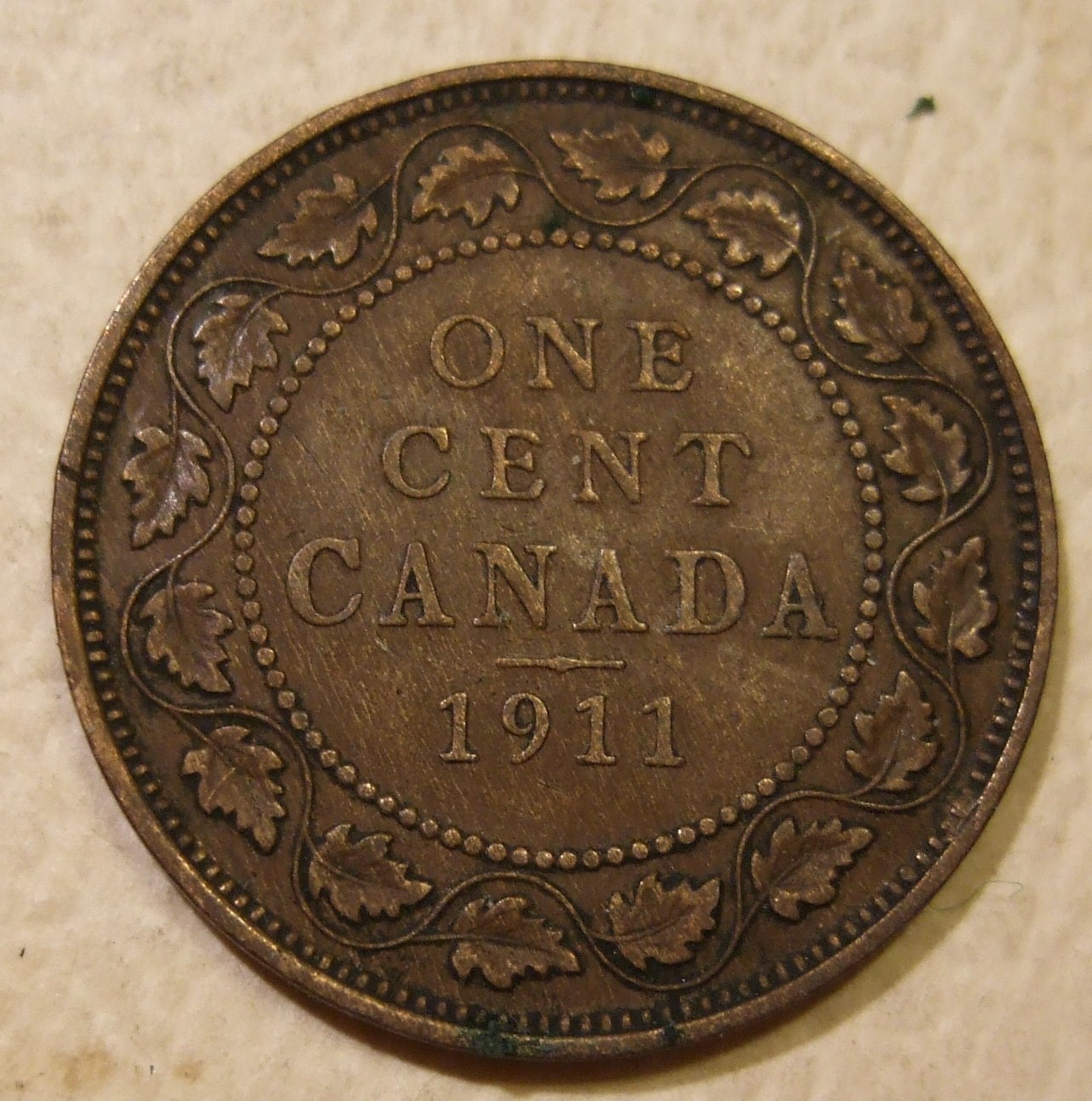
Canadian One Cent
Bronze Canadian large cent with a maple-leaf wreath reverse; the 1911 issue is the famous first-year 'Godless' cent lacking DEI GRATIA.
- Country
- Canada
- Denomination
- 1 Cent
- Metal
- Bronze
Got a coin like this?
Identify any coin from a photo, free.
Overview
The Canadian One Cent shown here is a bronze large cent, the sizeable copper-coloured coin Canada used before the smaller cent arrived in 1920. The obverse carries the left-facing portrait of King George V, and the reverse shows the denomination ONE CENT and CANADA with the date encircled by a wreath of maple leaves.
This particular coin is dated 1911, the first year George V's portrait appeared on Canadian coinage. It is a single-year type of special note to collectors because the obverse legend omits the usual DEI GRATIA ("by the grace of God"), earning the 1911 issue its nickname as the "Godless" cent.
The large cent is a chunky, satisfying coin roughly 25.4 mm across and about 5.67 g in weight, struck in bronze (an alloy of copper with small amounts of tin and zinc). It circulated widely and survives in large numbers, making it an accessible entry point for anyone starting a Canadian coin collection.
History & Background
Canada adopted a decimal cent in 1858, and the large cent became a workhorse of everyday commerce through the reigns of Queen Victoria and King Edward VII. When George V acceded to the throne, new coinage bearing his portrait was introduced for 1911.
The 1911 coins are distinctive because the obverse legend reads GEORGIVS V REX ET IND: IMP: without the words DEI GRATIA. The omission drew public criticism, and the phrase (abbreviated DEI GRA:) was restored beginning in 1912. Only the 1911-dated coins across the denominations carry this abbreviated, "Godless" legend, which is why the year is so often singled out.
The bronze large cent continued through 1920, after which Canada replaced it with the smaller cent similar in size to the U.S. and British small cents of the day. The maple-leaf wreath reverse used on the large cent is a design that ties this piece firmly to Canadian coinage tradition.
How to Identify
Confirm the reverse first: the words ONE CENT and CANADA with the date, wrapped in a wreath of maple leaves, identify a Canadian large cent rather than a British penny or a U.S. cent. The obverse shows King George V facing left. Read the legend closely: if it lacks DEI GRATIA (reading only GEORGIVS V REX ET IND: IMP:), the coin is the 1911 "Godless" type.
Check the physical standards. A large cent is bronze, about 25.4 mm in diameter and roughly 5.67 g in weight, noticeably bigger than the small cent that replaced it in 1920. The edge is plain (not reeded).
The date on this example is 1911. Because the large cent was struck for many years with similar wreath reverses, always read the date and the monarch's portrait together to place a specific coin within the series.
Value & Collectibility
The 1911 large cent is a common date. Most circulated examples are modest, affordable coins valued at a small premium over their scrap-metal content; heavily worn pieces trade for pocket-change to a few dollars. The coin's appeal to beginners rests more on its history as the first-year "Godless" cent than on rarity.
Condition drives price. Coins with sharp detail, original surfaces, and traces of red mint lustre command significantly more than worn brown examples, and fully red uncirculated pieces are scarcer and priced accordingly. Cleaning, corrosion, and environmental damage all reduce value.
These figures are general context, not a quote. Copper prices, grade, and eye appeal all move the market, so have a specific coin assessed by a reputable dealer or grading service before buying, selling, or insuring it.
Frequently asked questions
Why is the 1911 Canadian cent called the 'Godless' cent?
Because the obverse legend omits DEI GRATIA ('by the grace of God'). The 1911 coins read GEORGIVS V REX ET IND: IMP: without it; the phrase was restored (as DEI GRA:) from 1912 onward.
Is the Canadian one cent made of real copper?
The large cent is struck in bronze, an alloy that is mostly copper with small amounts of tin and zinc, giving it its warm copper colour.
How big is the large cent?
About 25.4 mm across and roughly 5.67 g in weight, noticeably larger than the small cent Canada introduced in 1920.
Is my 1911 cent rare or valuable?
The 1911 large cent is a common date. Worn examples are worth only a small premium over metal value; well-preserved coins with original red lustre are worth more. Have a specific coin appraised.
How is it different from a British penny or U.S. cent?
The maple-leaf wreath reverse and the words ONE CENT CANADA identify it as Canadian. British pennies show Britannia, and U.S. cents of the era show a Lincoln bust or Indian head with different legends.
Canadian One Cent guides
In-depth guides for identifying, valuing, and collecting Canadian One Cent.
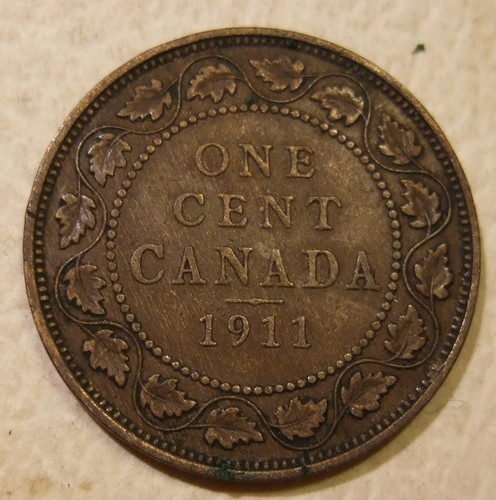
Canadian One Cent identified by the community
Real coins identified with Coin Identifier.
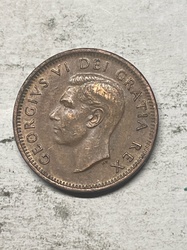
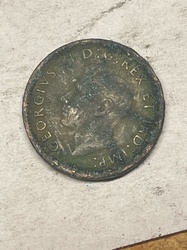
Other coins you may enjoy
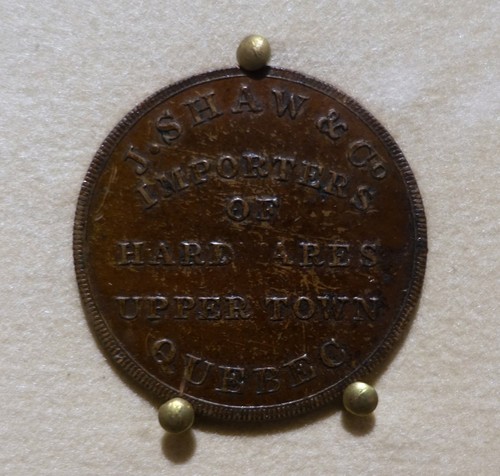
J. Shaw & Co. Hardware Token
circa 1850s
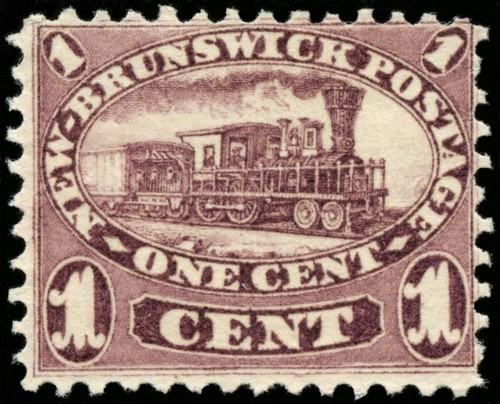
New Brunswick One Cent
Dated 1860 (locomotive token type)
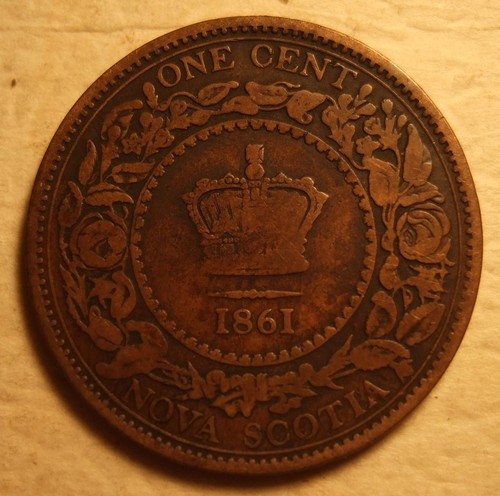
Nova Scotia One Cent
1861-1864
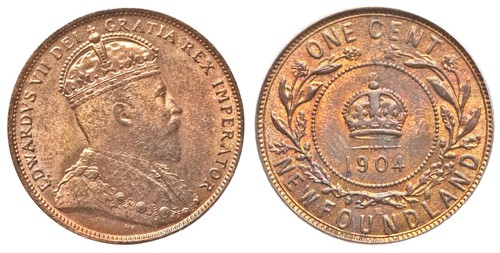
Newfoundland One Cent
1865-1936
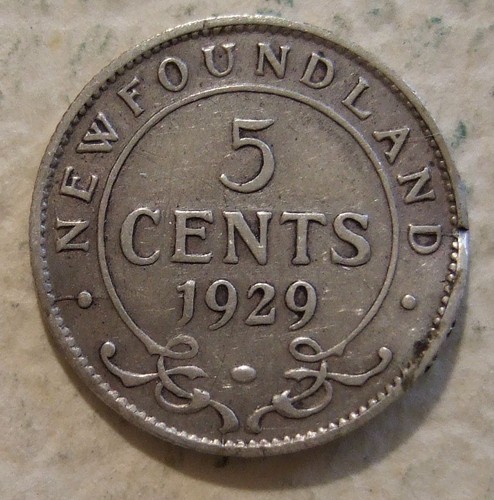
Newfoundland Five Cents
1865-1947
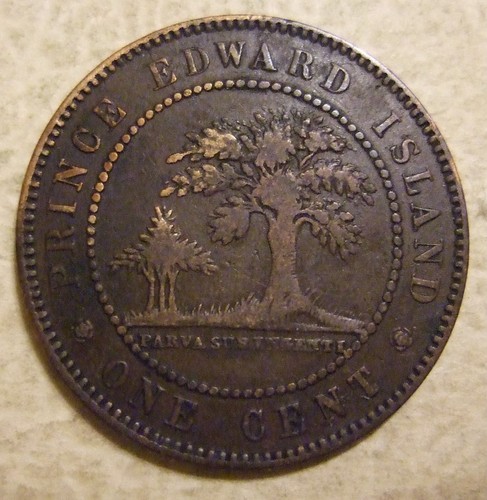
Prince Edward Island One Cent
1871
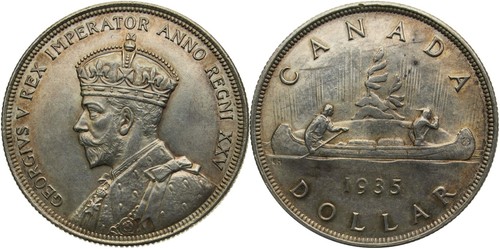
Canadian Silver Dollar
1935
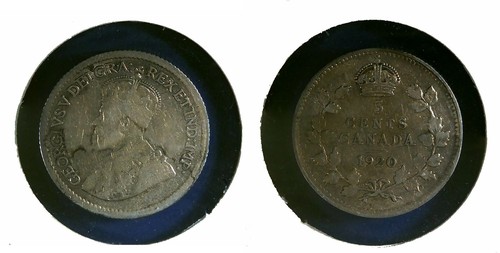
Canadian Five Cents (Nickel)
1937–present (beaver reverse; example shown: 1987)
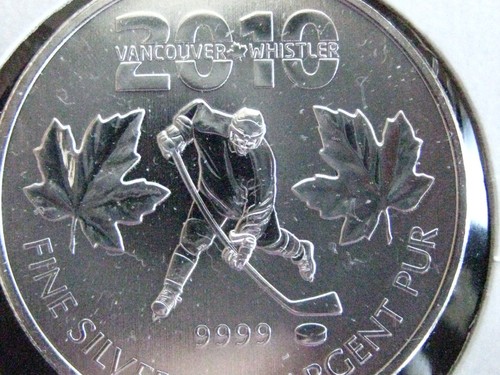
Olympic Hockey Commemorative Dollar
2010
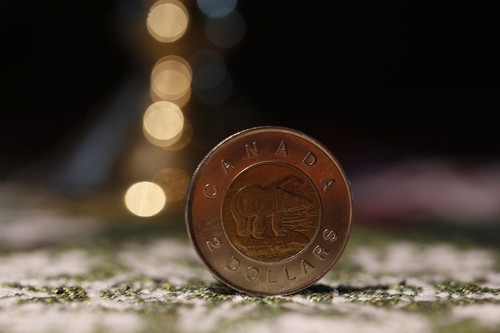
Canadian Two Dollar (Toonie)
1996-present
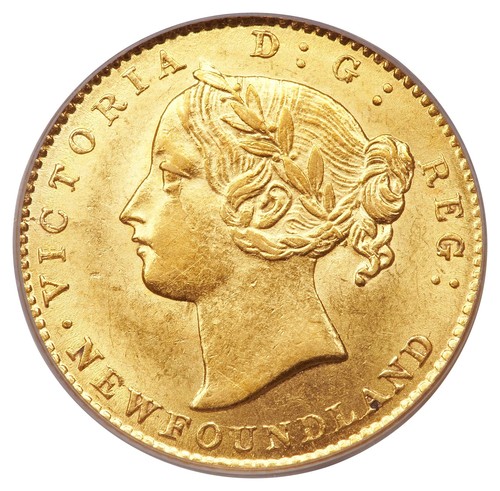
Newfoundland Two Dollars
1865-1888
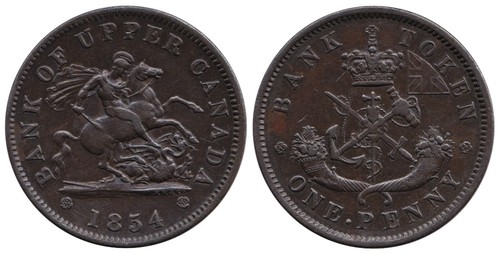
Bank of Upper Canada One Penny Token
1850-1857