
Coin Encyclopedia
Search and identify coins from around the world — with country, denomination, metal, mint, history, and how to tell them apart.
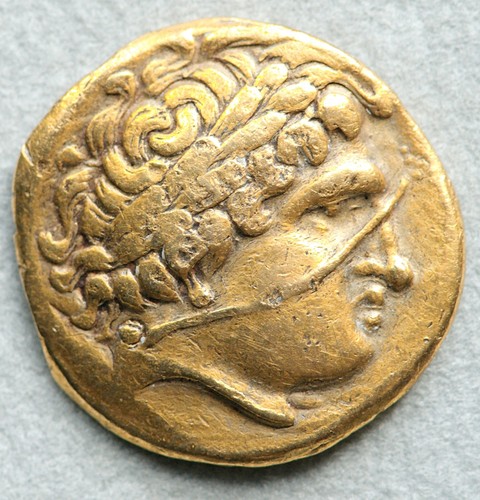
Gallic Imitation Stater
A gold stater struck by the tribes of Gaul, whose stylized head and single horse descend from Greek Macedonian prototypes reworked into abstract Celtic art.
Ancient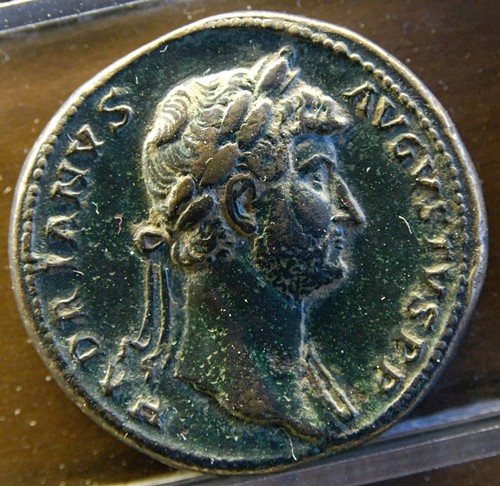
Sestertius of Hadrian
Large Roman bronze sestertius of Emperor Hadrian, showing his bearded curly-haired profile and a standing draped figure with a Latin legend on the reverse.
Ancient Coins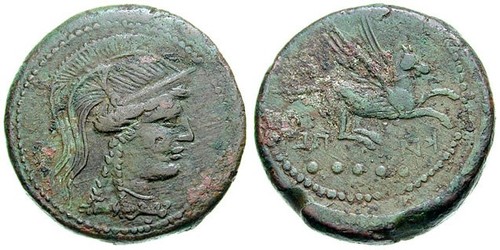
Quincunx of Capua
Bronze quincunx (5 unciae) struck by Capua in Campania in the 3rd century BC, pairing a diademed female head with a lion or griffin and five value pellets.
Ancient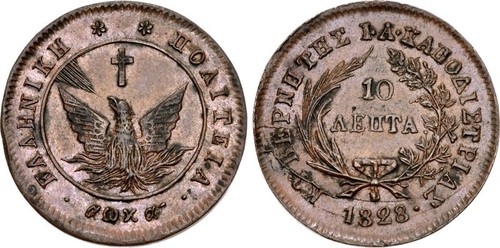
10 Lepta (Phoenix)
A copper 10 lepta of the first independent Greek state, dated 1828, showing the Phoenix rising from flames beneath a cross against the value within an oak wreath.
Modern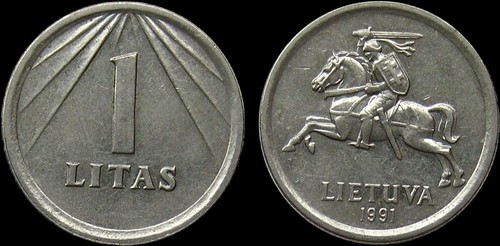
1 Litas
A 1991 Lithuanian one-litas coin from the first coinage after restored independence, showing the value with a radiating pattern and the Vytis knight of the national arms.
Modern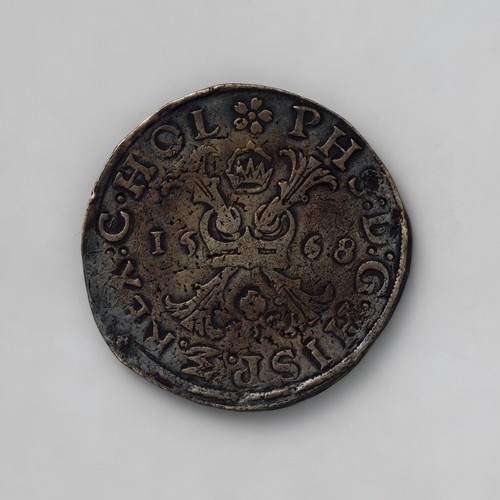
Bourgondische Rijksdaalder
A large silver rijksdaalder of the Habsburg Netherlands showing Philip II in helmeted armor, with a compartmented heraldic shield and the Golden Fleece collar.
Early Modern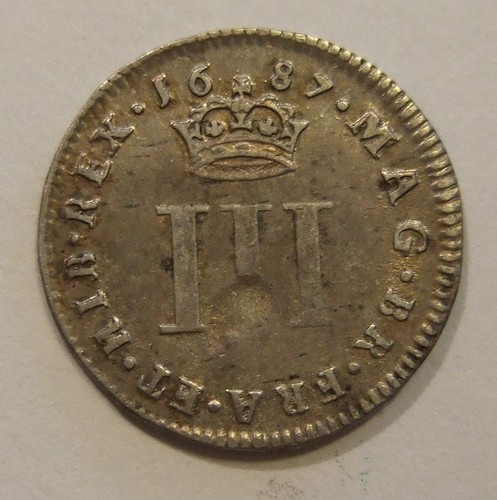
Maundy Three Pence
A tiny sterling-silver threepence tied to Britain's Royal Maundy tradition; the photographed 1687 coin shows James II's bust and a crowned Roman numeral III.
Maundy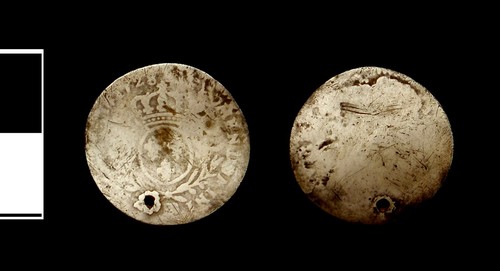
Unidentified Silver Coin (Louis XV era)
An 18th-century French royal silver coin of the Louis XV era, showing a right-facing bust and a crowned fleur-de-lis shield; the exact denomination is not confirmed.
Royal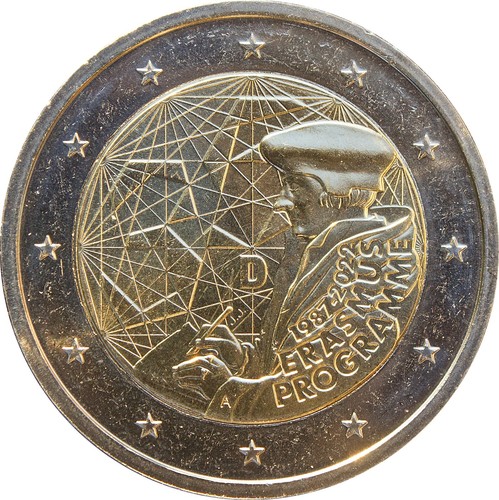
Germany 2 Euro Erasmus Programme Commemorative
A German 2 Euro commemorative dated 2022 marking the Erasmus Programme, its obverse showing a student figure with a globe and the reverse the ring of European stars.
Commemorative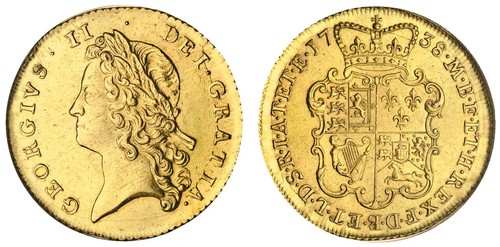
Two Guineas of George II
A large milled gold two-guinea piece of George II, with his left-facing laureate head and a crowned garnished shield of the royal arms; the pictured coin is dated 1738.
Milled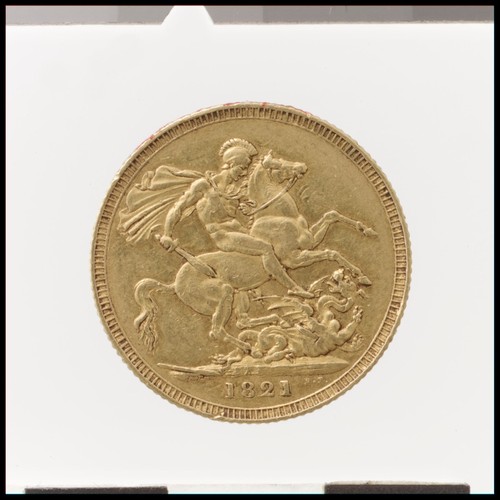
Sovereign of George IV
A milled gold sovereign of Great Britain struck under George IV, with the king's laureate head and Pistrucci's St George slaying the dragon reverse, dated 1821.
Milled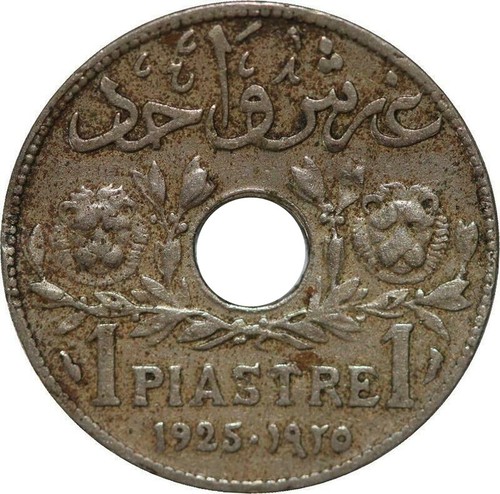
Lebanese 1 Piastre
A small holed bronze 1 Piastre of Greater Lebanon dated 1925, struck under the French Mandate, with bilingual legends and an ornamental wreath framing the value.
World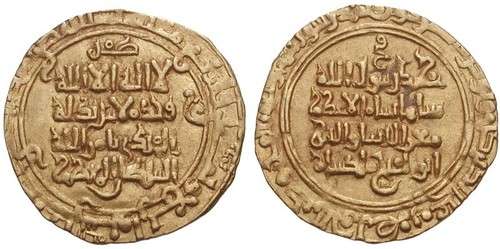
Gold Dinar of Malik Shah I
A hand-struck Seljuk gold dinar naming Malik Shah I (r. 1072–1092), covered in Arabic inscriptions with the ruler's titles and genealogy and an ornamental cartouche.
Islamic (Medieval)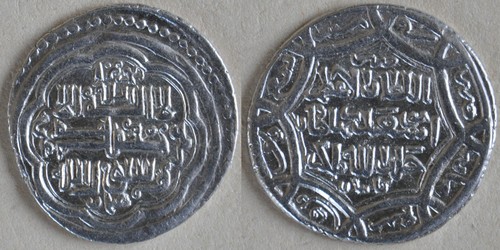
Ilkhanid Dirham of Abu Said
A hand-struck Mongol Ilkhanate silver dirham of Abu Sa'id Bahadur Khan, with the ruler's titles set in a cartouche and religious inscriptions in concentric bands.
Islamic (Medieval)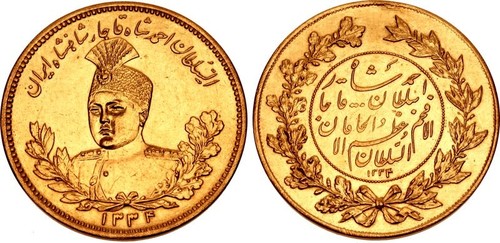
Gold Toman of Ahmad Shah Qajar
A Qajar-era gold toman bearing the portrait bust and tall headdress of Ahmad Shah, with Persian legends, date and mint, and a wreathed calligraphic reverse.
Persia / Iran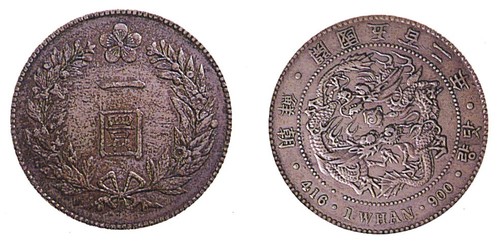
1 Hwan
A late-Joseon Korean bronze coin of one hwan, carrying a chrysanthemum-and-cartouche obverse and a traditional dragon motif with East Asian characters on the reverse.
Historic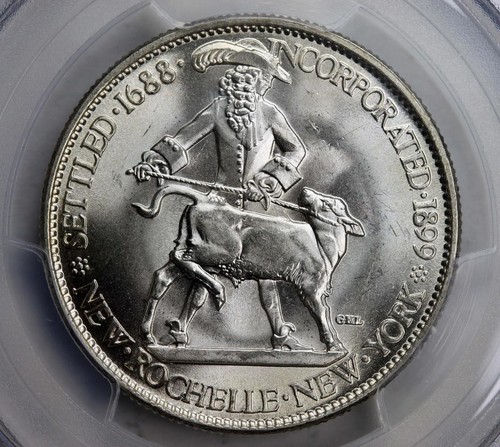
New Rochelle Half Dollar
A 1938 U.S. silver half dollar marking the 250th anniversary of New Rochelle, New York, with a Huguenot founder leading a fatted calf and a fleur-de-lis reverse.
Classic Commemorative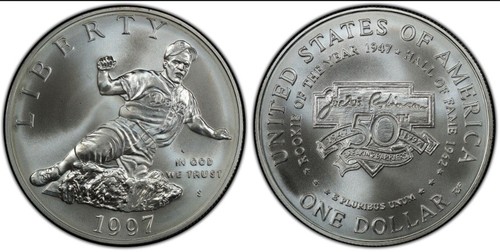
Jackie Robinson Silver Dollar
A 1997 U.S. silver dollar honoring Jackie Robinson and the 50th anniversary of his breaking baseball's color barrier, with an action portrait and eagle reverse.
Modern Commemorative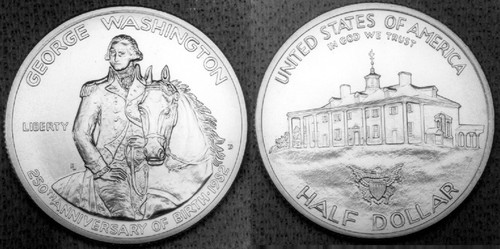
George Washington 250th Anniversary Half Dollar
A 1982 U.S. silver half dollar honoring the 250th anniversary of George Washington's birth; it revived both the commemorative program and 90% silver coinage.
Modern Commemorative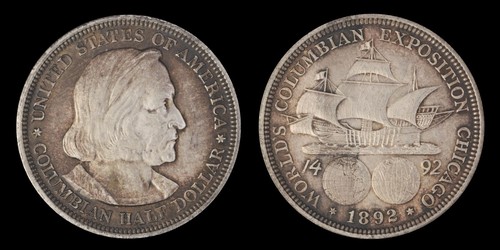
Columbian Exposition Half Dollar
The first U.S. commemorative half dollar, issued for the 1893 World's Columbian Exposition with Christopher Columbus on the obverse and his three ships on the reverse.
Classic Commemorative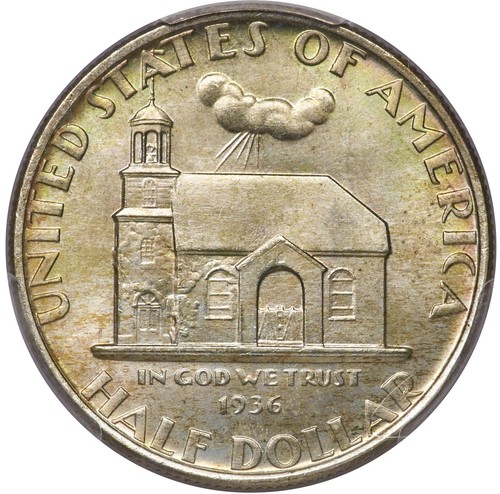
Delaware Tercentenary Half Dollar
A 1936 U.S. silver half dollar marking 300 years since Swedish colonists landed in Delaware, showing Old Swedes Church on one side and the ship Kalmar Nyckel on the other.
Classic Commemorative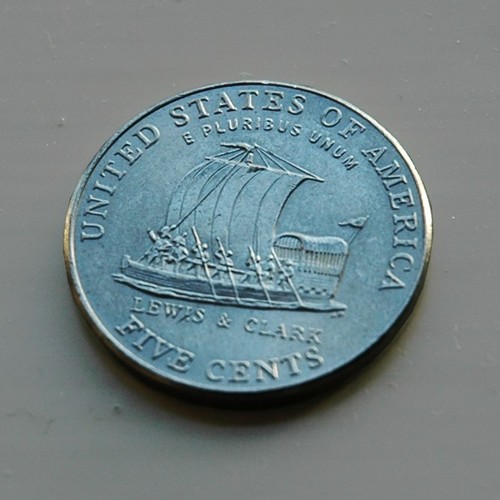
Westward Journey Nickel - Lewis and Clark Keelboat
A 2004 Jefferson five-cent piece from the Westward Journey series, its reverse showing the keelboat that carried the Lewis and Clark expedition upriver.
Nickel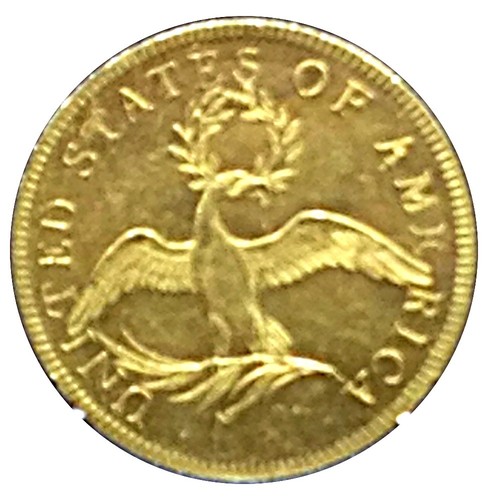
Capped Bust Eagle
The first United States gold ten-dollar coin, struck 1795–1804 with a capped Liberty bust and, in later years, a heraldic eagle bearing a shield and E PLURIBUS UNUM.
United States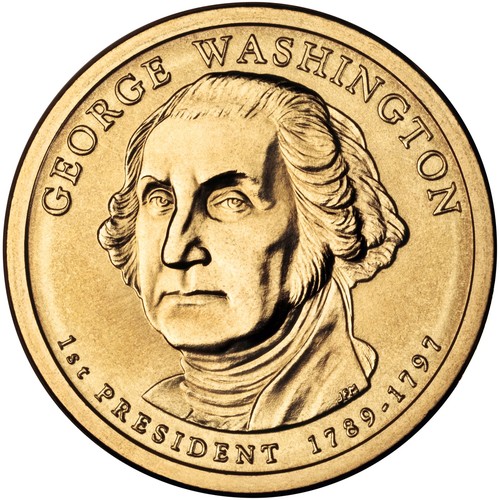
George Washington Presidential Dollar
The 2007 golden dollar honoring George Washington, first coin in the U.S. Presidential $1 series, with a left-facing portrait and Statue of Liberty reverse.
Dollar