
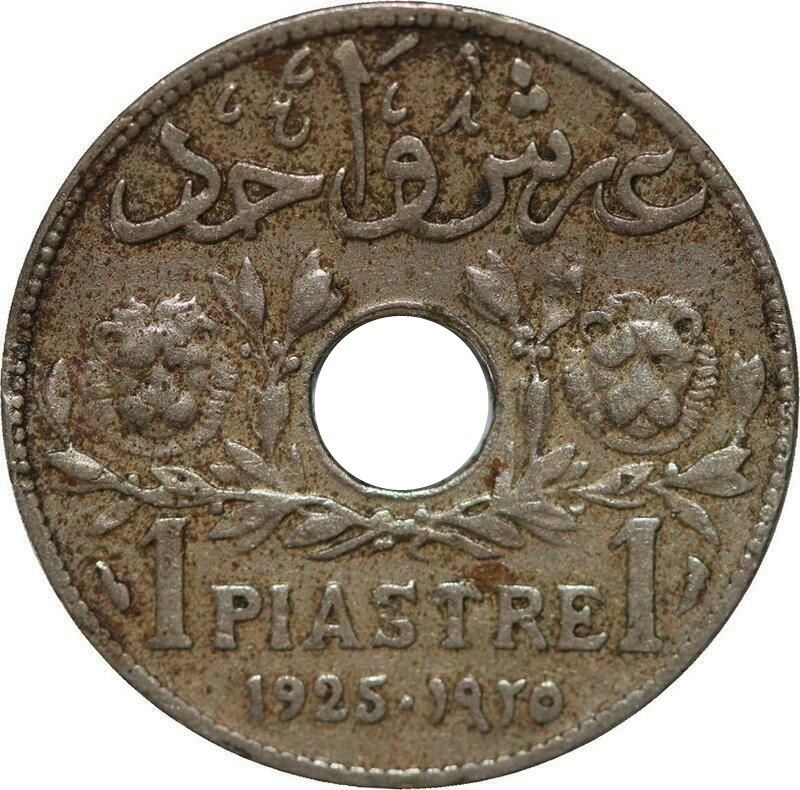
Lebanese 1 Piastre
A small holed bronze 1 Piastre of Greater Lebanon dated 1925, struck under the French Mandate, with bilingual legends and an ornamental wreath framing the value.
- Country
- Lebanon
- Denomination
- 1 Piastre
- Metal
- Bronze
Got a coin like this?
Identify any coin from a photo, free.
Overview
The Lebanese 1 Piastre is a small bronze coin dated 1925, issued for the State of Greater Lebanon (Grand Liban) during the period of French Mandate administration. Its most immediately recognizable feature is the round hole punched through the center, a design choice used on several small coins of the era to save metal and make low-value pieces easy to distinguish by touch.
The piastre was a minor unit of the Lebanese monetary system, a fraction of the larger pound (livre), so this coin represents everyday small change rather than a store of value. It circulated as ordinary pocket money, which is why many surviving examples show honest wear.
Both faces carry bilingual inscriptions, pairing Arabic script with Latin-script (French) legends, reflecting the dual administrative and local character of Greater Lebanon in the 1920s. The reverse frames the denomination within an ornamental wreath, a common decorative convention for stating value on minor coinage of the period.
History & Background
Greater Lebanon was proclaimed in 1920 under the French Mandate that followed the collapse of Ottoman rule in the Levant after the First World War. As the new entity organized its administration, it needed its own low-denomination coinage, and pieces such as this 1 Piastre were struck in France for use in the territory.
The 1925 date places the coin in the early mandate years, when the currency was being established on a modern footing. Bilingual Arabic and French legends were standard for the period, signaling both the French administering power and the Arabic-speaking population the coin served.
Because it was minor circulating change rather than a commemorative, the piastre was produced for practical daily use. Later Lebanese coinage would evolve in design and composition as the country moved toward and beyond full independence in the 1940s, leaving these early holed mandate pieces as artifacts of Lebanon's formative period.
How to Identify
The single most diagnostic feature is the central hole: this is a small round bronze coin pierced through the middle, dated 1925. The obverse carries inscriptions in both Arabic and Latin-script (French) around the hole, while the reverse states the value inside an ornamental wreath.
Expect a modest, coin-sized bronze piece with the warm brown tone of circulated bronze rather than the bright silver look of a higher denomination. The holed format, the 1925 date, and the bilingual legends together separate it from the many non-holed Lebanese coins struck in later decades.
Confirm that the stated denomination reads as one piastre and that the country/issuer legends reference Greater Lebanon (Grand Liban). Do not confuse it with holed coins of neighboring mandate territories or with later Lebanese piastre and pound coins, which differ in design, script arrangement, and metal.
Value & Collectibility
As a small circulating bronze coin, the Lebanese 1 Piastre of 1925 carries no precious-metal content, so its worth is driven entirely by collector demand and condition rather than by melt value. Well-worn examples are generally affordable, while sharp, problem-free pieces with clear detail and even color command higher premiums.
Condition is the main price lever: coins with full legends, an undamaged hole rim, and minimal corrosion are worth more than pitted, cleaned, or bent examples. Original surfaces and attractive bronze patina add appeal to specialists in mandate-era coinage.
For any specific coin, judge the grade honestly and compare recent sales of the same 1925 holed piastre rather than relying on a single catalog number, since realized prices vary with eye appeal and collector interest in French Mandate Lebanon.
Frequently asked questions
Why does the Lebanese 1 Piastre have a hole in the middle?
The central hole was a practical design feature used on some small coins of the era. It reduced the metal needed for a low-value piece and made the denomination easy to tell apart by feel, a common convention for minor coinage in the 1920s.
Is this coin made of precious metal?
No. It is a bronze minor coin with no gold or silver content, so its value comes from collector interest and condition rather than from melt value. Expect the warm brown tone of circulated bronze.
What do the two sets of inscriptions mean?
The coin carries bilingual legends, pairing Arabic script with Latin-script (French) text. This reflects Greater Lebanon under the French Mandate in the 1920s, serving both the administering power and the local Arabic-speaking population.
Was the 1 Piastre used as everyday money?
Yes. The piastre was a minor unit, a fraction of the larger Lebanese pound, so this was small change for daily transactions. That everyday use is why many surviving examples show genuine circulation wear.
Lebanese 1 Piastre guides
In-depth guides for identifying, valuing, and collecting Lebanese 1 Piastre.
Other coins you may enjoy
5 Aurar
1926-1942
20 Kronor
1925 (denomination struck 1873-1925)
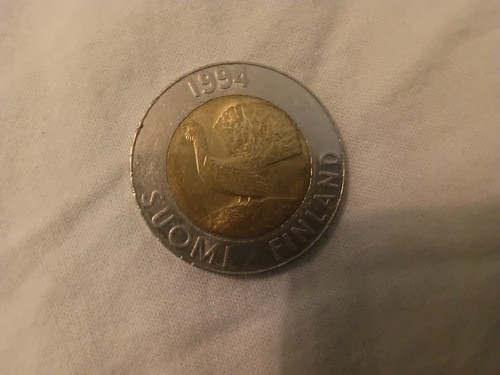
10 Markka
1993–2001
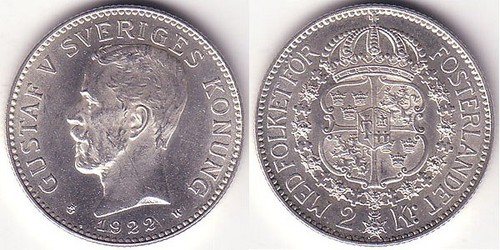
2 Kronor
1910-1940 (this example dated 1922)
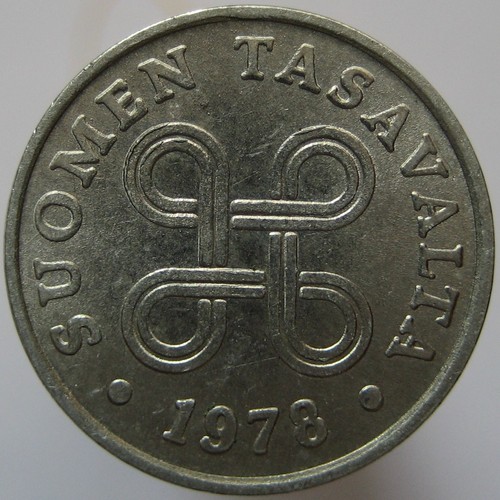
1 Penni
1969–1979
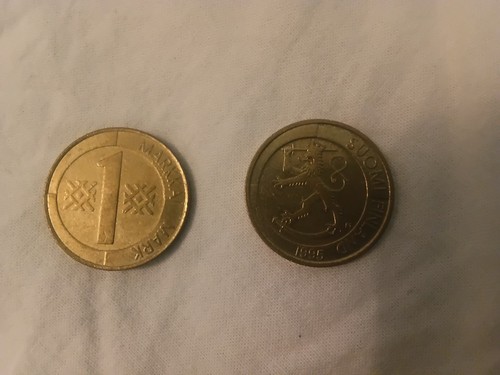
1 Markka
1993–2001
Kenya 5 Shillings
Bimetallic issues (2005–2010)
Kenya 20 Shillings
Modern issue (late 1990s–2000s)
South Africa Farthing
1923-1960
Kenya 10 Shillings
Republic of Kenya, bimetallic issues (mid-1990s to c. 2010)
Gold Sovereign
1817–present
Henri V Five Francs
1831