
Columbian Exposition Half Dollar
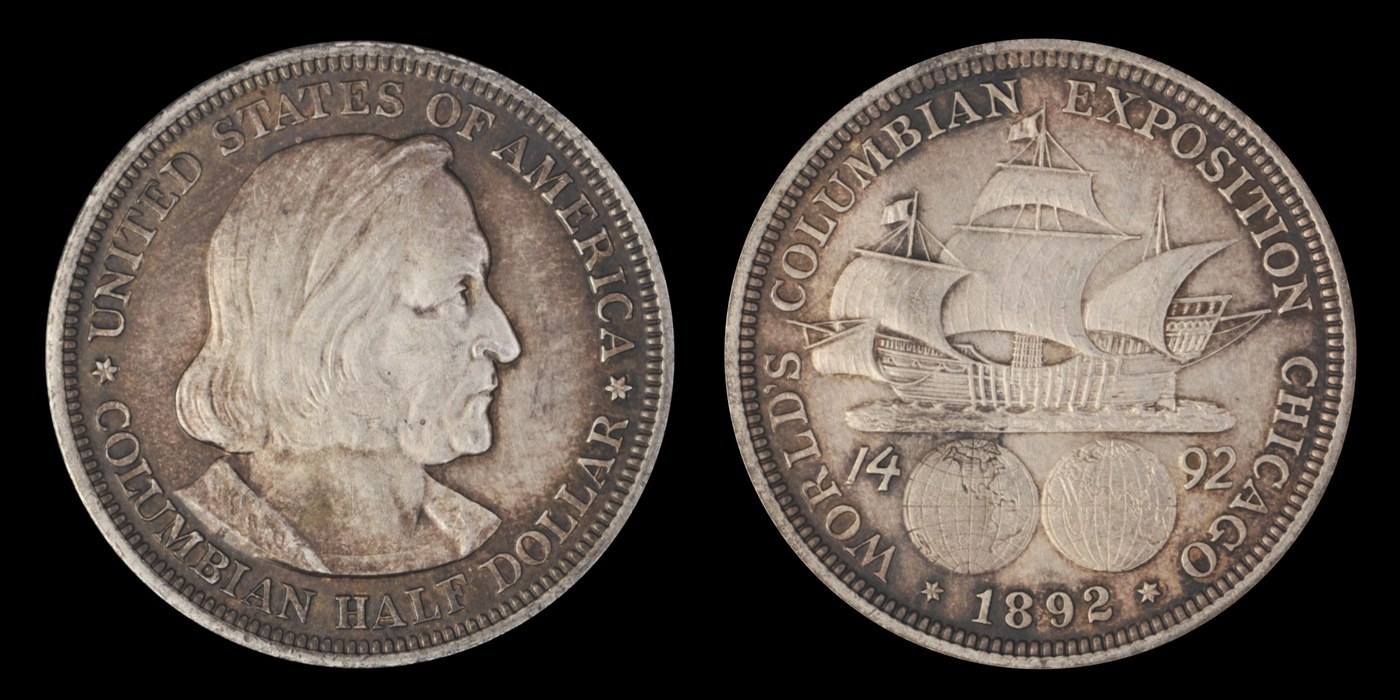
The first U.S. commemorative half dollar, issued for the 1893 World's Columbian Exposition with Christopher Columbus on the obverse and his three ships on the reverse.
- Country
- United States
- Denomination
- 50¢
- Metal
- Silver
Got a coin like this?
Identify any coin from a photo, free.
Overview
The Columbian Exposition Half Dollar is a 90% silver commemorative coin authorized to help fund and promote the World's Columbian Exposition, the 1893 world's fair held in Chicago to mark the 400th anniversary of Christopher Columbus's 1492 voyage. It holds the distinction of being the first commemorative coin issued by the United States. The photographed example is dated 1892, the first of the two years the type was struck.
The obverse presents a right-facing bust of Christopher Columbus. The reverse depicts a caravel — one of Columbus's three ships — sailing over ocean waves above two hemispheres of a globe; on some framings the design reads as three ships on the sea. Coins are dated either 1892 or 1893, with the year appearing on the reverse rather than the obverse.
Because it was made in large numbers and sold to the public at the fair, the type remains one of the most affordable and widely collected of the classic U.S. commemoratives, and it is a common starting point for collectors of the series.
History & Background
Congress authorized the Columbian Exposition Half Dollar in 1892 as part of the federal support for the Chicago world's fair celebrating the 400th anniversary of Columbus's landing in the Americas. The coins were sold to fairgoers and the public, typically at a premium above face value, as a fundraising device for the exposition. This established the model, repeated for decades afterward, of using commemorative half dollars to raise money for events and causes.
The pieces were struck at the Philadelphia Mint and dated 1892 and 1893. Production ran into the millions across the two years — far more than could be sold at a premium — so a large portion of the coins were eventually released into circulation at face value or returned to the Treasury. As a result, worn examples are plentiful today.
The design work is generally credited to Charles E. Barber for the Columbus portrait and George T. Morgan for the ship-and-globe reverse, both prominent Mint engravers of the era. The coin's success as a fundraiser and souvenir helped launch the long series of U.S. classic commemoratives that continued into the 1950s.
How to Identify
Identify the type by its two central designs. The obverse shows a right-facing bust of Christopher Columbus with UNITED STATES OF AMERICA around the upper border and COLUMBIAN HALF DOLLAR below. The reverse shows one of Columbus's sailing ships (a caravel) with billowing sails over ocean waves, set above a globe divided into two hemispheres; the date — 1892 or 1893 — appears on the reverse.
The coin follows standard U.S. half dollar specifications: 90% silver with 10% copper, a diameter of about 30.6 mm, a weight near 12.5 grams, and a reeded edge. It was struck only at Philadelphia and carries no mint mark, so the absence of a mint mark is normal for the type.
The two dates are the main variety distinction: 1892 was the first year and 1893 the larger issue. Look-alikes to rule out include ordinary Barber half dollars of the same era — those show Liberty's head and a heraldic eagle, not Columbus or a ship — and later modern medals or replicas that copy the Columbus theme but lack the correct legends and silver specifications.
Value & Collectibility
Because production reached the millions and many coins entered circulation, the Columbian Exposition Half Dollar is one of the more affordable classic commemoratives. Well-worn examples typically trade for a modest premium over their silver content, while attractive uncirculated pieces command more, and fully brilliant, high-grade certified coins can bring a substantial multiple of the common price.
Condition is the dominant value factor. Circulated coins are common and inexpensive; the premium rises sharply for pieces with original luster, few marks, and sharp detail on Columbus's portrait and the ship's rigging. Between the two dates, availability in higher grades and eye appeal matter more than the year itself for most examples.
Values move with the silver market at the low end and with the collector market for choice specimens. For any specific coin, check its grade and recent dealer or auction sales, and consider third-party grading (PCGS or NGC) for coins that appear uncirculated, since certified grade heavily influences price.
Frequently asked questions
Is the Columbian Exposition Half Dollar the first U.S. commemorative coin?
Yes. It is recognized as the first commemorative coin issued by the United States, authorized for the 1893 World's Columbian Exposition in Chicago marking the 400th anniversary of Columbus's voyage.
Is my Columbian half dollar made of silver?
Yes. It is struck in 90% silver with 10% copper, the standard U.S. half dollar alloy of the era, weighing about 12.5 grams. It always carries at least its silver melt value.
Why are there two dates, 1892 and 1893?
The type was struck in both years for the exposition. 1892 was the first year of issue and 1893 the larger production. The date appears on the reverse, below the ship and globe design.
Is my coin rare or valuable?
Millions were made, so circulated examples are common and sell for a modest premium over silver. Value rises sharply for uncirculated, lustrous, high-grade coins, especially those professionally graded.
Does it have a mint mark?
No. The coins were struck only at the Philadelphia Mint, which used no mint mark on this issue, so a missing mint mark is normal and expected for the type.
Columbian Exposition Half Dollar guides
In-depth guides for identifying, valuing, and collecting Columbian Exposition Half Dollar.
Columbian Exposition Half Dollar identified by the community
Real coins identified with Coin Identifier.
Other coins you may enjoy
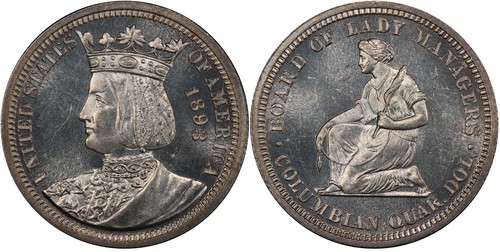
Isabella Quarter
1893
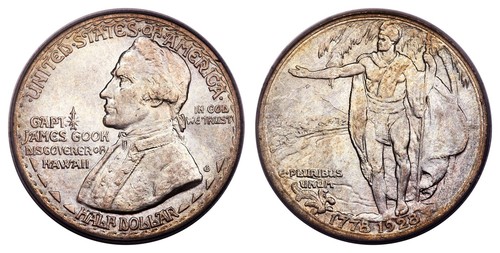
Hawaiian Sesquicentennial Half Dollar
1928
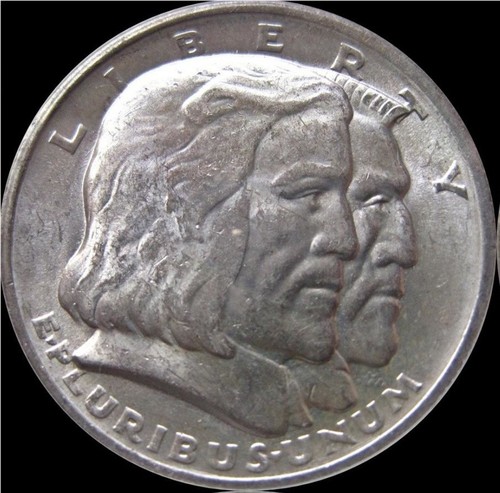
Long Island Tercentenary Half Dollar
1936
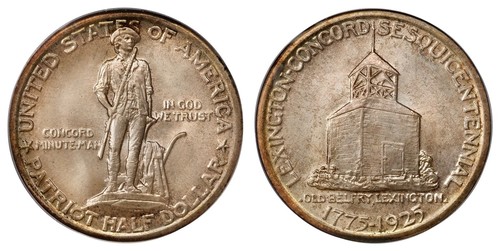
Lexington-Concord Sesquicentennial Half Dollar
1925
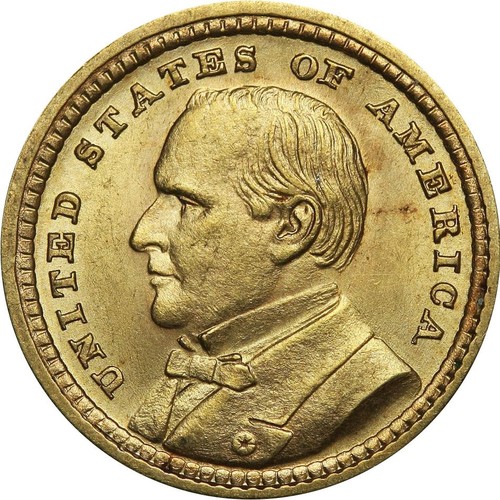
Louisiana Purchase Exposition Dollar (Jefferson)
1903
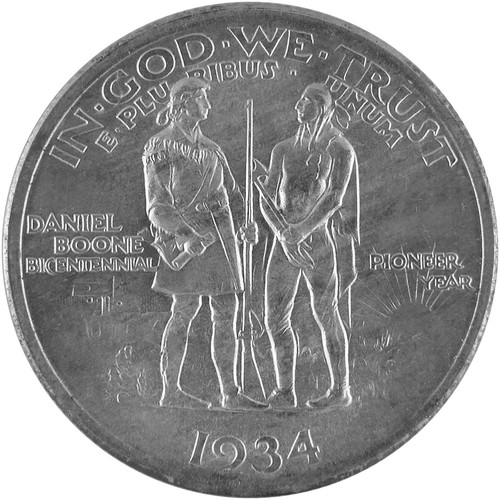
Daniel Boone Bicentennial Half Dollar
1934–1938
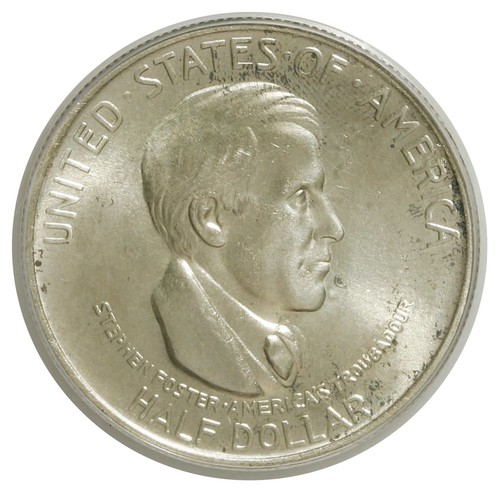
Cincinnati Music Center Half Dollar
1936
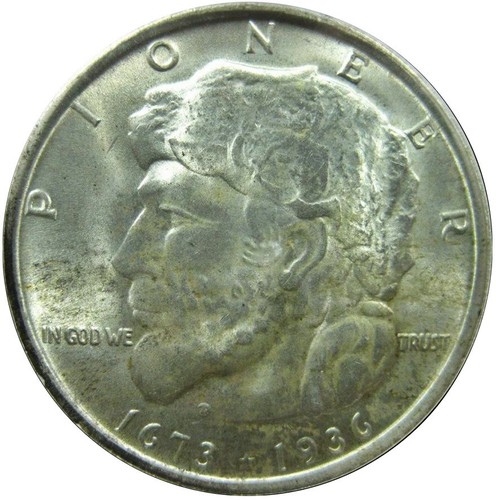
Elgin Illinois Centennial Half Dollar
1936
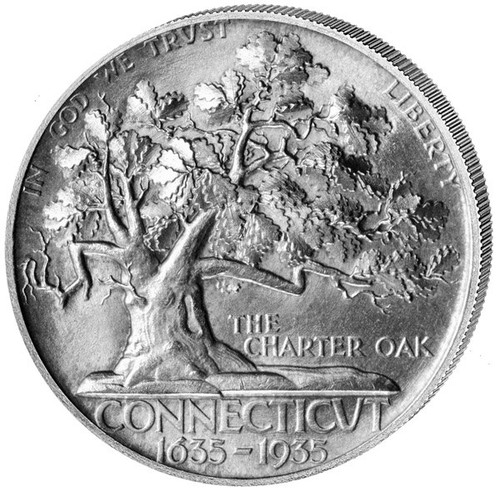
Connecticut Tercentennial Half Dollar
1935
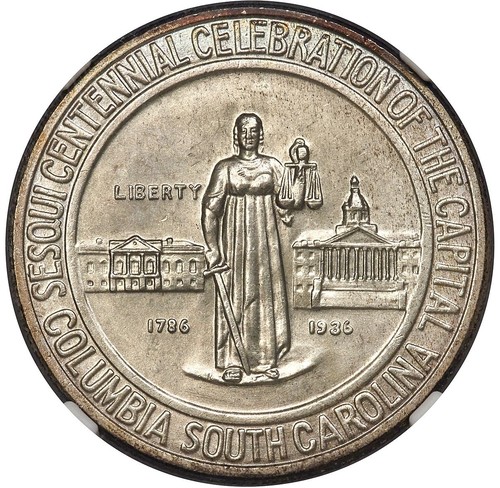
Columbia South Carolina Sesquicentennial Half Dollar
1936
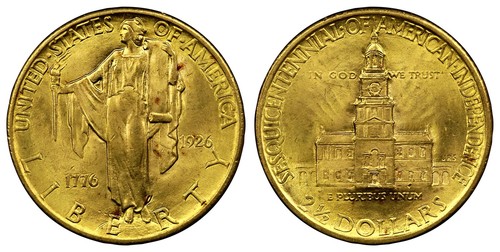
Sesquicentennial of American Independence Quarter Eagle
1926
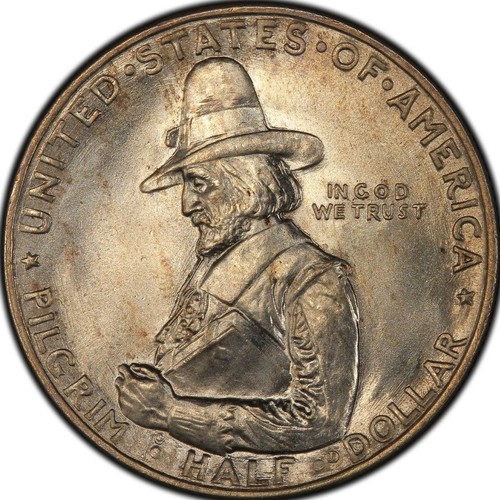
Pilgrim Tercentenary Half Dollar
1920-1921