How to Identify the Columbian Exposition Half Dollar
A collector's checklist for confirming a genuine 1892–1893 Columbian half dollar — Columbus bust, ship-and-globe reverse, silver specs, and look-alikes.
Read the full Columbian Exposition Half Dollar encyclopedia entry →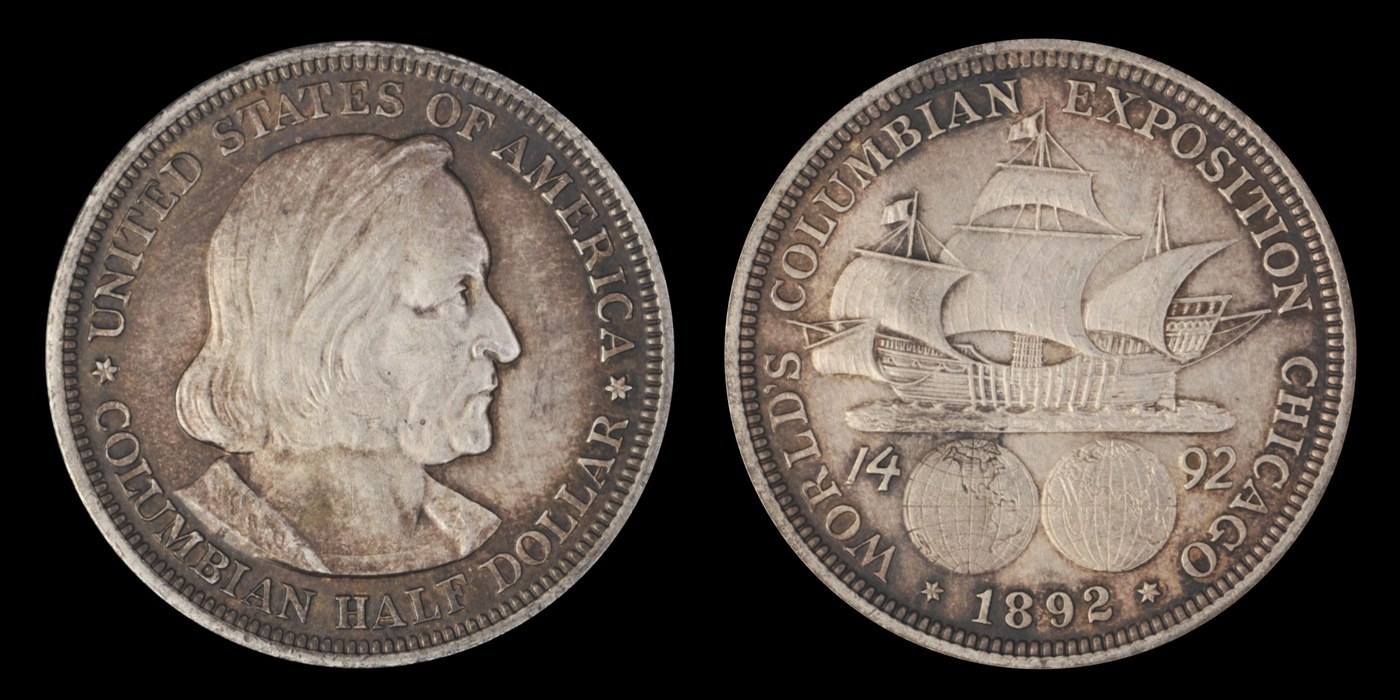
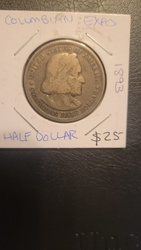
Start with the two central designs, which are unique to this type. The obverse carries a right-facing bust of Christopher Columbus, encircled by UNITED STATES OF AMERICA above and COLUMBIAN HALF DOLLAR below. The reverse shows one of Columbus's caravels under full sail on ocean waves, positioned above a globe split into two hemispheres. Seeing Columbus paired with a sailing ship is the fastest confirmation that you are holding this commemorative and not an ordinary circulating half dollar.
Find the date on the reverse, not the obverse. It will read either 1892 or 1893 — the only two years the type was produced. If the piece shows a Columbus theme but a different date, or lacks the correct legends, treat it as a later medal, souvenir, or replica rather than the genuine coin.
Check the physical specifications. A genuine example is 90% silver, about 30.6 mm in diameter, roughly 12.5 grams in weight, with a reeded (grooved) edge. A calibrated scale and calipers are the most reliable way to confirm it matches half dollar standards; a coin that is off-weight, off-diameter, or has a plain edge is a warning sign.
Do not search for a mint mark. Every genuine Columbian half dollar was struck at the Philadelphia Mint, which applied no mint mark to this issue, so its absence is correct. A coin bearing a D, S, or other mint mark under this design would be suspect.
Rule out the common look-alike: the Barber half dollar of the same period. Barber halves show a right-facing Liberty head wearing a cap on the obverse and a heraldic eagle on the reverse — not Columbus and not a ship. For higher-grade or higher-value pieces, weigh authenticity carefully; confirm the silver is non-magnetic and correctly proportioned, and rely on third-party grading (PCGS, NGC) rather than surface appearance alone, since polished or artificially toned coins and cast copies exist.
Frequently asked questions
How do I tell a Columbian half from a regular Barber half dollar?
Look at the designs. The Columbian shows Columbus's bust and a sailing ship over a globe. A Barber half shows a Liberty head in a cap and a heraldic eagle. The subjects are completely different.
Where is the date on the coin?
The date appears on the reverse, beneath the ship-and-globe design, and reads either 1892 or 1893. These are the only two years the type was struck.
What should a genuine coin weigh and measure?
About 12.5 grams and roughly 30.6 mm in diameter, struck in 90% silver with a reeded edge. Figures that don't match half dollar standards are a counterfeit warning sign.
Should the coin have a mint mark?
No. It was struck only at Philadelphia with no mint mark, so its absence is normal. A mint mark under this design would raise doubts about authenticity.
Columbian Exposition Half Dollar identified by the community
Recent Columbian Exposition Half Dollar coins identified with Coin Identifier.