
Coin Encyclopedia
Search and identify coins from around the world — with country, denomination, metal, mint, history, and how to tell them apart.
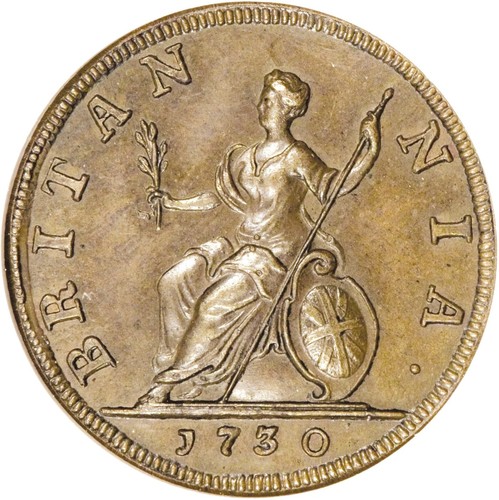
British Farthing
Small copper farthing of King George II, with his laureate bust facing left and a seated Britannia on the reverse; struck in the 1730s.
British Isles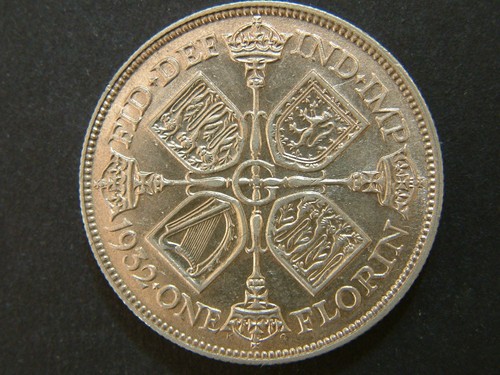
British Florin
A Victorian silver two-shilling florin with a crowned, veiled Victoria and a heraldic crowned-shields reverse; the pictured coin is dated 1890.
World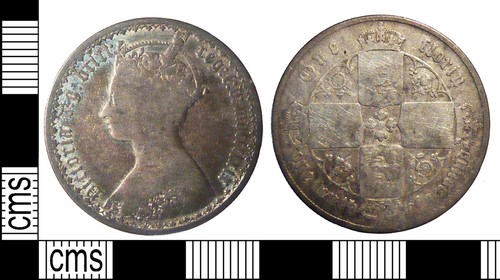
Gothic Florin
A silver two-shilling florin of Queen Victoria in the medieval-revival Gothic style, with an ornate crowned cruciform shield reverse dated 1869.
Milled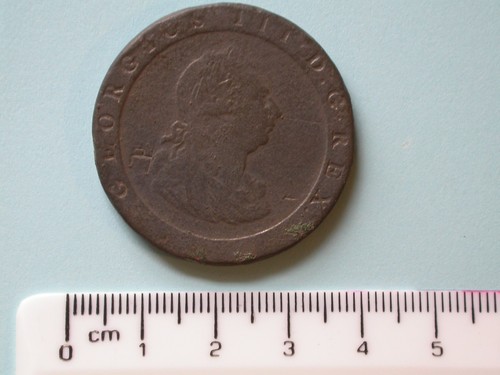
Cartwheel Penny
The heavy 1797 copper penny of George III, with a broad raised rim and sunken lettering, struck by steam power at Matthew Boulton's Soho Mint.
Milled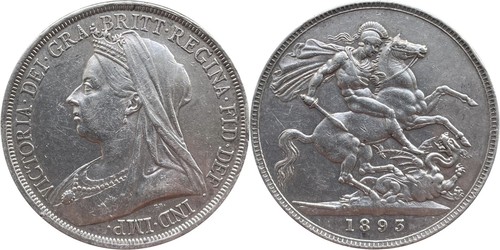
Victorian Crown
Large Victorian silver crown showing Queen Victoria's veiled "Old Head" portrait and Pistrucci's Saint George slaying the dragon, dated 1893.
World Coins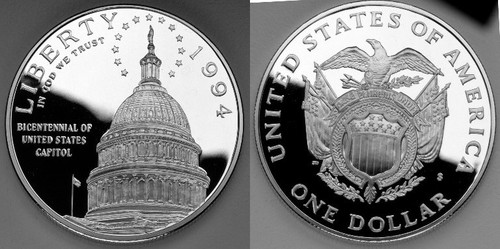
U.S. Capitol Bicentennial Silver Dollar
A 1994 U.S. Mint silver commemorative dollar honoring 200 years of the United States Capitol, featuring the Capitol dome and a heraldic eagle.
Modern Commemorative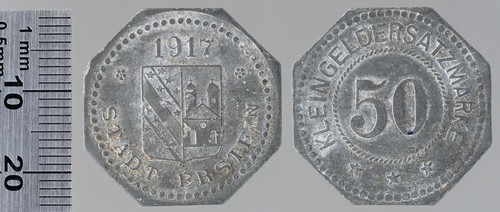
Erstein Notgeld 50 Pfennigs
A 1917 German emergency-money token for 50 Pfennigs from Erstein in Alsace, with the town coat of arms on the obverse and a large 50 on the reverse.
Token/notgeld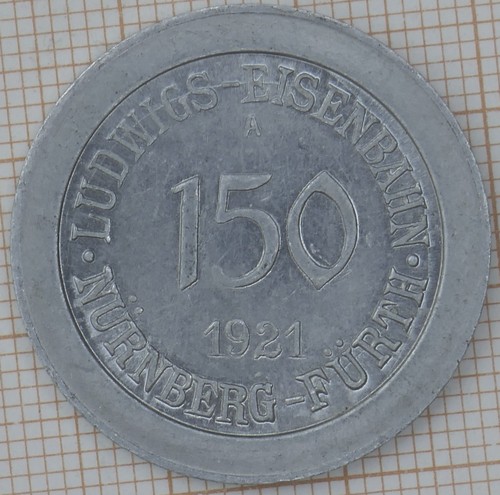
Ludwigs-Eisenbahn Nürnberg-Fürth 150 Pfennig
A 1921 German emergency-money 150 Pfennig piece from Nürnberg-Fürth, struck in zinc-iron and showing an ornamental Kunstbrunnen fountain monument.
Token/notgeld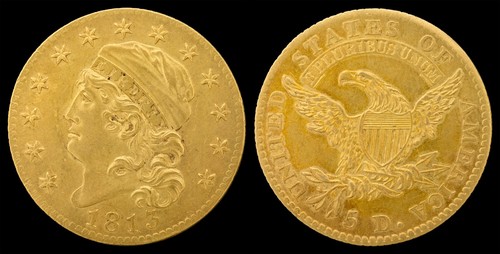
Capped Head Half Eagle
A U.S. five-dollar gold coin struck 1813–1834, showing a left-facing capped Liberty with stars and a heraldic eagle bearing a shield and E PLURIBUS UNUM.
United States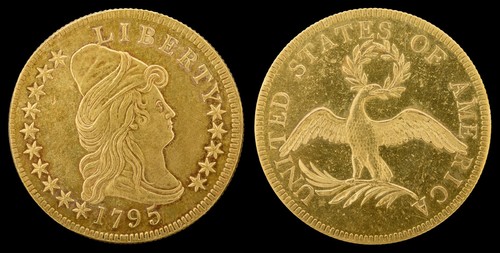
Turban Head Eagle
The first U.S. ten-dollar gold coin, struck 1795–1804, with a right-facing Liberty in a soft cap and an eagle reverse.
Eagle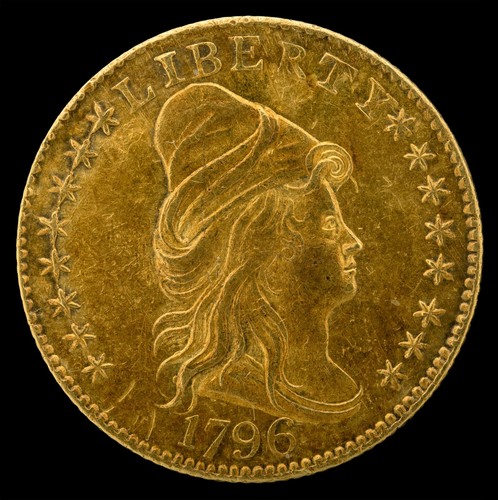
Turban Head Quarter Eagle
First U.S. $2.50 gold coin (1796), designed by Robert Scot; Liberty in a soft cap facing right with a heraldic eagle reverse. Extremely rare.
United States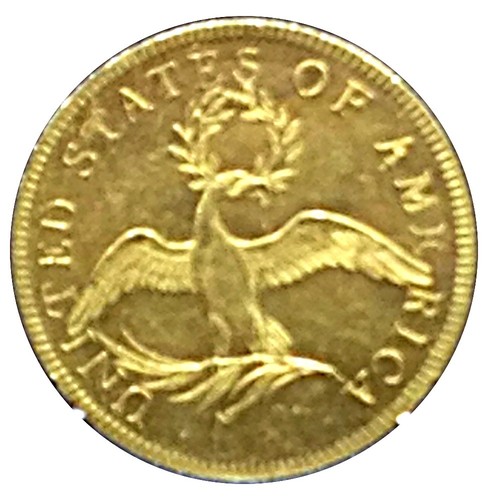
Capped Bust Eagle
The first United States gold ten-dollar coin, struck 1795–1804 with a capped Liberty bust and, in later years, a heraldic eagle bearing a shield and E PLURIBUS UNUM.
United States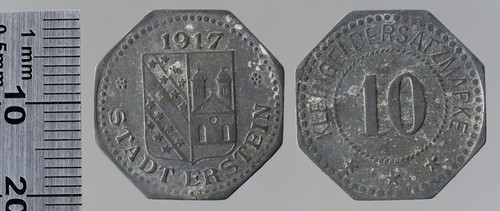
Erstein Notgeld 10 Pfennigs
A 1917 German emergency coin (Notgeld) for 10 Pfennigs from the town of Erstein, with the city coat of arms on one side and a large 10 on the other.
Token/notgeld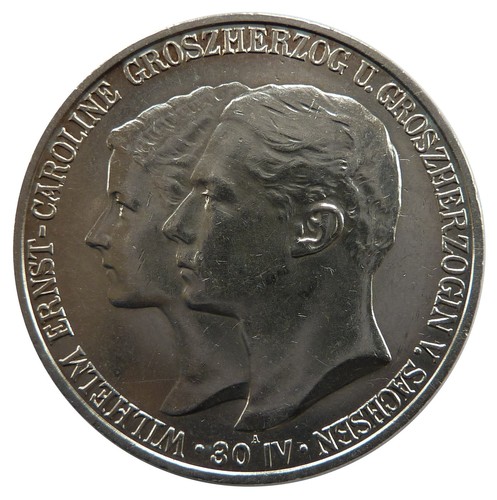
Sachsen-Weimar-Eisenach 5 Mark Wedding Commemorative
A silver German Empire 5 Mark of Sachsen-Weimar-Eisenach struck to mark a grand-ducal wedding, showing conjoined bride-and-groom profile busts.
Commemorative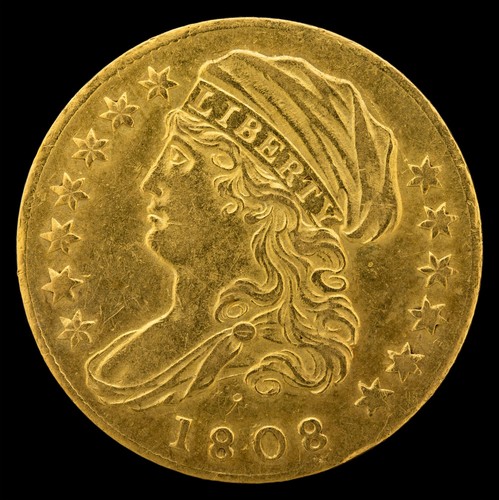
Capped Bust Quarter Eagle
A one-year U.S. gold $2.50 piece struck only in 1808, with John Reich's capped Liberty obverse and a heraldic eagle reverse. A classic rarity.
Quarter Eagle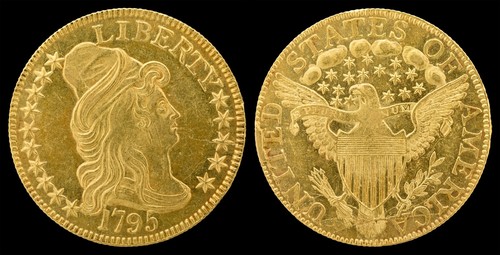
Turban Head Half Eagle
First U.S. gold $5 coin, 1795: Liberty in a soft cap facing right, with a heraldic shield-breasted eagle reverse struck in 22-karat gold.
Half Eagle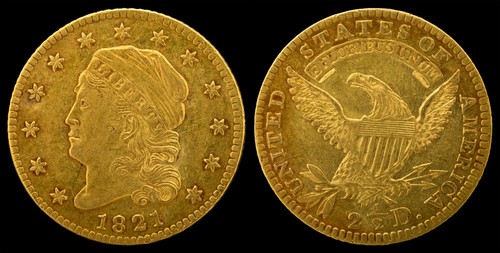
Capped Head Quarter Eagle
A rare early U.S. $2.50 gold coin struck 1821–1834, showing a left-facing capped Liberty head amid stars and a heraldic eagle with shield and E PLURIBUS UNUM.
United States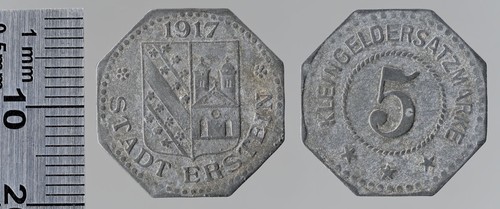
Erstein Notgeld 5 Pfennigs
A World War I emergency small-change coin issued by the town of Erstein in 1917, with the civic coat of arms on one side and a large 5 on the other.
Token/notgeld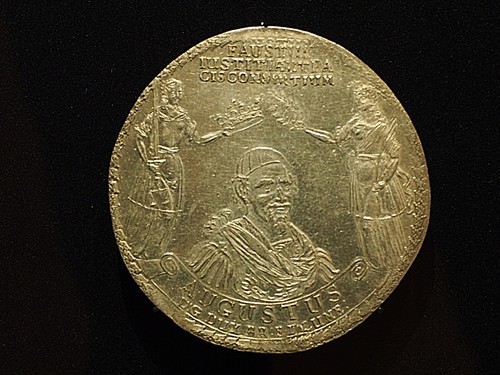
Schaummünze 4 Thaler
A silver Schaummünze struck to a 4-Thaler weight, dated 1666, with elaborate heraldic and figural imagery referencing August der Jüngere.
Medal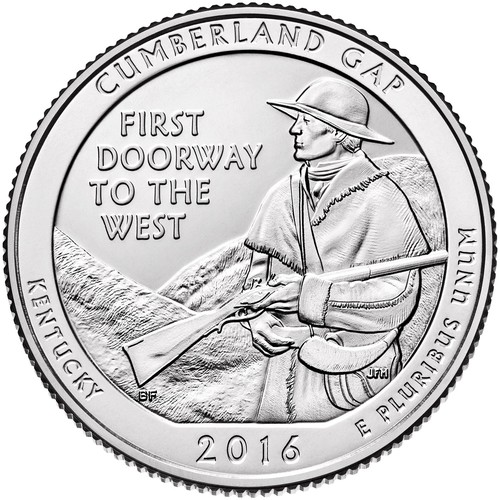
Cumberland Gap Quarter
2016 U.S. copper-nickel clad quarter for Cumberland Gap National Historical Park, Kentucky, showing a frontiersman with a long rifle and "First Doorway to the West."
Quarter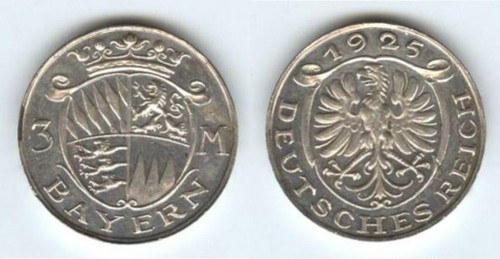
Bavaria 3 Mark
A silver 3 Mark tied to Bavaria, pairing the crowned Bavarian shield with its rampant lion against a German imperial eagle, dated 1925.
Circulation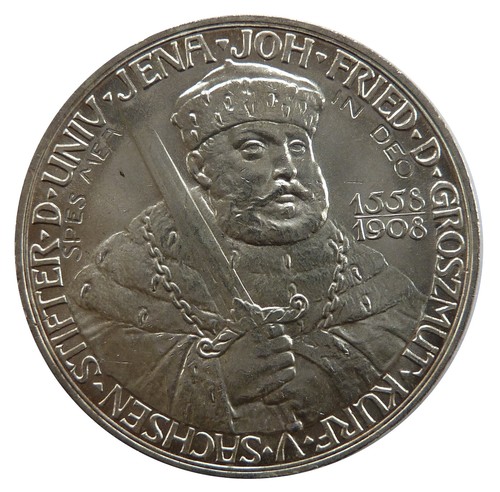
Sachsen-Weimar-Eisenach 5 Mark Commemorative
An 1908 German Empire 5 Mark silver commemorative of Saxe-Weimar-Eisenach marking the University of Jena's jubilee, with the founder's capped portrait.
Commemorative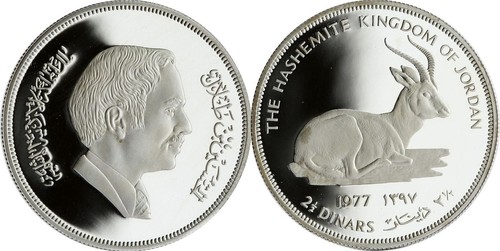
Jordanian 2½ Dinars
A crown-sized 1977 silver commemorative of the Hashemite Kingdom of Jordan, pairing King Hussein's portrait with a standing gazelle from the wildlife-conservation coin theme.
World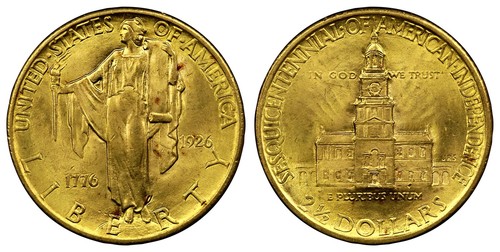
Sesquicentennial of American Independence Quarter Eagle
A 1926 U.S. commemorative $2.50 gold coin marking 150 years of American independence, with Liberty holding a torch and scroll and Independence Hall on the reverse.
Classic Commemorative