
Coin Encyclopedia
Search and identify coins from around the world — with country, denomination, metal, mint, history, and how to tell them apart.
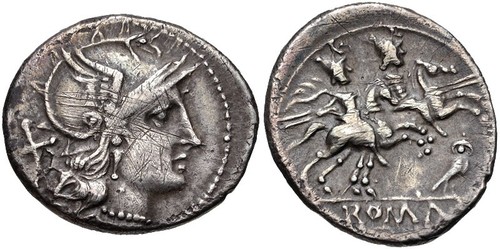
Caecidius Noctua Denarius
A silver Roman Republican denarius of the owl (noctua) symbol series, catalogued RRC 135/1 and dated c. 194–190 BC.
Ancient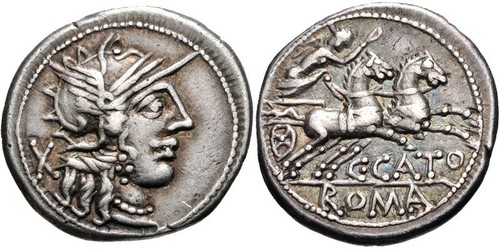
Denarius of C. Cato
Silver Roman Republican denarius struck at Rome in 123 BC by the moneyer C. Cato, with a helmeted head of Roma and Victory driving a chariot.
Ancient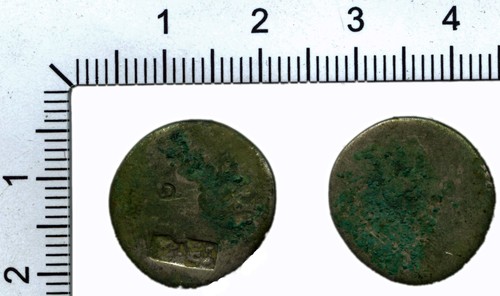
Mark Antony Legionary Denarius
Silver denarius struck by Mark Antony in 32-31 BC to pay his army and fleet; reverse aquila between two standards, this example countermarked IMP VES.
Ancient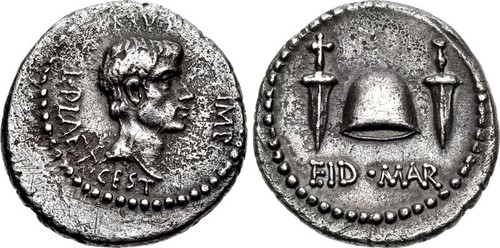
Brutus & Plaetorius Denarius
The silver EID MAR denarius: M. Junius Brutus on the obverse, a Phrygian cap between two daggers and EID MAR on the reverse, struck 42 BC.
Ancient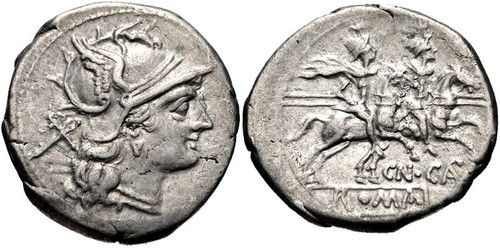
Calpurnia Denarius
Silver Roman Republican denarius of the Calpurnia gens: a right-facing male head on the obverse and a galloping horseman with inscription on the reverse.
Ancient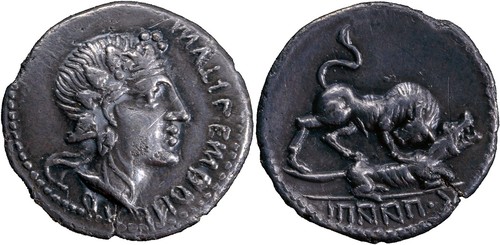
Denarius of C. Papius Mutilus
Silver denarius bearing the name C PAPIUS MUTILUS, a Social War-era Italic type of c. 90 BC with a portrait bust and a horseman or chariot reverse.
Ancient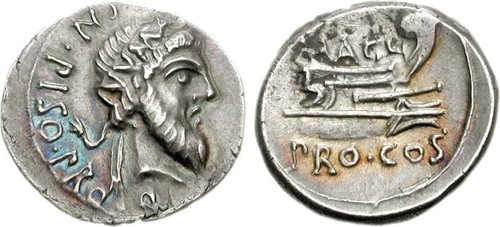
Denarius of Cn. Pompeius Magnus
Silver Roman Republican denarius of the Pompeian party (46–45 BC), with a bearded portrait of Pompey the Great and a galley reverse reading PRO COS.
Ancient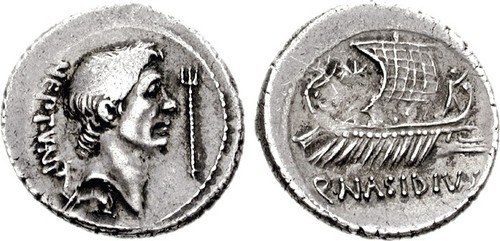
Nasidius Denarius
Roman Republican silver denarius struck for Sextus Pompey's admiral Q. Nasidius, showing Pompey the Great's head and a galley marked NASIDIVS.
Ancient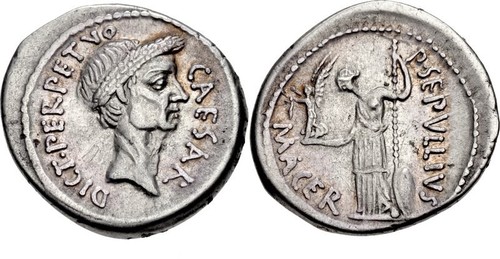
Julius Caesar Denarius
Silver Roman denarius of 44 BC bearing the bareheaded portrait of Julius Caesar, among the first Roman coins to show a living statesman's likeness.
Ancient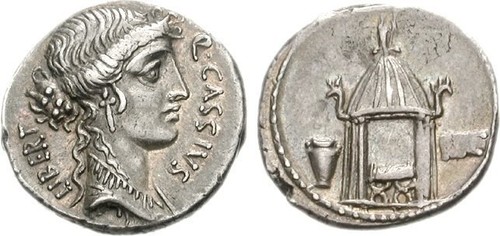
Denarius of Cassius Longinus
Silver denarius struck in 42 BC by Gaius Cassius Longinus, one of Caesar's assassins, to pay his legions before the Battle of Philippi.
Ancient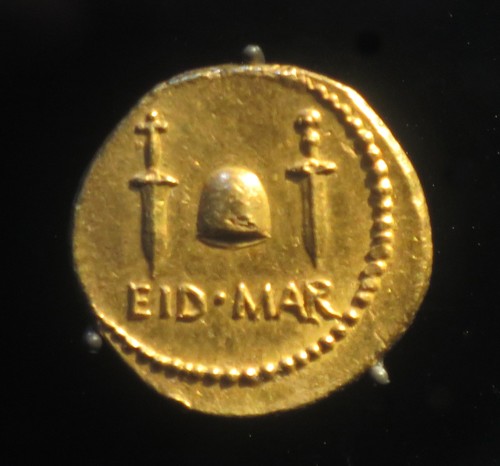
Brutus Aureus
The gold aureus of Marcus Junius Brutus, struck 42 BC, whose reverse celebrates Caesar's assassination with EID MAR, a cap of liberty, and two daggers.
Ancient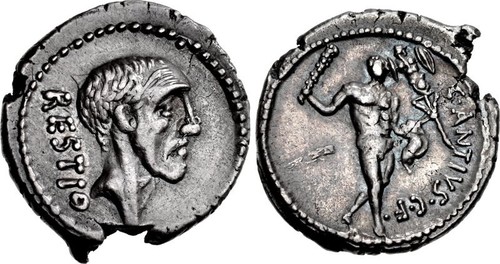
Denarius of C. Antius Restio
Silver Roman Republican denarius struck at Rome in 47 BC by the moneyer C. Antius Restio, pairing an ancestor's portrait with a striding figure and trophy.
Ancient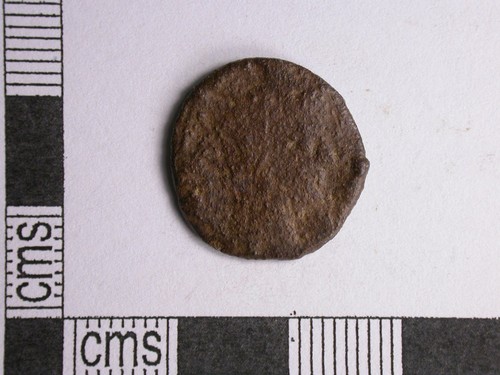
Caesar Elephant Denarius
Silver denarius of Julius Caesar (49–48 BC) showing an elephant trampling a serpent above CAESAR, paired with priestly pontifical emblems.
Ancient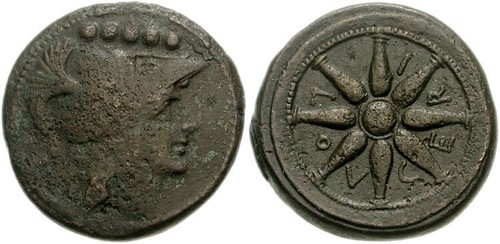
Quincunx of Luceria
A cast bronze quincunx of Luceria in Apulia (3rd century BC), showing a female head and a five-point floral or star device marking five unciae.
Ancient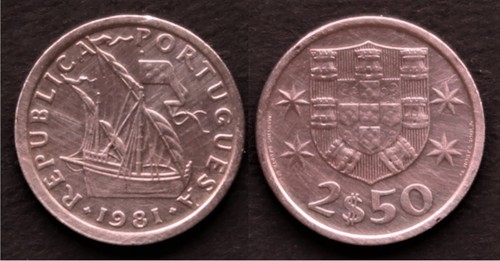
2.5 Escudos
A copper-nickel 2.5 Escudos of the Portuguese Republic, showing a sailing caravel on the obverse and the national shield with the value 2$50.
Modern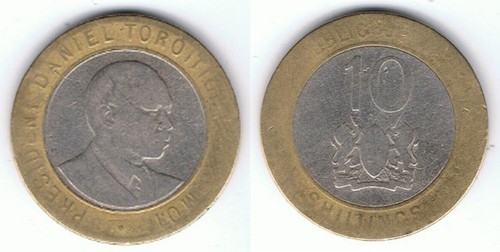
Kenya 10 Shillings
A modern bimetallic circulating coin of the Republic of Kenya bearing President Jomo Kenyatta on the obverse and the national coat of arms on the reverse.
World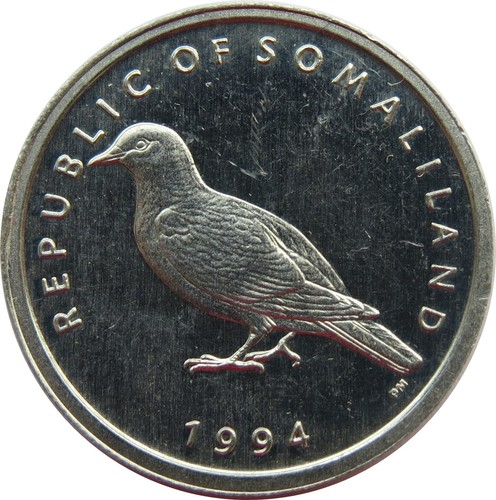
Somaliland 1 Shilling
An early circulation coin of the self-declared Republic of Somaliland, its reverse showing a dove above the country's name and the value.
World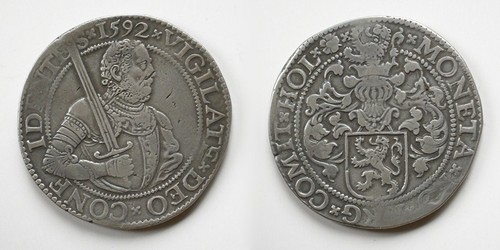
Prinsendaalder (Rijksdaalder)
A large silver rijksdaalder of the Dutch Republic showing an armored bust with sword, popularly named the Prinsendaalder after the Prince of Orange.
Early Modern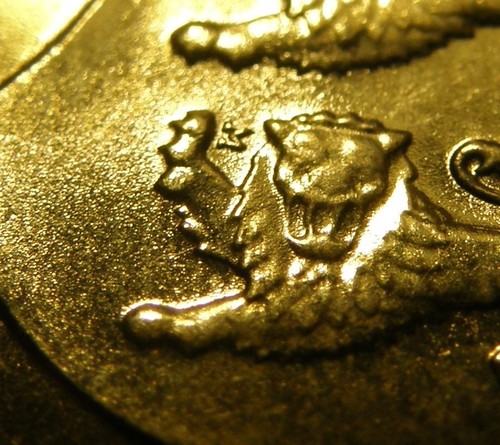
5 Krooni
A silver 5 krooni of the Republic of Estonia dated 1993, carrying the national coat of arms with its three heraldic lions.
Modern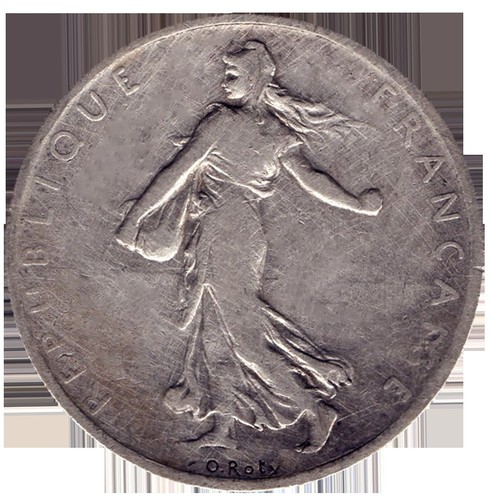
French Semeuse 2 Francs
French Third Republic silver 2 francs showing Roty's striding Sower (Semeuse); the pictured example is dated 1899.
Circulation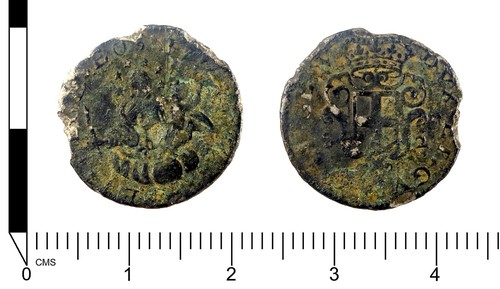
2 Soldi
A small base-metal coin of the Republic of Genoa worth two soldi, typically showing a heraldic lion and a fortified castle gateway.
Early Modern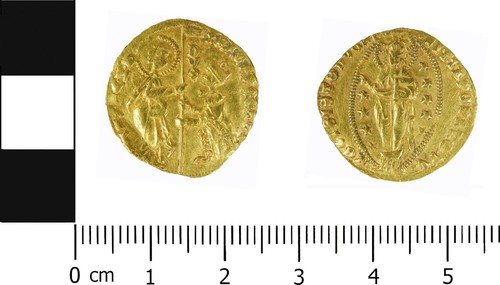
Venetian Ducat
A medieval gold ducat of the Republic of Venice, showing Saint Mark presenting a banner to the kneeling Doge on one side and Christ on the other.
Medieval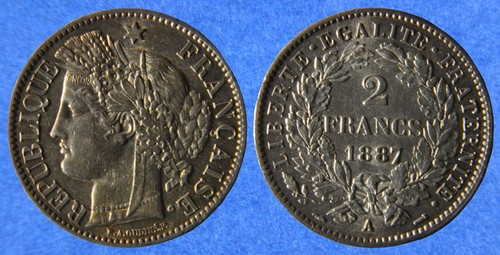
French Cérès 2 Francs
A French Third Republic silver 2 francs showing the goddess Cérès in a liberty cap, with the value 2 FRANCS in a wreath on the reverse.
Circulation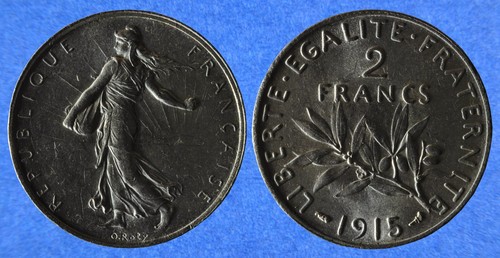
2 Francs Semeuse
A French silver two francs of the Third Republic showing Roty's striding Semeuse (Sower) on the obverse and the value with the national motto on the reverse.
Circulation