
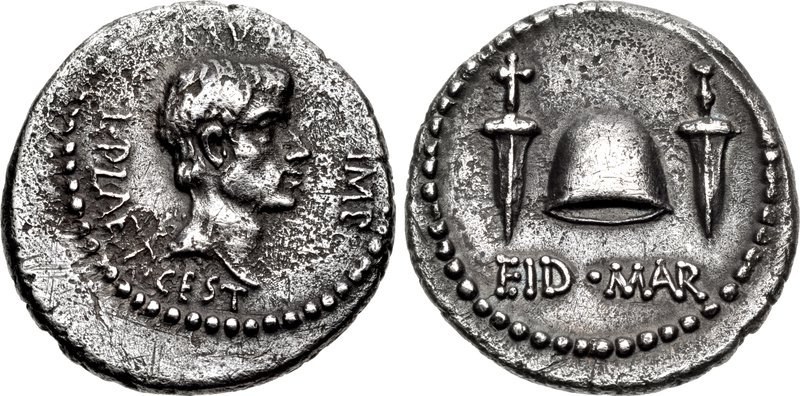
Brutus & Plaetorius Denarius
The silver EID MAR denarius: M. Junius Brutus on the obverse, a Phrygian cap between two daggers and EID MAR on the reverse, struck 42 BC.
- Country
- Roman Republic
- Denomination
- Denarius
- Metal
- Silver
Got a coin like this?
Identify any coin from a photo, free.
Overview
This is a silver denarius of the Roman Republic associated with Marcus Junius Brutus, one of the principal assassins of Julius Caesar. It was struck at a military mint in 42 BC and is catalogued as Crawford 508/3 in the standard reference on Roman Republican coinage. It is universally known as the EID MAR denarius, after the abbreviated legend on its reverse.
The obverse carries a bare, right-facing portrait of Brutus himself, an extraordinary step for a Roman coin, accompanied by his name and the title of the moneyer L. Plaetorius Cestianus who managed the issue. The reverse shows a Phrygian cap, the pileus or cap of liberty, flanked by two daggers, above the legend EID MAR, short for Eidibus Martiis, the Ides of March. The imagery openly celebrates the killing of Caesar on 15 March 44 BC as an act of liberation from tyranny. As a hand-struck ancient coin, the example shown here is one individually made survivor of this famous type.
History & Background
The EID MAR denarius was produced during the civil war that followed Caesar's assassination, while Brutus and Cassius commanded the armies of the so-called Liberators against Mark Antony and Octavian. Struck at a moving military mint in the Balkans or Greece around 43 to 42 BC, it was coined to pay the troops in the campaign that ended in defeat at Philippi in 42 BC, after which Brutus took his own life.
What makes the coin remarkable is its propaganda. By placing his own living portrait on the obverse, Brutus followed a precedent set only shortly before by Caesar himself, whose portrait coinage the assassins had condemned as monarchical. The reverse then justifies the deed directly: the cap of liberty, traditionally given to a freed slave, paired with the two daggers of the conspirators and the date of the murder, presents the assassination as the restoration of Roman freedom.
Because the issue was small, tied to a losing cause, and struck for a brief campaign, genuine examples are rare and were prized even in antiquity. The historian Cassius Dio described the type centuries later. Today the EID MAR denarius is one of the most celebrated and sought-after of all ancient coins, and both silver and extremely rare gold versions are known.
How to Identify
Look for a small, hand-struck silver coin in the size and weight range of a late-Republican denarius, broadly on the order of 3.5 to 4 grams and roughly the diameter of a small modern coin. The flan is often slightly irregular, which is normal for ancient hammered coinage.
The defining features are unmistakable. The obverse shows a bare right-facing male portrait of Brutus with his name and the moneyer's name, commonly rendered with BRVT and the abbreviations of L. Plaetorius Cestianus. The reverse is the key diagnostic: a Phrygian liberty cap set between two upright daggers, with EID MAR in the exergue beneath. No other Roman coin combines these three elements.
Because each coin was struck from individually engraved dies, expect variation in centering, strike, and the exact form of the legends. Given the type's fame and value, any example should be approached with caution, as this is among the most frequently forged and copied of all ancient coins.
Value & Collectibility
The EID MAR denarius is one of the most valuable of all ancient coins, and genuine silver examples sell for very large sums, commonly in the six-figure range and higher at specialist auctions, with exceptional pieces reaching into the millions. The unique appeal of its historical subject, combined with genuine rarity, drives prices far above ordinary Republican denarii.
Because of this value, the market is heavily populated with reproductions, tourist copies, and outright forgeries, many of which have little or no value. Provenance is decisive: authentic examples typically carry documented collection histories, and the finest coins are die-matched to known specimens and vetted by leading experts.
Anyone encountering a supposed EID MAR denarius should assume it needs professional authentication before any value is assigned. Given the stakes, treat unauthenticated pieces with strong skepticism, and rely on established auction houses, dealers, and third-party experts rather than a single asking price.
Frequently asked questions
What does EID MAR mean?
EID MAR is short for Eidibus Martiis, Latin for the Ides of March, the date 15 March 44 BC when Julius Caesar was assassinated. The legend, paired with two daggers and a liberty cap, openly commemorates the killing.
Who is on the obverse of the coin?
The obverse shows a portrait of Marcus Junius Brutus, one of the leaders of the conspiracy against Caesar. Putting his own living portrait on a coin was a bold and controversial act, echoing the very portrait coinage of Caesar that the assassins had opposed.
Why are the daggers and cap on the reverse?
The two daggers represent the weapons of the assassins, and the Phrygian cap, or pileus, is the cap of liberty given to freed slaves. Together they present Caesar's death as the restoration of Roman freedom from perceived tyranny.
Why is this coin so famous and valuable?
It directly commemorates one of the most famous events in Roman history using the portrait of a leading assassin. That subject, combined with genuine rarity from a short wartime issue, makes it one of the most prized of all ancient coins.
Are there fakes of this coin?
Yes, extensively. Because of its fame and value, the EID MAR denarius is among the most reproduced and forged ancient coins. Any example should be authenticated by qualified experts before it is trusted or valued.
Brutus & Plaetorius Denarius guides
In-depth guides for identifying, valuing, and collecting Brutus & Plaetorius Denarius.
Other coins you may enjoy
Tetradrachm of Ptolemy XII
80-51 BC
Tetradrachm of Ptolemy I
305-283 BC
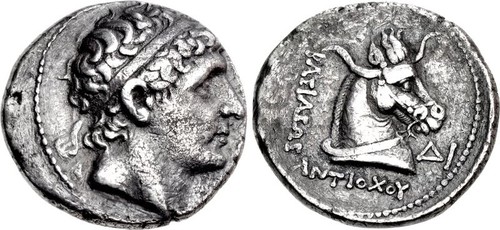
Tetradrachm of Antiochos I Soter
281-261 BC
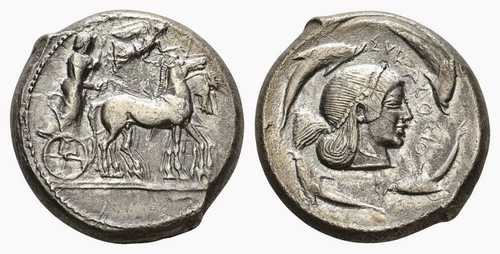
Syracuse Tetradrachm
c. 5th-4th century BC (Classical period)
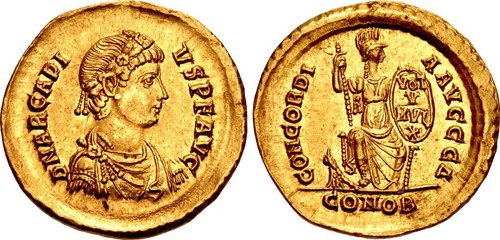
Solidus of Arcadius
AD 395-402
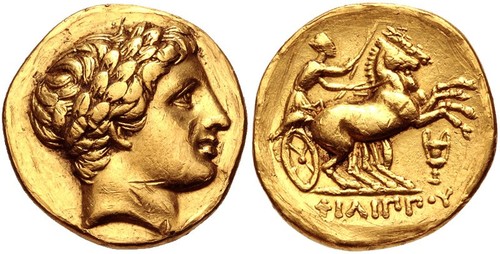
Philip III Gold Stater
323-317 BC
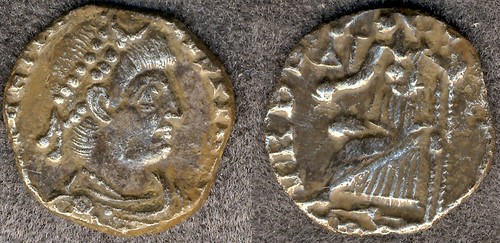
Siliqua of Gratian
AD 367-383
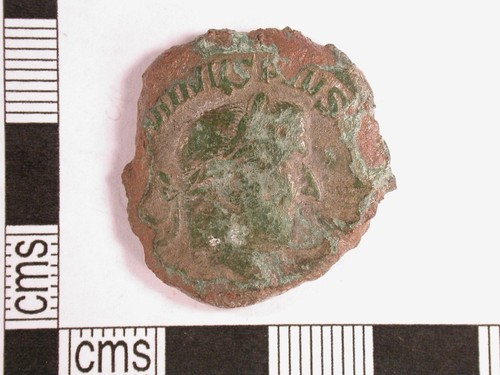
Sestertius of Maximinus Thrax
235-238 AD
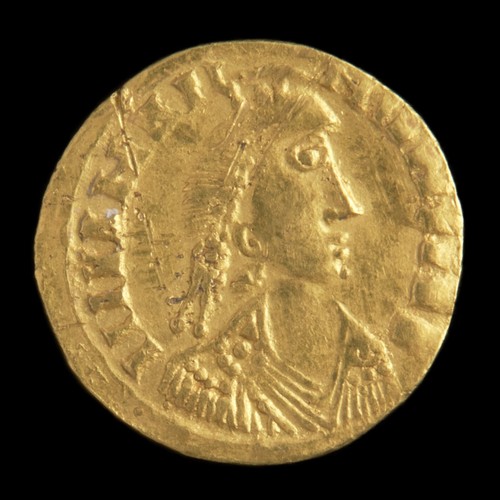
Solidus of Valentinian III
AD 425-455
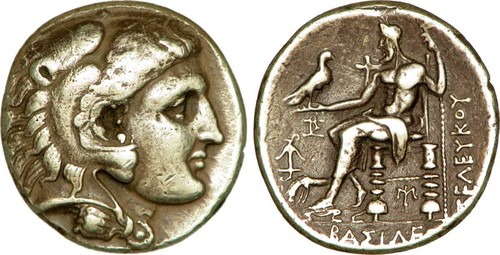
Seleucus I Nicator Tetradrachm
Late 4th-3rd century BC
Nummus of Magnentius
AD 350-353
Follis of Galerius
AD 308-310