
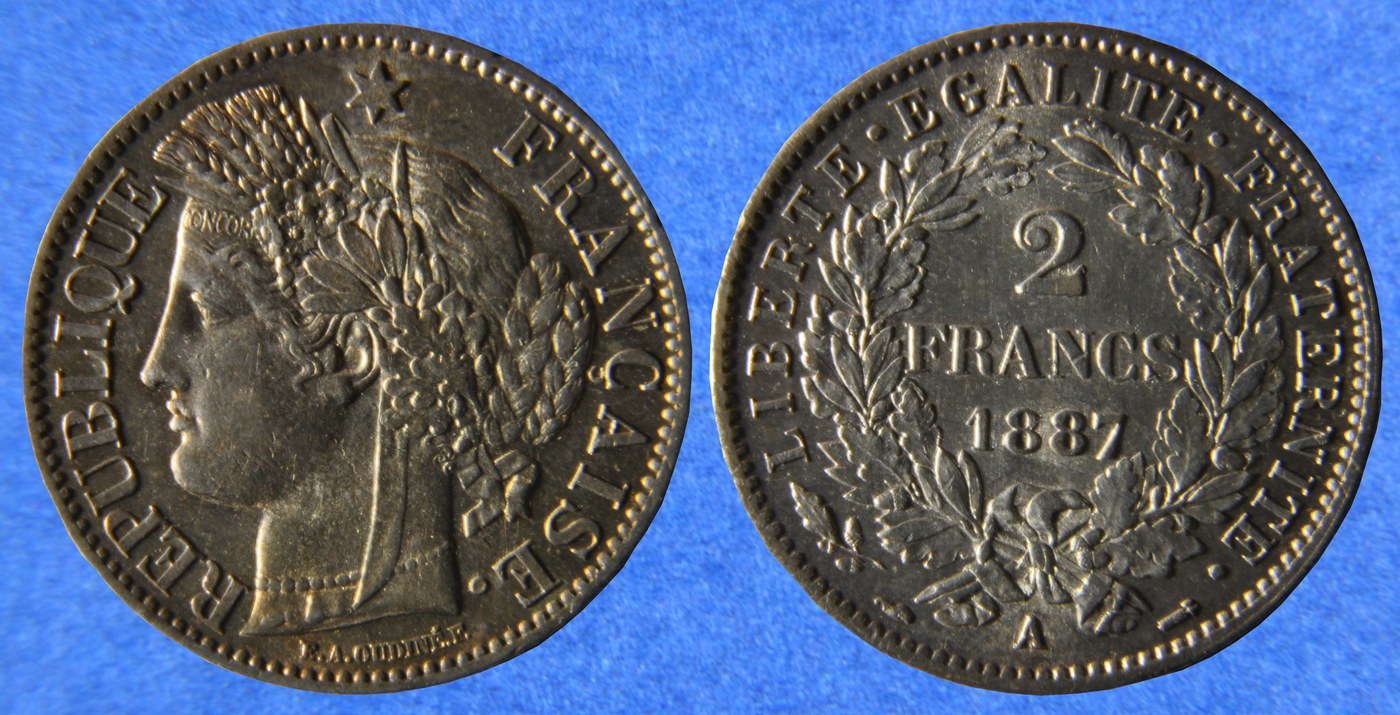
French Cérès 2 Francs
A French Third Republic silver 2 francs showing the goddess Cérès in a liberty cap, with the value 2 FRANCS in a wreath on the reverse.
- Country
- France
- Denomination
- 2 Francs
- Metal
- Silver
Got a coin like this?
Identify any coin from a photo, free.
Overview
The French Cérès 2 Francs is a silver circulation coin of the French Third Republic, named for the design on its obverse: the head of Cérès, the Roman goddess of the harvest, used here as a personification of the Republic and Liberty. The example shown is dated 1887. One face carries her left-facing portrait wearing a liberty cap wreathed with grain and leaves; the other shows the denomination 2 FRANCS enclosed in a wreath.
Struck in silver, it is a mid-sized member of France's decimal franc coinage, sitting between the smaller 50 centimes and 1 franc pieces and the larger 5 francs. The Cérès type revived a design first used in the mid-19th century and returned to the 2 francs denomination in the 1870s, continuing into the 1890s.
As a genuine silver coin of the late 1800s, the Cérès 2 francs is prized both as a historical circulation piece of Republican France and for its silver content. Most surviving examples are well-circulated, though the classical portrait keeps the type popular with collectors of French coinage.
History & Background
The Cérès figure first appeared on French coinage during the Second Republic around 1849–1851, designed by Louis-Oscar Roty's predecessor, the engraver Louis Merley working from the model of Eugène-André Oudiné. After the fall of the Second Empire and the founding of the Third Republic in 1870, France revived the Cérès design for its silver franc denominations, including the 2 francs, as a fitting Republican emblem of Liberty and agricultural plenty.
The Cérès 2 francs was struck across several dates in the 1870s, 1880s and into the early 1890s, the 1887 coin here falling in the middle of that run. It circulated under the monetary standards of the Latin Monetary Union, a 19th-century agreement that fixed the silver weight and fineness of the franc and equivalent coins across France, Belgium, Italy, Switzerland and other member states.
Toward the end of the century the Cérès type gave way to newer designs, most famously Oscar Roty's "Sower" (Semeuse) that would define French silver coinage into the 20th century. The Cérès 2 francs thus marks a distinct late-19th-century chapter of Republican French money.
How to Identify
Obverse (portrait side): the head of Cérès facing left, wearing a liberty (Phrygian) cap and crowned with a wreath of grain ears and leaves, her hair tied behind. The legend RÉPUBLIQUE FRANÇAISE typically surrounds the portrait, with the engraver's name below the neck and the date at the base.
Reverse (value side, shown): the denomination 2 FRANCS across the center, enclosed within an open wreath — usually of laurel or oak and olive branches tied at the bottom — with the motto LIBERTÉ ÉGALITÉ FRATERNITÉ around the rim and a small mint mark and privy marks near the base.
Size and metal: a silver coin of roughly 27 mm and about 10 grams, struck to the Latin Monetary Union standard of .835 fine silver. The pale grey silver tone, the classical female head in a liberty cap, and the wreath-and-value reverse together identify the type; the date and the mint mark (such as A for Paris) pin down the specific issue.
Value & Collectibility
The Cérès 2 francs is a late-19th-century silver coin, so even well-worn examples carry a base value tied to their silver content, and they trade for a modest premium over that as collectible French coins. Common dates in circulated grades are affordable and widely available.
Value rises with condition and scarcer date-and-mint combinations. Coins with sharp detail in Cérès's hair and the wreath, clean fields, and attractive original toning bring more than worn, cleaned or damaged pieces. Certain years or mints struck in smaller numbers command notable premiums among specialists.
Because prices track both the silver market and collector demand, treat any single figure as approximate. Check the exact date and mint mark and compare recent sales of similar-grade Cérès 2 francs before buying or selling.
Frequently asked questions
Who is the figure on the French Cérès 2 francs?
It is Cérès, the Roman goddess of the harvest, used as a personification of the French Republic and Liberty. She faces left wearing a liberty cap wreathed with grain.
Is the Cérès 2 francs real silver?
Yes. It was struck in .835 fine silver to the Latin Monetary Union standard, weighing about 10 grams, so it carries genuine silver value in addition to any collector premium.
What years was the Cérès 2 francs made?
The Third Republic Cérès 2 francs was struck across dates in the 1870s, 1880s and into the early 1890s. The coin shown here is dated 1887.
What does the reverse say?
The reverse shows the value 2 FRANCS inside a wreath, surrounded by the Republican motto LIBERTÉ ÉGALITÉ FRATERNITÉ, with a mint mark near the bottom.
Is the French Cérès 2 francs valuable?
Common dates in worn grades are affordable and valued mainly for silver content, while high-grade coins, attractive toning and scarcer date-mint combinations bring stronger premiums.
French Cérès 2 Francs guides
In-depth guides for identifying, valuing, and collecting French Cérès 2 Francs.
Other coins you may enjoy
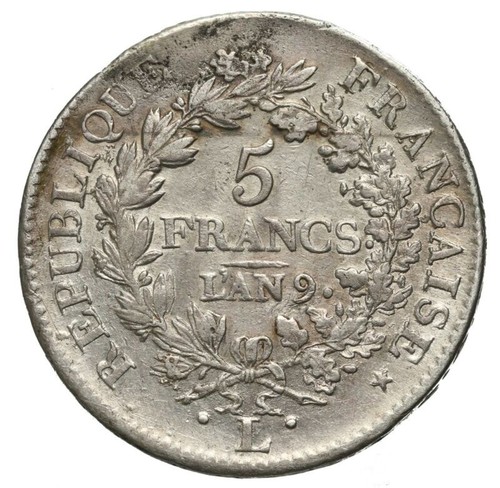
5 Francs (First Republic)
L'an 9 (1800–1801)
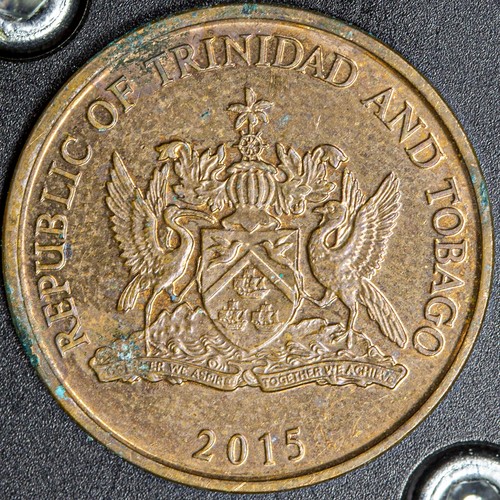
Trinidad and Tobago Dollar
2015
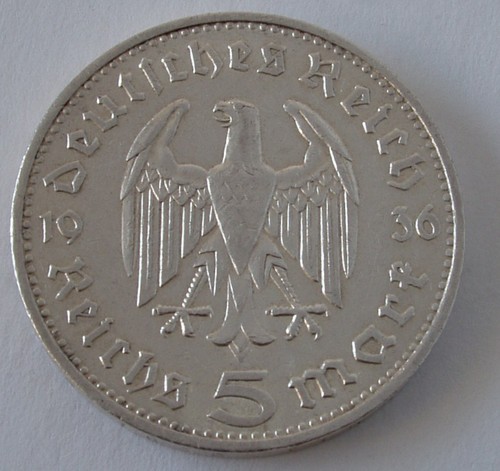
German 5 Reichsmark (Hindenburg)
1935–1936 (Hindenburg type with swastika)
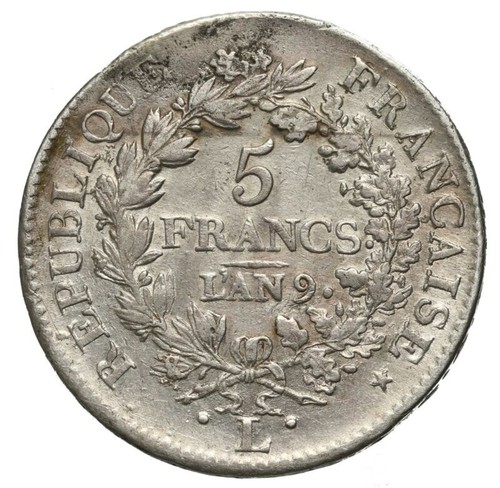
5 Francs Semeuse
1960–1969
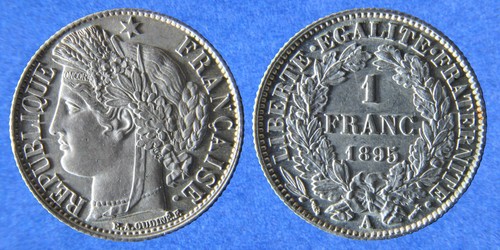
French Cérès 1 Franc
1849–1895
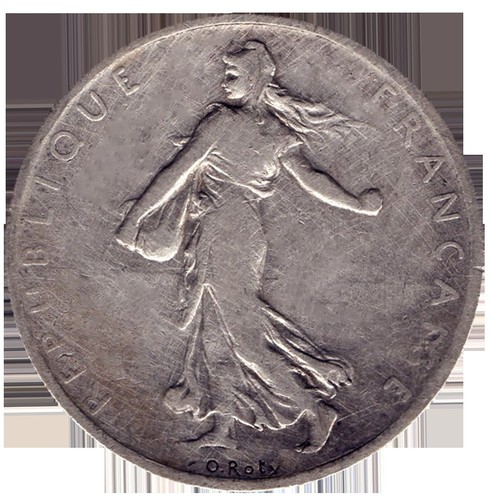
French Semeuse 2 Francs
1898–1920 (silver issues; pictured example dated 1899)
French Semeuse 1 Franc
1898–1920 (silver Semeuse 1 franc type)
France 50 Cent Euro
1999–present
Swiss 1 Franc
1861
France 20 Centimes
1962–2001 (Fifth Republic, Marianne / Lagriffoul type)
Swiss 2 Francs
1860
Austria-Hungary 15 Kreuzer
1807