
Coin Encyclopedia
Search and identify coins from around the world — with country, denomination, metal, mint, history, and how to tell them apart.
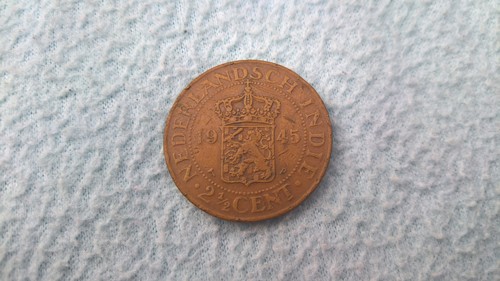
Netherlands East Indies 2 Cent
A wartime 1945 bronze 2-cent coin of the Dutch colony of the Netherlands East Indies, showing the crowned Netherlands shield and an ornate colonial reverse.
Southeast Asia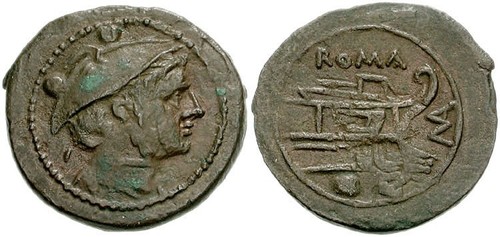
Manlius Vulso Æ Sextans
Small Roman Republican bronze sextans signed by the moneyer Manlius Vulso, with a capped male head and the classic prow reverse marked ROMA.
Ancient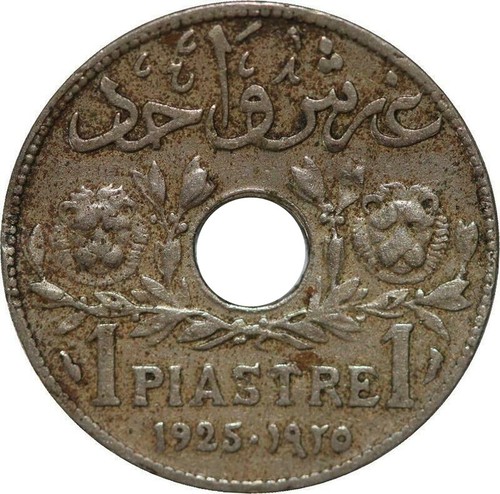
Lebanese 1 Piastre
A small holed bronze 1 Piastre of Greater Lebanon dated 1925, struck under the French Mandate, with bilingual legends and an ornamental wreath framing the value.
World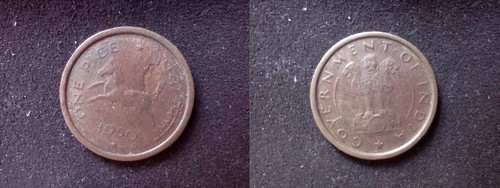
Republic India One Pice
A small bronze one-pice from 1950, the first year of the Republic of India, the lowest coin of the pre-decimal anna series struck in a copper alloy.
Modern India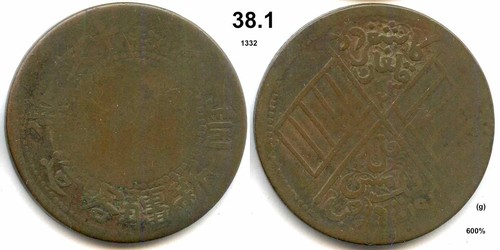
10 Cash (Republic)
A Republic of China bronze 10 Cash: a round machine-struck copper piece with a central ornament and characters on one face and a decorative inscribed reverse.
Cash Coin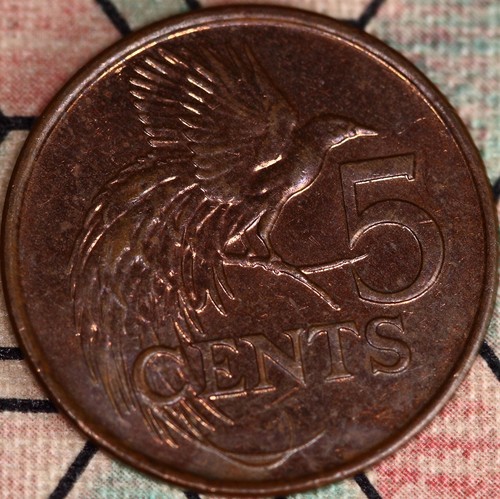
Trinidad and Tobago 5 Cents
A bronze five-cent coin of Trinidad and Tobago showing a perched bird — the Greater Bird of Paradise, often mistaken for a parrot — with FIVE CENTS on the reverse.
Circulation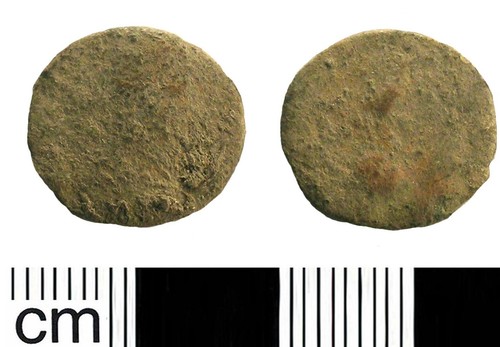
Half Centenionalis of Constans or Constantius II
A small mid-4th-century Roman bronze attributed to Constans or Constantius II, sons of Constantine the Great, worn but identifiable by its imperial portrait and era.
Ancient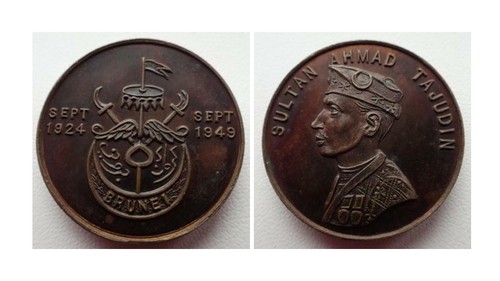
Brunei Silver Jubilee Commemorative
A bronze Brunei commemorative marking the 1949 Silver Jubilee of Sultan Ahmad Tajuddin, dated SEPT 1924 to SEPT 1949 with his right-facing portrait.
Southeast Asia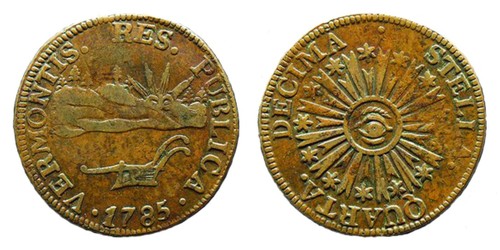
Río de la Plata Copper Real
A copper real of the Río de la Plata showing the Sol de Mayo sun and a PROVINCIAS legend, dated 1785 — a provincial-style piece from the Argentine region.
Colonial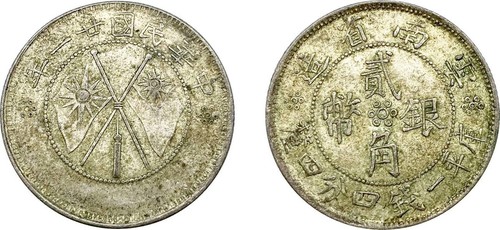
Yunnan 20 Cents
A 1932 provincial silver 20 Cents from Yunnan, China, with a radiant sun and rays on one face and central Chinese value characters framed by ornament on the other.
Circulation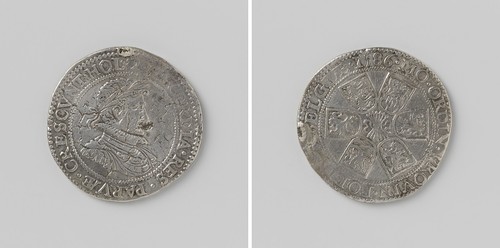
Halve Rijksdaalder van Leicester
Silver half rijksdaalder of the Leicester type, struck in the rebelling Dutch provinces, showing an armored bust and a split provincial shield.
Early Modern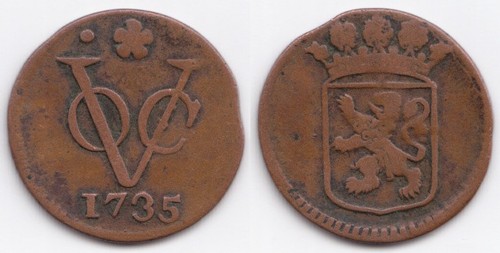
Dutch East Indies Duit
Small copper duit of the Dutch East India Company (VOC), showing the interlaced VOC monogram and a crowned provincial coat of arms, dated 1735.
Southeast Asia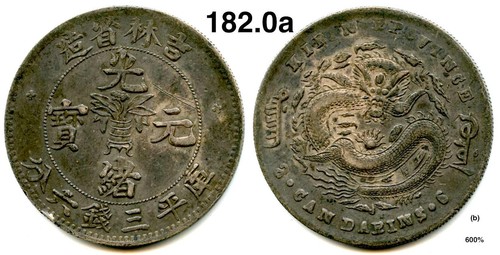
Guangxu Yuanbao 50 Cents
A Qing-dynasty silver half-dollar bearing the legend Guangxu Yuanbao and a coiled dragon, struck by Chinese provincial mints during the Guangxu Emperor's reign.
Circulation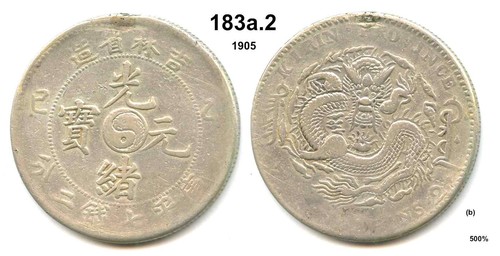
Guangxu Yuanbao Dollar
A crown-sized silver dragon dollar of Qing China inscribed 光緒元寶 (Guangxu Yuanbao), with a coiled dragon reverse and a provincial mint inscription; this piece dated 1905.
Circulation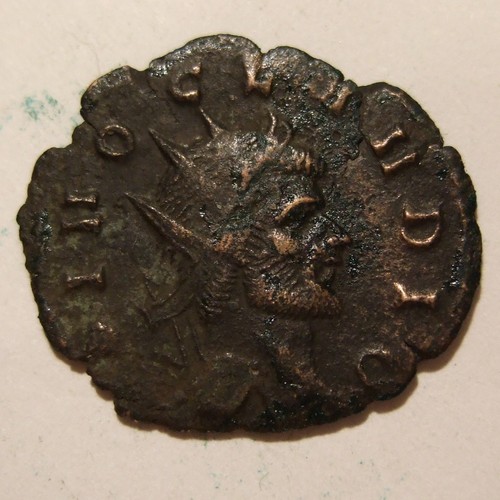
Roman Quadrans
A small Roman bronze quadrans, worth a quarter of an as, here a heavily corroded piece with a laureate head facing right.
Ancient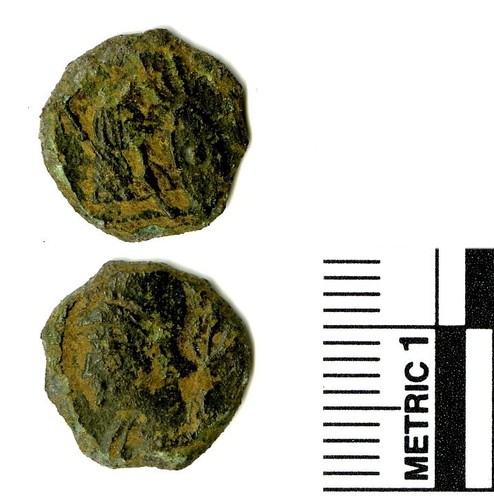
Commemorative Follis of Constantinople
Bronze city-commemorative of Constantine's era (330-340 AD): helmeted Constantinopolis on the obverse, a Victory standing on a ship's prow on the reverse.
Ancient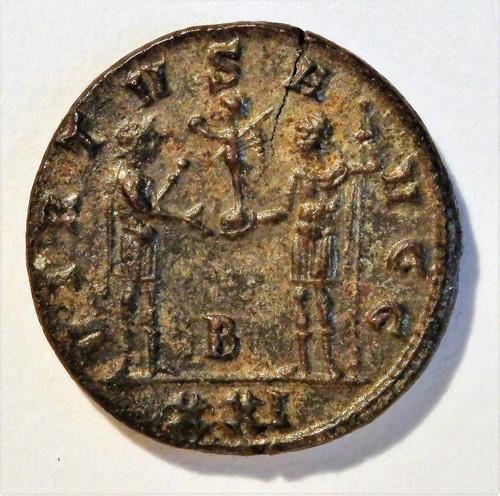
Antoninianus of Carinus
Bronze radiate coin of the emperor Carinus (283-285 AD), recognizable by his spiked crown and a standing or seated deity on the reverse.
Ancient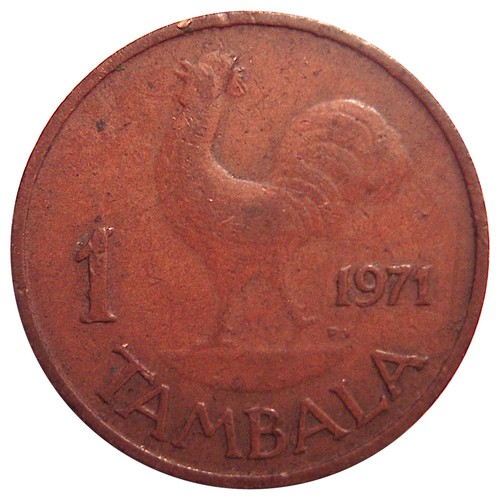
Malawi 1 Tambala
Malawi's small copper-bronze 1 tambala of 1971, showing President Hastings Kamuzu Banda on the obverse and a standing cockerel on the reverse.
World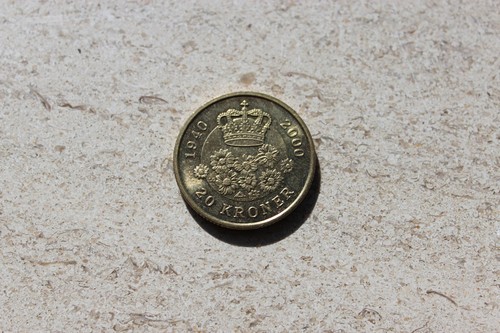
20 Kroner
Danish aluminum-bronze 20 Kroner of 1990 honoring Queen Margrethe II, with a crown over a marguerite daisy and the dates 1940 and 1990.
Modern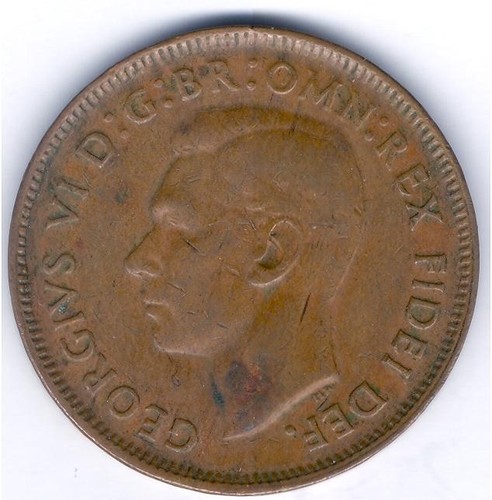
Australian Halfpenny
Small bronze pre-decimal Australian half penny; the George VI kangaroo type shown here was struck through the early 1950s.
Australian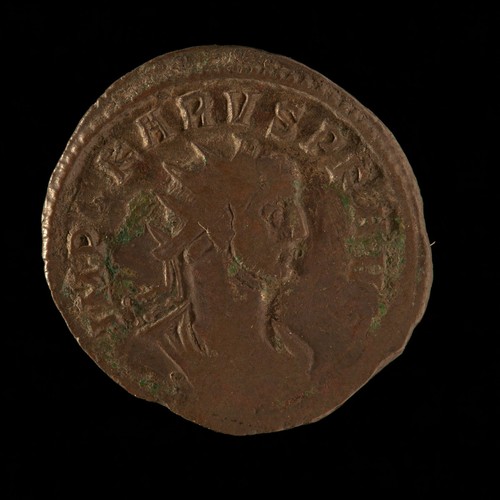
Antoninianus of Carus
Late-Roman bronze radiate of the emperor Carus (282-283 AD), showing his bearded, spiky-crowned head and a standing personification on the reverse.
Ancient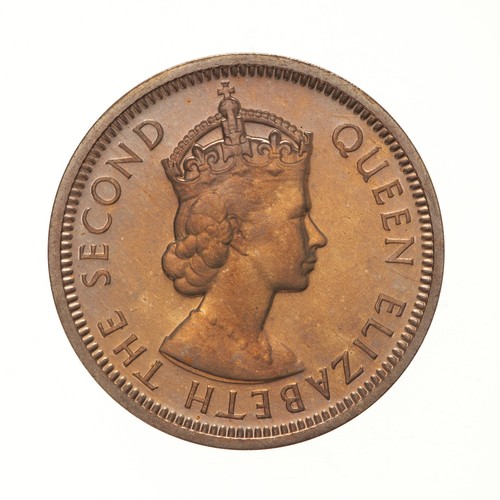
Belize 1 Cent
A small bronze one-cent coin from the Caribbean nation now called Belize, carrying a portrait of Queen Elizabeth II and dated 1954.
Circulation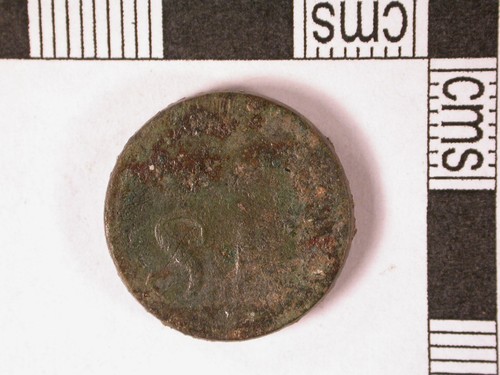
Louis d'Or Coin Weight
A French bronze monetary weight (poids monétaire) made to check the weight of a gold Louis d'Or, not a coin itself but a money-changer's balance weight.
Coin Weight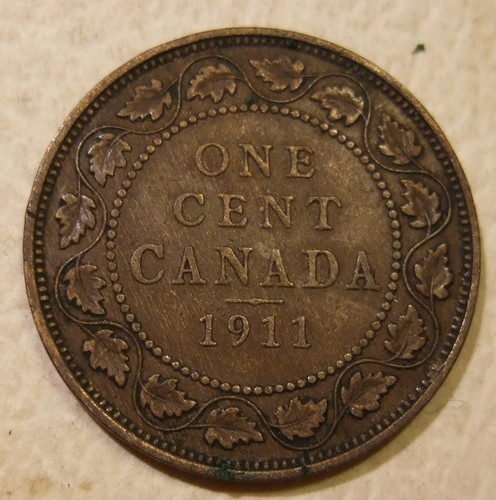
Canadian One Cent
Bronze Canadian large cent with a maple-leaf wreath reverse; the 1911 issue is the famous first-year 'Godless' cent lacking DEI GRATIA.
Canadian & Provincial