
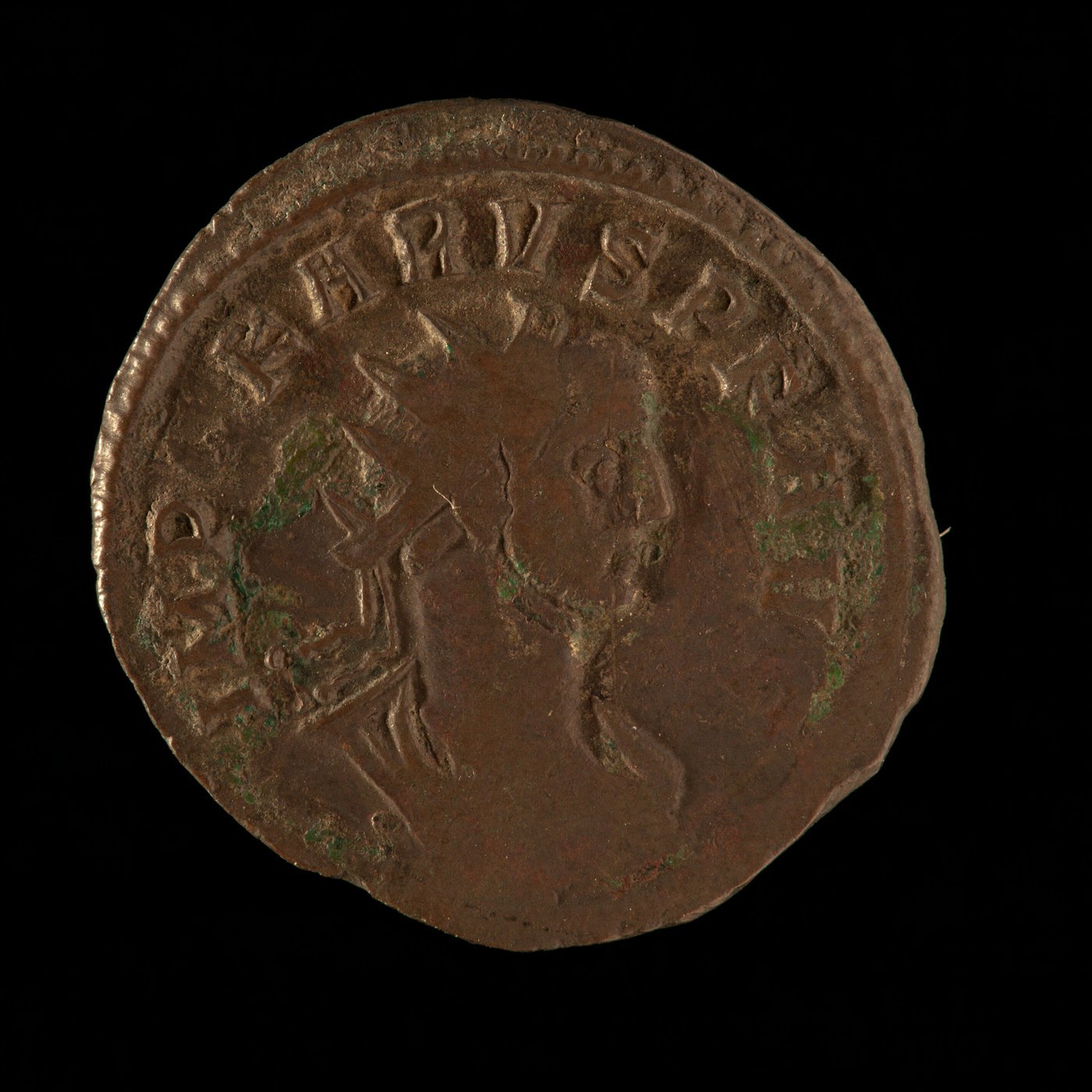
Antoninianus of Carus
Late-Roman bronze radiate of the emperor Carus (282-283 AD), showing his bearded, spiky-crowned head and a standing personification on the reverse.
- Country
- Roman Empire
- Denomination
- Antoninianus
- Metal
- Bronze
Got a coin like this?
Identify any coin from a photo, free.
Overview
The antoninianus of Carus is a small bronze coin struck during the brief reign of Marcus Aurelius Carus, Roman emperor from 282 to 283 AD. By this late date the antoninianus, once a silver double-denarius, had become an essentially bronze coin carrying only a thin silver wash, so surviving examples are usually brown or dark in color rather than bright.
The coin shown here follows the standard pattern of the reign: a bearded, mature imperial head wearing the radiate (spiked) crown on the obverse, paired with a standing deity or personification on the reverse. Coins of Carus were produced across several imperial mints during his short rule and are a familiar type from the late-third-century recovery of the empire.
History & Background
Carus was an experienced officer and Praetorian prefect who was proclaimed emperor in 282 AD after the death of Probus. He was already an older man at his accession, which is reflected in the mature, bearded portraits on his coinage, and he quickly raised his two sons, Carinus and Numerian, to share imperial authority.
His reign lasted barely a year: after campaigning successfully against the Sasanian Persians he died in 283 AD, according to ancient tradition struck by lightning. Because the reign was so short, his coinage was struck within a compressed window, yet the antoninianus remained the everyday coin of the period. By this era the denomination was a reformed radiate bronze, part of the monetary system stabilized under Aurelian a decade earlier, and coinage continued under his sons after his death.
How to Identify
Look first for the radiate crown of pointed spikes on the obverse, which marks the coin as a radiate antoninianus. The portrait is a mature, bearded man facing right, usually draped and cuirassed, surrounded by a Latin legend built around the name CARVS, commonly a form of IMP C M AVR CARVS P F AVG or IMP CARVS P F AVG.
The reverse typically shows a single standing deity or personification, such as Pax, Providentia, Aequitas, Salus, Felicitas, or Victoria, identified by the objects it holds (a branch, cornucopia, patera, wand, or scales) and named in the surrounding legend. Typical coins measure roughly 20-23 mm across and weigh about 3-4.5 grams. Many carry a mint mark in the lower reverse field or exergue that records the striking mint and workshop.
Value & Collectibility
The antoninianus of Carus is an affordable ancient Roman coin, reflecting its bronze fabric and the large output of the late third century. Worn but identifiable examples trade at modest prices, while coins that retain sharp detail, a full legible legend, and traces of the original silvering command a clear premium.
Value is driven mainly by condition and eye appeal rather than rarity, since the common reverse types survive in quantity. Because Carus reigned for only about a year, his coins are somewhat scarcer than those of longer-reigning contemporaries, so an attractive, well-centered specimen with surviving silver wash can be more desirable than the low base price for the type suggests.
Frequently asked questions
Is the antoninianus of Carus made of silver or bronze?
By 282-283 AD the antoninianus was essentially a bronze coin with only a thin silver wash. Most surviving examples look brown or dark because that surface coating has worn away.
How do I know the portrait is Carus and not another emperor?
The obverse shows a mature, bearded man in a radiate crown, and the surrounding legend contains the name CARVS. Reading that legend is the surest way to confirm the ruler.
Who is the figure standing on the reverse?
It is usually a Roman deity or personification such as Pax, Providentia, Salus, or Victoria, identified by the objects it holds and by the Latin legend around it.
Are coins of Carus rare?
They are less common than coins of long-reigning emperors because Carus ruled only about a year, but they are not rare, and identifiable examples remain widely available and affordable.
Antoninianus of Carus guides
In-depth guides for identifying, valuing, and collecting Antoninianus of Carus.
Other coins you may enjoy
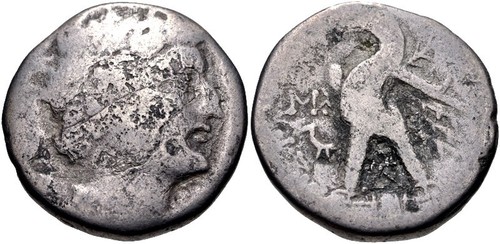
Tetradrachm of Ptolemy XII
80-51 BC
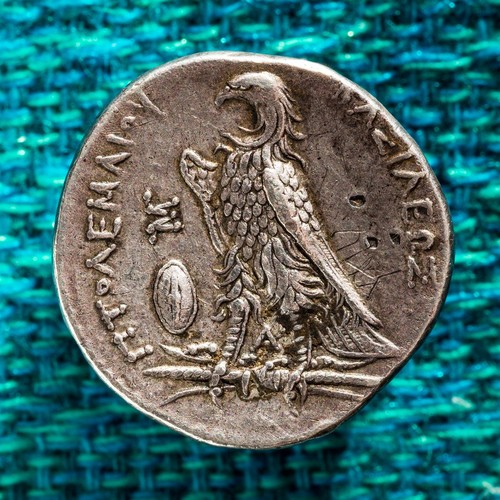
Tetradrachm of Ptolemy I
305-283 BC
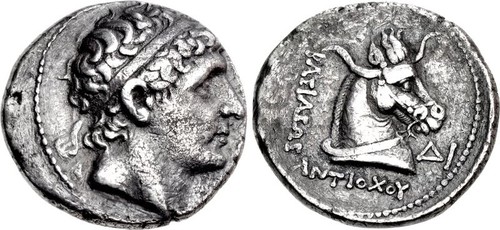
Tetradrachm of Antiochos I Soter
281-261 BC
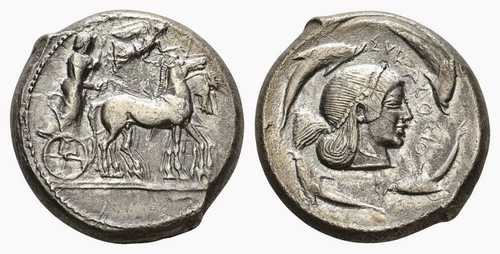
Syracuse Tetradrachm
c. 5th-4th century BC (Classical period)
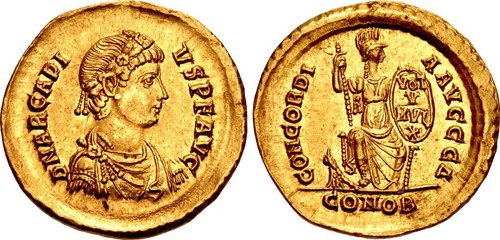
Solidus of Arcadius
AD 395-402
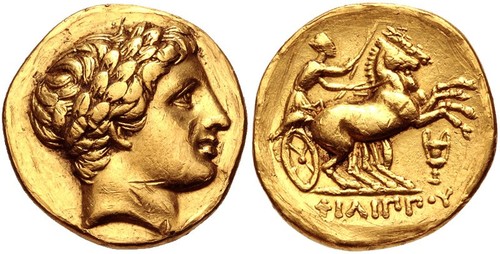
Philip III Gold Stater
323-317 BC
Siliqua of Gratian
AD 367-383
Sestertius of Maximinus Thrax
235-238 AD
Solidus of Valentinian III
AD 425-455
Seleucus I Nicator Tetradrachm
Late 4th-3rd century BC
Nummus of Magnentius
AD 350-353
Follis of Galerius
AD 308-310