
Coin Encyclopedia
Search and identify coins from around the world — with country, denomination, metal, mint, history, and how to tell them apart.
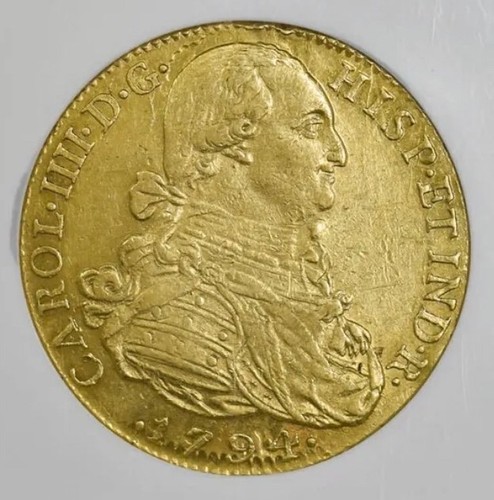
Colombia 8 Escudos (Base Metal)
A base-metal (copper-alloy) piece styled after the colonial Colombian 8 escudos gold onza, with a Charles III profile and crowned heraldic arms dated 1760.
Colonial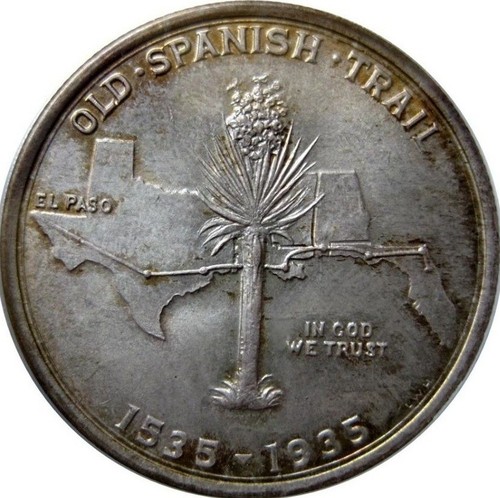
Old Spanish Trail Half Dollar
A 1935 U.S. silver commemorative half dollar marking 400 years of the Old Spanish Trail, with a longhorn cow's head punning on explorer Cabeza de Vaca.
Classic Commemorative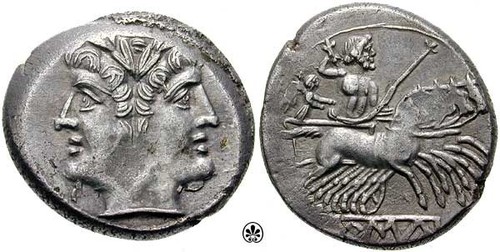
Roman As
A base-metal As of ancient Rome, showing the double-faced head of Janus on one side and a chariot with ROMA on the other.
Ancient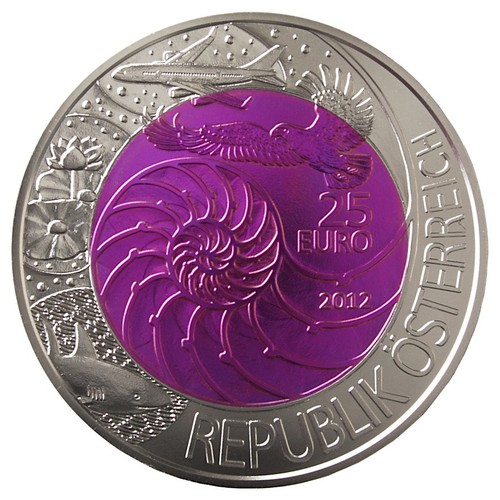
25 Euro (Bionik)
Austria's 2012 silver-niobium 25 euro coin, part of the Silver Niobium Series, with a purple niobium core and a Bionik (bionics) theme.
Commemorative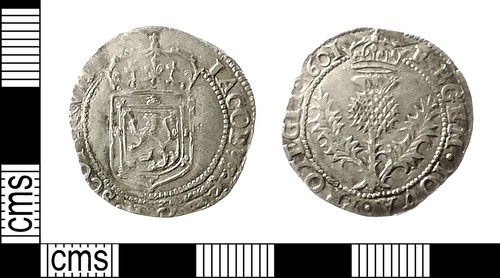
Half Thistle Merk
A hammered Scottish silver half merk of James VI, showing a crowned coat of arms on one side and a crowned thistle on the other.
Hammered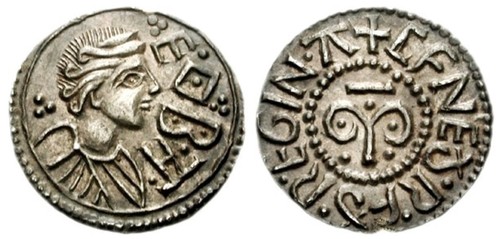
Penny of Cynethryth
Anglo-Saxon silver penny of Cynethryth, queen of Mercia and wife of Offa, and the only Anglo-Saxon queen named on her own coinage.
Medieval Coins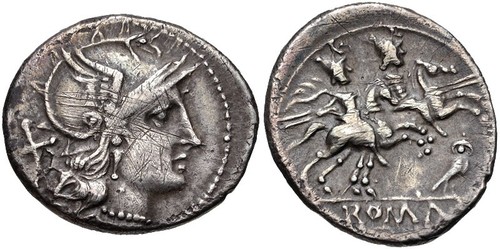
Caecidius Noctua Denarius
A silver Roman Republican denarius of the owl (noctua) symbol series, catalogued RRC 135/1 and dated c. 194–190 BC.
Ancient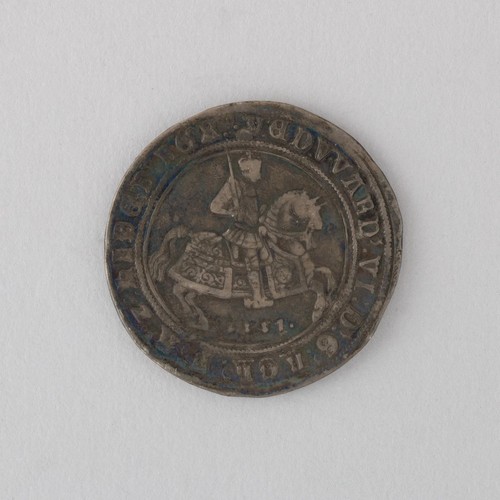
Edward VI Crown
Hammered English silver crown of Edward VI (1547-1553), the first English crown coin and among the earliest English coins to carry a date.
Hammered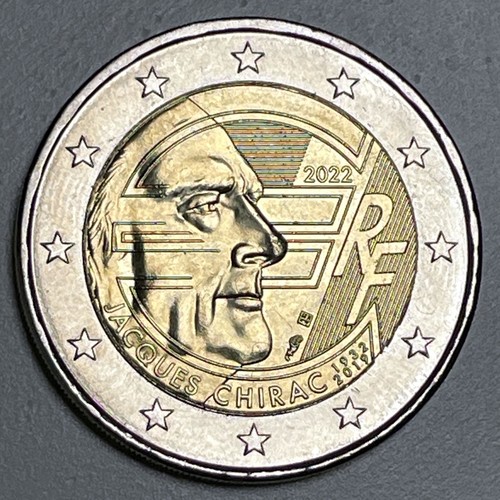
France 2 Euro Jacques Chirac Commemorative
France's 2022 bi-metallic €2 commemorative honouring former president Jacques Chirac, showing his right-facing profile paired with the standard euro reverse.
Commemorative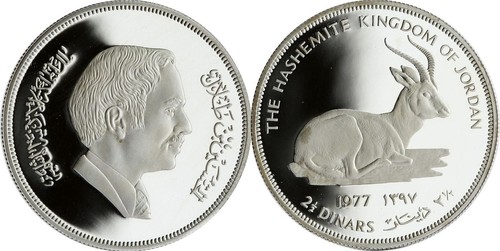
Jordanian 2½ Dinars
A crown-sized 1977 silver commemorative of the Hashemite Kingdom of Jordan, pairing King Hussein's portrait with a standing gazelle from the wildlife-conservation coin theme.
World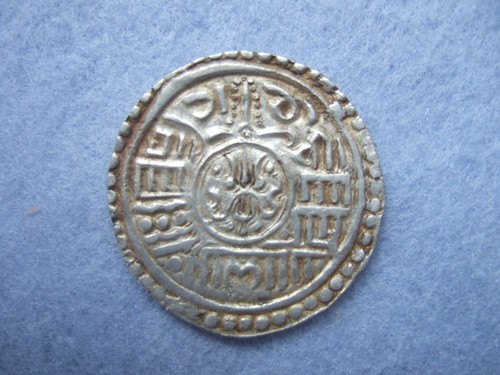
Nepalese Mohar
Silver mohar of the Nepalese Shah kingdom, with ornate Devanagari legends and auspicious symbols arranged around a mandala-style central design on both faces.
Himalayan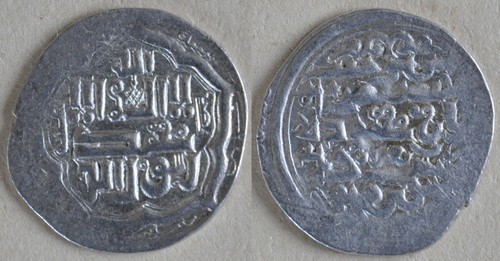
Ilkhanid Dirham of Ghazan
A silver dirham of the Mongol Ilkhanate struck for Ghazan Khan, with an ornamental cartouche bearing the ruler's name and concentric Arabic and Persian inscriptions.
Islamic (Medieval)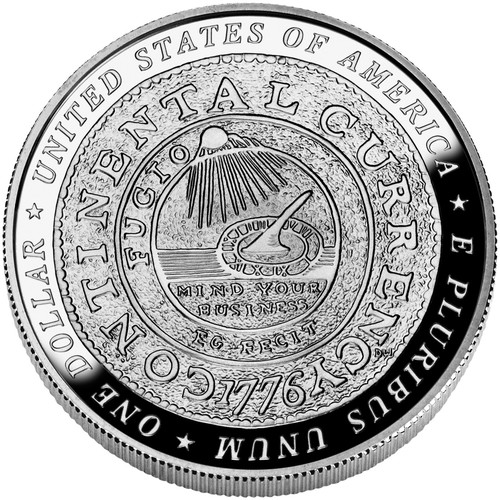
Benjamin Franklin Founding Father Commemorative Silver Dollar
A 2006 U.S. commemorative silver dollar honoring Benjamin Franklin, showing him flying his kite in the electricity experiment, with a 'MIND YOUR BUSINESS' reverse.
Dollar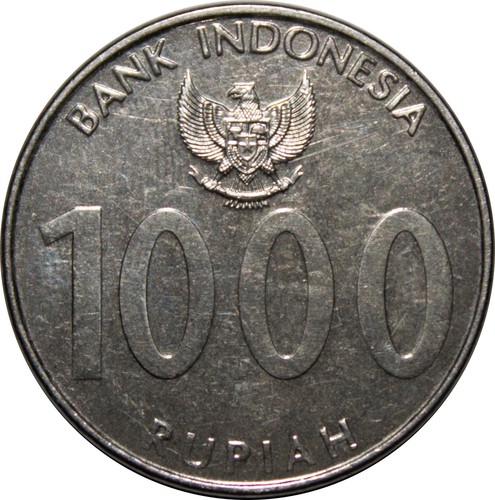
Indonesia 1000 Rupiah
A 2010 Indonesian 1000-rupiah circulation coin, its obverse bearing the Garuda Pancasila emblem and Bank Indonesia legend, its reverse a traditional monument design.
Southeast Asia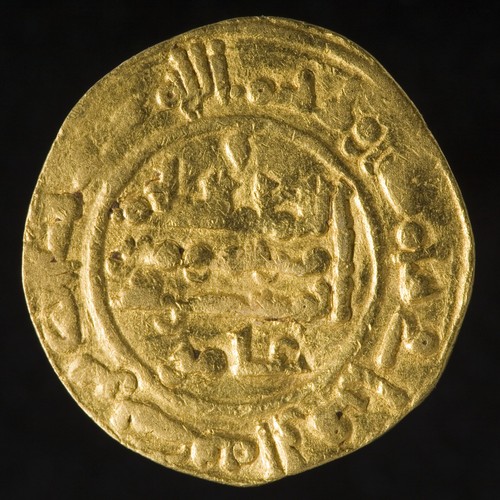
Islamic Gold Dinar (LACMA M.2006.143.8)
A medieval Islamic gold dinar in the LACMA collection, struck with purely calligraphic Arabic legends and a decorative border — the classic imageless coin of the caliphates.
Islamic (Medieval)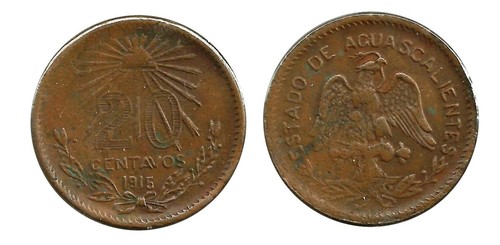
Aguascalientes 20 Centavos
A copper 20 centavos struck in Aguascalientes during the Mexican Revolution in 1915, showing the denomination on one side and a large numeral 20 with the national eagle on the other.
Revolutionary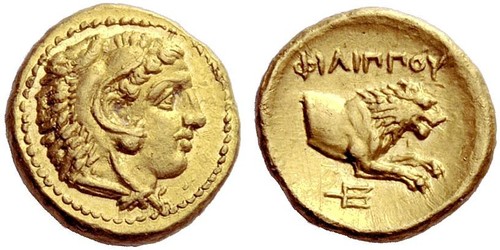
Philip II Gold Half Stater
Gold half stater of Philip II of Macedon, c. 359-336 BC, showing the head of Heracles and an eagle perched on a thunderbolt.
Ancient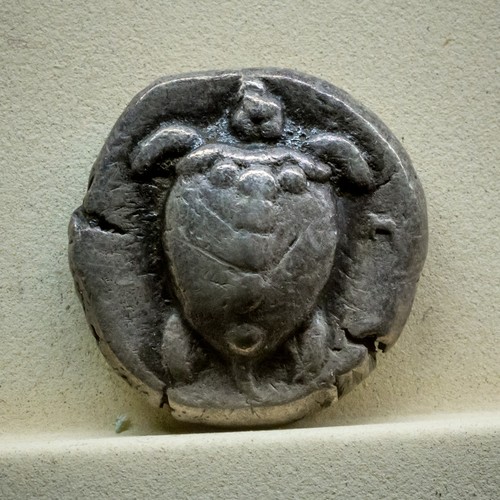
Aigina Turtle Stater
Thick silver stater of the island of Aigina, c. 480-456 BC, with a sea turtle on the obverse and a divided incuse punch on the reverse.
Ancient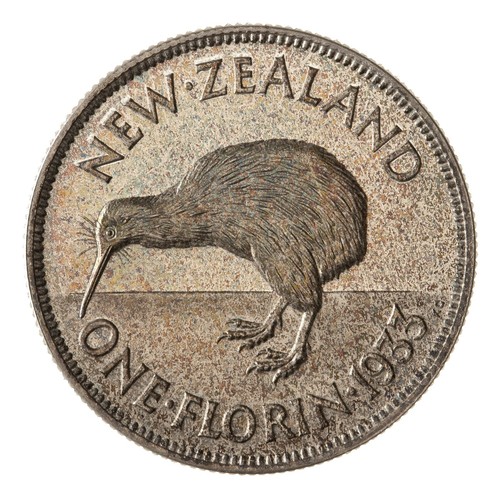
New Zealand Florin
New Zealand's silver two-shilling coin; this 1933 first-year example shows a kiwi and the legend NEW ZEALAND ONE FLORIN.
New Zealand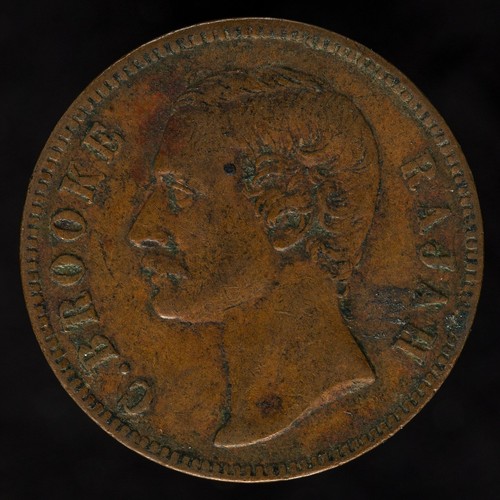
Sarawak One Cent
A large copper cent of the Brooke Rajahs of Sarawak, showing the Rajah's portrait on the obverse and SARAWAK ONE CENT with a wreath and the year 1870.
Colonial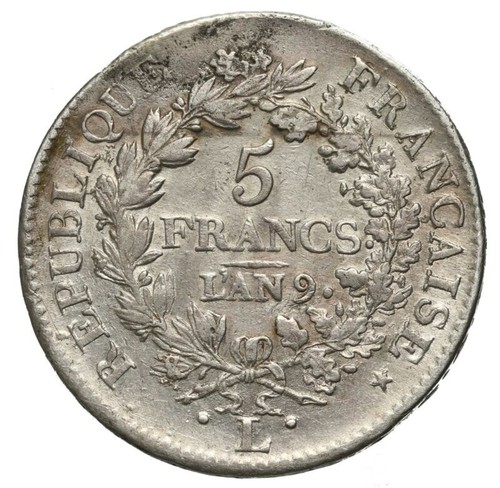
5 Francs Semeuse
France's silver 5 francs of the New Franc era: Roty's striding Semeuse (Sower) on the obverse, the value in an olive spray on the reverse.
Circulation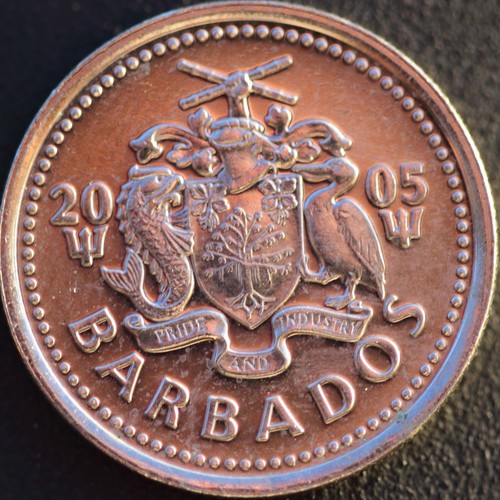
Barbados 10 Cents
A small copper-nickel Barbadian 10-cent coin showing the national coat of arms on one side and the value and country name on the other.
Circulation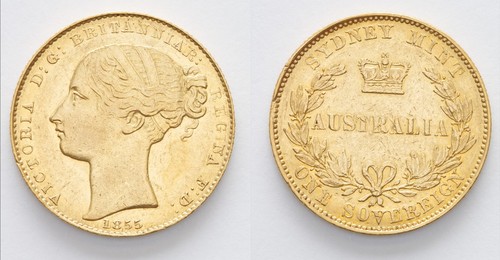
Australian Sovereign
22-carat gold sovereign struck at Australian branch mints; the 1855 Sydney Mint issue was the country's first gold coin.
Australian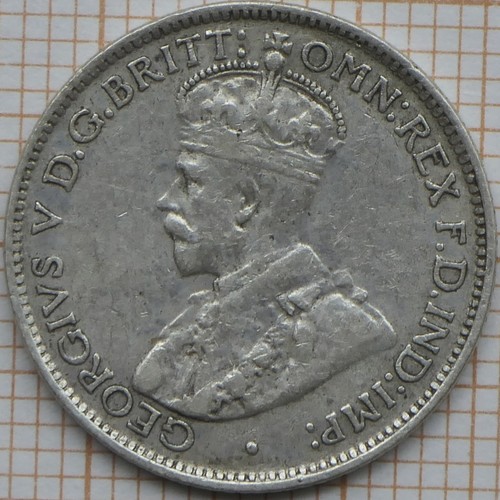
Australian Sixpence
Small silver sixpence of the Commonwealth of Australia; this 1935 piece carries the crowned bust of King George V.
Australian