
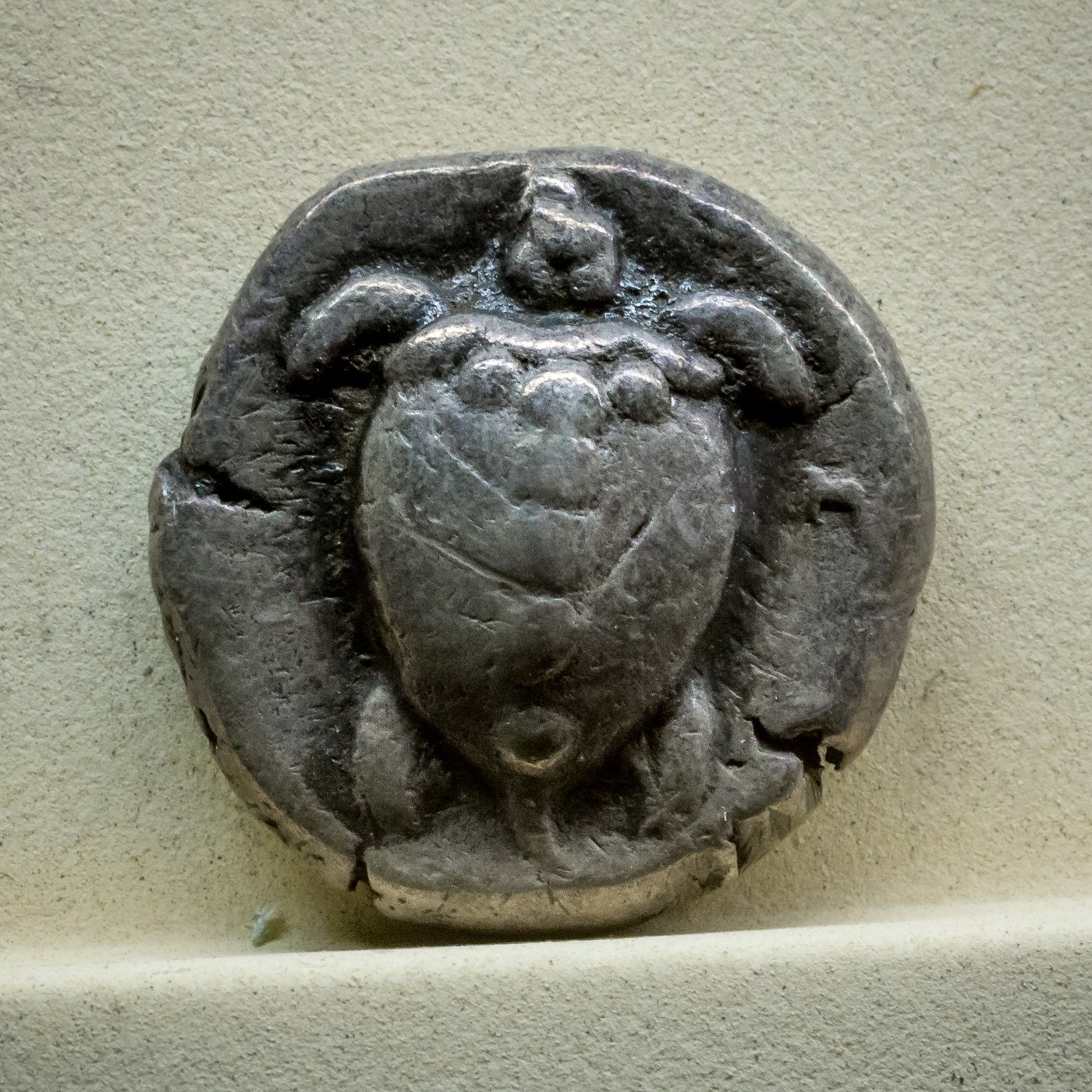
Aigina Turtle Stater
Thick silver stater of the island of Aigina, c. 480-456 BC, with a sea turtle on the obverse and a divided incuse punch on the reverse.
- Country
- Ancient Greece
- Denomination
- Stater
- Metal
- Silver
Got a coin like this?
Identify any coin from a photo, free.
Overview
The Aigina turtle stater is a silver coin of the Greek island of Aigina (Aegina) in the Saronic Gulf, one of the earliest and most influential coinages of the ancient Greek world. The example here belongs to the sea-turtle series, struck roughly 480-456 BC, and shows a sea turtle with a segmented shell on the obverse and a divided incuse (punch) pattern on the reverse.
Struck on the heavy Aiginetic weight standard, the stater is a thick, dumpy piece of high-purity silver rather than a thin, broad coin. Aigina's turtles were among the first coins to circulate as international trade money across the Aegean and beyond, and the turtle became so closely associated with the island's wealth that the coins were known simply as "tortoises" (chelonai) in antiquity.
Because it carries a civic badge rather than a ruler's portrait or an inscription, the coin is identified by its type. The sea turtle marks the earlier phase of Aigina's coinage; a later land tortoise replaced it after the island lost its independence to Athens around 456 BC.
History & Background
Aigina was a leading maritime and trading power in the Archaic and early Classical periods, and it was among the first Greek states to strike its own coinage, beginning in the second half of the sixth century BC. The turtle, a creature of the sea, served as the civic emblem of this island of merchants and sailors, and it appears on essentially all of Aigina's silver staters.
The coin shown belongs to the sea-turtle phase, which ran until the middle of the fifth century BC. Over that long run the reverse punch evolved from a rough, irregular incuse into an organized geometric pattern of divided compartments, the form seen on issues of about 480-456 BC. This gives numismatists a way to place a given turtle within the series.
Aigina's fortunes turned when it came into conflict with a rising Athens. Following defeat and the loss of its independence around 456 BC, the mint changed its badge from the sea turtle to a land tortoise. Aigina's staters had by then already spread widely as a trusted trade currency, and the "turtle" remained a byword for money in the Greek imagination.
How to Identify
The obverse shows a turtle seen from above, its shell filling the flan. On this sea-turtle type the carapace carries a raised line of round pellets running down the center like a spine, with the head and flippers visible at the edges. The flan is notably thick and rounded, a hallmark of Aiginetic coinage, and there is no inscription.
The reverse bears an incuse (sunken) punch divided into compartments rather than any figural design. Earlier turtles have a rough or irregular incuse; the c. 480-456 BC issues show a more regular geometric pattern of segments, sometimes described as a skew or mill-sail arrangement. This deep, angular sunken pattern, opposite a relief turtle, is the coin's second key identifier.
In hand the stater is a heavy, high-silver piece on the Aiginetic standard, weighing on the order of roughly 12 grams and measuring in the high-teens to about 20 mm across, but struck on a thick blank so the diameter is small for the weight. The metal is typically toned grey from age. The pellet-backed sea turtle distinguishes this earlier series from the smooth-shelled land tortoise that followed.
Value & Collectibility
Aigina sea-turtle staters are genuine ancient Greek silver of a famous and historically important series, and they carry a correspondingly solid market. Well-worn examples with a clearly readable turtle and incuse generally trade in the low-to-mid hundreds of dollars, while sharply struck, well-centered coins with a bold shell and crisp reverse pattern can reach well into the four figures.
Value is driven by the strength of the turtle's detail, the completeness of the shell and flippers, the clarity of the reverse incuse, the placement within the series, and overall eye appeal and toning. The earlier sea-turtle type is often more sought after than the later land tortoise, and superb or provenanced examples command strong premiums.
The figures here are general context, not appraisals. Any specific coin's price depends heavily on condition, style, and authenticity, and high-value ancient silver of this kind is frequently sold with specialist attribution or third-party certification.
Frequently asked questions
Why does the coin show a turtle?
The turtle was the civic badge of the island of Aigina, a major sea-trading power. As a creature of the sea it suited the island's maritime identity, and its coins became so well known that they were simply called "tortoises."
What is the sunken pattern on the back?
It is an incuse punch, a sunken mark left by the die used to strike the coin. On this period the punch is divided into geometric compartments rather than carrying any picture or inscription.
Is this a sea turtle or a land tortoise?
This is the earlier sea-turtle type, identified by the row of raised pellets down the center of the shell. Aigina switched to a smooth-shelled land tortoise after losing its independence around 456 BC.
How much does it weigh?
The stater is struck on the heavy Aiginetic standard and weighs on the order of about 12 grams. It is thick and dumpy, so it looks small for its weight compared with thinner Greek coins.
Does the coin have any lettering?
No. Like most Archaic and early Classical Greek civic coinage, the Aigina turtle stater carries no legend or ruler's name; it is identified entirely by its turtle type and incuse reverse.
Aigina Turtle Stater guides
In-depth guides for identifying, valuing, and collecting Aigina Turtle Stater.
Other coins you may enjoy
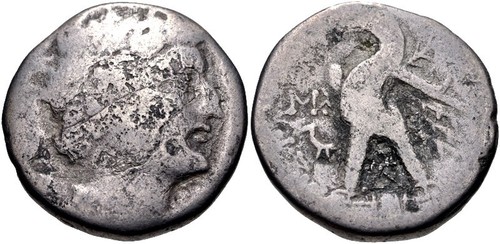
Tetradrachm of Ptolemy XII
80-51 BC
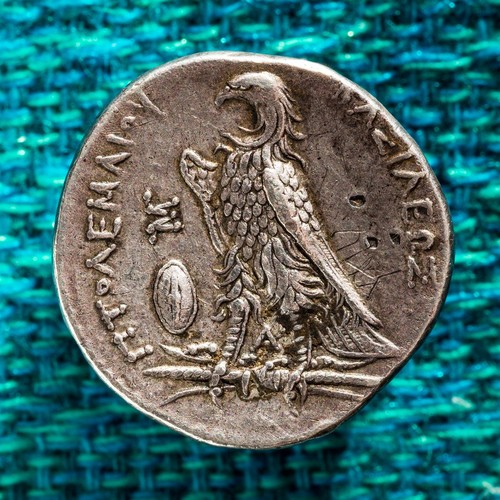
Tetradrachm of Ptolemy I
305-283 BC
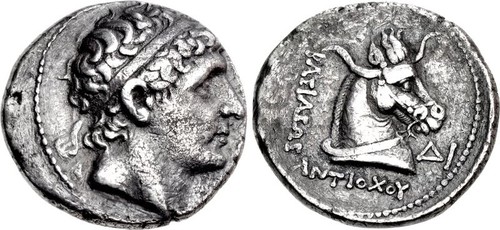
Tetradrachm of Antiochos I Soter
281-261 BC
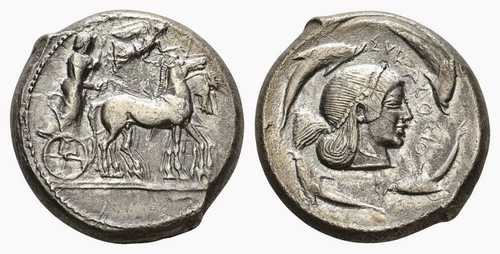
Syracuse Tetradrachm
c. 5th-4th century BC (Classical period)
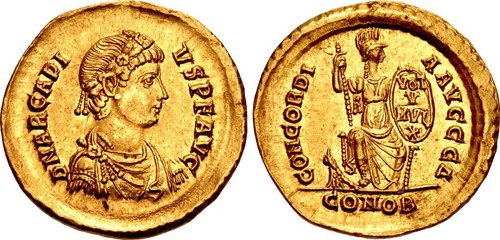
Solidus of Arcadius
AD 395-402
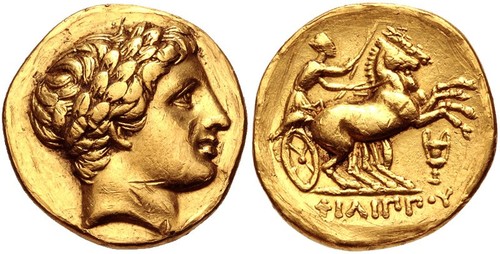
Philip III Gold Stater
323-317 BC
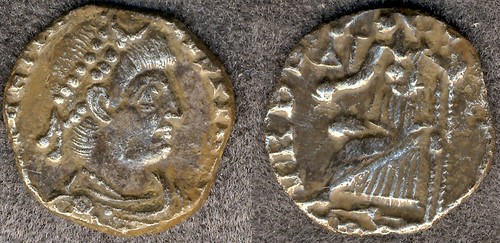
Siliqua of Gratian
AD 367-383
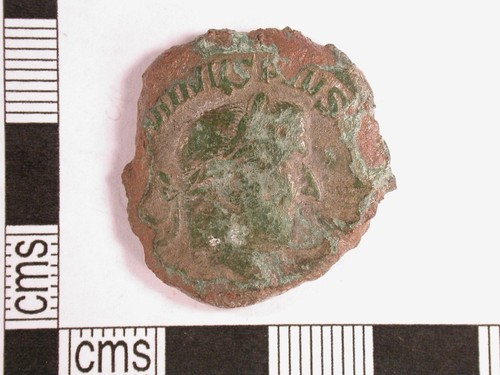
Sestertius of Maximinus Thrax
235-238 AD
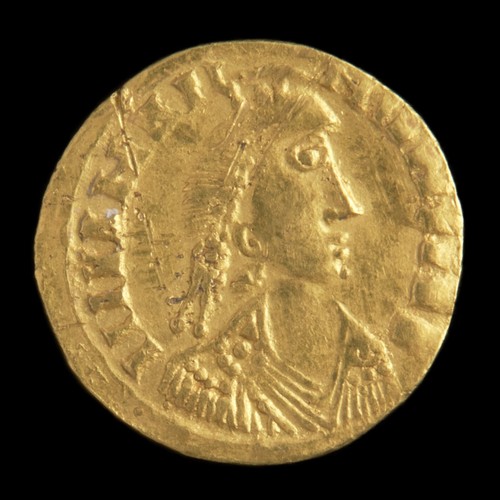
Solidus of Valentinian III
AD 425-455
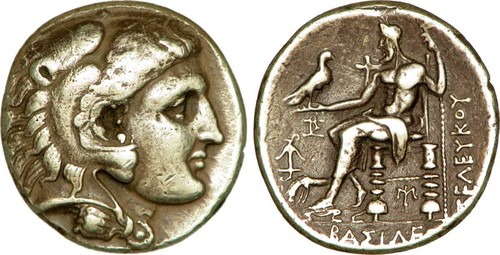
Seleucus I Nicator Tetradrachm
Late 4th-3rd century BC
Nummus of Magnentius
AD 350-353
Follis of Galerius
AD 308-310