
Coin Encyclopedia
Search and identify coins from around the world — with country, denomination, metal, mint, history, and how to tell them apart.
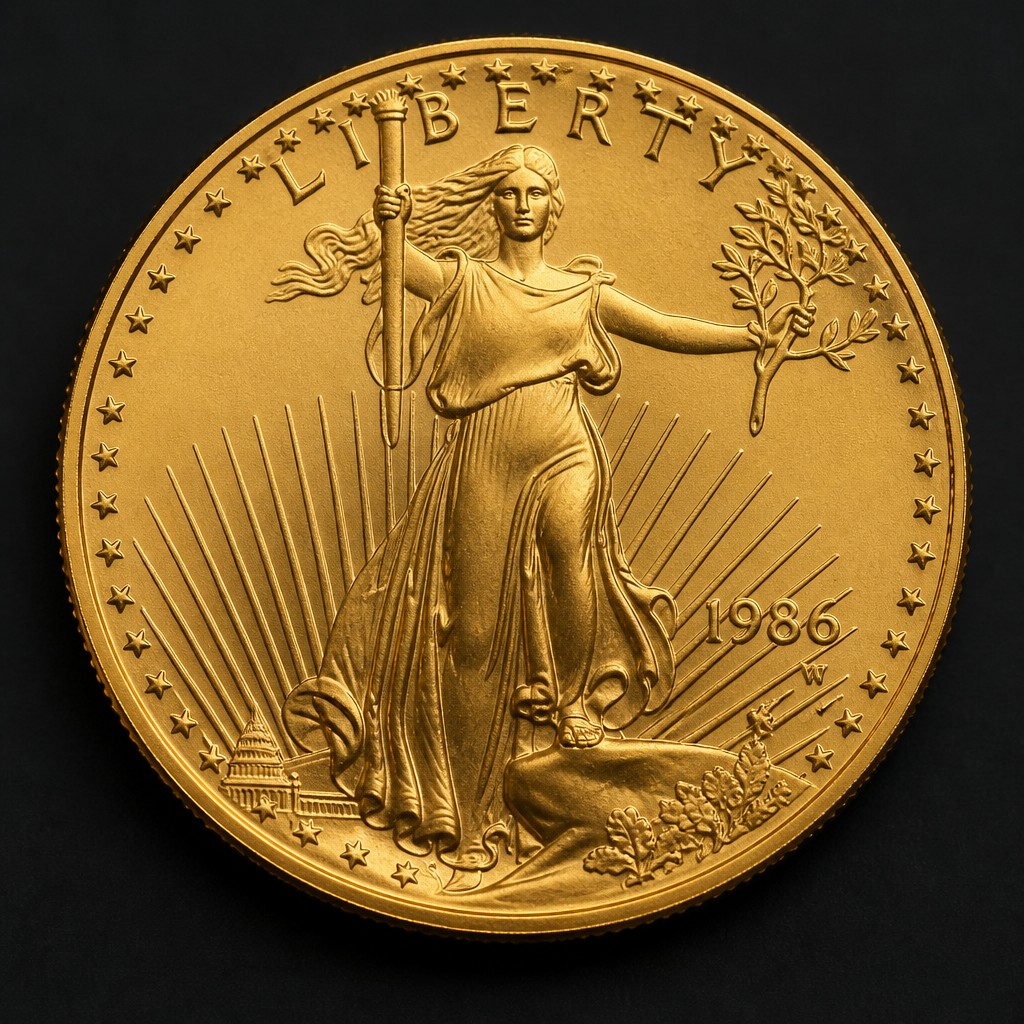
American Gold Eagle
The official U.S. gold bullion coin series since 1986, pairing Augustus Saint-Gaudens' famous Liberty design with a family-of-eagles reverse, issued in four sizes.
Bullion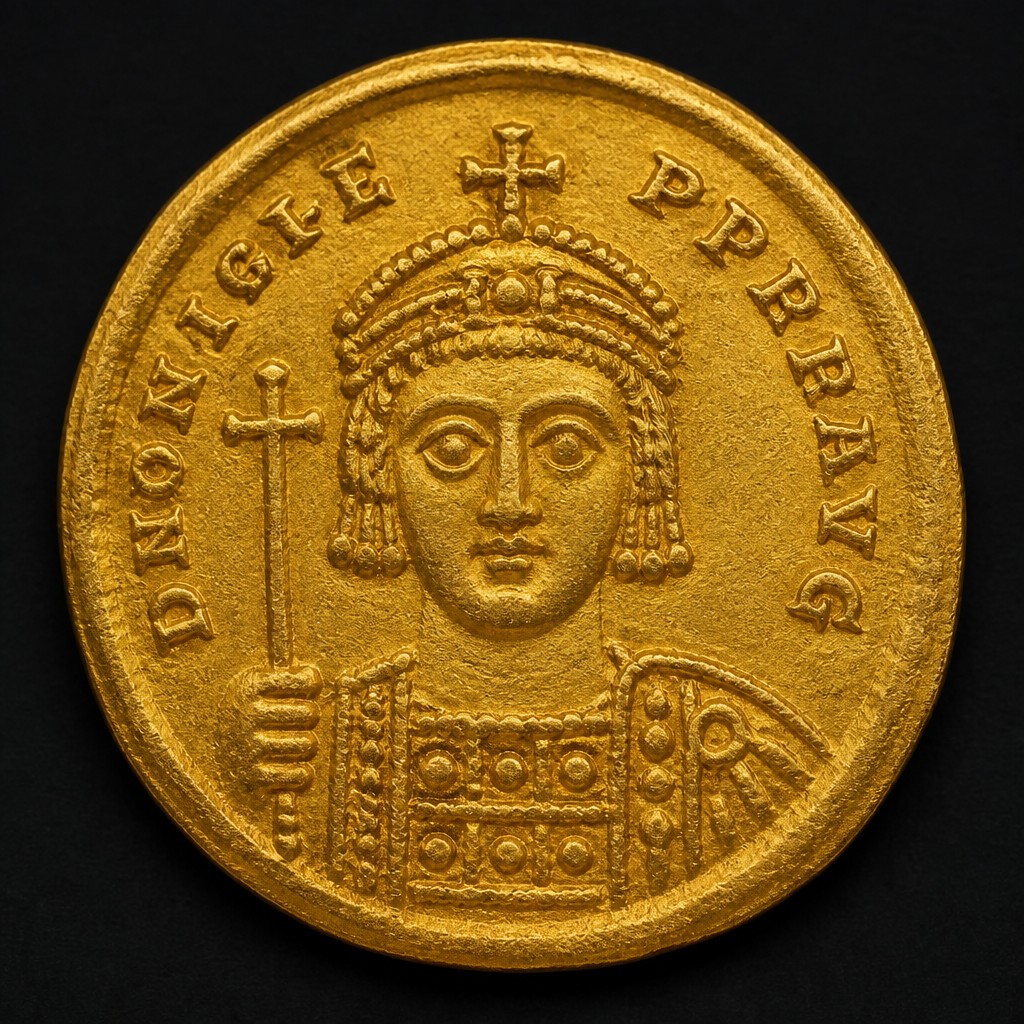
Byzantine Solidus
The gold standard coin of the Byzantine Empire for over 700 years, the solidus funded an empire, financed trade across three continents, and remained one of history's most stable currencies.
Ancient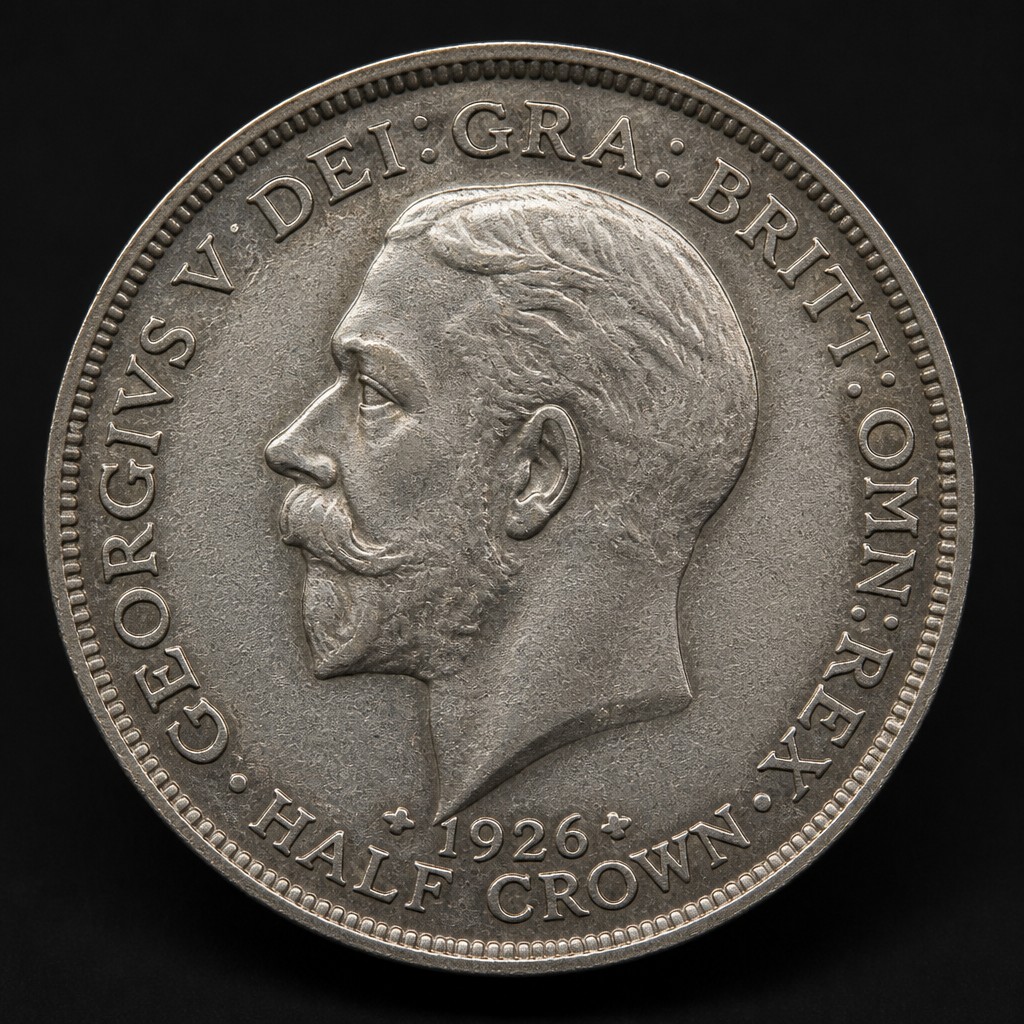
Half Crown
A long-lived British coin worth one-eighth of a pound, struck from the Tudor era until decimalisation in 1970, valued today mainly for its portraits and design variety.
British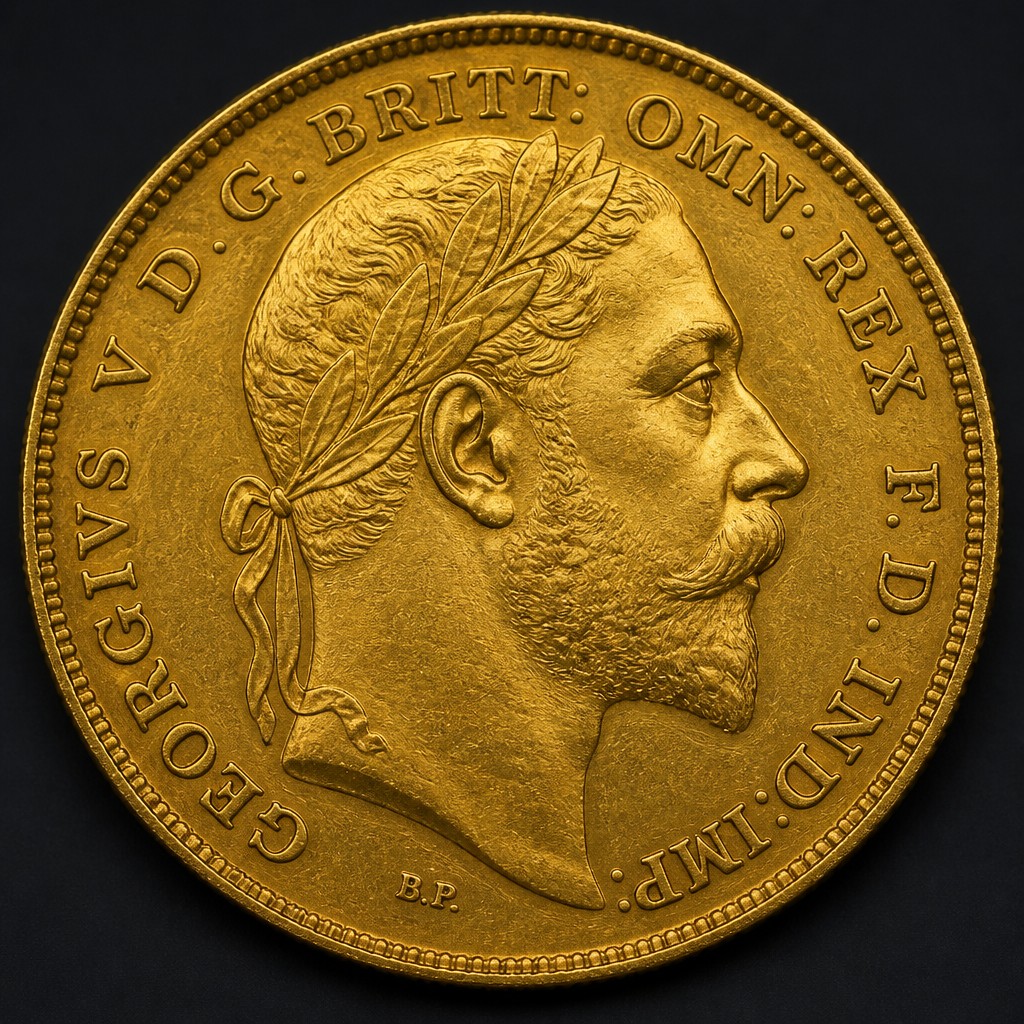
Two Pound Gold (Double Sovereign)
A gold coin worth two pounds sterling and roughly twice the weight of a sovereign, struck mainly for jubilees, coronations, and modern proof or bullion sets rather than daily circulation.
British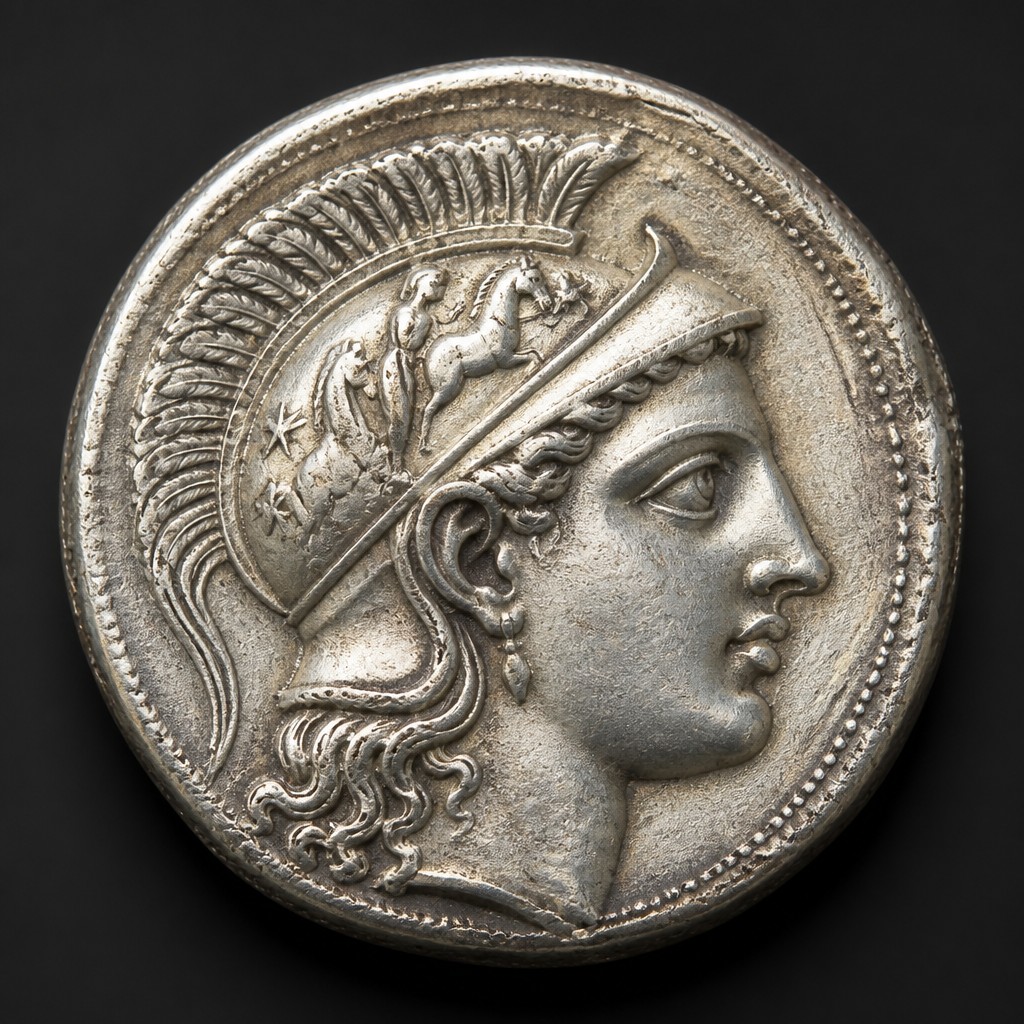
Syracuse Decadrachm
A large, exquisitely engraved silver coin from the Greek city of Syracuse, celebrated as one of the finest achievements of ancient Greek numismatic art, featuring the nymph Arethusa and a victorious chariot.
Ancient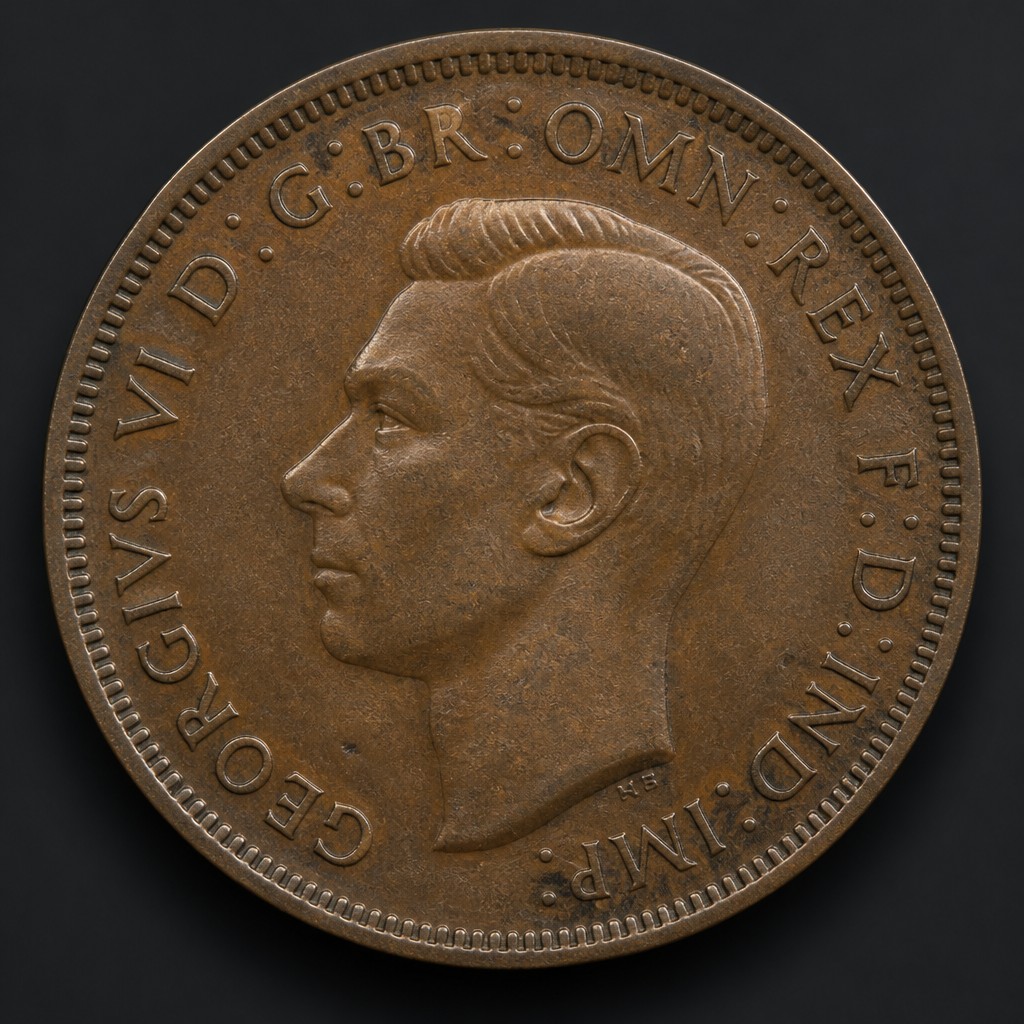
New Zealand Penny (KGVI)
New Zealand bronze penny struck under King George VI, notable for its reverse featuring the native tuatara reptile, part of the country's distinctive 1933-launched coin series.
Africa & Oceania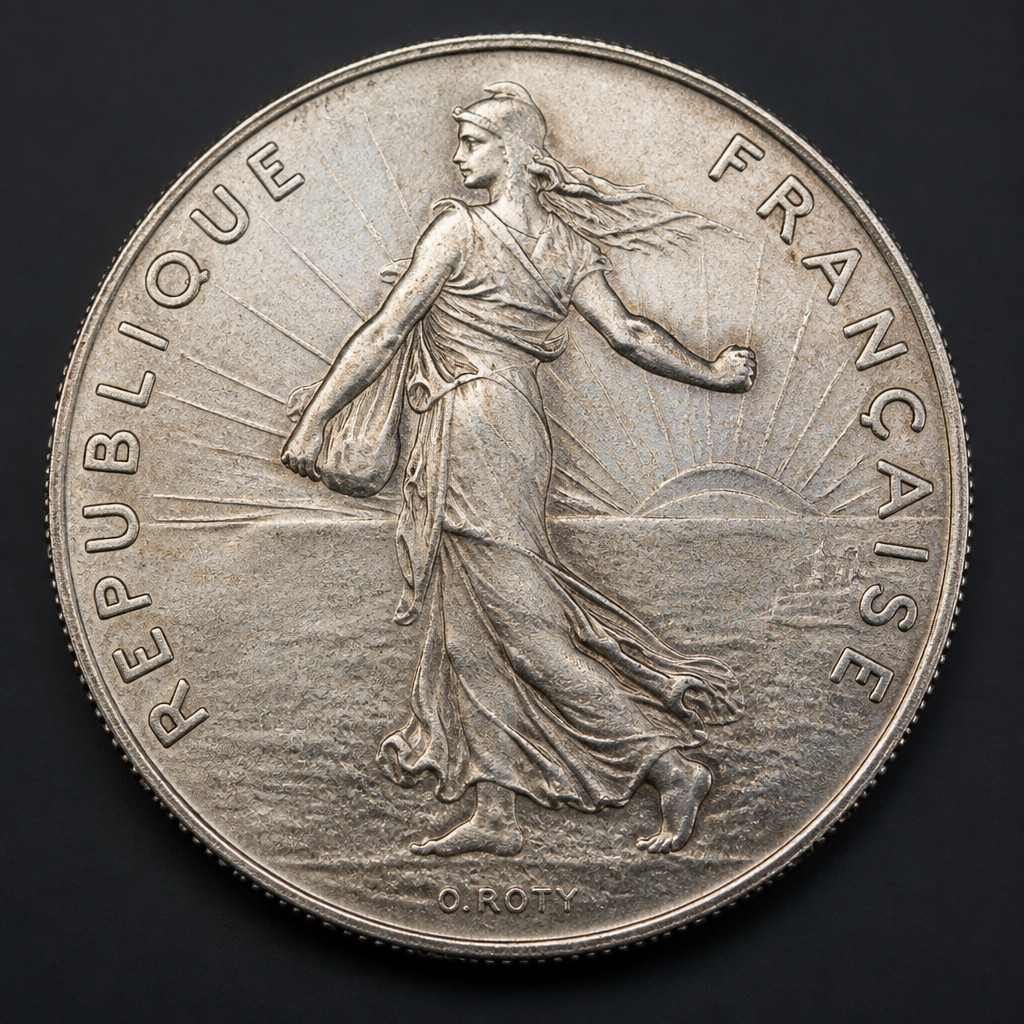
French 100 Francs Silver
France's pre-euro 100 Franc denomination included both a long-running silver Panthéon coin for collectors and numerous limited commemorative silver issues honoring people, events, and anniversaries.
European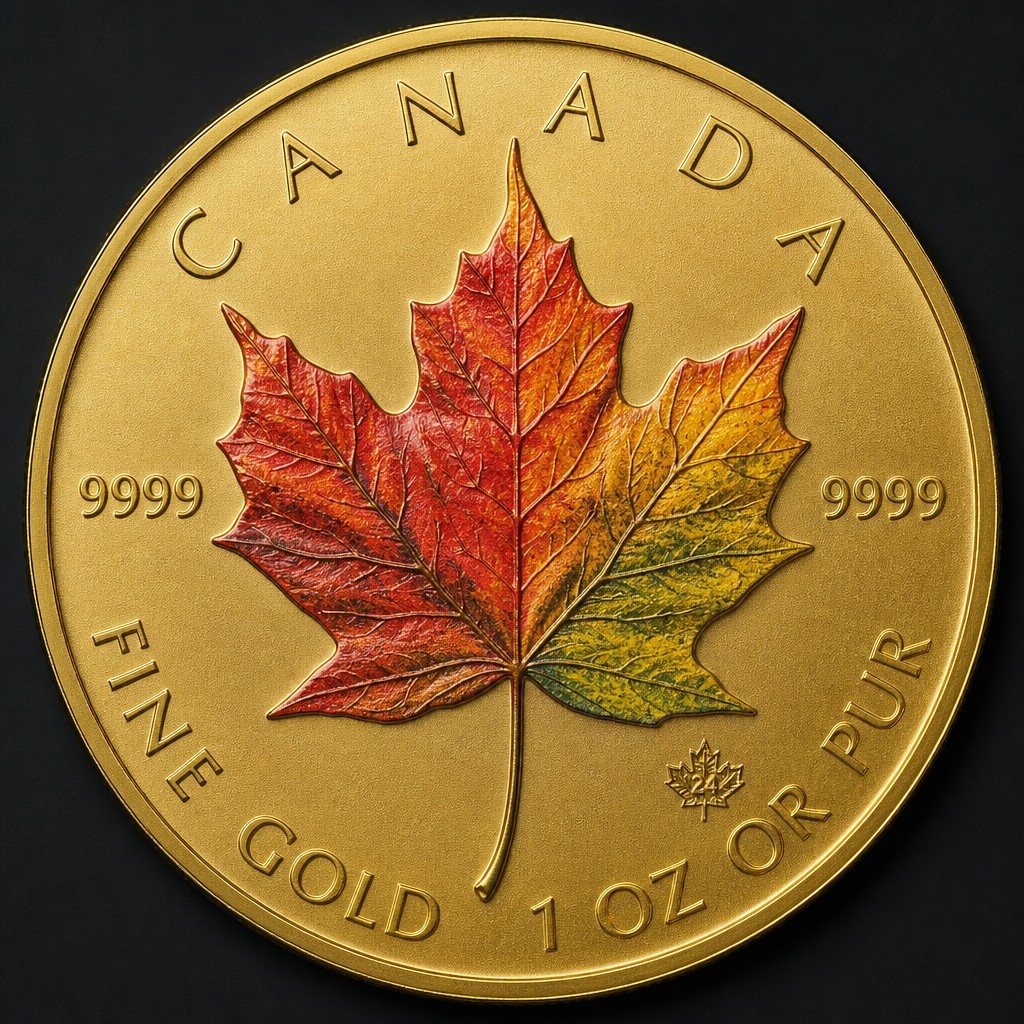
Canadian Colored Maple Leaf
A colorized variant of Canada's iconic Maple Leaf bullion coin, applying vivid printed designs over the standard maple leaf or themed reverse to create eye-catching collector editions.
Canadian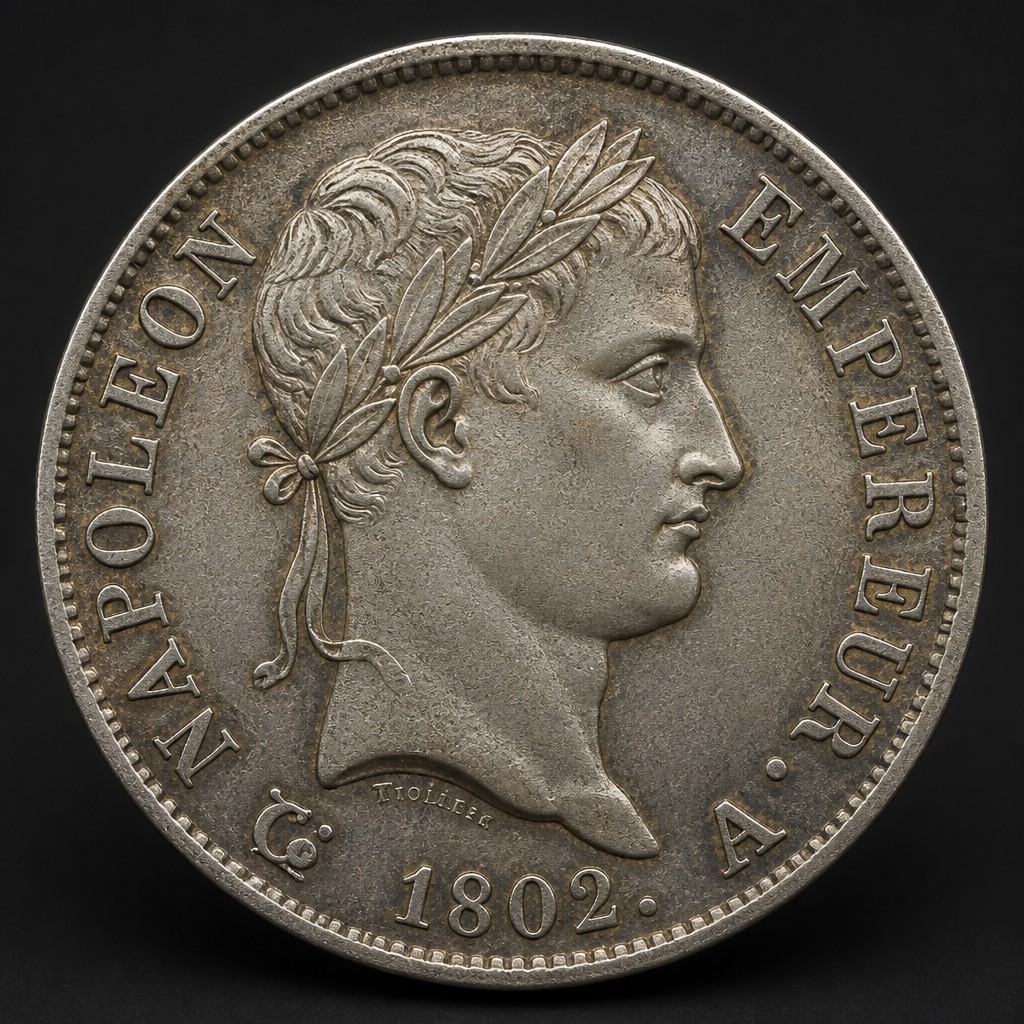
French 5 Francs "Napoleon"
A large silver crown-sized coin bearing the portrait of Napoleon Bonaparte, first as First Consul and later as Emperor, marking France's decimal franc system's early flagship silver denomination.
European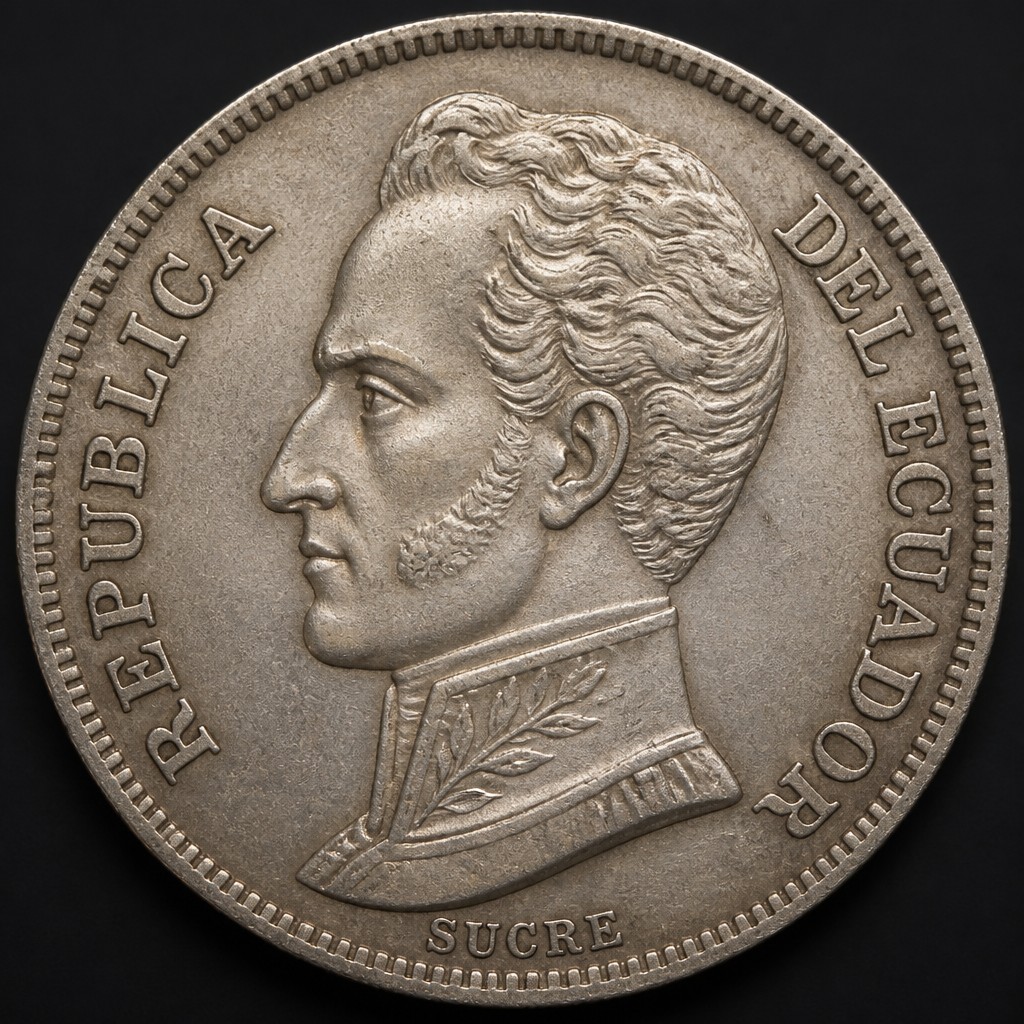
Ecuador Sucre Silver
Ecuador's historic silver one-sucre coin, named after independence hero Antonio Jose de Sucre, circulated for decades before Ecuador's currency was eventually replaced by the US dollar.
Latin American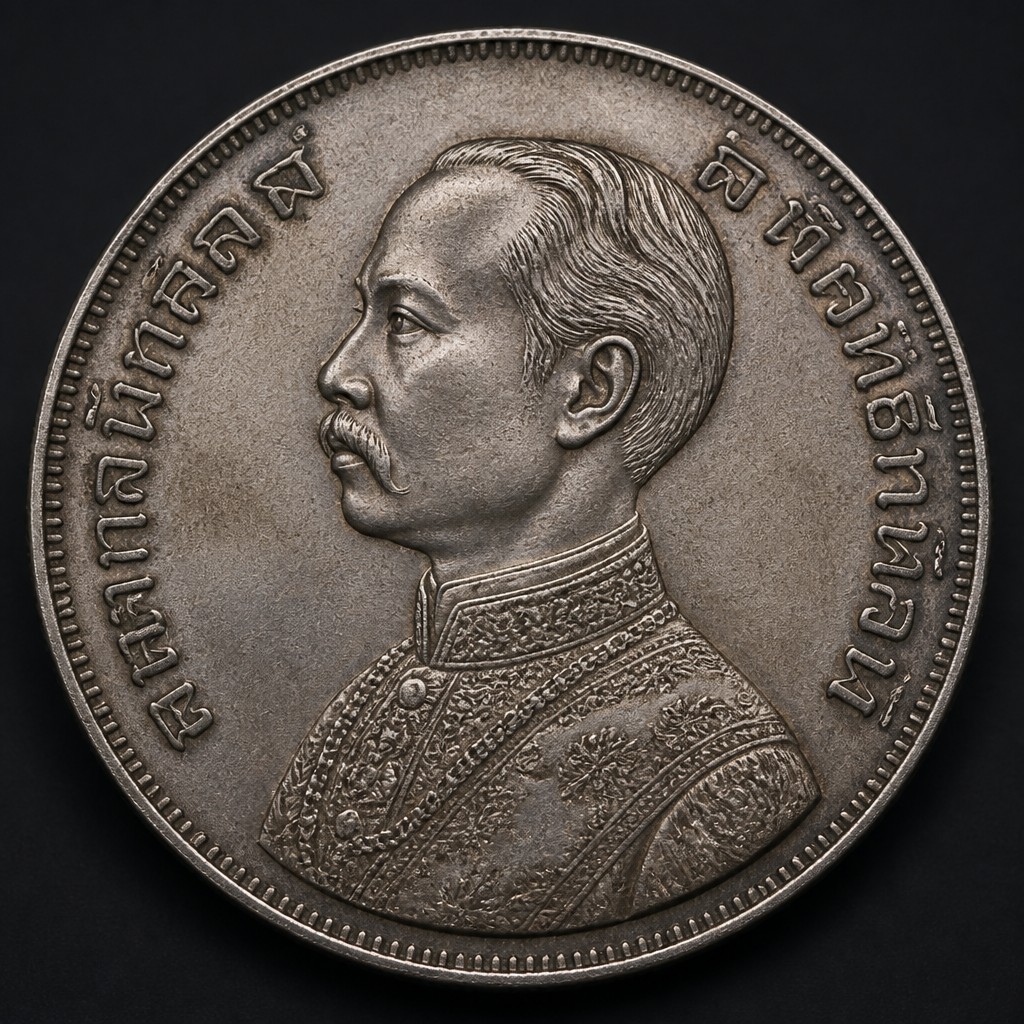
Rama IV Siamese Baht (first machine-struck)
Landmark Siamese silver coin introduced under King Mongkut (Rama IV), marking the country's shift from traditional bullet-shaped money to modern, flat, machine-struck coinage.
Asian
Reichsthaler
The standard large silver coin of the Holy Roman Empire and its constituent German states from the 16th century onward, whose name is the direct linguistic ancestor of the word 'dollar.'
European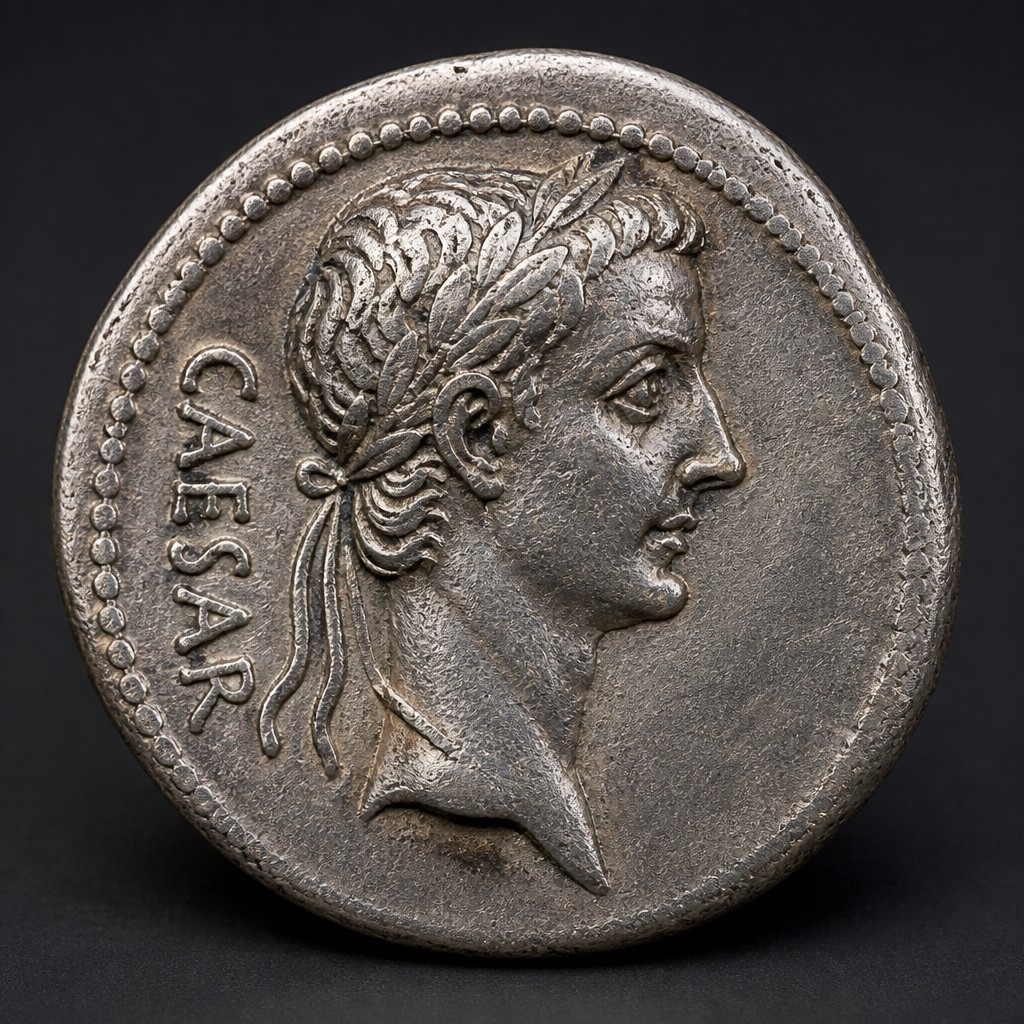
Julius Caesar Elephant Denarius
One of the most widely recognized ancient Roman coins, struck under Julius Caesar's authority and depicting an elephant trampling a serpent, likely a symbolic image tied to Caesar's political struggles.
Ancient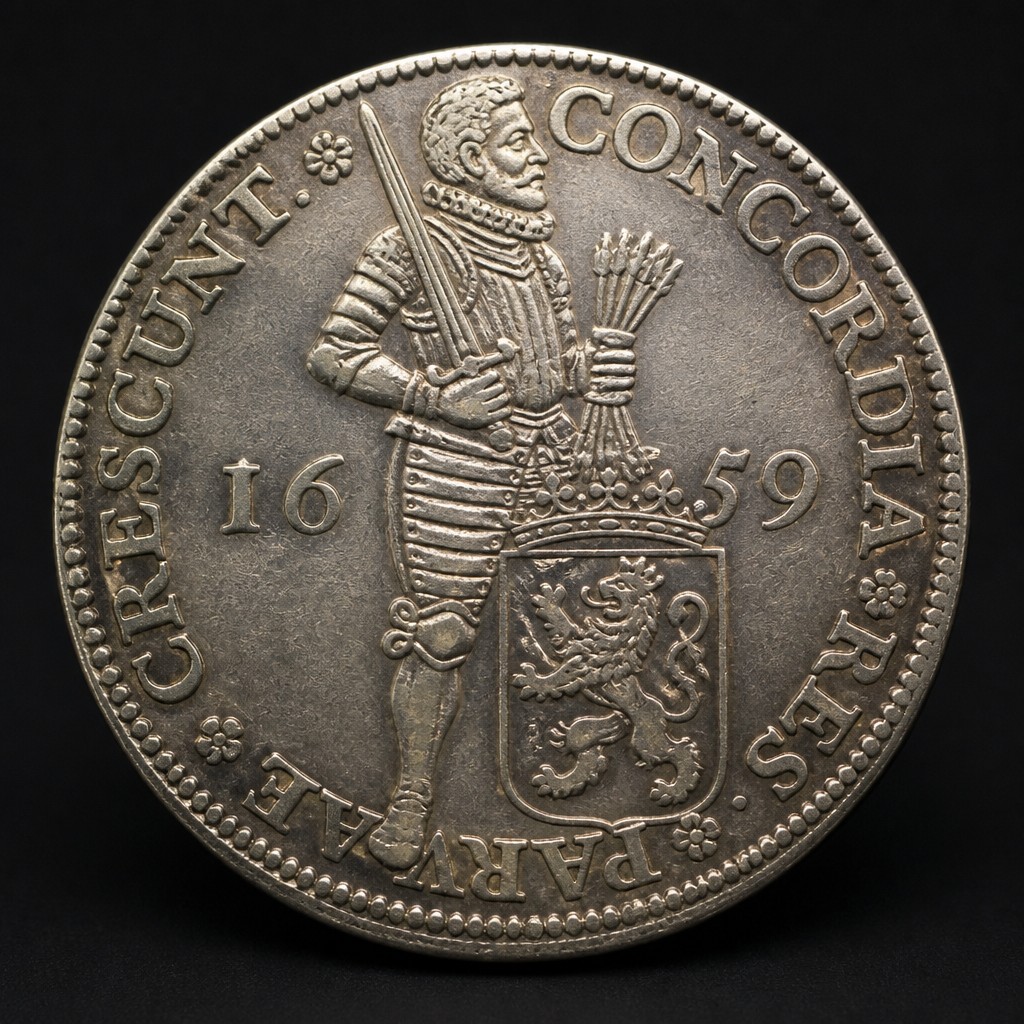
Dutch Silver Ducat
A historic Dutch trade silver coin first struck in 1659, depicting a standing knight, that has been minted continuously for centuries and remains a popular silver bullion and collector piece today.
European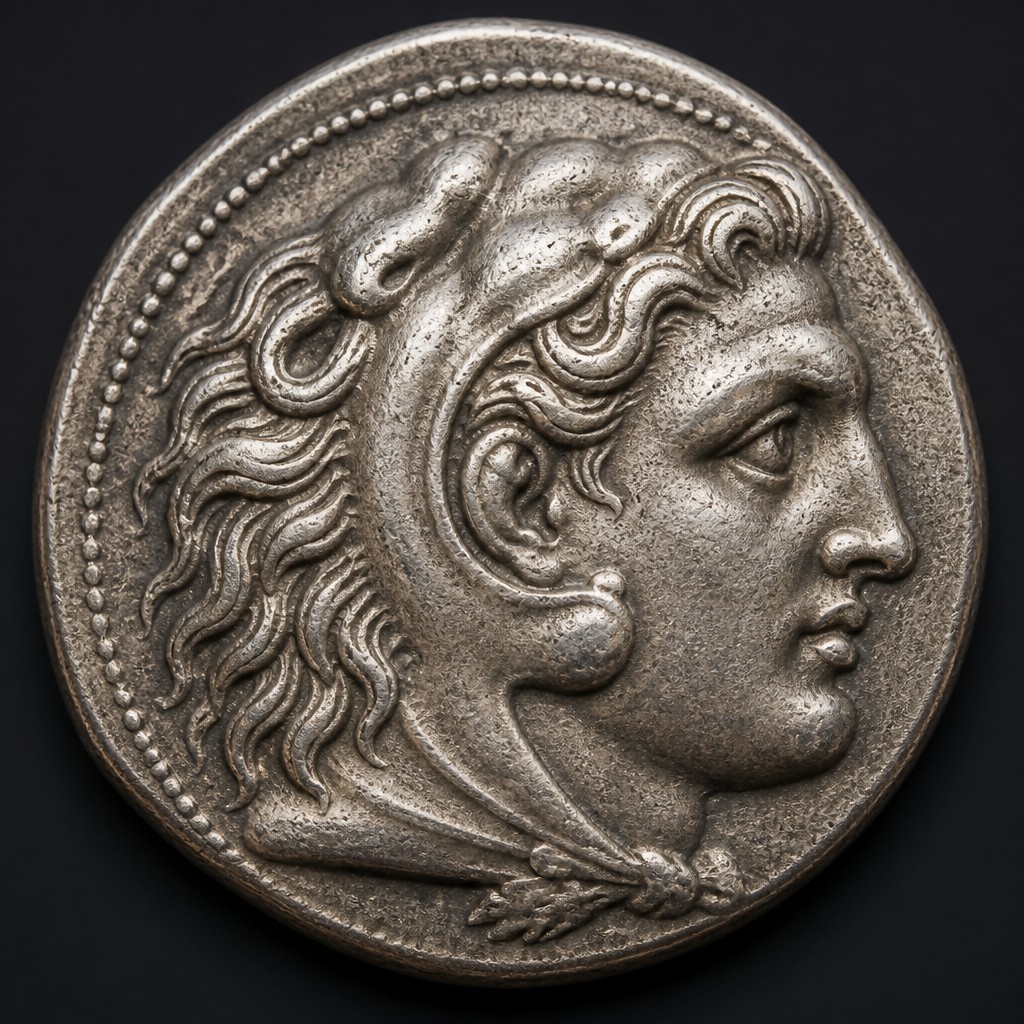
Alexander the Great Tetradrachm
The widely circulated silver coin of Alexander the Great, showing Herakles wearing a lion skin on the obverse and an enthroned Zeus on the reverse, struck across his empire and for generations after his death.
Ancient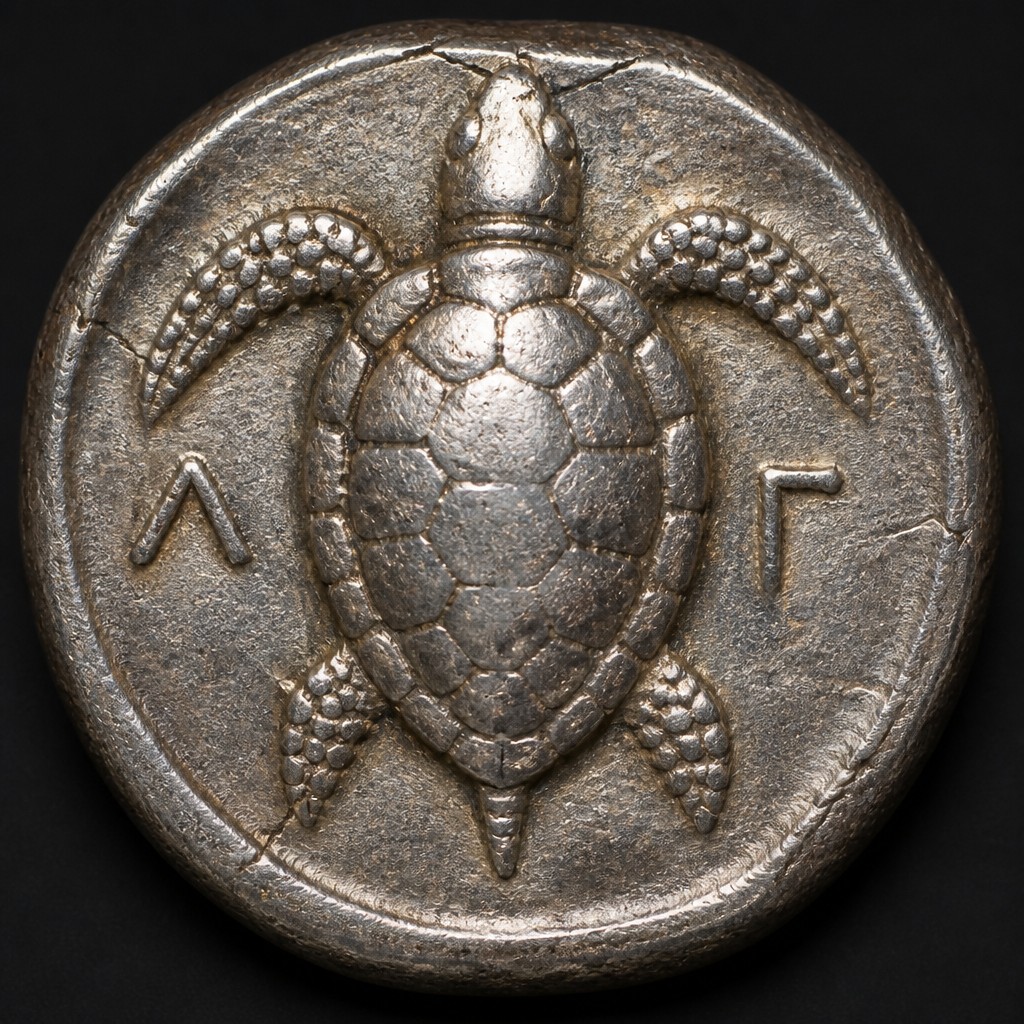
Aegina Sea Turtle Stater
One of the earliest widely circulated Greek silver coins, struck by the island city-state of Aegina, featuring a sea turtle and later a land tortoise, and nicknamed simply 'turtles' by ancient traders.
Ancient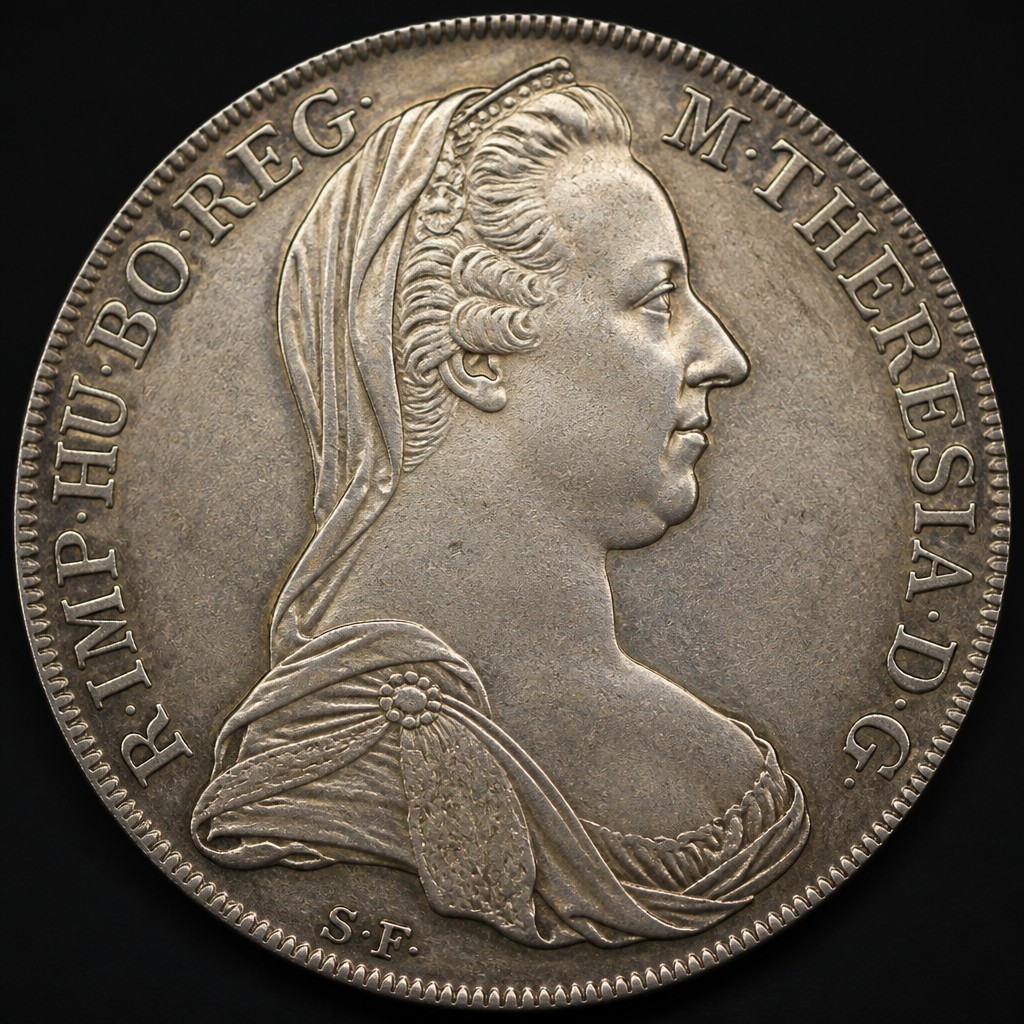
Austrian Levantine Thaler (Maria Theresa Thaler)
A famous silver trade coin bearing the portrait of Empress Maria Theresa, perpetually dated 1780 and restruck for centuries as a trusted trade currency across the Middle East, Arabia, and East Africa.
European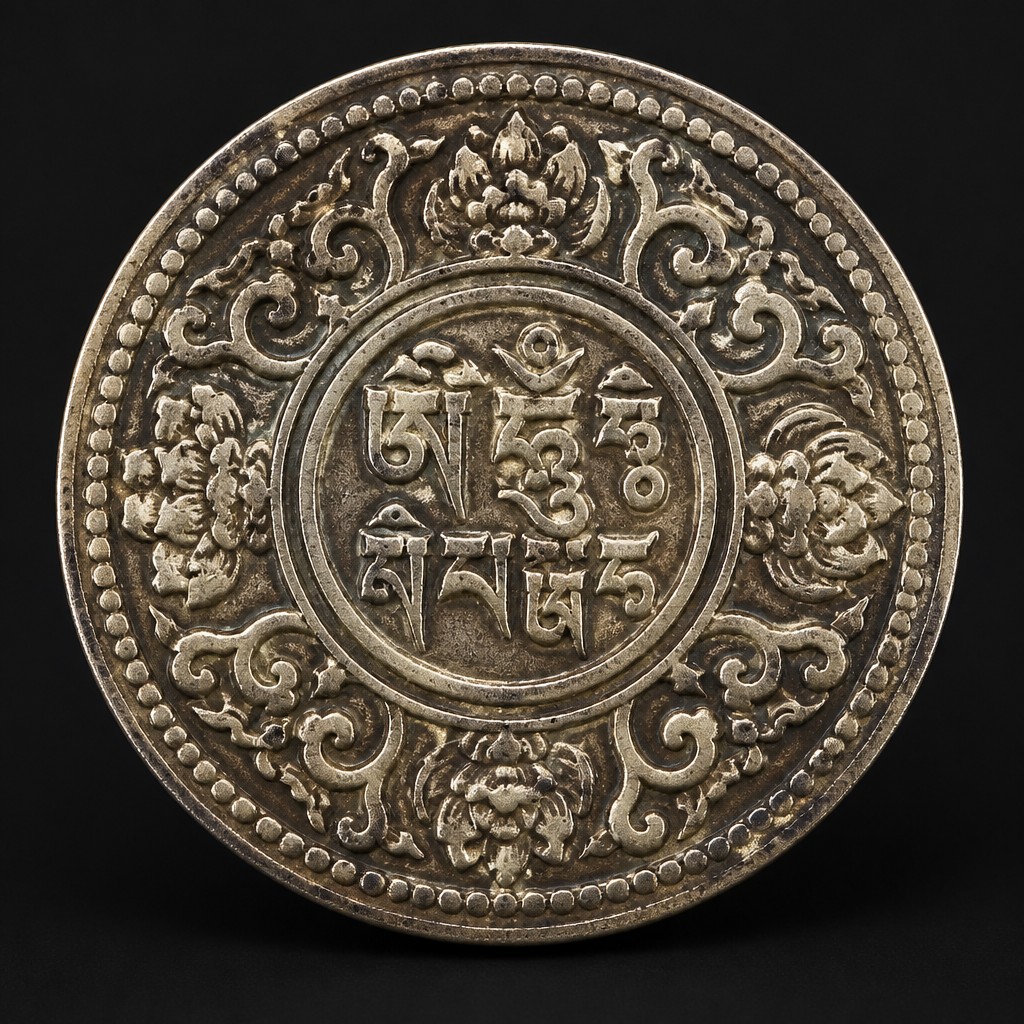
Tibetan Silver Tangka
The traditional silver coin denomination of Tibet, issued in many distinct types over roughly three centuries, from early Nepalese-struck coinage to native Tibetan and Sino-Tibetan issues.
Asian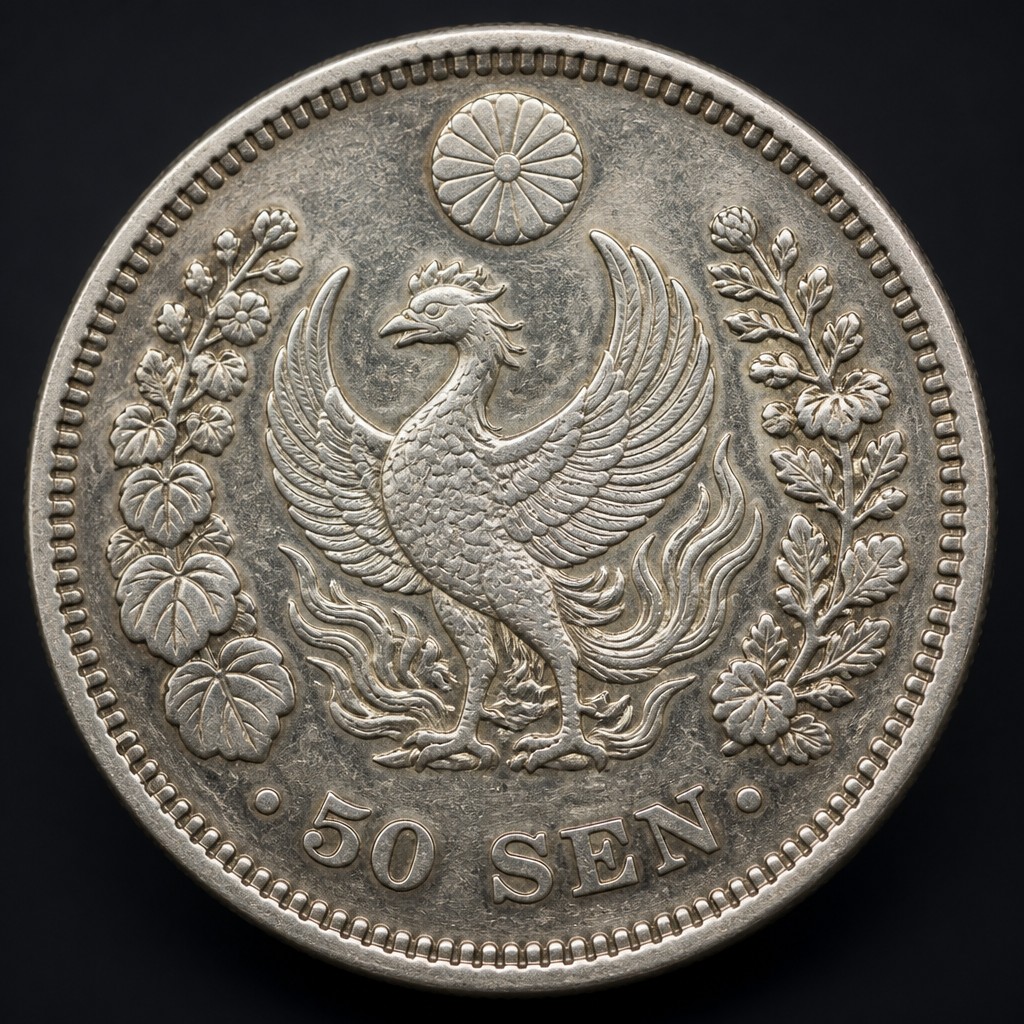
Japanese 50 Sen Silver (Meiji Phoenix)
An early Meiji-era Japanese silver coin featuring a coiled dragon on the obverse and a phoenix on the reverse, part of Japan's first modern decimal coinage system introduced after the Meiji Restoration.
Asian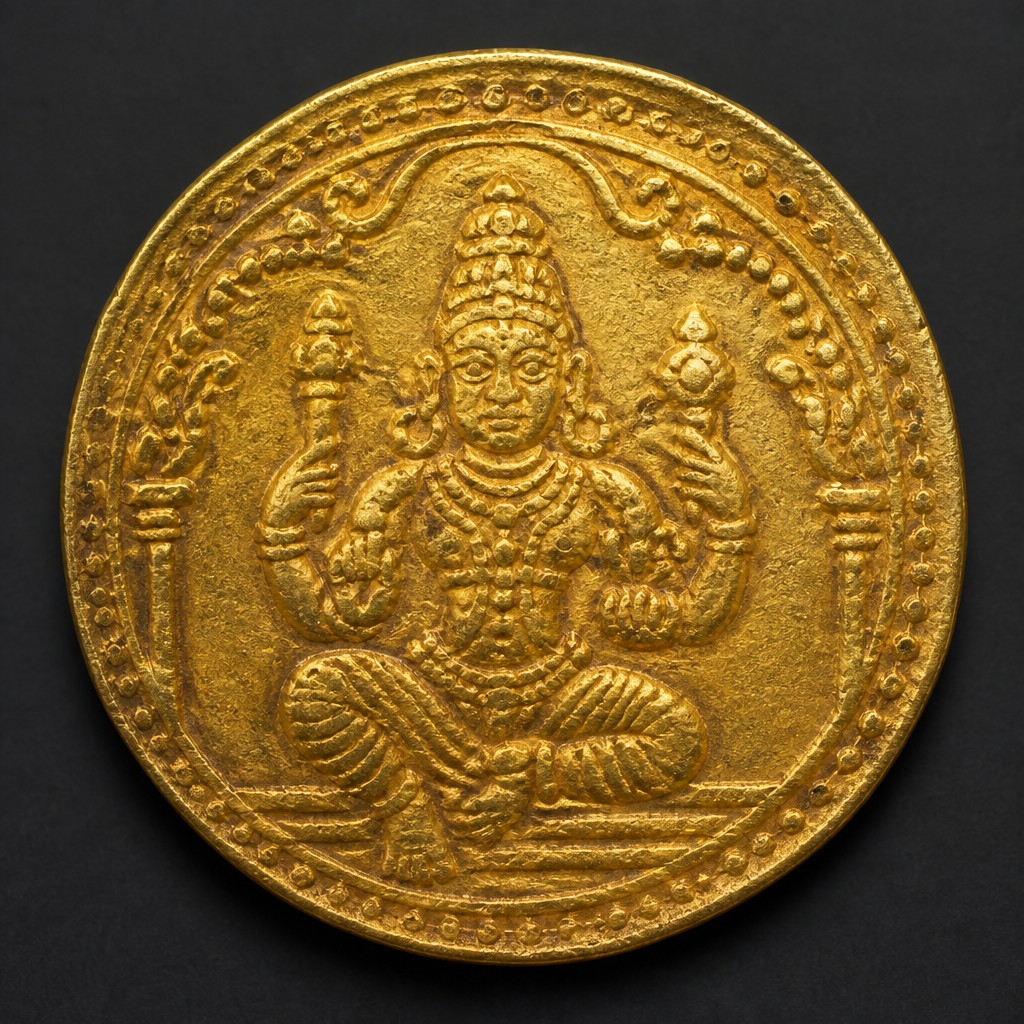
India Gold Pagoda (Madras Presidency)
Small gold coin traditionally used across South India, later adopted and standardized by the East India Company's Madras Presidency before being phased out for rupee-based currency.
Asian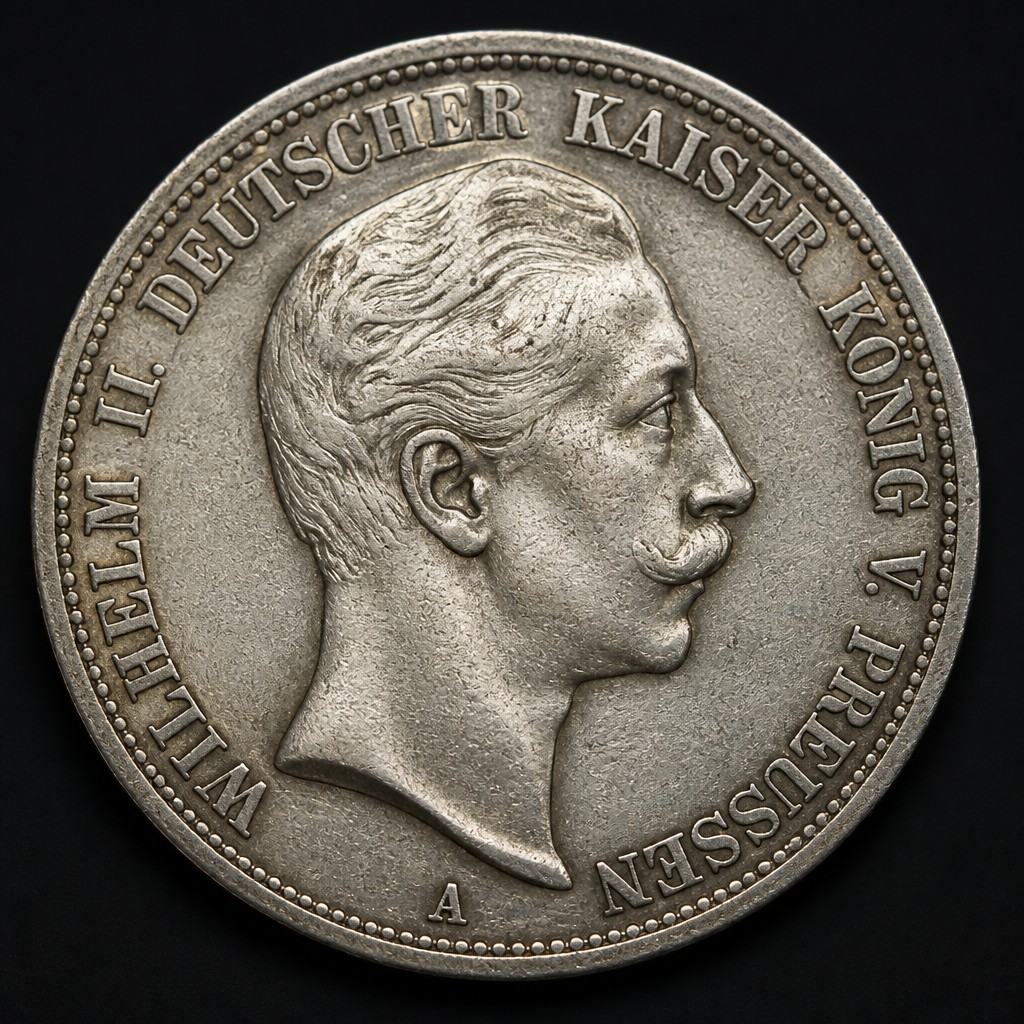
German 5 Mark Silver (Kaiserreich)
The 5 Mark was the largest circulating silver coin of the German Empire, issued by numerous constituent states and free cities, each with its own portrait or design under a common imperial system.
European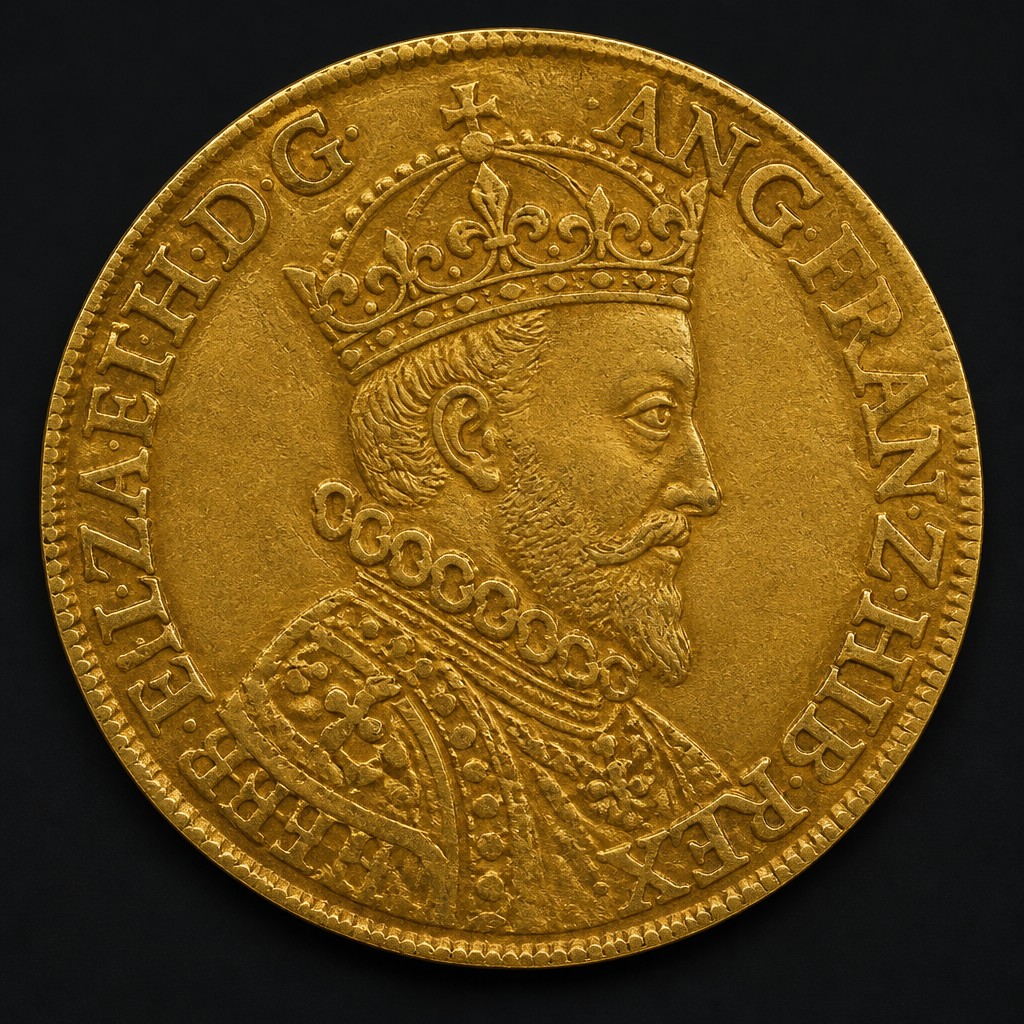
Touchstone Sovereign (Fine Sovereign)
A large, high-value English gold coin struck in especially pure 'fine gold,' valued at thirty shillings and distinguished from the more common crown-gold Sovereign of the same era.
British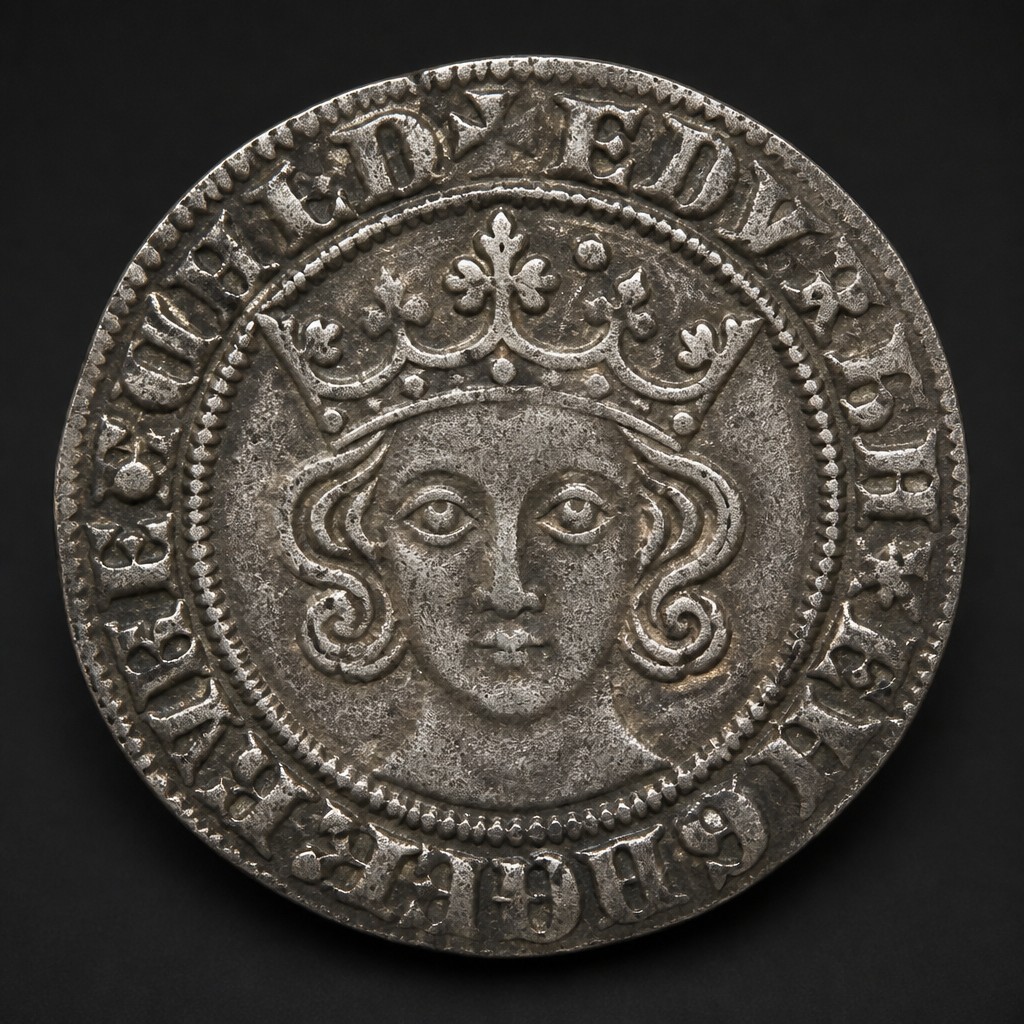
Half Groat
A small hammered silver coin worth half the value of the groat, or two pence, struck across three centuries of English coinage from the reign of Edward III through the Stuart era.
British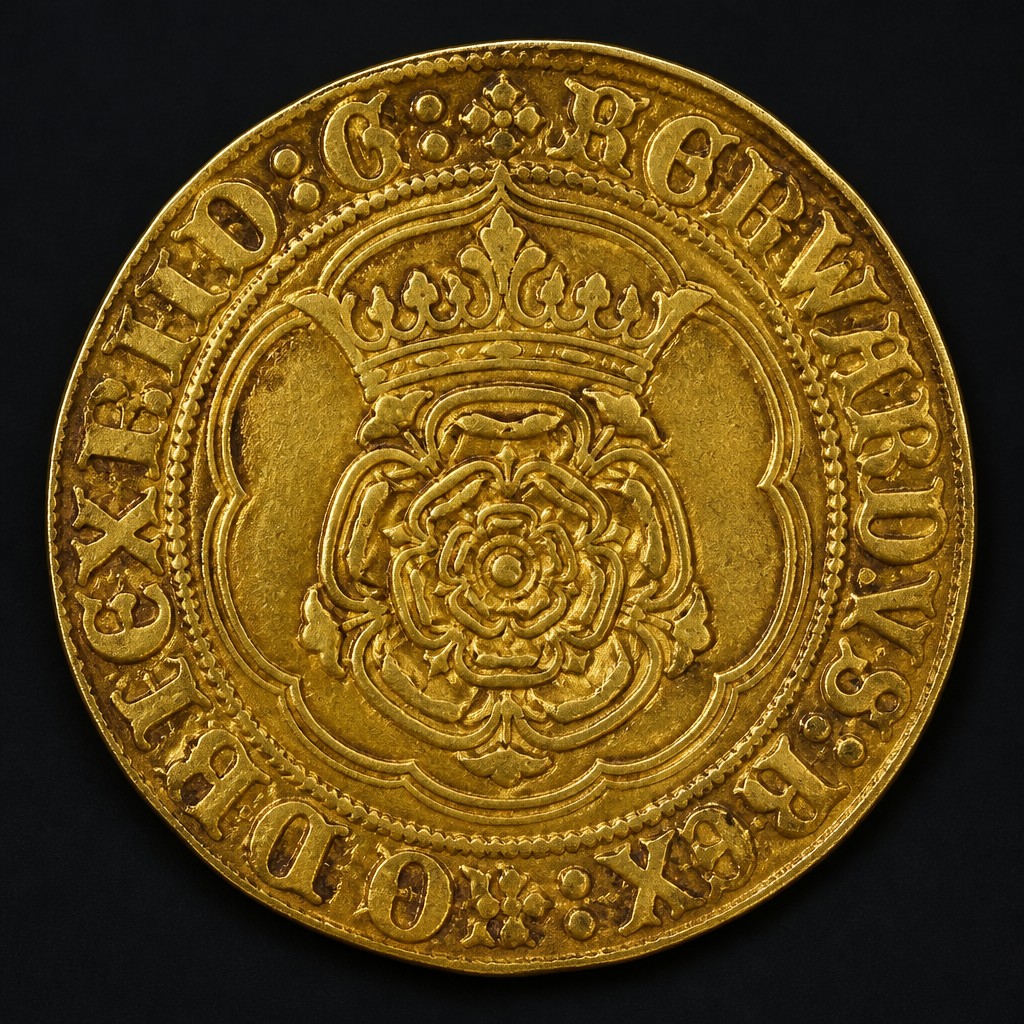
Rose Noble (Ryal)
A large English gold coin first struck under Edward IV in 1465, showing the king standing in a ship, and later revived in the Tudor era as a heavier, higher-value gold piece.
British