
Coin Encyclopedia
Search and identify coins from around the world — with country, denomination, metal, mint, history, and how to tell them apart.
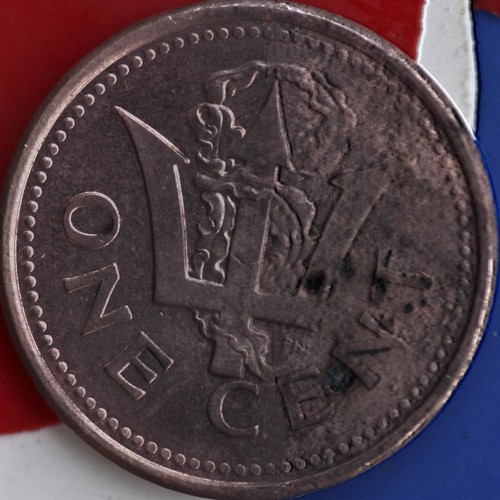
Barbados 1 Cent
A modern copper-colored Barbados one cent: the national coat of arms on the obverse and the value on the reverse, the smallest coin of the Barbadian dollar.
Circulation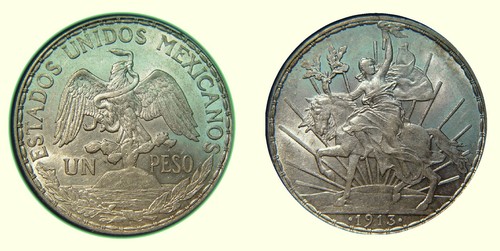
Mexican 1 Peso
Large silver Mexican peso, the famed "Caballito" type, with a winged Victory on horseback and the eagle-and-snake coat of arms.
World Coins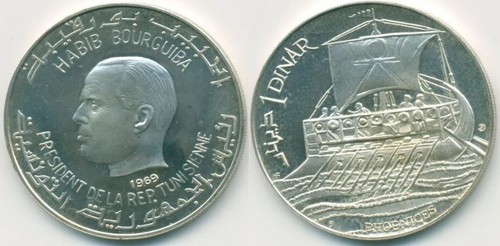
Tunisia 1 Dinar
A 1969 Tunisian silver 1 dinar showing President Habib Bourguiba on the obverse and a traditional sailing ship on the reverse.
World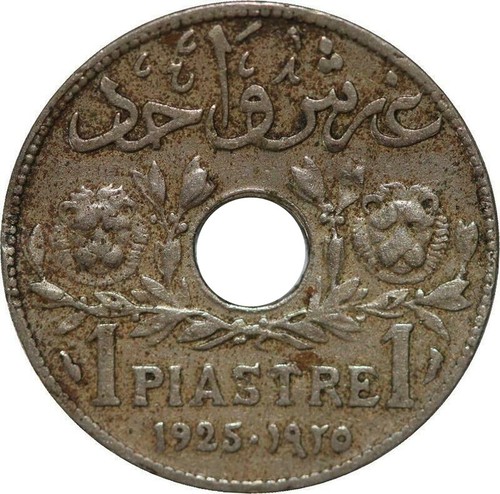
Lebanese 1 Piastre
A small holed bronze 1 Piastre of Greater Lebanon dated 1925, struck under the French Mandate, with bilingual legends and an ornamental wreath framing the value.
World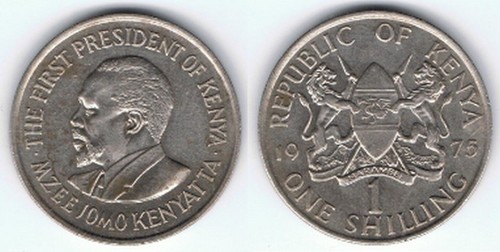
Kenya 1 Shilling
A circulating one-shilling coin of the Republic of Kenya bearing President Jomo Kenyatta on the obverse and the Kenyan coat of arms on the reverse.
World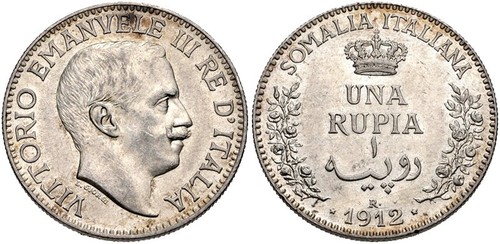
Somalia 1 Rupia
Silver 1 Rupia of Italian Somaliland, showing King Victor Emmanuel III facing right and a crowned heraldic reverse within a wreath.
World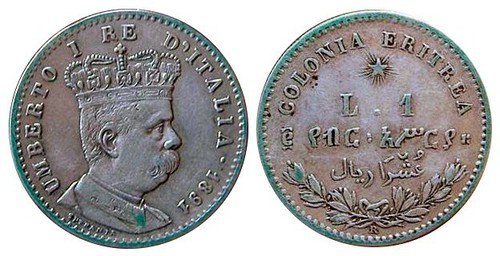
Eritrea 1 Lira
Silver 1 lira struck for Italy's colony of Eritrea, dated 1918, with a crowned heraldic emblem and the legend COLONIA ERITREA L.1.
World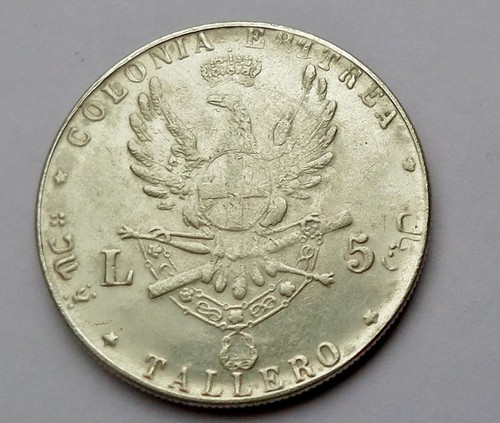
Eritrea 1 Tallero
A large silver trade dollar struck for Italian Eritrea under King Umberto I, carrying crowned heraldic arms and a Savoy eagle, dated 1891.
World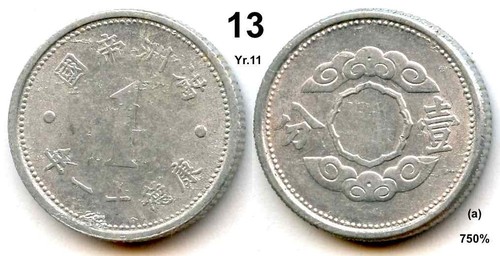
Manchukuo 1 Fen
A small bronze 1 fen from Manchukuo, dated 1944, with a large numeral 1 and Chinese inscriptions on one side and an ornamental circular design on the other.
Circulation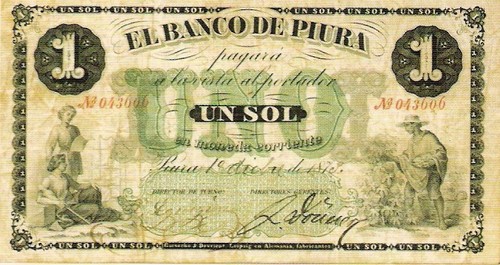
1 Sol (Gold)
A 19th-century Peruvian 1 Sol note from El Banco de Piura, with a seated torch-bearer and a standing laborer flanking a bold UN SOL.
Circulation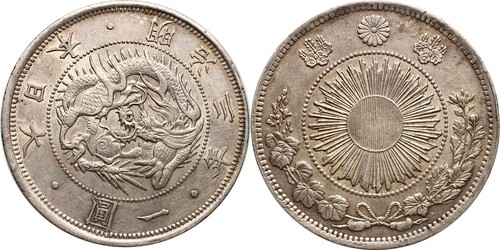
1 Yen (Silver)
An early Meiji silver 1 Yen struck in Meiji 3 (1870), showing a coiled dragon with a radiant sun on one side and a wreathed imperial crest on the other.
Circulation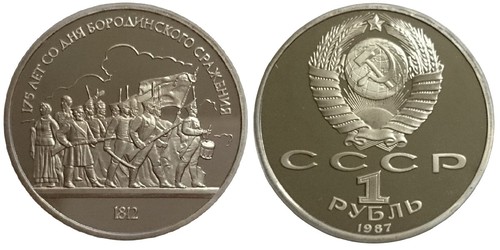
1 Rouble (1834)
An Imperial Russian silver 1 Rouble dated 1834, showing a right-facing imperial portrait with the Cyrillic ИМПЕРАТОРЪ legend and a crowned double-headed eagle.
Modern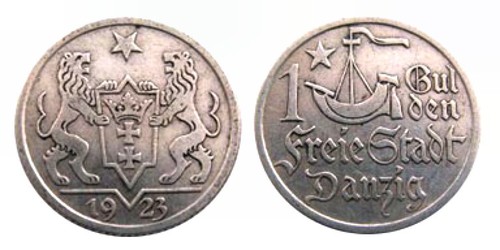
1 Gulden (Silver)
Silver 1 Gulden of the Free City of Danzig, dated 1923, carrying the city's coat of arms and its own short-lived currency between the World Wars.
Modern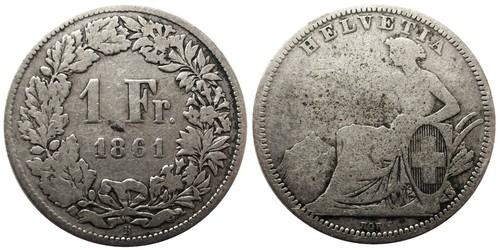
Swiss 1 Franc
A silver Swiss 1 Franc dated 1861, with the figure of Helvetia and the national coat of arms on one side and the value '1 Fr' in wreaths on the other.
Circulation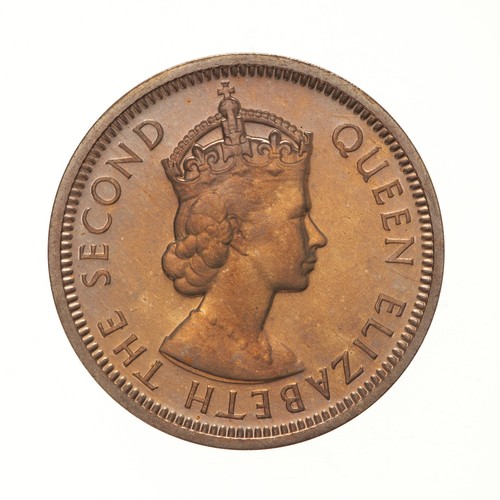
Belize 1 Cent
A small bronze one-cent coin from the Caribbean nation now called Belize, carrying a portrait of Queen Elizabeth II and dated 1954.
Circulation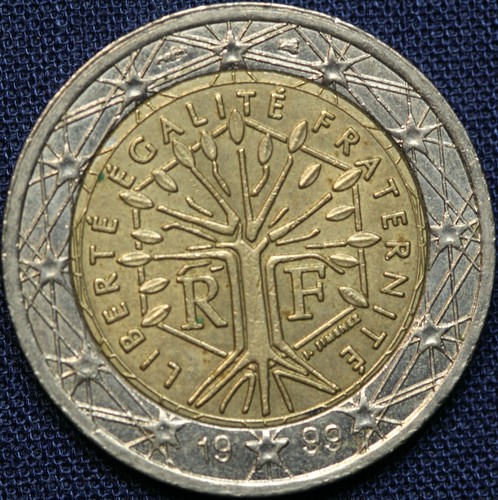
France 1 Euro
France's bimetallic 1 euro coin, with a stylized leafy tree inside a hexagon on the national side and the euro value with a map of Europe on the common side.
Euro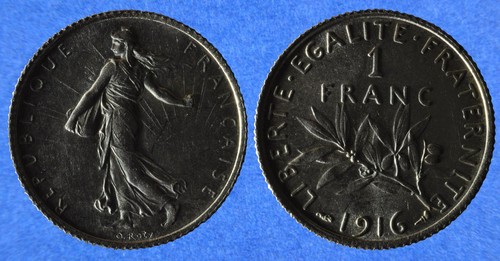
1 Franc Semeuse
A small silver French franc showing Roty's Semeuse, the striding Sower scattering seed at dawn, with the 1916 date on the LIBERTE EGALITE FRATERNITE reverse.
Circulation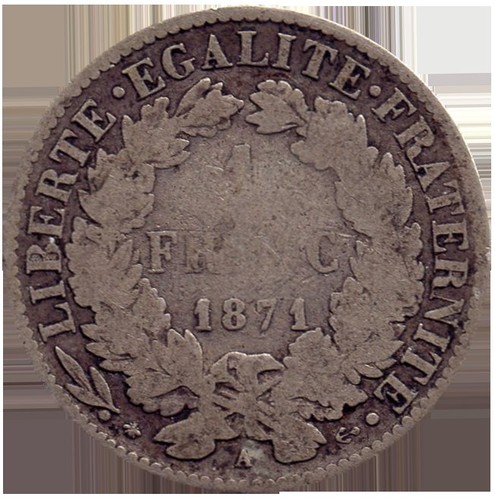
1 Franc Ceres
A small silver French franc showing the head of Cérès, goddess of the harvest, wearing wheat and a star, with the LIBERTE EGALITE FRATERNITE reverse dated 1871.
Circulation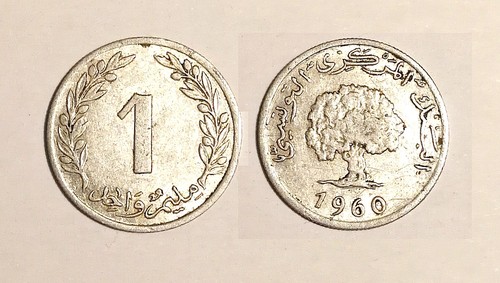
Tunisia 1 Millime
Tunisia's smallest post-independence coin, a tiny aluminum-bronze 1 millime of 1960 showing the value 1 framed by laurel and a numeral in profile.
World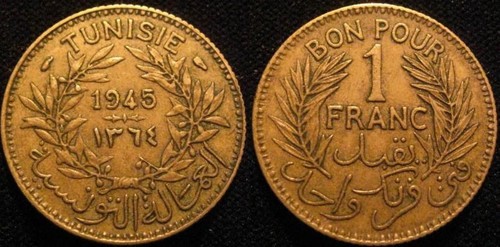
Tunisia 1 Franc
A small golden aluminum-bronze 1 franc of French-protectorate Tunisia, reading TUNISIE with a wreath and 'BON POUR 1 FRANC' beside Arabic script.
World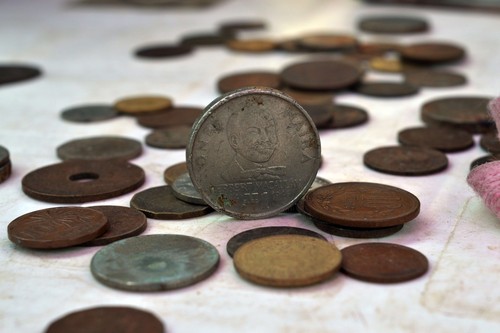
Nigeria 1 Naira
Nigeria's copper-nickel 1 Naira showing the nationalist Herbert Macaulay on the obverse and the national coat of arms on the reverse.
World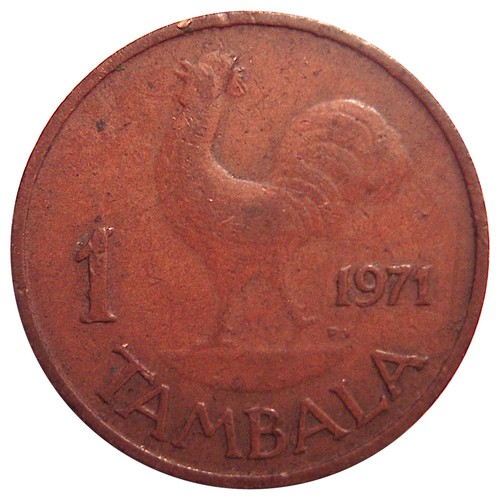
Malawi 1 Tambala
Malawi's small copper-bronze 1 tambala of 1971, showing President Hastings Kamuzu Banda on the obverse and a standing cockerel on the reverse.
World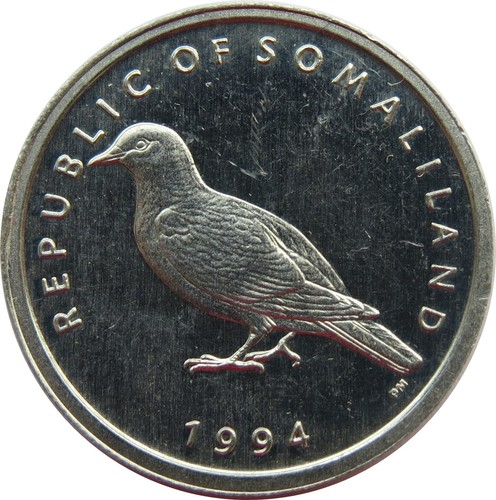
Somaliland 1 Shilling
An early circulation coin of the self-declared Republic of Somaliland, its reverse showing a dove above the country's name and the value.
World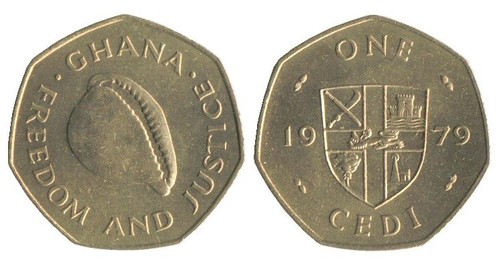
Ghana 1 Cedi
A golden-brass Ghanaian coin dated 1979, showing a cocoa pod with FREEDOM AND JUSTICE on one face and the national coat of arms on the other.
World