
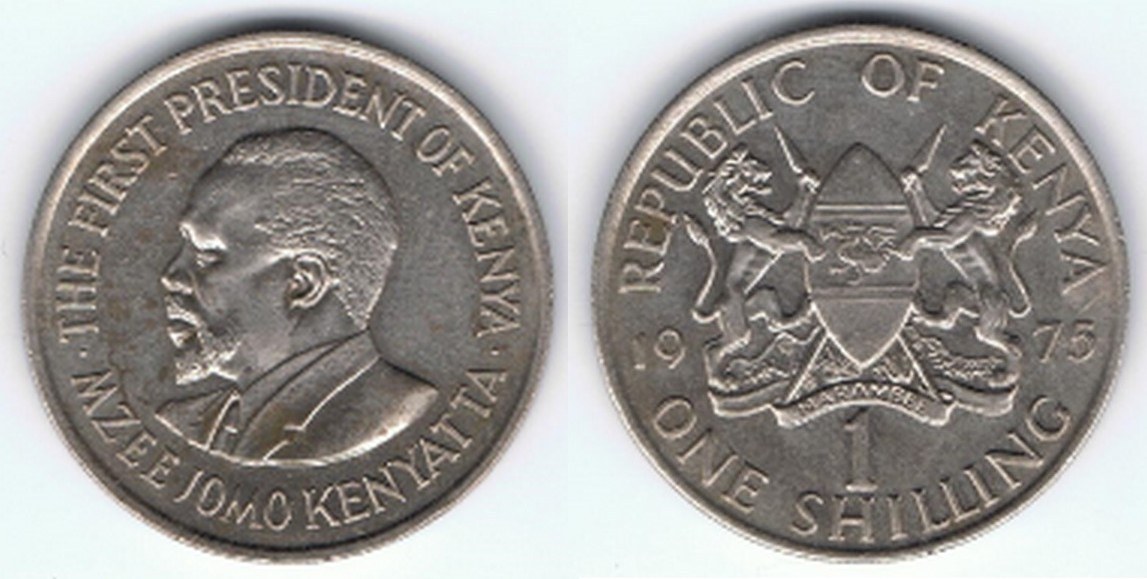
Kenya 1 Shilling
A circulating one-shilling coin of the Republic of Kenya bearing President Jomo Kenyatta on the obverse and the Kenyan coat of arms on the reverse.
- Country
- Kenya
- Denomination
- 1 Shilling
- Metal
- Bimetallic
Got a coin like this?
Identify any coin from a photo, free.
Overview
The Kenya 1 shilling is a circulating coin of the Republic of Kenya, the shilling being the country's principal unit of currency, divided into 100 cents. The example shown is a two-tone bimetallic piece, with a center plug set into an outer ring of a contrasting color, and carries the portrait of President Jomo Kenyatta on the obverse and the national coat of arms on the reverse.
Jomo Kenyatta was Kenya's first head of state after independence, and his portrait appeared on the country's early coinage. As a familiar everyday denomination, the one shilling is one of the most recognizable Kenyan coins and a common entry point for collectors of East African and modern world coinage.
Because the date is not visible on this particular coin, it should be attributed by matching its portrait, legends, and bimetallic construction to published references for the Kenyan shilling series rather than assumed to belong to any single year.
History & Background
Kenya became an independent republic in 1963 and introduced its own national currency, the Kenyan shilling, in place of the shared East African currency that had circulated across the region under British administration. Jomo Kenyatta, the country's founding president, featured on the portrait coinage of the new republic, establishing a design tradition of showing the sitting head of state on the obverse.
Over the following decades the shilling denomination was struck in several forms as coin specifications were revised, sizes reduced, and metal compositions changed in response to cost and circulation needs. Bimetallic construction — a center of one alloy within a ring of another — became a common technique for mid-value circulating coins worldwide in the later twentieth and early twenty-first centuries, valued for its distinctive appearance and its usefulness in coin-recognition and anti-counterfeiting.
The reverse of Kenyan coinage has consistently featured the national coat of arms, tying the money to the symbols of the republic. Because this coin's date is not legible here, it should be placed within the broader Kenyan shilling series by design and fabric rather than assigned to a specific issue.
How to Identify
The obverse shows the portrait of President Jomo Kenyatta, accompanied by a legend. The reverse displays the Kenyan coat of arms — a shield supported by two lions, with the national motto ribbon — together with the denomination naming the coin as one shilling and, where present, the date and country name. The pairing of the Kenyatta portrait with the coat of arms and the one-shilling value is the core attribution.
This example is bimetallic, meaning it is made of two visibly different-colored metals: a central disc set inside a surrounding ring. That two-tone construction, combined with the small-to-mid size typical of a circulating shilling, distinguishes it from earlier single-metal Kenyan shillings and from the base-metal cent denominations.
Key diagnostics are the Kenyatta obverse, the coat-of-arms reverse, the 'One Shilling' / 'Shilingi' denomination, and the bimetallic flan. Because the date on this coin is not visible, confirm the legends and match the design to a standard catalogue of Kenyan coinage rather than relying on appearance alone.
Value & Collectibility
The Kenya 1 shilling is primarily a circulating coin, so most examples carry modest collector value driven by condition and demand rather than precious-metal content; bimetallic circulating coins of this kind are base-metal and have little intrinsic bullion value.
As with most modern world coins, well-preserved uncirculated or proof examples, scarcer dates, and pieces with sharp detail and original surfaces bring more than worn circulated coins, which typically trade at nominal collector levels. Because the date is not visible on this coin, its precise place in the series — and therefore its value — cannot be fixed without confirming the year.
Exact prices depend on the specific date, grade, and marketplace, so figures are best treated as ranges and context rather than fixed values. For any coin thought to be scarce or in high grade, matching it to a catalogue year and, where warranted, seeking professional grading helps confirm both attribution and market value.
Frequently asked questions
What is the Kenya 1 shilling?
It is a circulating coin of the Republic of Kenya worth one shilling, the country's main currency unit; this example is bimetallic and shows President Jomo Kenyatta on the obverse and the Kenyan coat of arms on the reverse.
Who is pictured on the coin?
The obverse bears the portrait of Jomo Kenyatta, Kenya's founding president, whose image appeared on the coinage of the newly independent republic.
What is on the reverse?
The reverse shows the Kenyan coat of arms — a shield flanked by two lions with the national motto ribbon — together with the one-shilling denomination and, where legible, the country name and date.
Why does the coin have two different colors of metal?
It is bimetallic, meaning a central disc of one alloy is set inside an outer ring of a contrasting alloy. This two-tone construction is common for mid-value circulating coins and aids coin recognition.
How much is it worth?
As a base-metal circulating coin it carries mainly modest collector value that depends on date, grade, and eye appeal; without a visible date the exact catalogue year and value cannot be pinned down.
Kenya 1 Shilling guides
In-depth guides for identifying, valuing, and collecting Kenya 1 Shilling.
Other coins you may enjoy
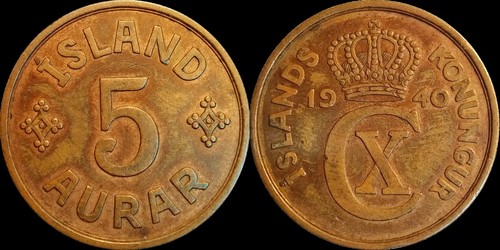
5 Aurar
1926-1942
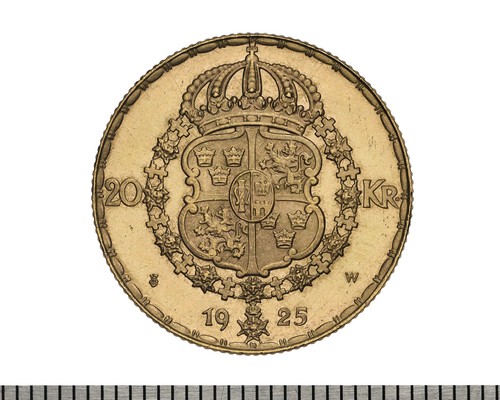
20 Kronor
1925 (denomination struck 1873-1925)
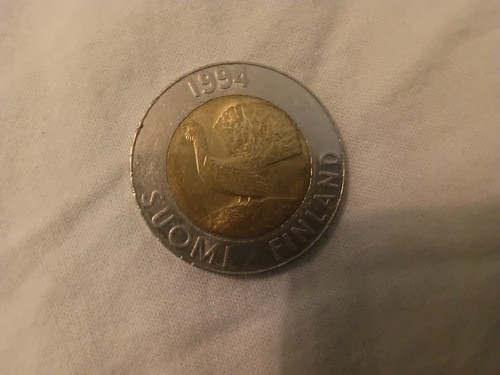
10 Markka
1993–2001
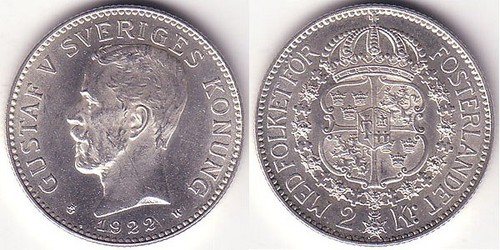
2 Kronor
1910-1940 (this example dated 1922)
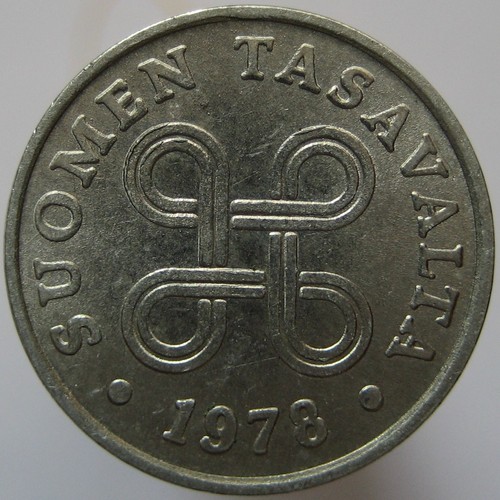
1 Penni
1969–1979
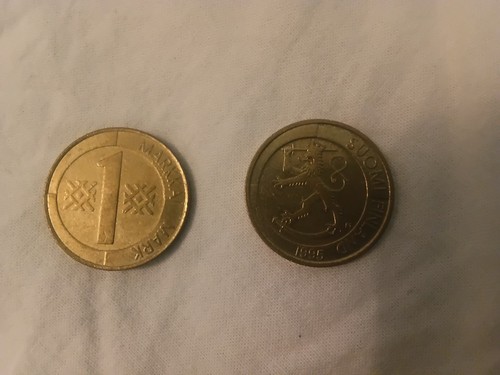
1 Markka
1993–2001
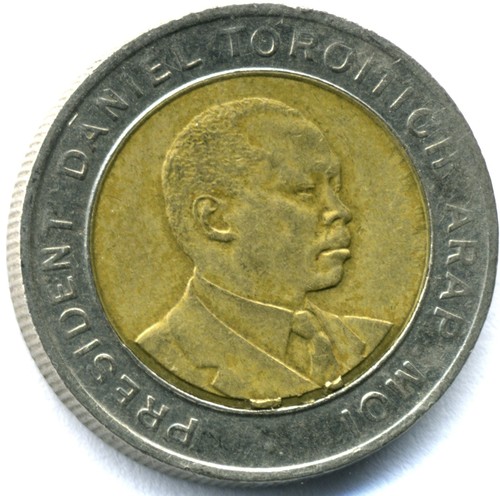
Kenya 5 Shillings
Bimetallic issues (2005–2010)
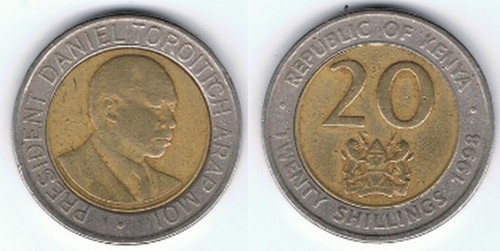
Kenya 20 Shillings
Modern issue (late 1990s–2000s)
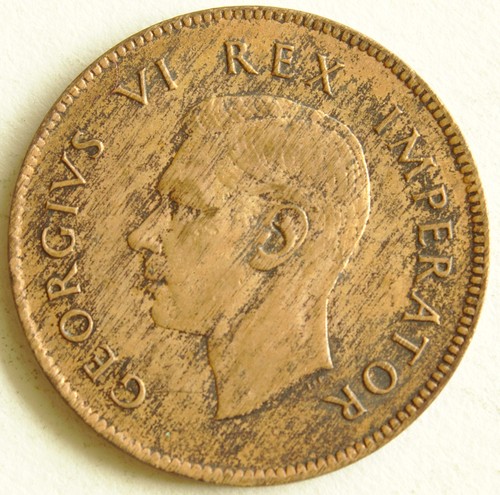
South Africa Farthing
1923-1960
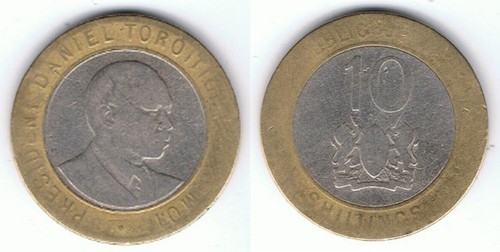
Kenya 10 Shillings
Republic of Kenya, bimetallic issues (mid-1990s to c. 2010)
Gold Sovereign
1817–present
Henri V Five Francs
1831