
How to Identify the Kenya 1 Shilling
A collector's guide to identifying the Kenyan one-shilling coin by its Jomo Kenyatta portrait, coat-of-arms reverse, bimetallic flan, and look-alikes.
Read the full Kenya 1 Shilling encyclopedia entry →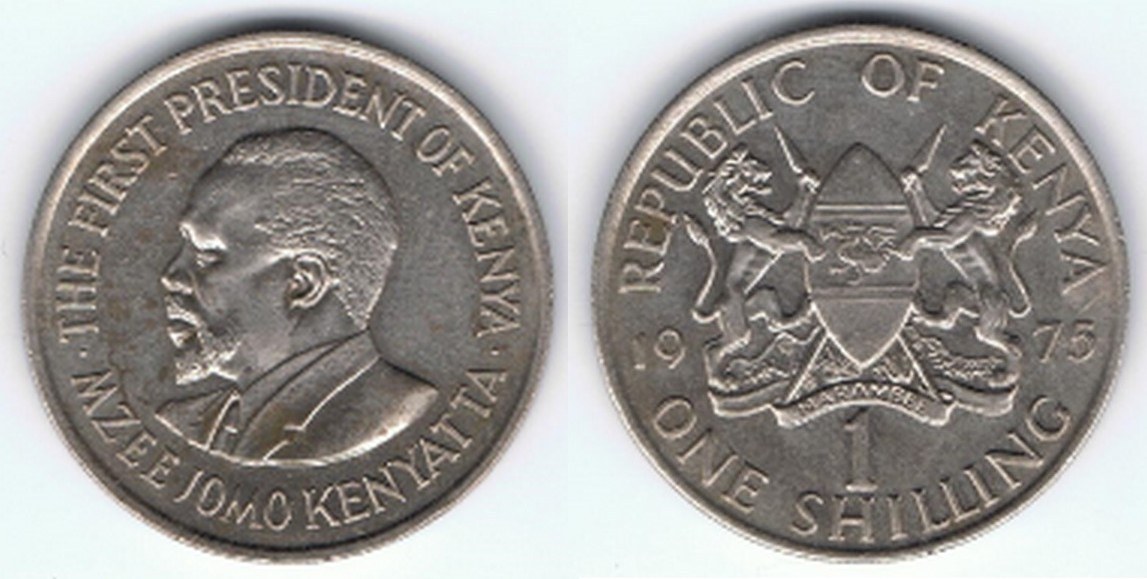
What This Coin Is
The Kenya 1 shilling is a circulating coin of the Republic of Kenya, where the shilling is the main currency unit divided into 100 cents. Identifying the example shown starts with recognizing a bimetallic (two-tone) coin that pairs a portrait of President Jomo Kenyatta on the obverse with the Kenyan coat of arms on the reverse and a 'One Shilling' denomination.
Reading the Obverse
The obverse centers on the portrait of Jomo Kenyatta, ringed by a legend. Read the legend rather than judging by the bust alone, since several Kenyan denominations and issues share portrait obverses. Confirming the name and titles in the legend helps separate the shilling from other values that may carry a similar head.
Reading the Reverse
The reverse shows the national coat of arms: a central shield supported by two lions, above a motto ribbon, with the denomination naming the coin as one shilling. Confirm that the value reads as a single shilling — not two, five, or a cent value — because the coat of arms appears across the Kenyan series and the denomination is what fixes the specific coin. Where the date and country name are legible, note them to place the coin in its catalogue year.
Size, Metal, and Fabric
This is a bimetallic coin: a central plug of one alloy set inside an outer ring of a contrasting alloy, giving the characteristic two-color appearance. That construction distinguishes it from earlier single-metal Kenyan shillings and from plain base-metal cent coins. Weigh and measure any candidate and compare against published specifications for the type, since size, weight, and the bimetallic build together are strong confirmation points.
Look-Alikes and Authentication Cautions
Other Kenyan denominations share the coat-of-arms reverse and, on some issues, a presidential portrait, so always read the stated value to avoid confusing the shilling with neighboring coins. Bimetallic coins from other countries can look broadly similar at a glance, making the Kenyan legends and coat of arms the decisive clues. Because the date on this example is not visible, do not assume a specific year — match the portrait, legends, and fabric to a standard catalogue of Kenyan coinage, and for any coin thought to be scarce, watch for signs of tampering such as a separated or reseated center plug, incorrect weight, or soft, cast-looking detail.
Frequently asked questions
How do I tell the 1 shilling from other Kenyan coins?
Read the reverse denomination: it must state one shilling. The coat of arms and, on some issues, the presidential portrait appear across the series, so the stated value is what identifies the specific coin.
What does the bimetallic construction tell me?
The two-tone build — a center disc within a contrasting ring — marks it as a modern circulating type rather than an early single-metal shilling, and it is a useful diagnostic when matching the coin to catalogue specifications.
The date isn't visible — how should I attribute it?
Do not assume a year. Confirm the Kenyatta portrait, the coat-of-arms reverse, the one-shilling value, and the bimetallic flan, then match those features to a standard reference for the Kenyan shilling series.
What are signs of a fake or altered bimetallic coin?
Watch for a loose, separated, or reseated center plug, incorrect weight or diameter, casting seams or surface bubbles, and unusually soft detail; for anything thought to be scarce, seek a catalogue match or professional authentication.