
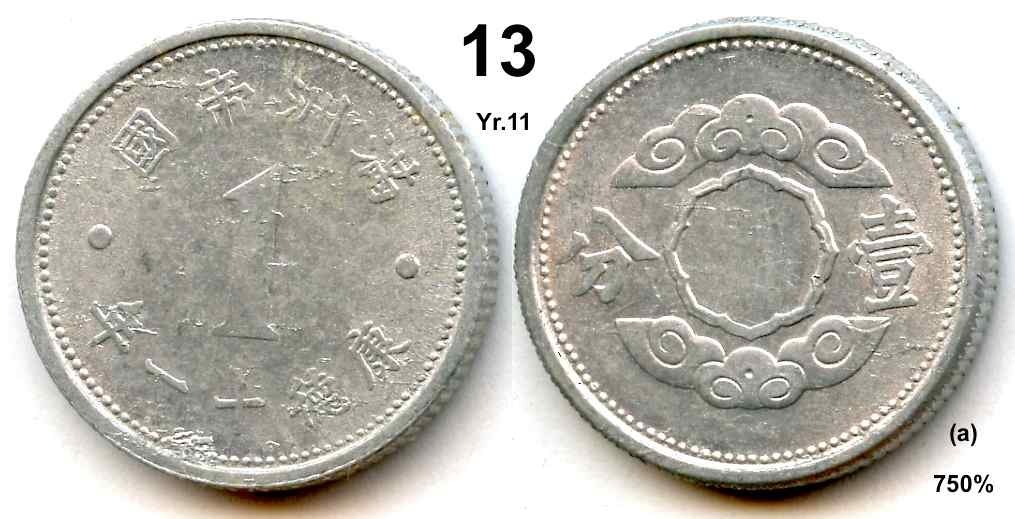
Manchukuo 1 Fen
A small bronze 1 fen from Manchukuo, dated 1944, with a large numeral 1 and Chinese inscriptions on one side and an ornamental circular design on the other.
- Country
- Manchukuo
- Denomination
- 1 Fen
- Metal
- Bronze
Got a coin like this?
Identify any coin from a photo, free.
Overview
The 1 fen is a small bronze minor coin of Manchukuo (Manchoukuo), the Japanese-backed state that governed northeast China (Manchuria) between the early 1930s and 1945. It was everyday small change: the fen was the low unit of the Manchukuo currency system, in which one hundred fen made up the higher yuan denomination. The example here is dated 1944.
One side is dominated by a bold numeral 1 accompanied by Chinese inscriptions and a border of raised pearls, marking the denomination. The other side carries an ornamental circular design with decorative patterns rather than a portrait. As a base-metal coin, its interest is historical rather than tied to any precious-metal content.
Because it circulated as pocket change in a short-lived wartime state, surviving pieces range from heavily worn browns to sharper examples that keep more of the numeral, inscriptions, and ornament. Collectors seek the type as a tangible relic of a distinct chapter in twentieth-century East Asian history.
History & Background
Manchukuo was established in the early 1930s in the wake of Japanese expansion into Manchuria and existed as a client state until 1945. It issued its own coinage in the name of the state, denominated in fen and higher units, to serve daily commerce across the region. The 1 fen sat at the small-change end of that system.
Manchukuo coins were dated by the reign era of the period rather than by the Western calendar alone, and this 1944 piece falls late in the state's existence, during the Second World War. Wartime pressure on raw materials pushed many mints, Manchukuo's included, toward lighter and cheaper substitute compositions in the final years, so the coinage of this era reflects the strained conditions under which it was produced.
The ornamental, inscription-heavy design, with a plain numeral and decorative motif in place of a ruler's portrait, is characteristic of the region's minor coinage of the period. Struck in quantity for circulation and handled heavily, these small bronze pieces survive today in a wide spread of conditions, and the type as a whole documents the currency of a state that ceased to exist at the end of the war.
How to Identify
Look for a small, round bronze coin with a large numeral 1 at the center of one side, framed by Chinese inscriptions and a ring of raised pearls or beads along the border. The numeral and characters together mark the one-fen denomination and the issuing state. The date, here 1944, is expressed in Chinese characters as part of the legend.
The opposite side shows an ornamental circular design built from decorative patterns rather than a portrait or national animal. This decorative motif, combined with the numeral-and-inscription side, is the quickest signature of the type.
The coin is bronze, showing brown tones where original surface survives, and is a small minor-coin module rather than a large or heavy piece. Identification rests on the combination of the numeral 1, the Chinese inscriptions naming the state and value, the beaded border, and the ornamental reverse together. Confirm the exact date and any variety details against published references for Manchukuo coinage.
Value & Collectibility
As a small circulating bronze minor coin from a short-lived state, the Manchukuo 1 fen is generally an affordable and accessible collector type. Heavily worn or corroded examples are common and inexpensive, while coins that keep sharp numeral, crisp inscriptions, an even beaded border, and clean surfaces command higher premiums.
Value is driven mainly by condition, eye appeal, and the specific year and variety rather than by metal content, since these are base-bronze pieces. Well-struck examples with problem-free surfaces are the most sought after, and certain dates or wartime compositions within Manchukuo's series are scarcer than others.
The historical association with Manchukuo adds collector interest beyond the coin's tiny face value. Because the type spans several years and design details, confirming the exact date and any variety helps place a given coin, and prices are best checked against recent sales of comparable pieces rather than assumed from the denomination alone.
Frequently asked questions
What country and denomination is this coin?
It is a 1 fen of Manchukuo, the Japanese-backed state that governed Manchuria in northeast China from the early 1930s to 1945. The fen was the small unit of its currency, with one hundred fen making up the higher yuan denomination.
What do the two sides show?
One side has a large numeral 1 with Chinese inscriptions and a beaded border, marking the one-fen value. The other side has an ornamental circular design of decorative patterns rather than a portrait or animal.
Is the 1 fen silver or a base metal?
It is bronze, a copper-based base metal. The 1 fen was low-value small change, not a precious-metal coin, so its appeal is historical rather than tied to bullion value.
How is the 1944 date shown?
Manchukuo coins were dated by the state's reign era in Chinese characters rather than by Western numerals. The 1944 date on this piece is expressed within the Chinese legend, which is why it does not read as a familiar four-digit year.
Is a 1944 example rare or valuable?
As a circulating bronze coin, most examples are affordable, with value depending on condition and surfaces. Well-preserved pieces with sharp detail are worth more; confirm the exact date and any variety against recent comparable sales.
Manchukuo 1 Fen guides
In-depth guides for identifying, valuing, and collecting Manchukuo 1 Fen.
Other coins you may enjoy
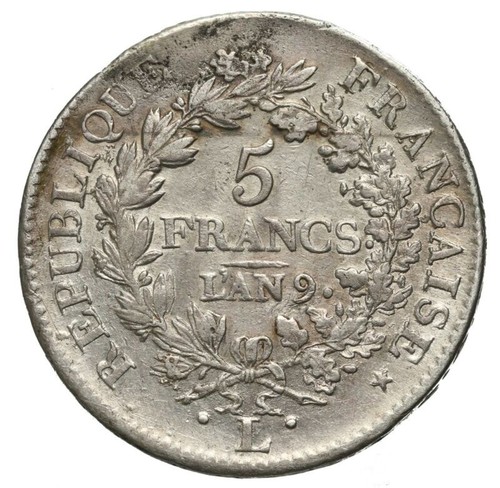
5 Francs (First Republic)
L'an 9 (1800–1801)
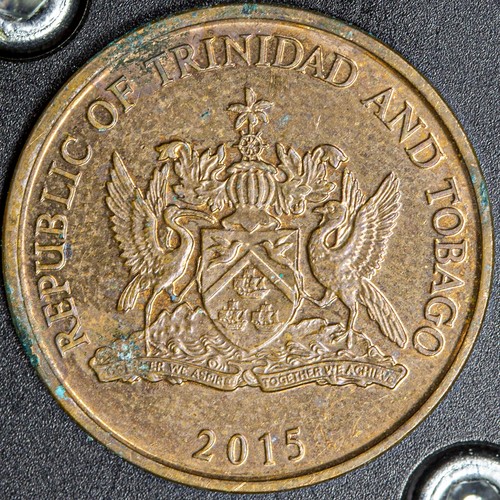
Trinidad and Tobago Dollar
2015
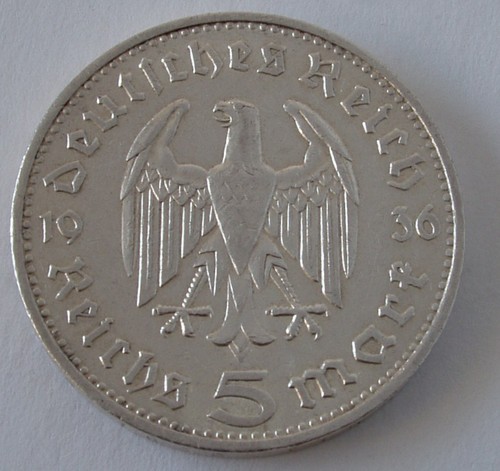
German 5 Reichsmark (Hindenburg)
1935–1936 (Hindenburg type with swastika)
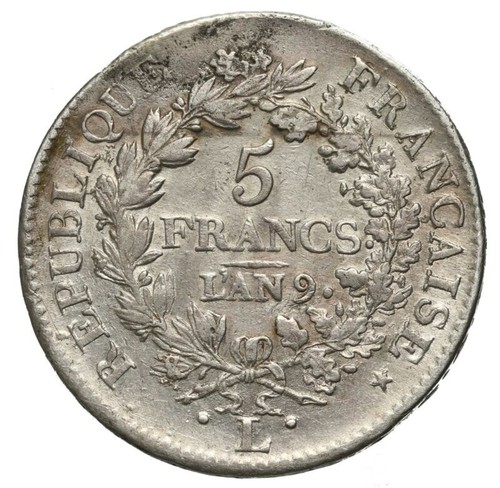
5 Francs Semeuse
1960–1969
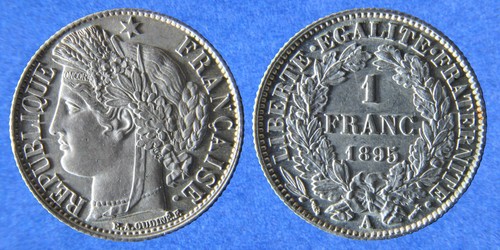
French Cérès 1 Franc
1849–1895
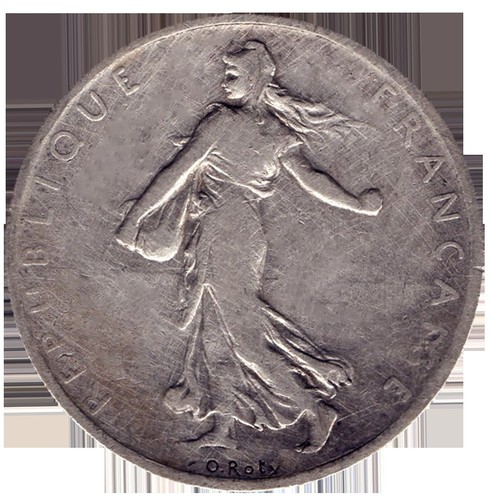
French Semeuse 2 Francs
1898–1920 (silver issues; pictured example dated 1899)
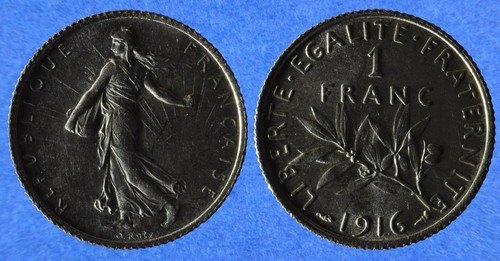
French Semeuse 1 Franc
1898–1920 (silver Semeuse 1 franc type)
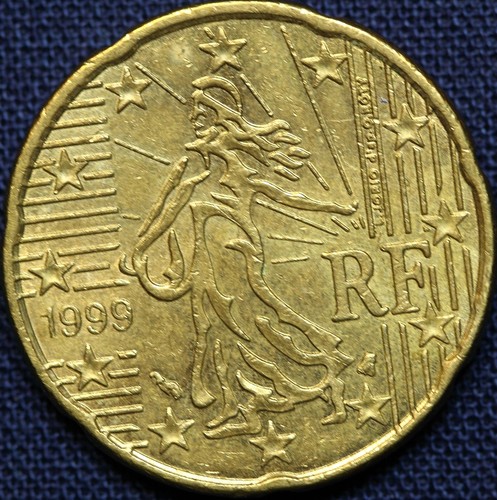
France 50 Cent Euro
1999–present
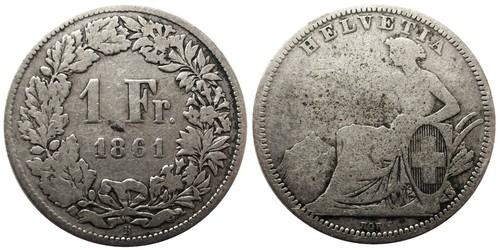
Swiss 1 Franc
1861
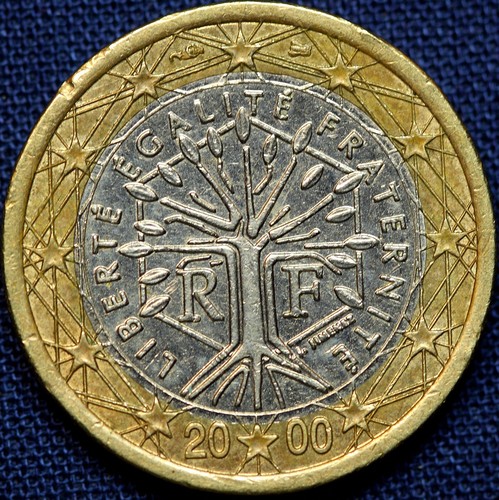
France 20 Centimes
1962–2001 (Fifth Republic, Marianne / Lagriffoul type)
Swiss 2 Francs
1860
Austria-Hungary 15 Kreuzer
1807