
How to Identify the Manchukuo 1 Fen
A collector's checklist for the bronze Manchukuo 1 fen: the numeral and beaded border, Chinese inscriptions, ornamental reverse, size and metal, and authentication cautions.
Read the full Manchukuo 1 Fen encyclopedia entry →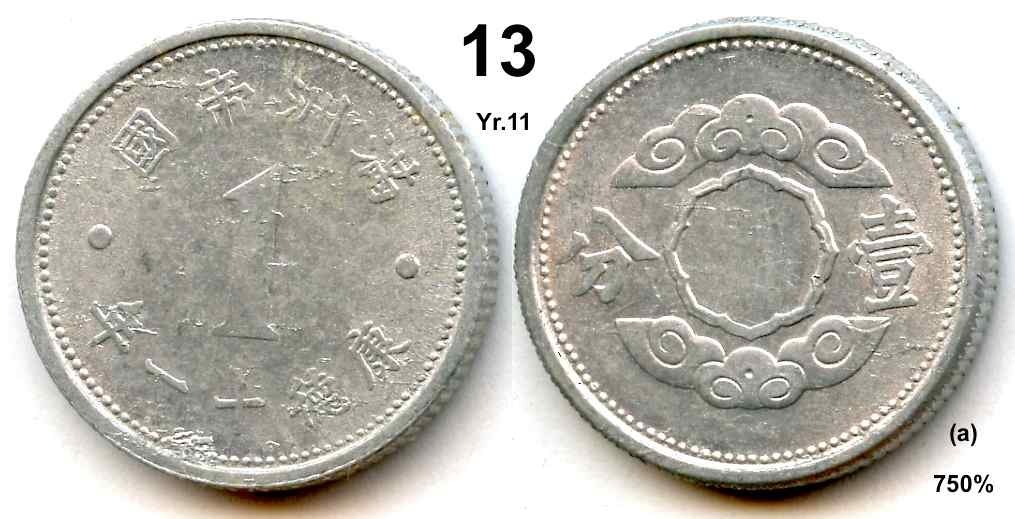
Start with the two sides together, because their contrast identifies the type quickly. One side is built around a large numeral 1 surrounded by Chinese inscriptions and a ring of raised pearls or beads. The other side carries an ornamental circular design of decorative patterns, with no portrait or national animal. A small bronze coin combining a beaded numeral side with a purely ornamental side points to the Manchukuo 1 fen.
Read the Chinese inscriptions and the date. The characters name the issuing state and the denomination, and the date is given in the state's reign-era form rather than as Western numerals. This is important: do not expect to see "1944" spelled out in Arabic digits. Matching the characters against a reference for Manchukuo coinage confirms both the state and the specific year.
Check the physical characteristics. This is a small bronze minor coin, brown where original surface survives, not a large or heavy piece. Weigh and measure it and compare against published figures for the 1 fen; a coin markedly off in diameter or weight deserves a closer look. Note that Manchukuo's late-war coinage moved toward lighter substitute materials in some issues, so composition and weight can help place a given date.
Mind variety and date details. The 1 fen was issued across several years, and small differences in the inscriptions, numeral, and ornament help attribute a coin to a particular year and variety. Some dates and compositions are scarcer than others, so match the specifics to a reference rather than assuming all similar-looking pieces are identical.
Beware of look-alikes and altered coins. Other East Asian minor coins of the period also use a numeral, Chinese characters, and a beaded border, so rely on the specific inscriptions to confirm the coin is Manchukuo rather than a neighboring issue. Watch for cast copies with seam lines, grainy or bubbled surfaces, and soft, blurry characters, as well as corrosion that can mimic or hide detail. When origin, value, or surfaces raise doubt, seek an opinion from a specialist in Chinese and East Asian coinage.
Frequently asked questions
What is the fastest way to confirm this is a Manchukuo 1 fen?
Check both sides: a large numeral 1 with Chinese inscriptions and a beaded border on one, and an ornamental circular design on the other. On a small bronze coin, that pairing points to the 1 fen. Then read the Chinese legend to confirm the state and date.
How do I tell it apart from other East Asian small coins?
Many regional minor coins share a numeral, Chinese characters, and a beaded border, so those features alone are not decisive. Rely on the specific inscriptions naming Manchukuo and the fen denomination to separate it from Chinese, Japanese, or other neighboring issues of the era.
Why can't I find the 1944 date on the coin?
Manchukuo dated its coins by the state's reign era in Chinese characters, not by Western four-digit years. The 1944 date is encoded in the Chinese legend, so you confirm it by matching the characters to a reference rather than looking for Arabic numerals.
How can I spot a fake or altered coin?
Look for casting seams, a grainy or bubbled surface, and soft characters that lack struck crispness, along with corrosion that can obscure detail. If the coin's origin, value, or surfaces look suspicious, have it examined by a specialist in East Asian coinage.