
Coin Encyclopedia
Search and identify coins from around the world — with country, denomination, metal, mint, history, and how to tell them apart.
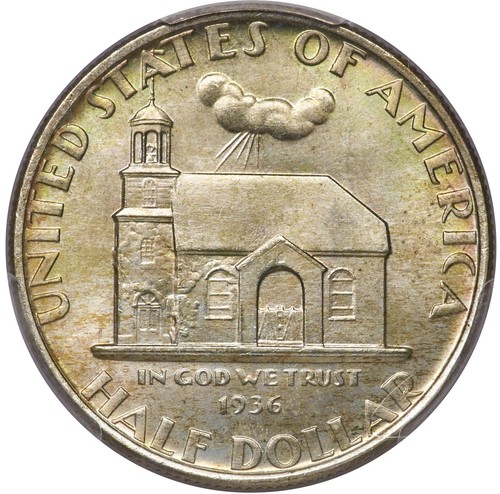
Delaware Tercentenary Half Dollar
A 1936 U.S. silver half dollar marking 300 years since Swedish colonists landed in Delaware, showing Old Swedes Church on one side and the ship Kalmar Nyckel on the other.
Classic Commemorative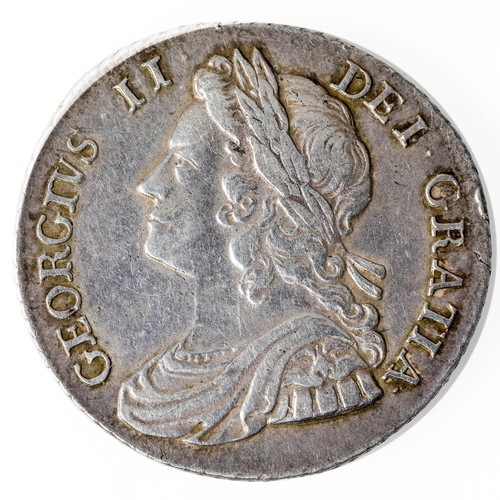
Shilling of George II
A milled silver shilling of George II, with a left-facing bust reading GEORGIVS II DEI GRATIA and a crowned cruciform-shields reverse; this one is a 1736 roses and plumes issue.
Milled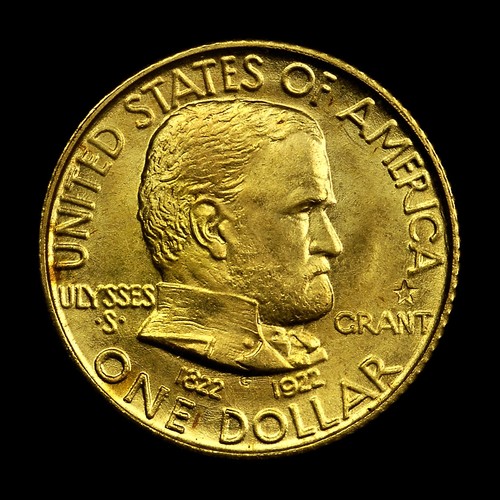
Grant Memorial Gold Dollar
A tiny 1922 U.S. gold dollar honoring Ulysses S. Grant's birth centennial, issued in 'star' and 'no star' varieties from the Philadelphia Mint.
Classic Commemorative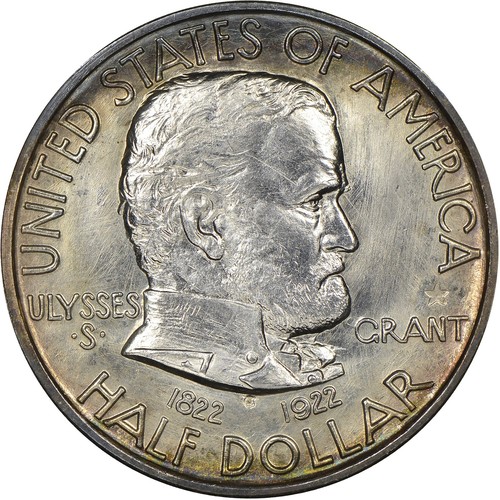
Grant Memorial Half Dollar
A 1922 U.S. silver commemorative marking the centennial of Ulysses S. Grant's birth, with his profile and the dates 1822-1922, issued with and without a star.
Classic Commemorative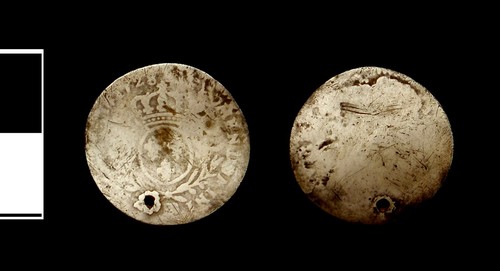
Unidentified Silver Coin (Louis XV era)
An 18th-century French royal silver coin of the Louis XV era, showing a right-facing bust and a crowned fleur-de-lis shield; the exact denomination is not confirmed.
Royal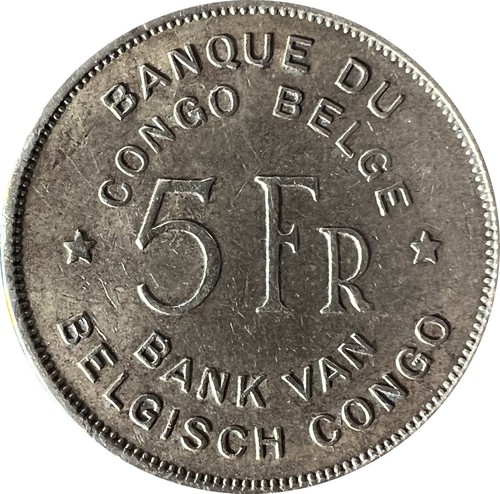
Congo 5 Francs
A modern circulation coin of the Democratic Republic of Congo, showing the central bank name and the value 5 Francs with decorative devices.
World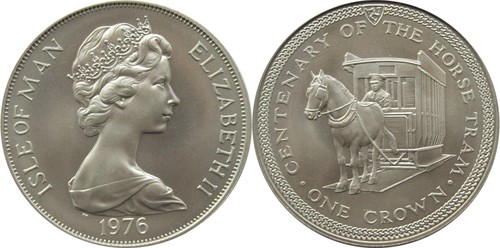
Isle of Man Crown
A 1976 Isle of Man cupronickel crown marking the centenary of the Douglas horse trams, showing a horse-drawn tram beneath an archway on the reverse.
Commemorative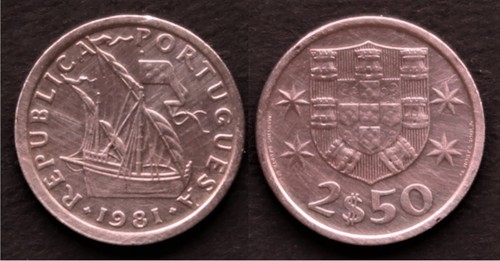
2.5 Escudos
A copper-nickel 2.5 Escudos of the Portuguese Republic, showing a sailing caravel on the obverse and the national shield with the value 2$50.
Modern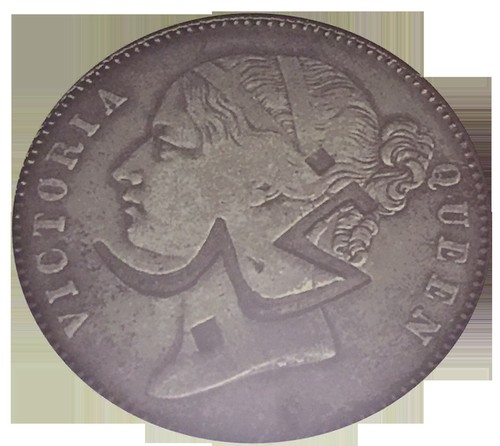
Najd Silver Coin
Silver trade coin catalogued to Najd, central Arabia, bearing a left-facing Victoria Queen bust and an 1862 date in the British India rupee style.
Arabia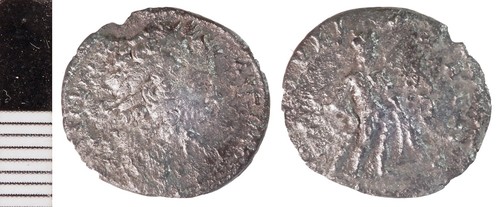
Roman Imperial Denarius (Unidentified)
A silver denarius of the Roman Empire, 2nd century AD, showing an emperor's right-facing curly-haired portrait and a standing imperial reverse type.
Ancient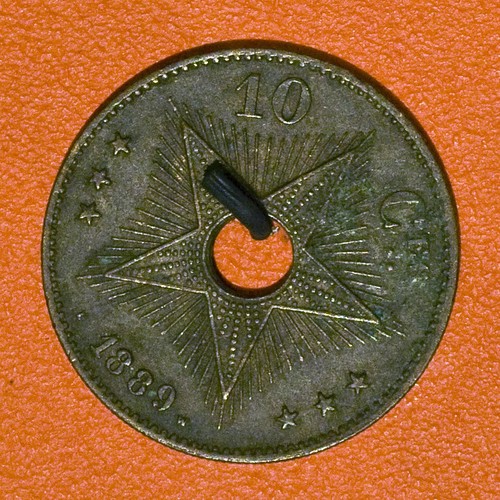
Congolese Commemorative Coin
An 1889 holed copper 10-centime coin of the Congo Free State, with a radiant five-pointed star, the value 10 C, and a ring of small stars.
World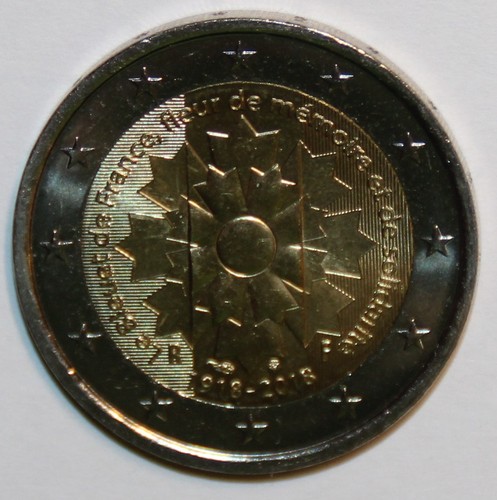
France 2 Euro Bleuet de France Commemorative
A French bi-metallic 2 euro commemorative showing the Bleuet de France cornflower, France's remembrance flower, paired with the shared European 2 euro side.
Commemorative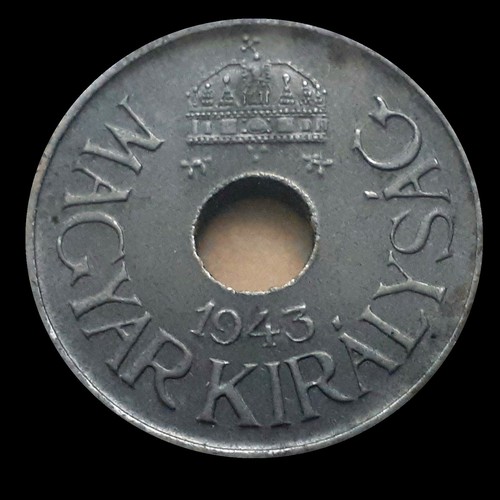
20 Fillér
An early 20th-century Hungarian 20 fillér, a small base-metal coin showing the crowned Hungarian coat of arms and the FILLÉR minor denomination.
Modern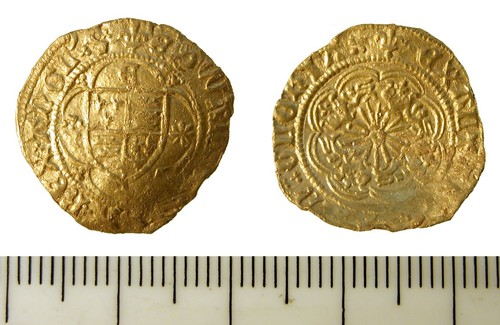
Edward IV Quarter Ryal
Small English medieval gold coin of Edward IV, bearing the crowned royal arms and an ornate radiate cross with a rose-on-sun at its center.
Medieval Coins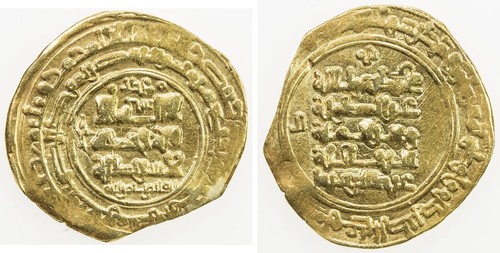
Ghaznavid Dinar
Gold dinar of the Ghaznavid dynasty (c. 10th–11th century), an epigraphic Islamic coin struck at Ghazna and allied mints in Afghanistan.
Medieval Islamic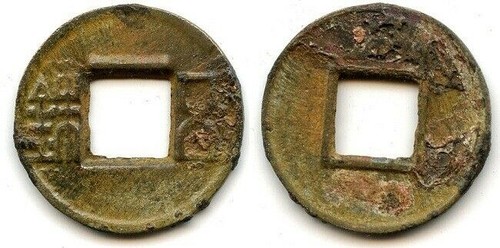
Wu Zhu Cash
A round Han-dynasty bronze cash coin with a central square hole and two seal-script characters, Wu Zhu, naming its weight of five zhu.
Cash Coin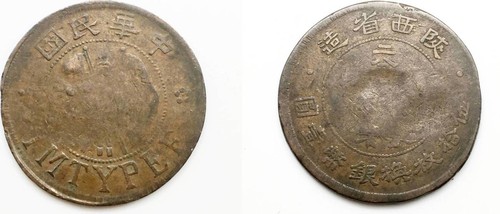
Shanxi 2 Fen
A holed Republic-era Chinese copper 2 Fen struck for Shanxi Province, dated 1931, with a numeral 2 and Chinese legends around a central hole.
Circulation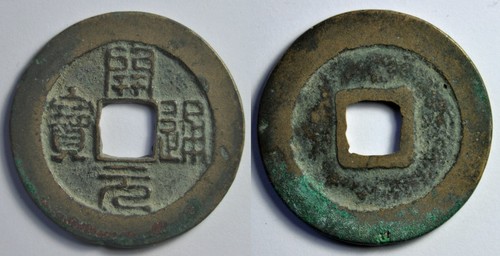
Kai Yuan Tong Bao
A Tang-dynasty Chinese bronze cash coin with the four seal-script characters Kai Yuan Tong Bao around a central square hole.
Cash Coin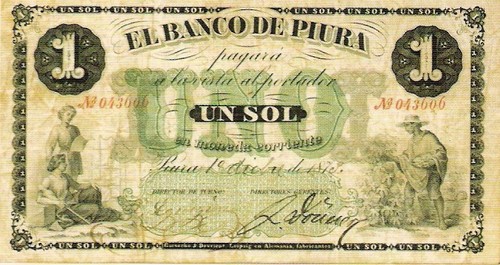
1 Sol (Gold)
A 19th-century Peruvian 1 Sol note from El Banco de Piura, with a seated torch-bearer and a standing laborer flanking a bold UN SOL.
Circulation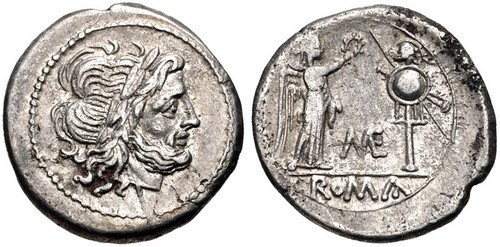
Roman Victoriatus
Silver Roman Republican victoriatus of the late 3rd–2nd century BC, with the laureate head of Jupiter and a Victory crowning a trophy above ROMA.
Ancient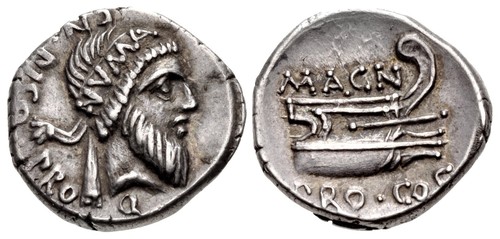
Numapis Denarius
A silver denarius of the Roman Republic (1st century BC) pairing a male portrait facing right with a ship or galley and lettering on the reverse.
Ancient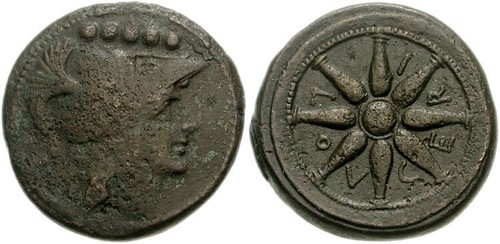
Quincunx of Luceria
A cast bronze quincunx of Luceria in Apulia (3rd century BC), showing a female head and a five-point floral or star device marking five unciae.
Ancient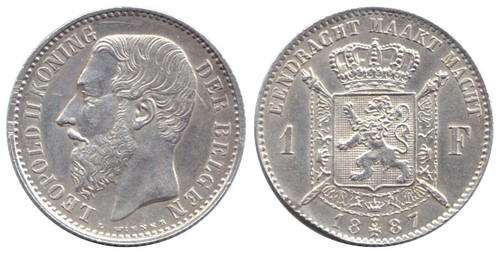
1 Franc (Leopold II)
A late-19th-century Belgian silver franc of King Leopold II, with his left-facing profile on the obverse and a crowned coat of arms on the reverse.
Modern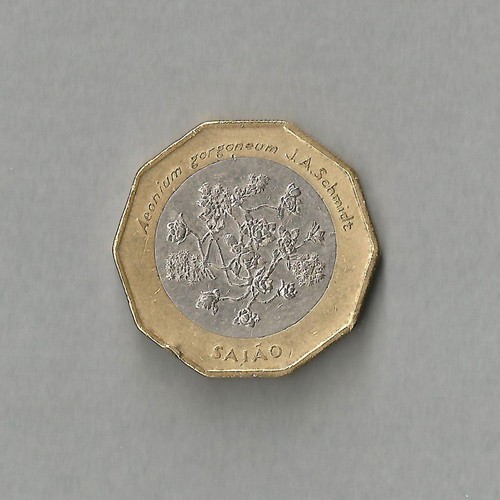
Cape Verde 100 Escudos
A bi-metallic Cape Verde 100 escudos with a botanical theme, its silver-colored center showing the endemic Aeonium gorgoneum plant.
World