
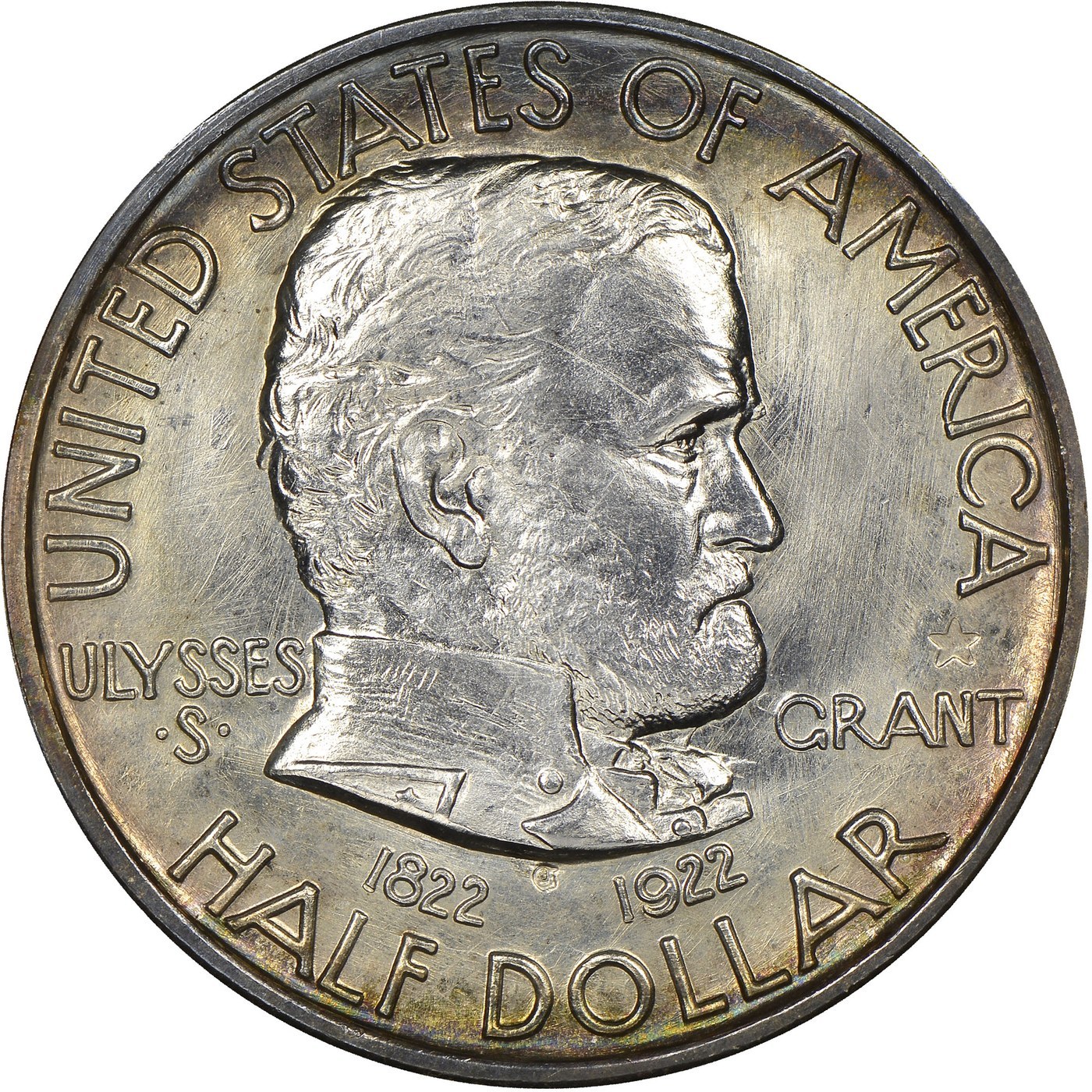
Grant Memorial Half Dollar
A 1922 U.S. silver commemorative marking the centennial of Ulysses S. Grant's birth, with his profile and the dates 1822-1922, issued with and without a star.
- Country
- United States
- Denomination
- 50¢
- Metal
- Silver
Got a coin like this?
Identify any coin from a photo, free.
Overview
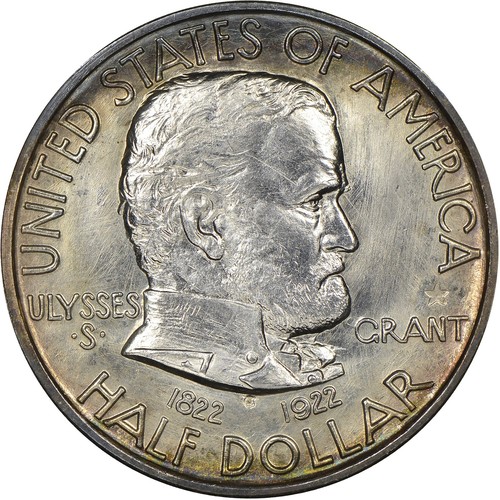
The Grant Memorial Half Dollar is a United States classic commemorative coin struck in 1922 to mark the one-hundredth anniversary of the birth of Ulysses S. Grant, the Civil War general and 18th President. The obverse of the photographed coin shows Grant's bust facing right, the anniversary dates 1822-1922, and the denomination HALF DOLLAR.
Like other classic commemoratives of the era, it is a 90% silver half dollar the size of a circulating Barber or Walking Liberty half, but it was sold at a premium to raise funds rather than released into everyday circulation. It was designed by sculptor Laura Gardin Fraser, one of the most respected medallic artists of the period.
The issue is best known for existing in two varieties: one with a small incuse star on the obverse and one without. The star variety was produced in far smaller numbers, making it one of the scarcer and more sought-after pieces in the classic commemorative series.
History & Background
In early 1922, Congress authorized coinage to commemorate the centennial of Ulysses S. Grant's 1822 birth in Point Pleasant, Ohio. The program produced both a silver half dollar and a companion Grant gold dollar, with proceeds intended to support a memorial and community projects in his home region. All pieces were struck at the Philadelphia Mint.
Laura Gardin Fraser modeled both the obverse portrait and the reverse. Early in production a small star was punched into the obverse above Grant's name; the star carries no known official meaning and was later removed from the dies. The result was two collectible varieties: a small "With Star" printing and a larger "No Star" printing.
Sales of the commemoratives were modest, and a substantial portion of the mintage was ultimately returned and melted, leaving net distributed figures well below the coins originally struck. The star variety survived in especially small numbers, and today both the half dollar and its gold-dollar companion are collected as part of the classic U.S. commemorative series that ran from 1892 into the 1950s.
How to Identify
The defining feature is the obverse portrait: Ulysses S. Grant in bust profile facing right, bearded, with UNITED STATES OF AMERICA and IN GOD WE TRUST around the rim, the name GRANT below the portrait, and the dual dates 1822-1922 flanking the bust. The denomination HALF DOLLAR appears on this side as well, confirming the coin's face value.
The key variety diagnostic is a tiny incuse star in the obverse field, just above the word GRANT. A coin showing that star is the scarce "With Star" variety; a coin with a plain field there is the far more common "No Star" variety. The reverse, not visible on these photographs, depicts Grant's log-cabin birthplace framed by trees, with E PLURIBUS UNUM above.
Struck in 90% silver, the coin measures about 30.6 mm across and weighs roughly 12.5 grams, matching a standard U.S. half dollar of the period. Because it was a Philadelphia issue, it bears no mint mark.
Value & Collectibility
As a classic commemorative, the Grant Memorial Half Dollar trades well above its silver melt value, with price driven mainly by variety and condition. The "No Star" version is the more affordable of the two and is a common entry point into the series, typically bringing modest collector premiums in circulated and lower uncirculated grades.
The "With Star" variety is dramatically scarcer and commands substantially higher prices, often several multiples of the plain version in comparable condition. Gem uncirculated examples of either variety, and especially certified high-grade star coins, can reach into the strongest levels for the issue.
Authenticity matters greatly for the star variety, because added or altered stars are a known risk. For any specific coin, current value should be checked against recent auction results and dealer listings for the matching variety and grade, ideally with third-party certification.
Frequently asked questions
What does the Grant Memorial Half Dollar commemorate?
It marks the centennial of Ulysses S. Grant's birth, which is why the obverse carries the dates 1822-1922 alongside his portrait. It was issued in 1922 to raise funds for memorial and community projects.
What is the difference between the 'With Star' and 'No Star' varieties?
Both share the same design, but the scarce variety has a small incuse star punched into the obverse field above the word GRANT. Coins without that star are the far more common version.
Is the coin real silver?
Yes. It is struck in 90% silver (10% copper), the standard alloy for U.S. half dollars of the era, weighs about 12.5 grams, and measures roughly 30.6 mm across.
Does it have a mint mark?
No. All Grant Memorial Half Dollars were struck at the Philadelphia Mint, which used no mint mark on this issue, so a blank space where a mint mark might sit is normal.
Was there also a Grant gold coin?
Yes. The 1922 Grant program included a companion gold dollar, also designed by Laura Gardin Fraser and likewise issued in 'With Star' and 'No Star' varieties. It is a separate, smaller coin from the silver half dollar.
Grant Memorial Half Dollar guides
In-depth guides for identifying, valuing, and collecting Grant Memorial Half Dollar.
Other coins you may enjoy
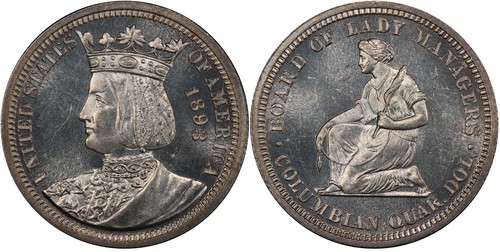
Isabella Quarter
1893
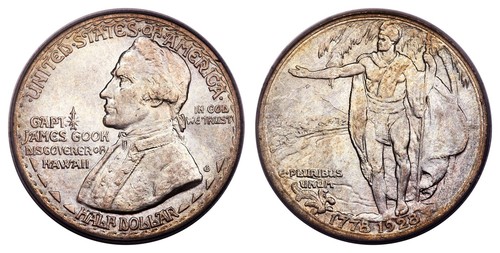
Hawaiian Sesquicentennial Half Dollar
1928
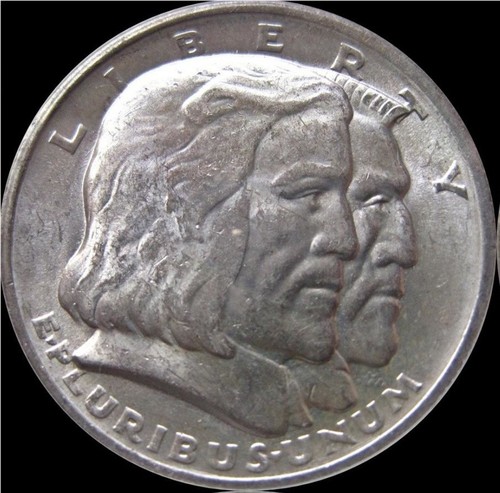
Long Island Tercentenary Half Dollar
1936
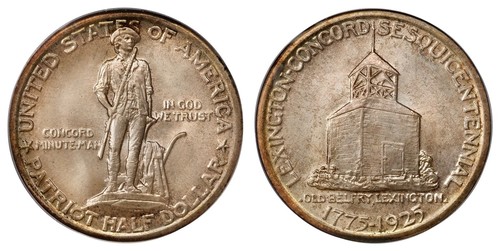
Lexington-Concord Sesquicentennial Half Dollar
1925
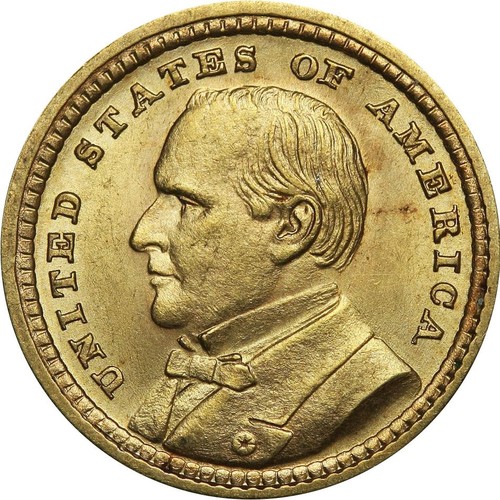
Louisiana Purchase Exposition Dollar (Jefferson)
1903
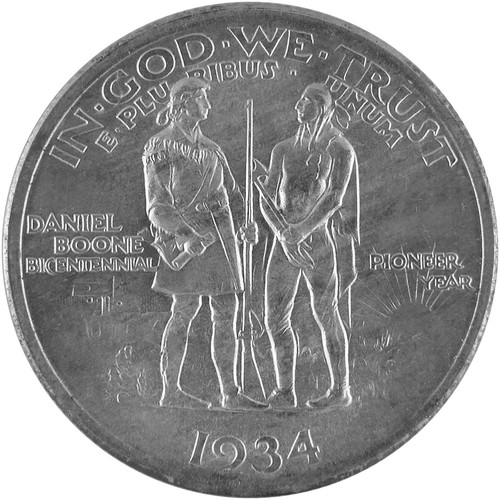
Daniel Boone Bicentennial Half Dollar
1934–1938
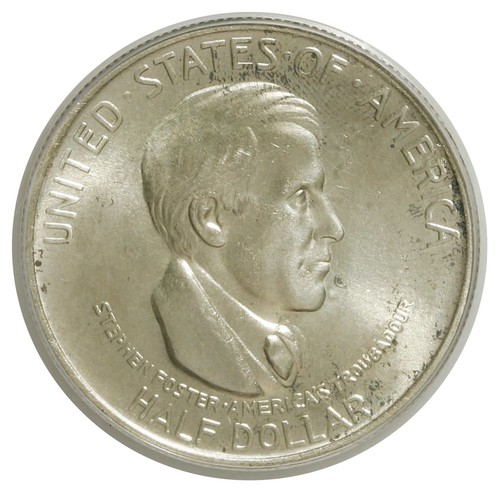
Cincinnati Music Center Half Dollar
1936
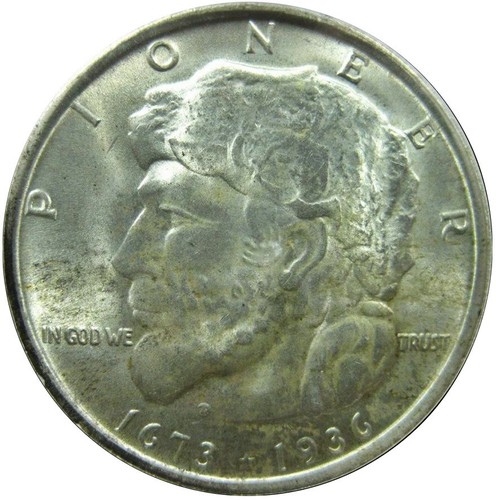
Elgin Illinois Centennial Half Dollar
1936
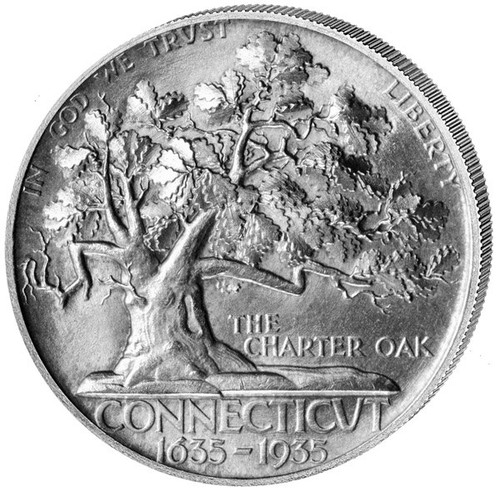
Connecticut Tercentennial Half Dollar
1935
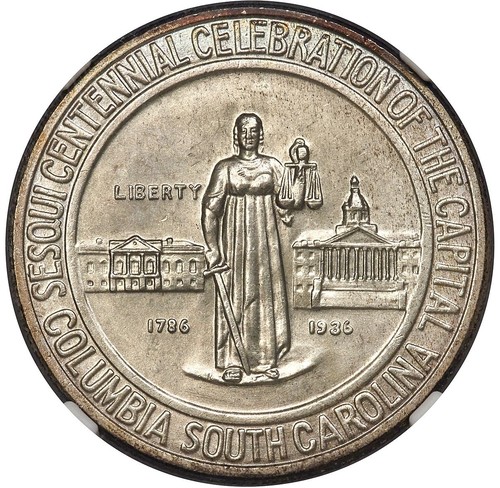
Columbia South Carolina Sesquicentennial Half Dollar
1936
Sesquicentennial of American Independence Quarter Eagle
1926
Pilgrim Tercentenary Half Dollar
1920-1921