
Coin Encyclopedia
Search and identify coins from around the world — with country, denomination, metal, mint, history, and how to tell them apart.
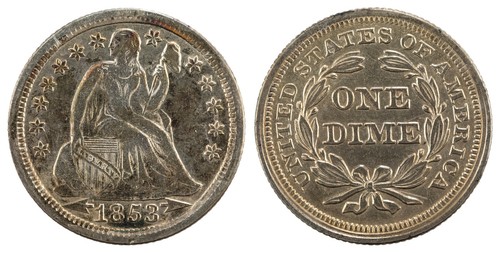
Seated Liberty Dime with Arrows
A silver Seated Liberty dime with small arrows flanking the date, marking the 1853 weight reduction; struck 1853–1855, with the pictured coin dated 1853.
Dime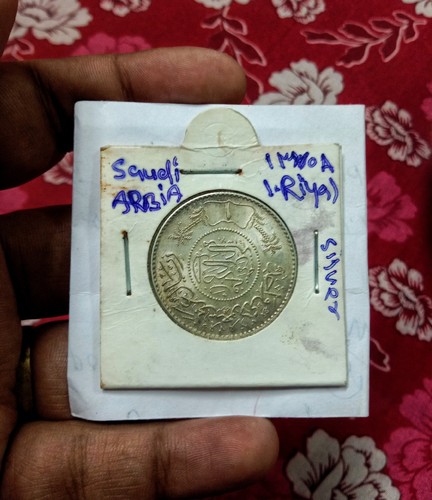
Saudi Arabian Silver Riyal
A large, portrait-free silver coin of King Abdul Aziz ibn Saud, covered in Arabic legends and a state seal — a cornerstone of early Saudi coinage.
World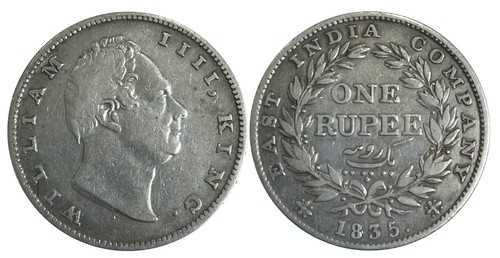
William IV One Rupee
Silver one-rupee coin of British India struck in 1835 under the East India Company, bearing the right-facing bust of King William IV.
British India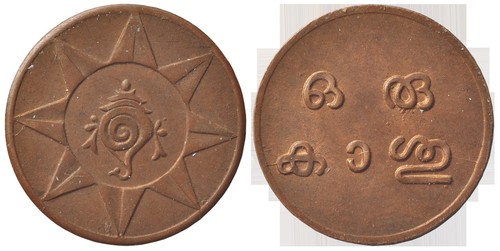
Travancore One Cash
A tiny copper coin of the princely state of Travancore, carrying the state's conch-shell emblem on one side and its cash value in local script on the other.
Princely & Presidency States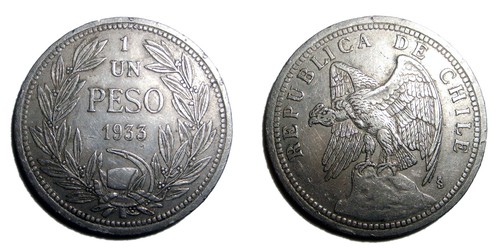
Chilean Peso (1875 Type)
A silver one-peso coin of Chile: the national coat of arms with its lone star and laurel wreaths on one side, and a large bird in flight on the other.
Circulation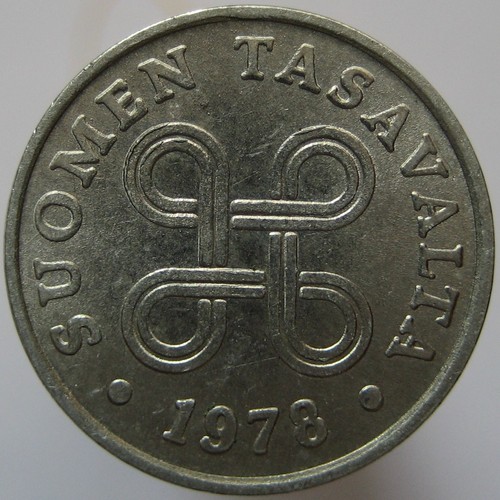
1 Penni
Finland's smallest post-1963 coin: a tiny light base-metal piece with a bold numeral 1 and SUOMI on the front and a geometric line pattern on the back.
World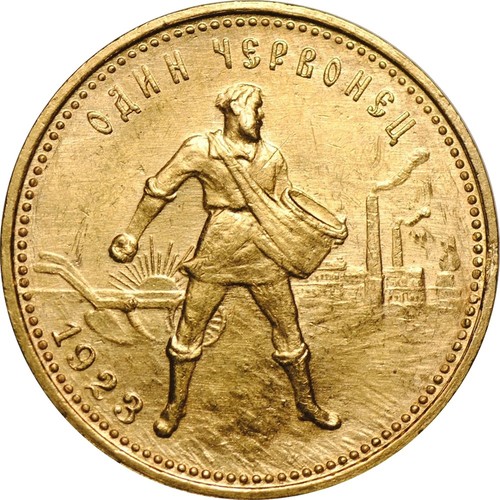
Gold Chervonets
Soviet gold coin of 1923 worth one chervonets (10 rubles), showing a peasant sowing before a rising sun and factories, with the Soviet state emblem.
World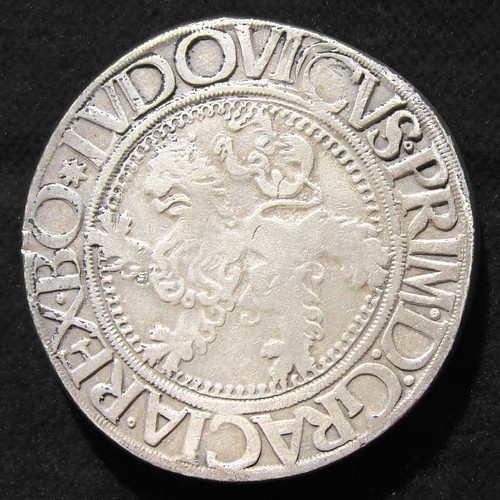
Joachimsthaler (Thaler)
A large early-16th-century Bohemian silver thaler from Joachimsthal, dated 1525; the coin whose name gave rise to the words 'thaler' and 'dollar'.
Early Modern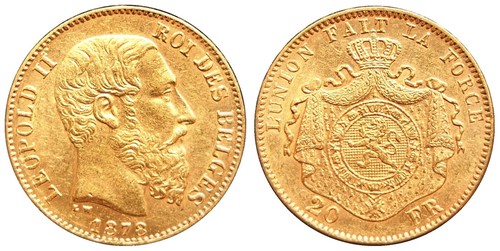
20 Francs (Leopold II)
Belgium's gold 20 francs under King Leopold II, a small Latin Monetary Union coin with the bearded king's profile and the crowned national arms.
Modern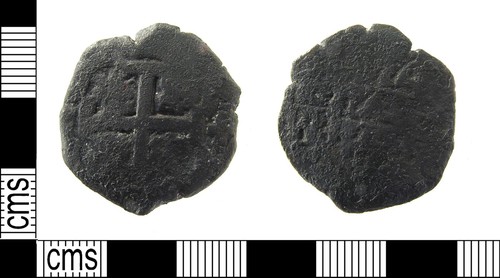
Spanish Colonial 1 Real (Bourbon)
A small silver coin of Spain's American colonies from the early Bourbon era, showing a cross with ornaments on one side and the crowned royal arms on the other.
Colonial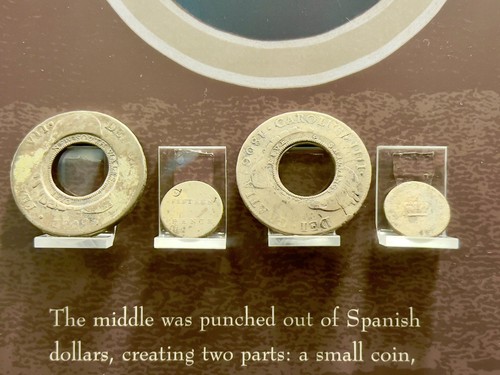
Holey Dollar
Australia's first struck coin: a Spanish silver dollar with its centre punched out, counterstamped NEW SOUTH WALES 1813 and revalued at five shillings.
Australian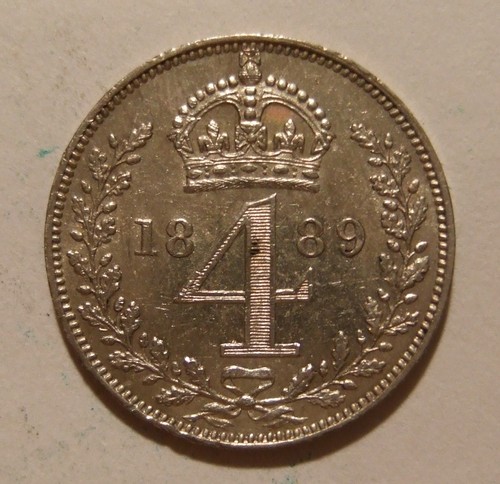
Victoria Maundy Fourpence
A tiny sterling-silver ceremonial coin from a royal Maundy set. This 1889 example shows Victoria's crowned Jubilee Head and a crowned '4' in a wreath.
British Isles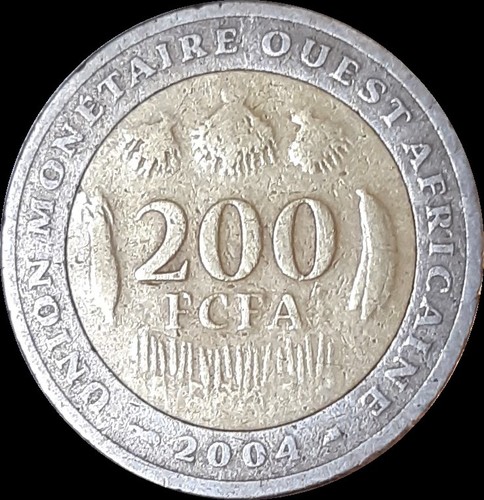
200 CFA Francs
A modern West African CFA coin worth 200 francs, showing a bold '200 FCFA' with decorative border on one face and a crossed emblem on the other.
World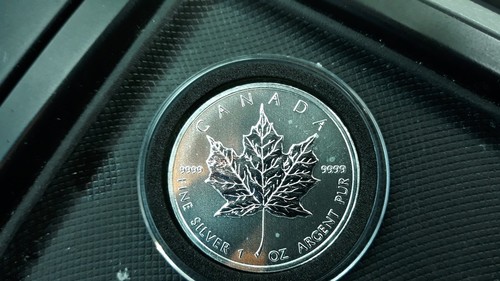
Canadian Silver Maple Leaf
Canada's flagship 1 oz silver bullion coin, struck in .9999 fine silver by the Royal Canadian Mint with a single sugar-maple leaf design.
Bullion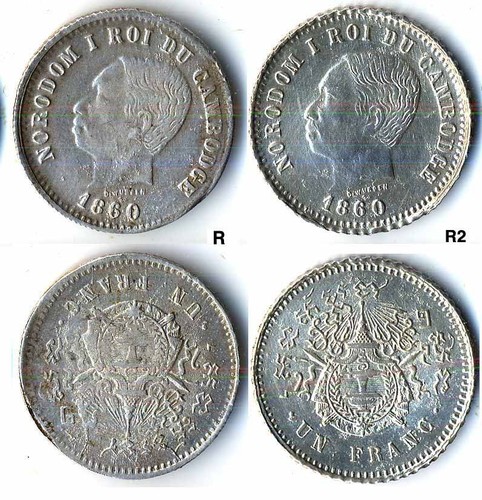
Cambodia One Franc
A mid-20th-century one-franc coin of the Kingdom of Cambodia, its obverse bearing a royal Norodom profile and its reverse a heraldic coat of arms.
Southeast Asia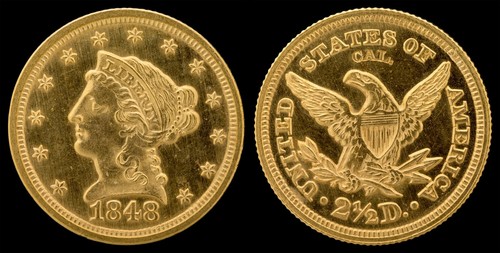
Liberty Head Quarter Eagle
U.S. $2.50 gold coin struck 1840–1907, with a coronet-crowned Liberty head obverse and a shield-breasted eagle reverse marked "2½ D."
Quarter Eagle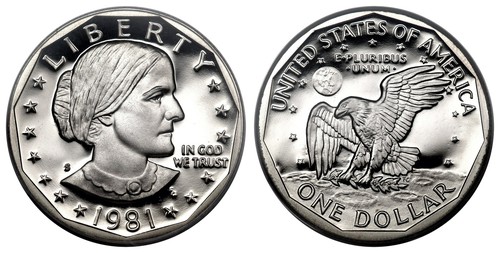
Susan B. Anthony Dollar
U.S. small-size copper-nickel clad dollar coin (1979–1981, 1999) featuring suffragist Susan B. Anthony and an eagle landing on the moon.
Dollar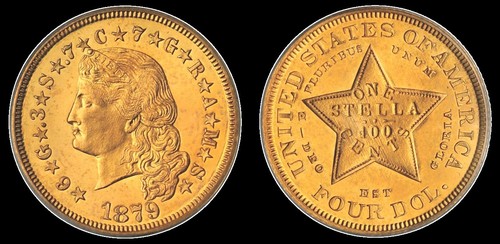
Flowing Hair Stella
An 1879 U.S. $4 gold pattern coin with a flowing-hair Liberty obverse and a large-star "ONE STELLA" reverse; famous rarity, never circulated.
Stella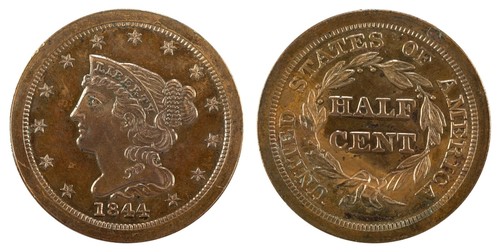
Braided Hair Half Cent
The final U.S. half cent design, a small copper coin showing Liberty with braided hair and a coronet, paired with a wreath reverse, struck 1840–1857.
Half Cent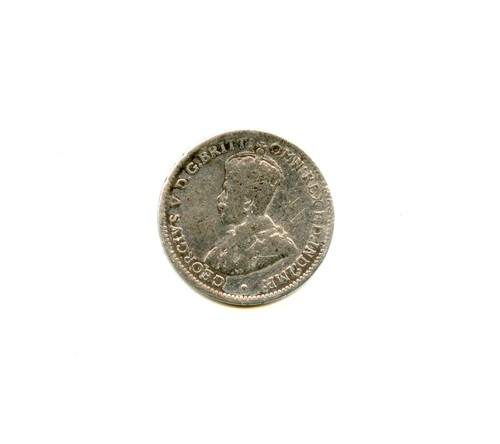
Australian Threepence
Australia's small pre-decimal silver threepence (3d), the country's tiniest coin, struck 1910-1964. The example shown carries a George V portrait.
Australian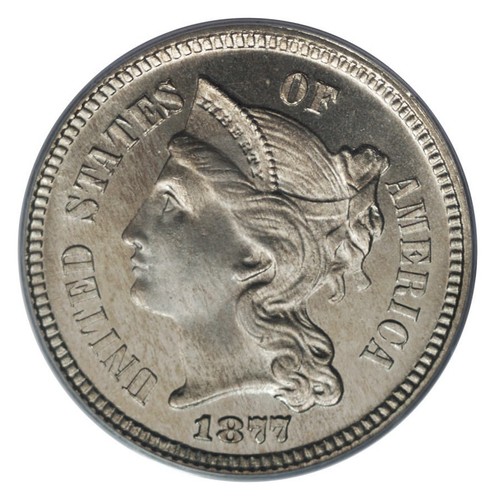
Three Cent Nickel
A small copper-nickel three-cent coin with a Liberty head obverse and a Roman numeral III inside a wreath; struck at Philadelphia from 1865 to 1889.
Three Cent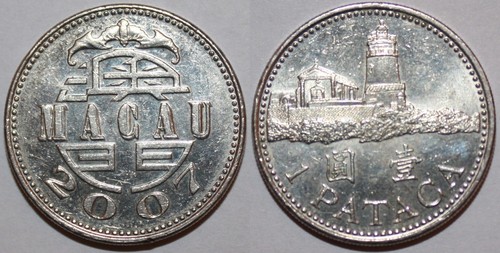
Macao 1 Pataca
A silver-colored 1 Pataca circulation coin of Macao dated 2007, showing Chinese characters and denomination on one face and a lighthouse-and-harbor scene on the other.
Circulation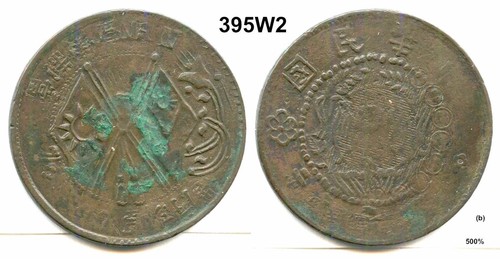
Ho-Nan 100 Cash
A large struck bronze 100-cash coin of Henan Province from Republican China, with ornate Chinese characters on one face and a decorative pattern on the other.
Cash Coin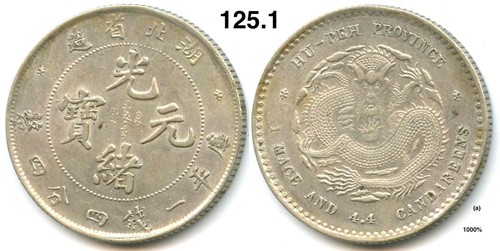
Guangxu Yuanbao 1 Mace 4.4 Candareens
A small silver dragon coin of Qing China from the Guangxu era, its face reading 1 Mace 4.4 Candareens and its back showing a coiled Chinese dragon.
Circulation