
Coin Encyclopedia
Search and identify coins from around the world — with country, denomination, metal, mint, history, and how to tell them apart.
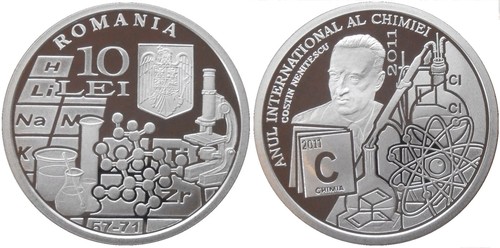
Romania International Year of Chemistry Commemorative
Romanian silver 10 lei commemorative dated 2011, issued for the International Year of Chemistry with molecular, laboratory and scientist imagery.
Commemorative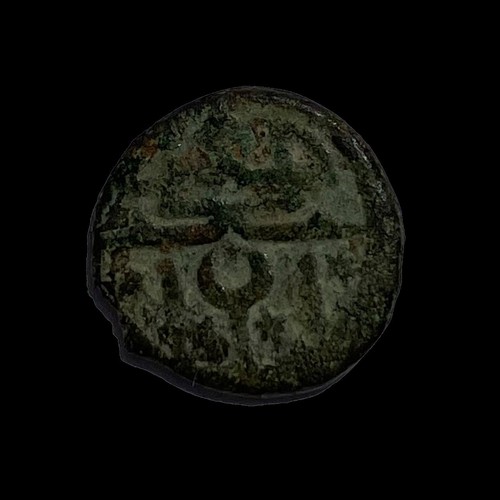
Ottoman Manghir
The manghir was the small copper coin of the Ottoman Empire, used for everyday change; this example bears a tughra and dates to the reign of Murad II.
Medieval Islamic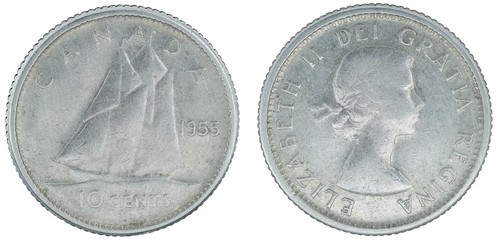
Canadian Ten Cents
Small silver Canadian dime with the Bluenose schooner reverse and an early Queen Elizabeth II portrait; the pictured coin is dated 1955.
Canadian & Provincial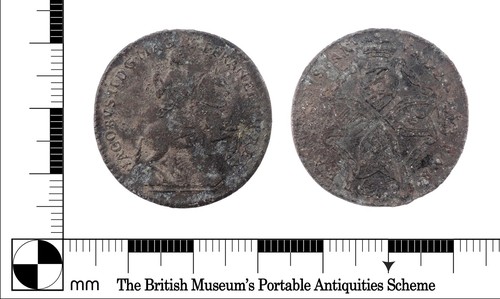
American Plantations Token
A 1688 tin token struck under James II for England's American colonies, valued at 1/24 of a Spanish real — the first regal-authorized coinage for British America.
Colonial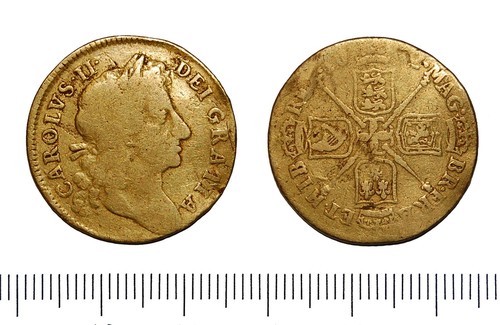
Gold Guinea
English gold coin of the Guinea denomination; the example shown bears the right-facing bust of Charles II with a crowned cruciform shield reverse dated 1668.
World Coins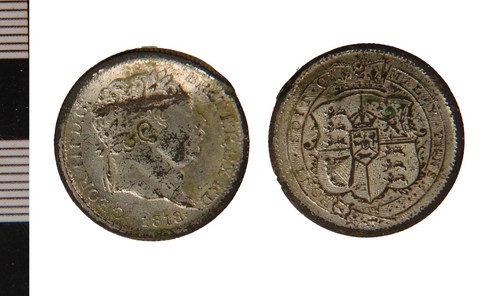
British Bank Token
Copper token of the late George III period bearing the king's left-facing bust and a quartered royal-arms reverse, dated 1819.
British Isles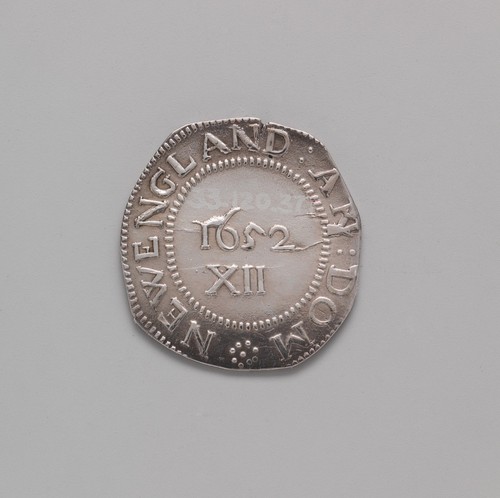
English Shilling
English silver shilling of William III, showing his right-facing laureate bust and a crowned cruciform-shield reverse; this example is dated 1692.
World Coin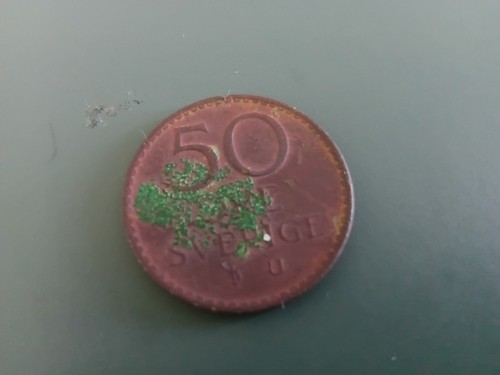
50 Öre (Silver)
A small Swedish silver 50 ore of the Oscar II era, dated 1898, with the value and date in a laurel wreath on one side and the crowned Swedish arms on the other.
Modern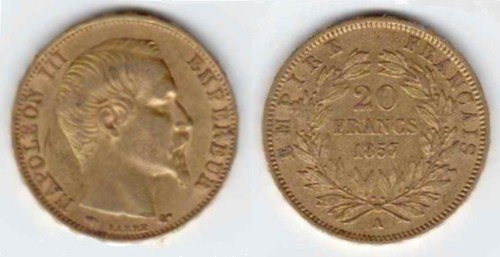
20 Francs Napoleon
A small 21 mm French gold coin bearing Napoleon III's profile and a wreathed 20 FRANCS reverse — the classic gold Napoleon, here dated 1857.
Bullion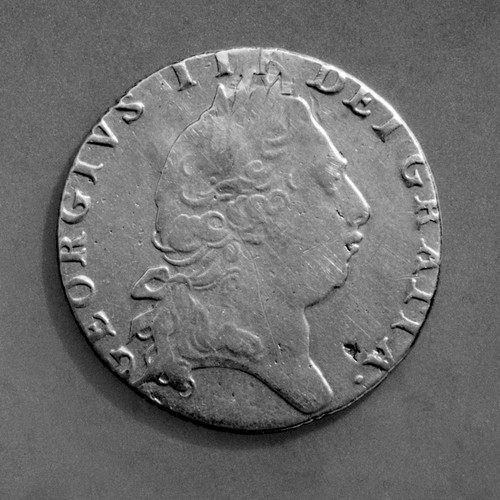
Spade Guinea
A late George III gold guinea named for the distinctive spade-shaped shield on its reverse, struck in England from 1787 into the early 1800s.
Milled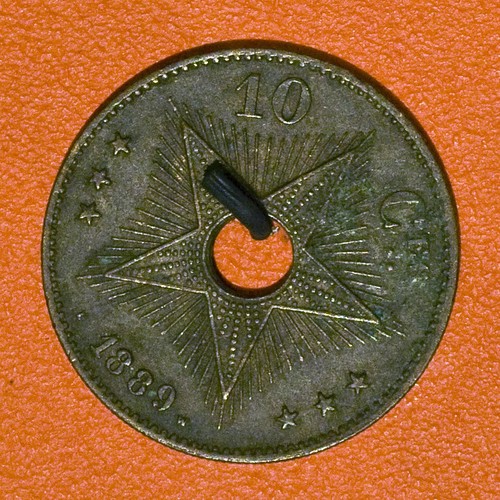
Congolese Commemorative Coin
An 1889 holed copper 10-centime coin of the Congo Free State, with a radiant five-pointed star, the value 10 C, and a ring of small stars.
World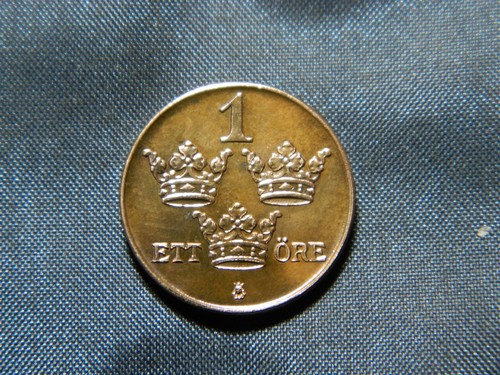
1 Öre
A small copper 1 öre of Sweden dated 1873, with a left-facing profile of King Oscar II, the legend SVERIGE OCH NORGE, and the value in a laurel wreath.
Modern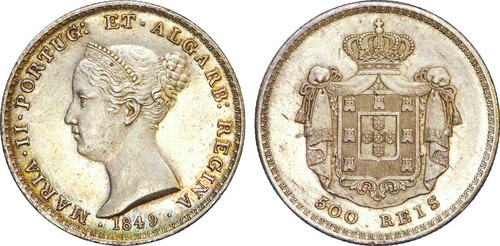
500 Reis
A Portuguese silver 500 Reis of Queen Maria II, with her left-facing draped bust on the obverse and a crowned coat of arms on the reverse.
Modern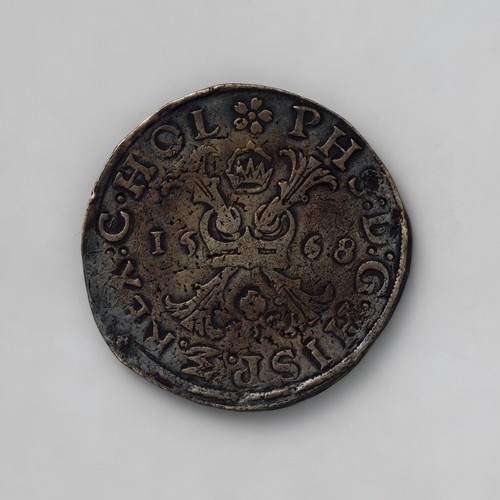
Bourgondische Rijksdaalder
A large silver rijksdaalder of the Habsburg Netherlands showing Philip II in helmeted armor, with a compartmented heraldic shield and the Golden Fleece collar.
Early Modern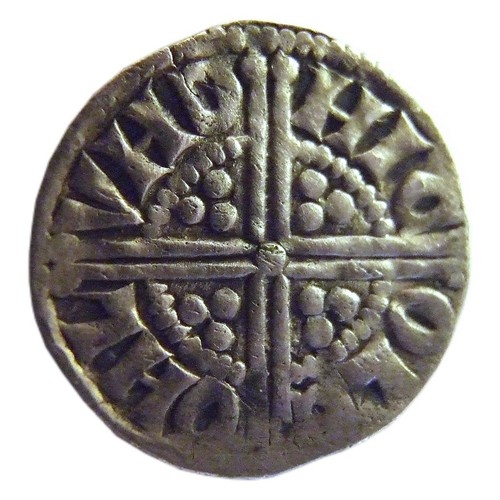
Long Cross Penny
Hand-struck medieval English silver penny with a crowned royal bust and a long voided cross reaching the rim, dividing the reverse legend.
Medieval Coins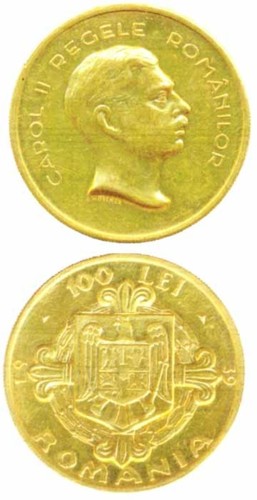
100 Lei
A scarce Kingdom of Romania gold 100 Lei of 1939, showing King Carol II in profile on the obverse and the crowned Romanian coat of arms on the reverse.
Modern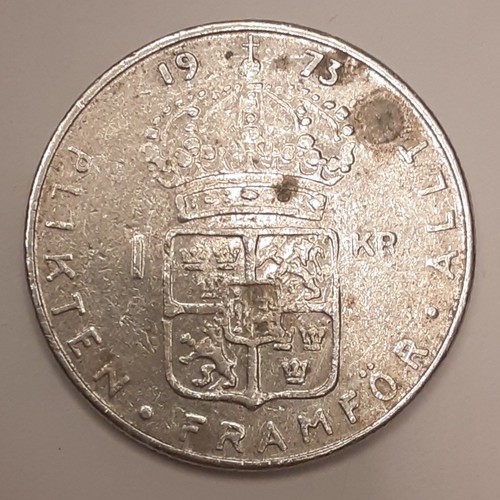
1 Krona (Gold)
A gold 1 krona of Sweden dated 1906, bearing the left-facing portrait of King Oscar II and the Swedish royal coat of arms with lions and three crowns.
Modern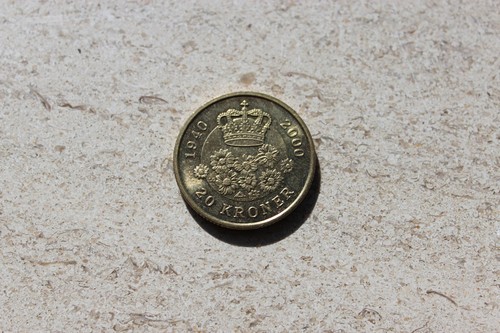
20 Kroner
Danish aluminum-bronze 20 Kroner of 1990 honoring Queen Margrethe II, with a crown over a marguerite daisy and the dates 1940 and 1990.
Modern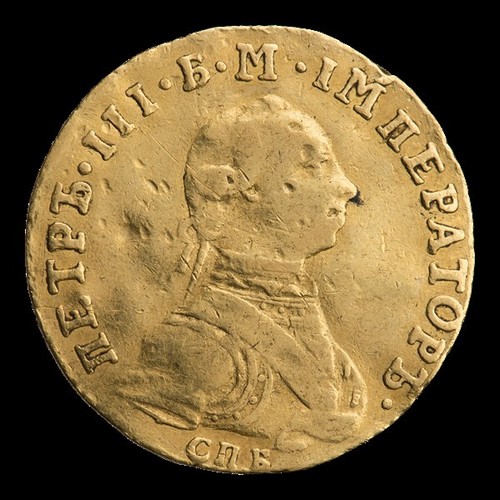
Imperial Chervonets
A small imperial Russian gold chervonets bearing the right-facing bust of Peter III with regalia and the crowned double-headed eagle, dated 1762.
Early Modern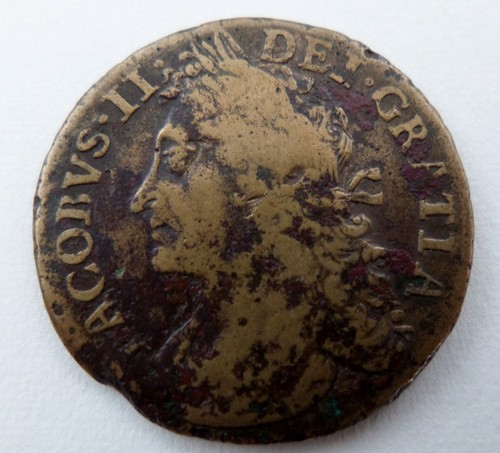
Irish Gun Money Halfcrown (30 Pence)
Emergency base-metal halfcrown struck for James II in Ireland during 1689–1690, valued at 30 pence and carrying his portrait and, on many issues, the month of striking.
Emergency Coinage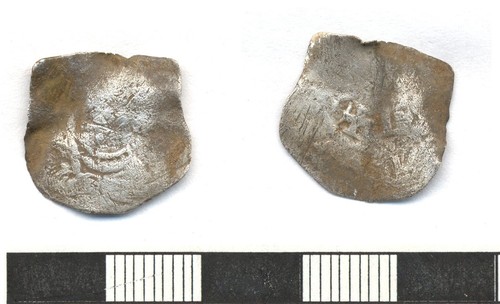
Tealby Penny
Silver penny of Henry II, the Tealby or Cross-and-Crosslets type, with a crowned royal bust and a voided cross bearing small crosslets in its angles.
Medieval Coins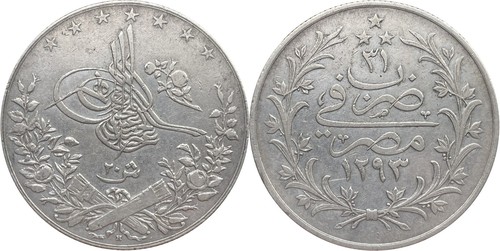
Egypt 20 Qirsh
The 20 qirsh was Egypt's largest silver coin under the Khedivate, bearing the Ottoman sultan's tughra; this example dates to 1905.
World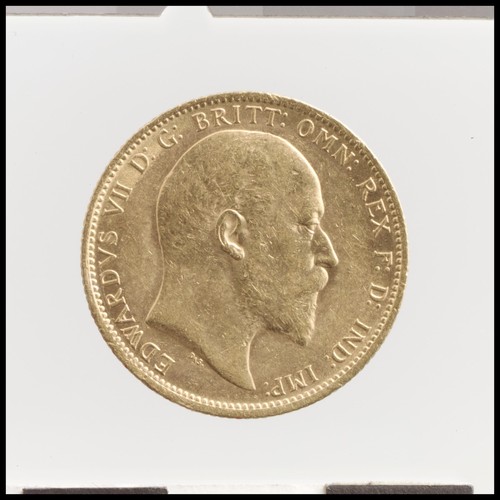
Gold Sovereign
The British gold sovereign: a one-pound gold coin. This 1817 George III example shows a laureate bust and a crowned heraldic shield of the royal arms.
World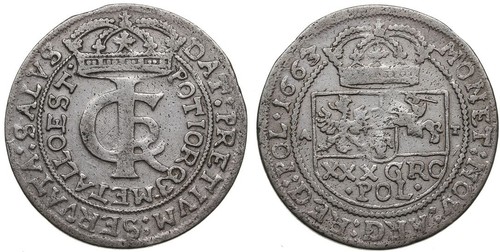
Tymf
A debased Polish silver coin of 1663 tariffed at 30 groszy, famous for a Latin motto declaring the state's safety worth more than the metal.
Early Modern