
Coin Encyclopedia
Search and identify coins from around the world — with country, denomination, metal, mint, history, and how to tell them apart.
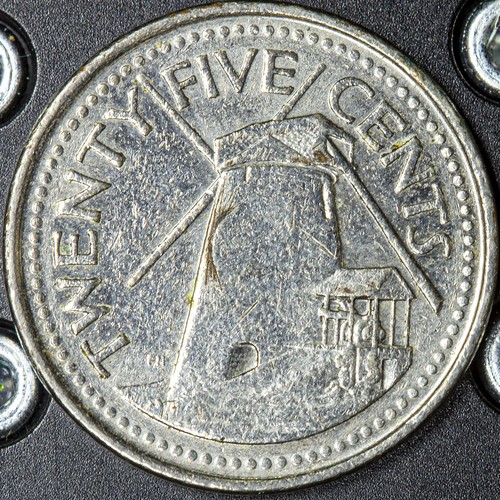
Barbados 25 Cents
A copper-nickel Caribbean circulation coin of Barbados; the 1998 example shows the national coat of arms on the obverse and the 25-cent value on the reverse.
Circulation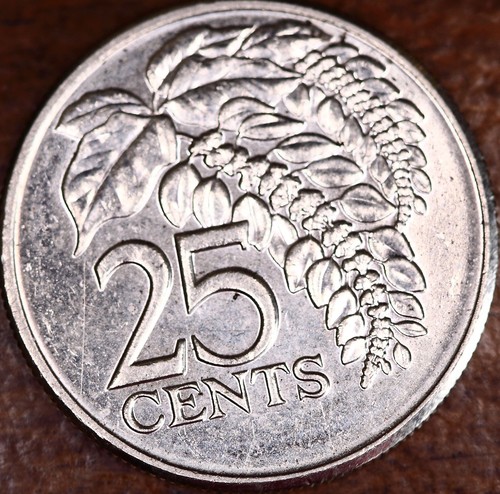
Trinidad and Tobago 25 Cents
A copper-nickel 25-cent coin of Trinidad and Tobago: a leafy national-flower plant design on one face and the value TWENTY FIVE CENTS on the other.
Circulation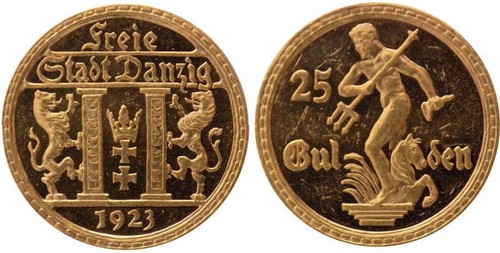
25 Gulden
The gold 25 Gulden of the Free City of Danzig, dated 1923, pairing the lion-supported Danzig arms with an armed female figure holding a trident.
Modern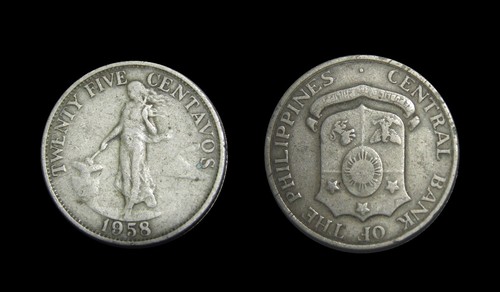
Philippines 25 Centavos
Silvery base-metal 25 centavos of the young Republic of the Philippines, dated 1958: a standing figure with a liberty torch and the Republic's sunburst coat of arms.
Southeast Asia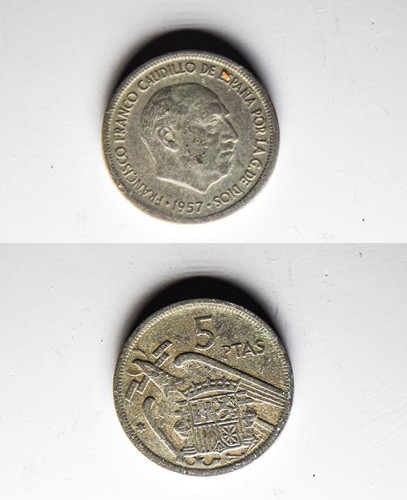
25 Pesetas (Franco)
Spain's common Franco-era 25 pesetas, a silvery copper-nickel coin bearing the national coat of arms and the value 25; dated 1957 but struck into the 1970s.
Modern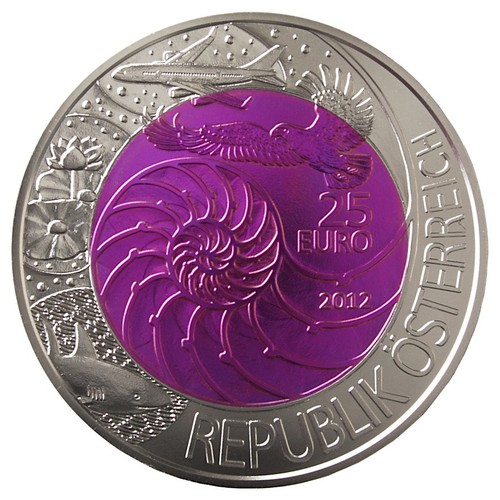
25 Euro (Bionik)
Austria's 2012 silver-niobium 25 euro coin, part of the Silver Niobium Series, with a purple niobium core and a Bionik (bionics) theme.
Commemorative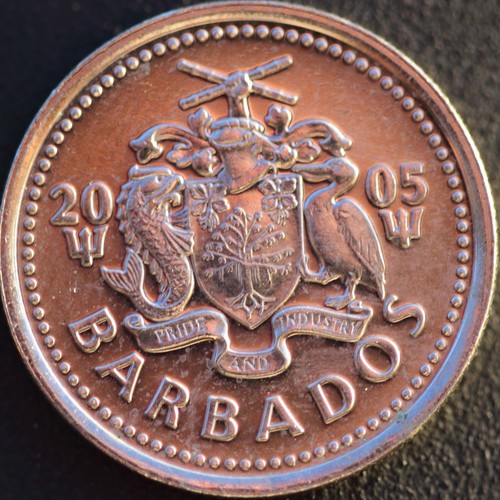
Barbados 10 Cents
A small copper-nickel Barbadian 10-cent coin showing the national coat of arms on one side and the value and country name on the other.
Circulation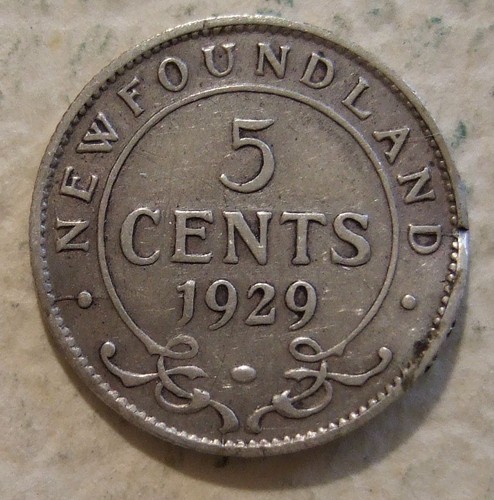
Newfoundland Five Cents
Tiny sterling-silver 5-cent piece of the Dominion of Newfoundland; the 1929 issue bears King George V and a crowned denomination reverse.
Canadian & Provincial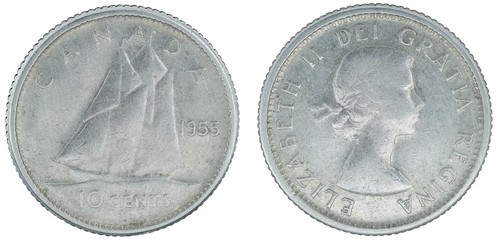
Canadian Ten Cents
Small silver Canadian dime with the Bluenose schooner reverse and an early Queen Elizabeth II portrait; the pictured coin is dated 1955.
Canadian & Provincial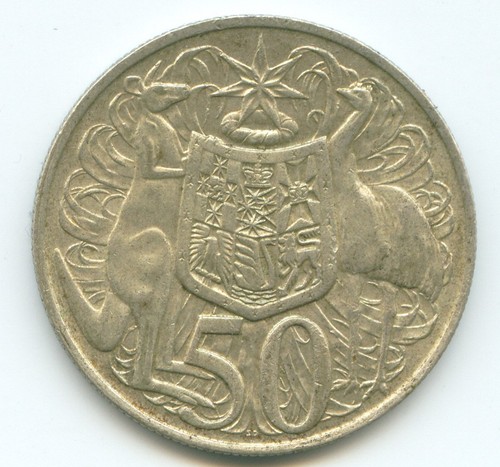
Australian Fifty Cents
Australia's 50 cent coin bearing the national coat of arms. The 1966 round issue shown here was struck in silver; later 12-sided coins are cupronickel.
Australian
Canadian 50 Cents
Canada's mid-century silver 50-cent piece bearing King George VI, struck in 80% silver with the Canadian coat of arms.
World Coins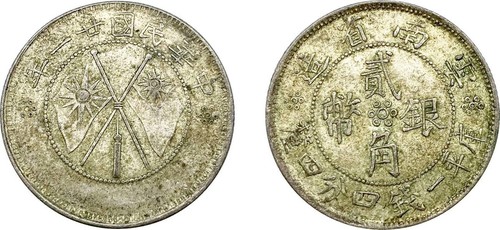
Yunnan 20 Cents
A 1932 provincial silver 20 Cents from Yunnan, China, with a radiant sun and rays on one face and central Chinese value characters framed by ornament on the other.
Circulation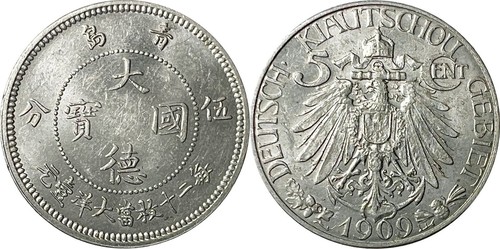
Kiautschou 5 Cents
A 1909 nickel 5 Cent coin of the German-leased Kiautschou Bay territory in China, pairing Chinese characters with the German imperial eagle.
Colonial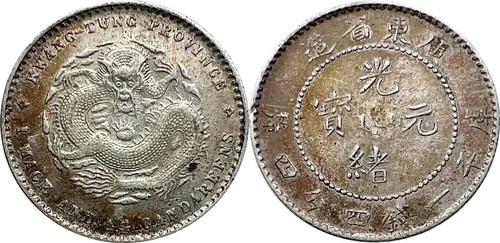
Guangdong 20 Cents
A silver 20-cent coin of Kwangtung (Guangdong) province, struck under the Guangxu Emperor with a coiled dragon on one side and Chinese legends on the other.
Circulation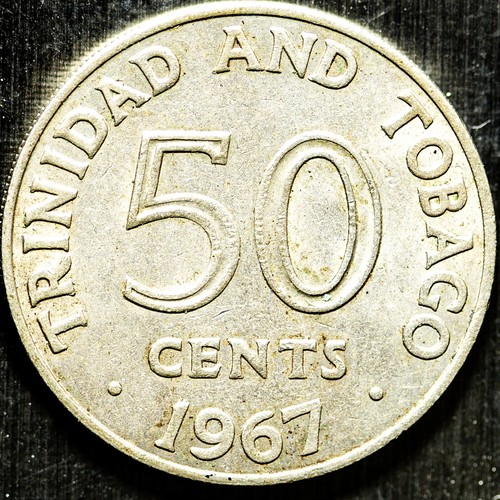
Trinidad and Tobago 50 Cents
A large copper-nickel Caribbean circulation coin; the 1967 example carries the national coat of arms and country name on the obverse and the 50-cent value on the reverse.
Circulation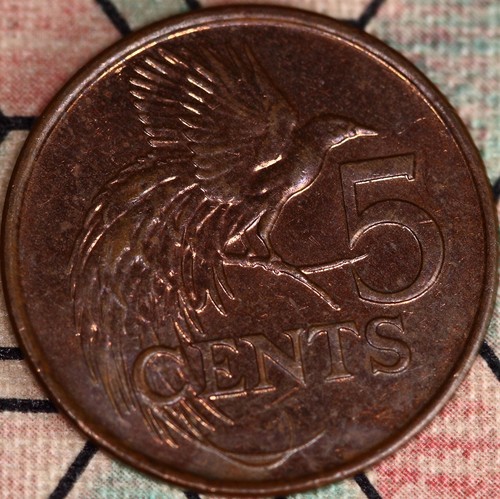
Trinidad and Tobago 5 Cents
A bronze five-cent coin of Trinidad and Tobago showing a perched bird — the Greater Bird of Paradise, often mistaken for a parrot — with FIVE CENTS on the reverse.
Circulation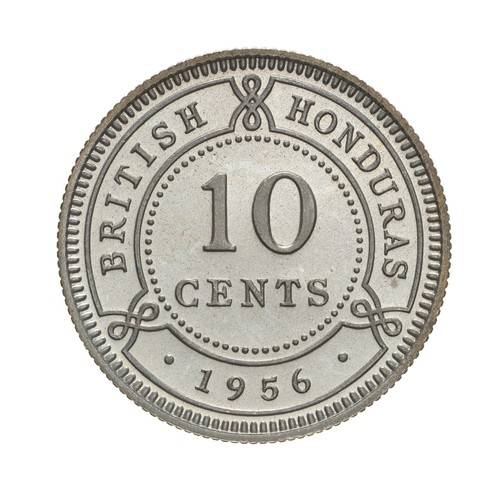
British Honduras 10 Cents
A silver-colored colonial 10 cents of British Honduras, with the Queen's portrait on the obverse and a plain 10 CENTS legend around BRITISH HONDURAS and the date.
Colonial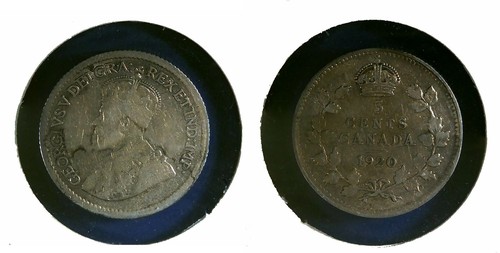
Canadian Five Cents (Nickel)
Canada's five-cent 'nickel,' with G.E. Kruger Gray's beaver reverse. This 1987 example pairs the beaver with an Elizabeth II portrait.
Canadian & Provincial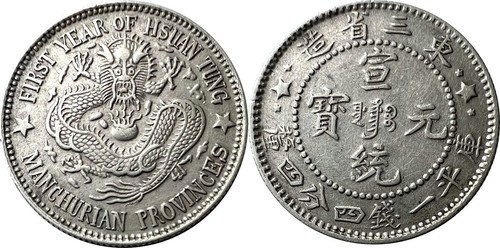
Xuantong Yuanbao 20 Cents
A small late-Qing silver 20-cent coin with a Western-style dragon, the English legend FIRST YEAR OF HSUAN TUNG, and Chinese characters reading Xuantong Yuanbao.
Circulation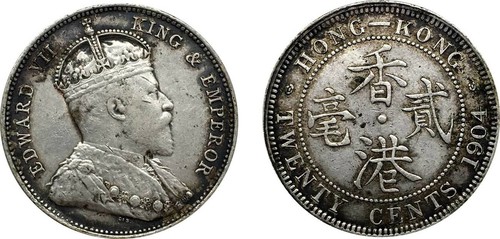
Hong Kong 20 Cents
A small British Hong Kong silver 20 Cents of Edward VII, with the crowned royal profile on one side and a Chinese dragon and value on the other.
Circulation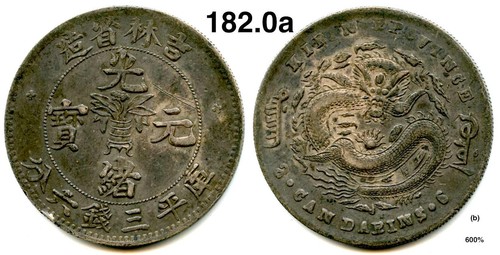
Guangxu Yuanbao 50 Cents
A Qing-dynasty silver half-dollar bearing the legend Guangxu Yuanbao and a coiled dragon, struck by Chinese provincial mints during the Guangxu Emperor's reign.
Circulation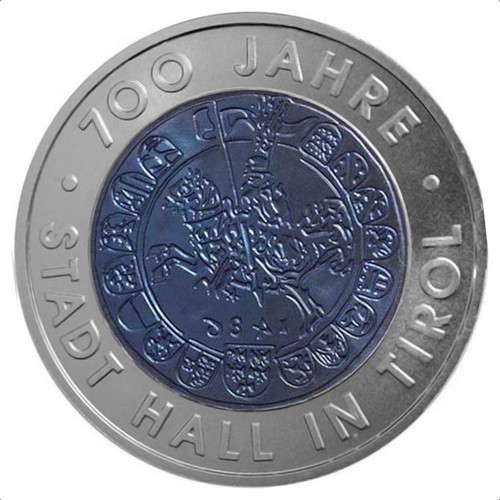
Austria 25 Euro Silver-Niobium Commemorative
Bi-metallic 25 Euro of the Austrian Mint with a silver outer ring and a colored niobium core; the 2003 first issue honored the town of Hall in Tirol.
Commemorative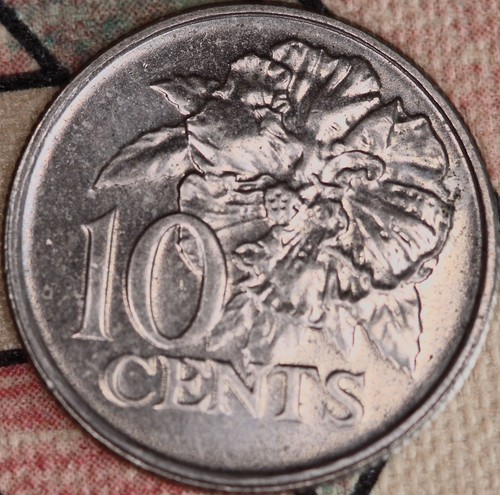
Trinidad and Tobago 10 Cents
A copper-nickel 10-cent coin of Trinidad and Tobago: the national coat of arms on the obverse and the denomination on the reverse.
Circulation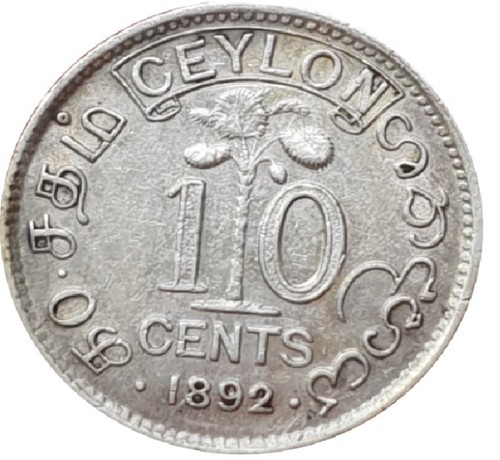
Ceylon 10 Cents (Cupronickel)
A wartime 1944 British Ceylon ten-cent piece in cupronickel, its obverse bearing the uniformed left-facing bust of King George VI and the legend GEORGE VI KING.
South Asia