
Coin Encyclopedia
Search and identify coins from around the world — with country, denomination, metal, mint, history, and how to tell them apart.
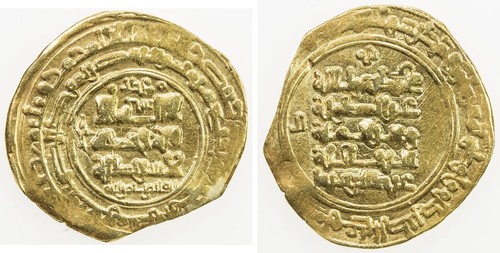
Ghaznavid Dinar
Gold dinar of the Ghaznavid dynasty (c. 10th–11th century), an epigraphic Islamic coin struck at Ghazna and allied mints in Afghanistan.
Medieval Islamic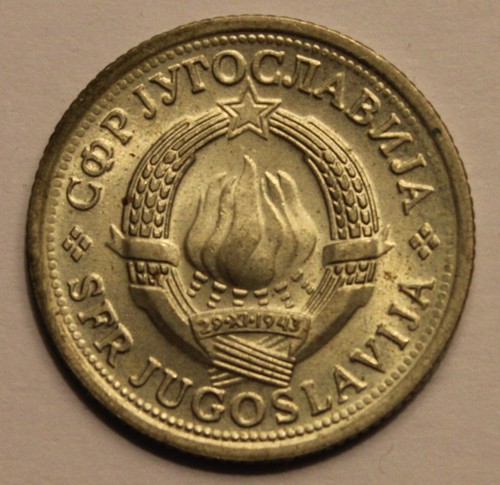
1 Dinar
A base-metal 1 dinar of Socialist Yugoslavia, dated 1978, with a star and SFRJ legend on one side and the socialist state emblem of flaming torches on the other.
Modern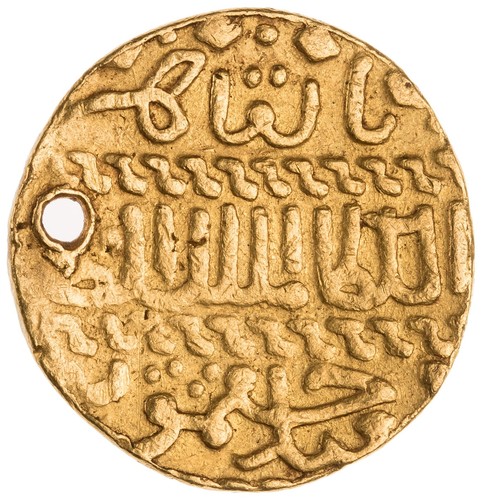
Gold Dinar of Jaqmaq
A hand-struck Mamluk gold dinar of Sultan al-Zahir Jaqmaq (r. 1438-1453 CE), covered in Arabic calligraphy with no figural imagery; this example is pierced.
Islamic (Medieval)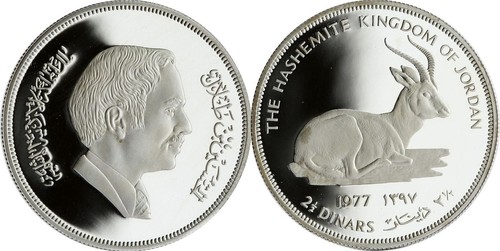
Jordanian 2½ Dinars
A crown-sized 1977 silver commemorative of the Hashemite Kingdom of Jordan, pairing King Hussein's portrait with a standing gazelle from the wildlife-conservation coin theme.
World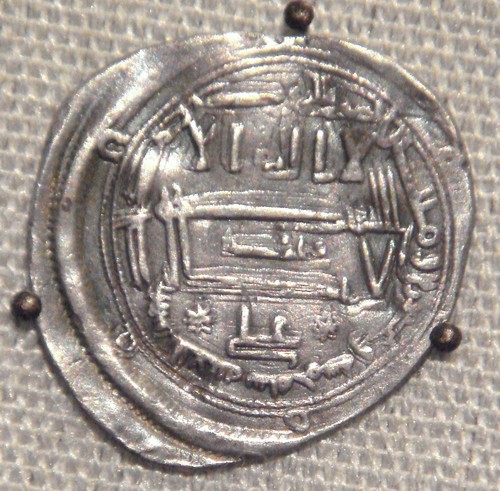
Idrisid Gold Dinar
Gold dinar of Morocco's Idrisid dynasty: a purely epigraphic Islamic coin bearing Kufic Arabic religious legends, no images.
Medieval Islamic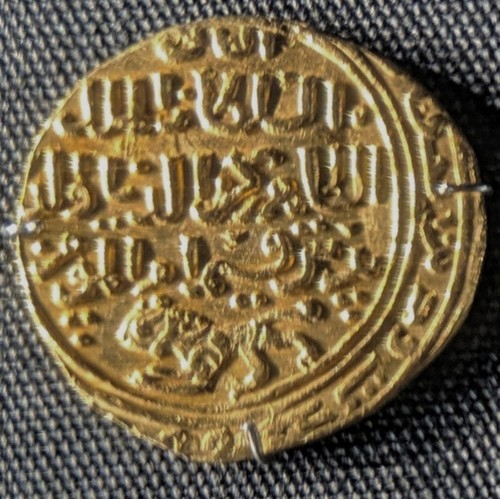
Gold Dinar of Baybars I
A hand-struck gold coin of the Mamluk sultan Baybars I, covered on both faces with Arabic calligraphy naming the ruler and struck in Egypt between 1260 and 1277 CE.
Islamic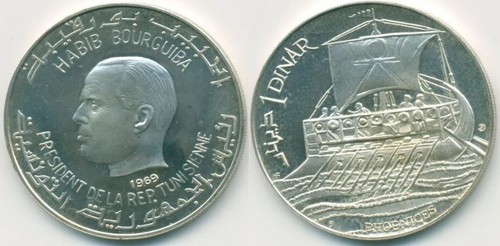
Tunisia 1 Dinar
A 1969 Tunisian silver 1 dinar showing President Habib Bourguiba on the obverse and a traditional sailing ship on the reverse.
World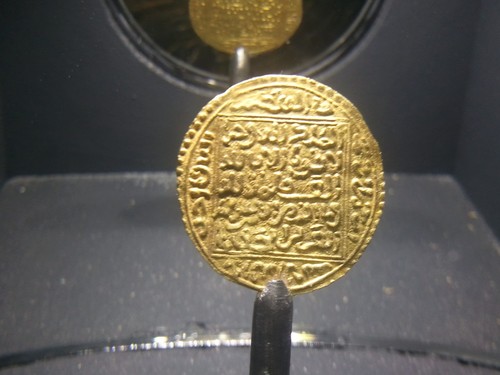
Marinid Gold Dinar
Aniconic Islamic gold dinar of the Marinid dynasty of Morocco, its faces filled with Arabic religious inscriptions framed by geometric border bands.
Medieval Islamic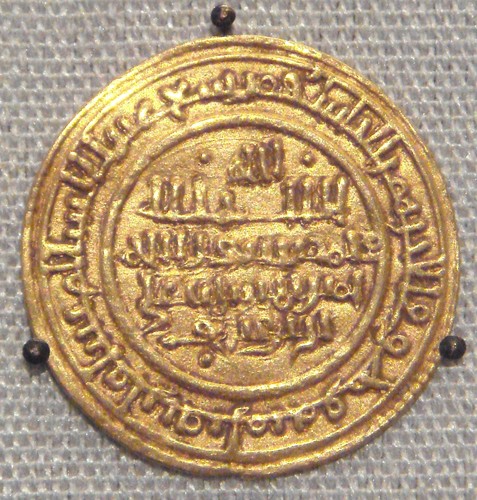
Almoravid Gold Dinar
Pure-gold dinar of the Almoravid dynasty, struck in Islamic Spain and North Africa with concentric Arabic legends; this piece is dated 1116 CE.
Medieval Islamic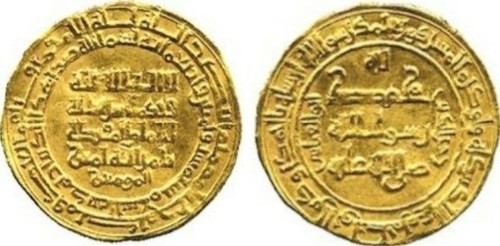
Gold Dinar of al-Muqtadi
An aniconic Abbasid gold dinar of Caliph al-Muqtadi, covered on both faces with Arabic calligraphy and ornamental borders, struck in the later 11th century.
Islamic (Medieval)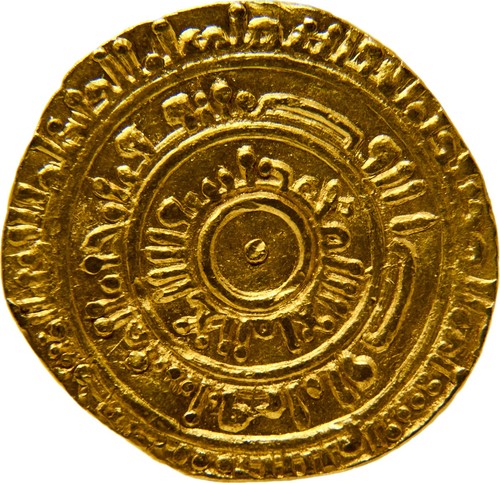
Fatimid Dinar of Imam Nizar
An 11th-century Fatimid gold dinar with concentric circular Kufic inscriptions naming the ruler and Shi'a invocations, a hallmark of Fatimid coinage.
Islamic (Medieval)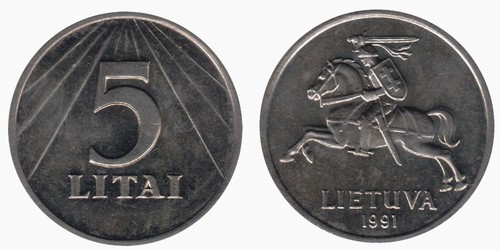
5 Litai
A nickel-alloy 5 litai of newly independent Lithuania dated 1991, showing the value with radiating lines on one side and the armored knight Vytis on horseback on the other.
Modern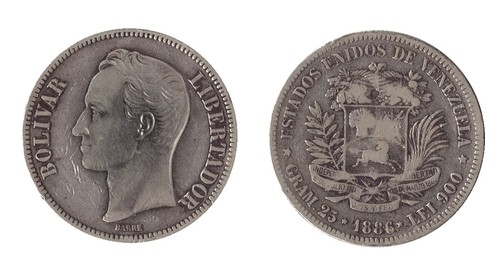
5 Bolivares
A crown-sized silver 5 bolivares of Venezuela: the head of Bolivar the Liberator on one side and the national coat of arms on the other.
Circulation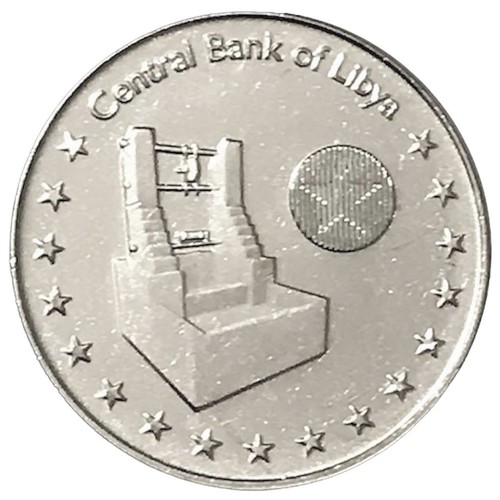
Libya 1 Dinar (Counterfeit)
A brass coin imitating Libyan 1 Dinar coinage, carrying Arabic legends and geometric ornament but identified as a counterfeit or non-official replica.
World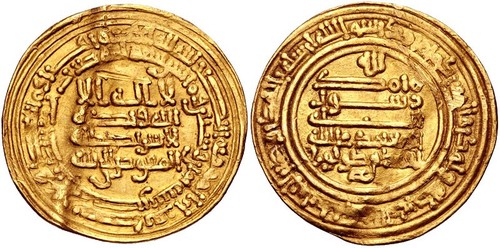
Gold Dinar of Ahmad ibn Tulun
A late-9th-century Islamic gold dinar of the Tulunid ruler Ahmad ibn Tulun, its faces filled with concentric Arabic inscriptions and dated AH 268 (881–882 CE).
Islamic (Medieval)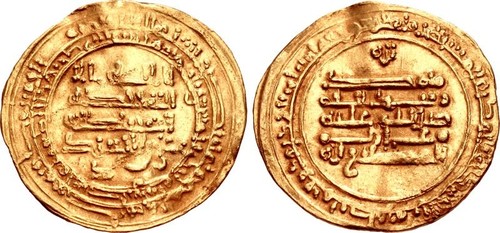
Gold Dinar of Abu'l-Hasan Ali
A high-purity Islamic gold dinar dated AH 351 (961-962 CE) in the name of the Ikhshidid ruler Abu'l-Hasan Ali, struck in fully calligraphic Kufic script.
Islamic (Medieval)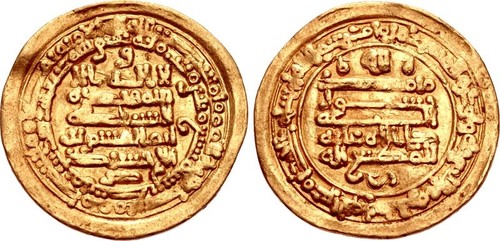
Gold Dinar of Abu'l-Qasim Unujur
An Ikhshidid gold dinar of Abu'l-Qasim Unujur, dated AH 337, with purely calligraphic Arabic legends inside ornamental borders on both faces.
Islamic (Medieval)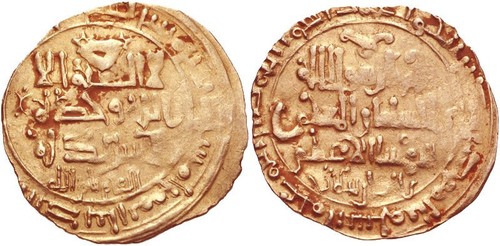
Gold Dinar of Alp Arslan
A hand-struck Islamic gold coin of the Great Seljuk sultan Alp Arslan, covered in concentric Arabic inscriptions naming the ruler and caliph, AH 455–465.
Islamic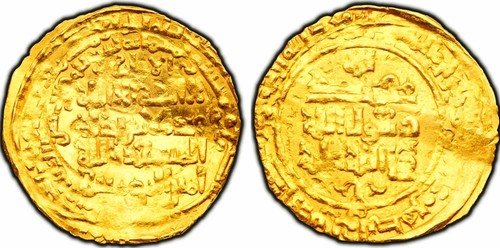
Gold Dinar of al-Mustanjid
A hand-struck Abbasid gold dinar of Caliph al-Mustanjid, bearing only Arabic calligraphy within concentric ring borders and dated AH 557.
Islamic (Medieval)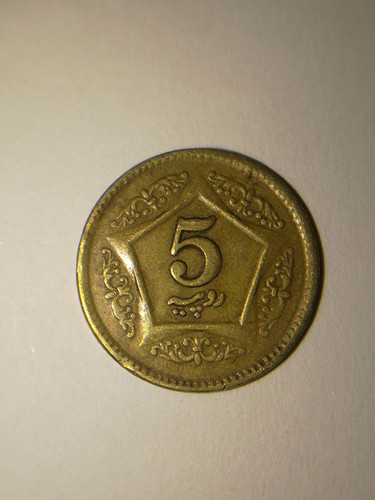
Pakistan 5 Rupees
A brass Pakistani five-rupee coin with a large numeral 5 set in an ornamental frame and Islamic-style Urdu calligraphy around both faces.
South Asia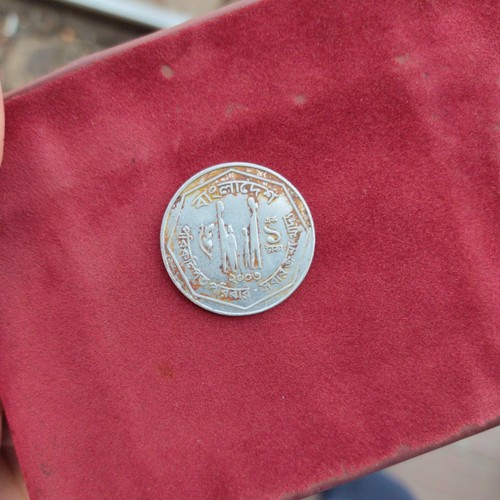
Bangladesh 5 Taka
A modern Bangladeshi circulation coin worth five Taka, struck in nickel-plated steel, with the national emblem on the obverse and the value in Bengali on the reverse.
South Asia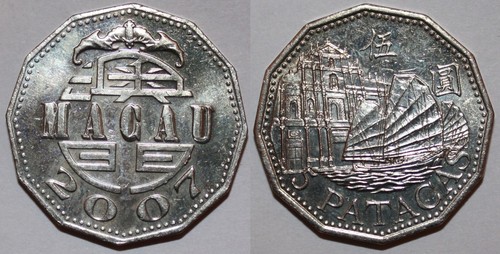
Macao 5 Patacas
A distinctive octagonal Macao 5 Patacas circulation coin dated 2007, showing a denomination-marked face and a sailing ship over a harbor scene.
Circulation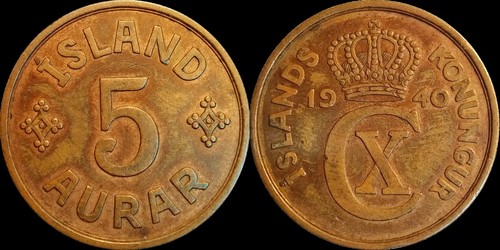
5 Aurar
Icelandic bronze 5 aurar of the Kingdom era, marked ÍSLAND with a crowned KONUNGDÓMUR ÍSLANDS reverse, struck 1926-1942.
World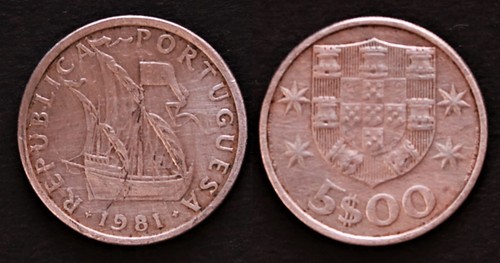
5 Escudos
Portugal's copper-nickel 5 Escudos, showing a caravel sailing ship on the obverse and the national shield with the value 5$00 on the reverse.
Modern