
Coin Encyclopedia
Search and identify coins from around the world — with country, denomination, metal, mint, history, and how to tell them apart.
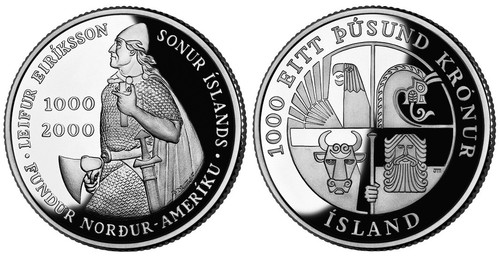
Leif Erikson Commemorative 1000 Króna
Icelandic silver commemorative dated 2000, marking the millennium of Leif Erikson's voyage and the Norse discovery of North America.
Commemorative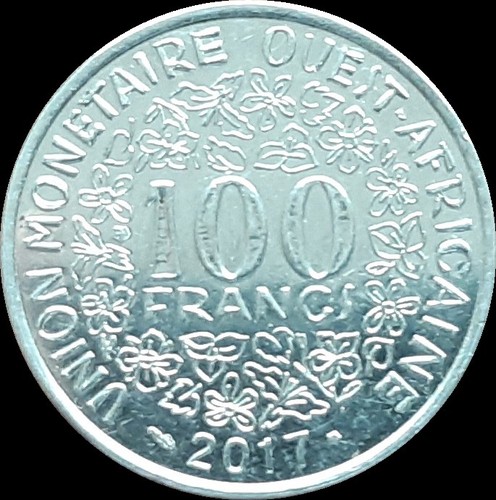
100 CFA Francs
A widely circulated West African coin bearing a crossed-sword emblem and a floral design, denominated 100 francs of the West African CFA franc.
World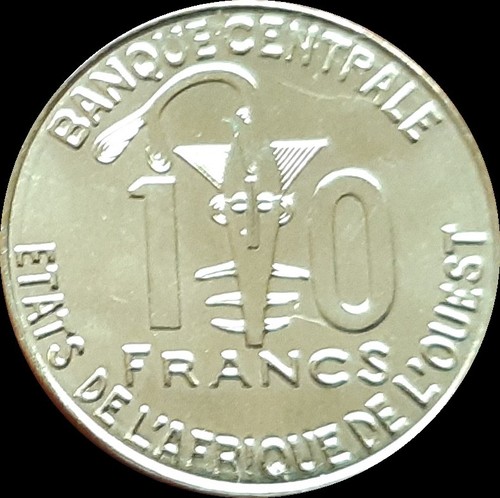
10 CFA Francs
A small modern circulation coin of the West African CFA franc zone, showing a stylized traditional emblem and the bold value 10.
World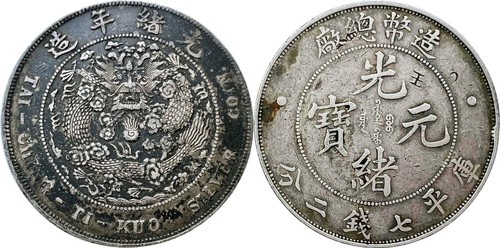
Guangxu Yuanbao 7 Mace 2 Candareens
A silver Chinese dragon dollar of the Guangxu era, marked Guangxu Yuanbao and valued at 7 Mace 2 Candareens, with a coiled dragon on one face and Chinese legends on the other.
Circulation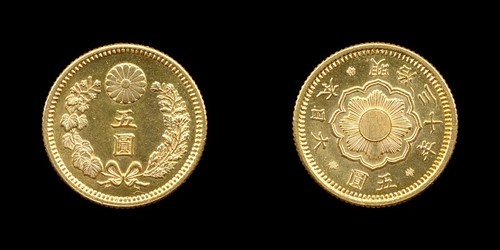
Japanese 5 Yen
Small Meiji-era Japanese gold coin with an imperial chrysanthemum and characters on the obverse and a floral wreath framing the 5 Yen value.
World Coins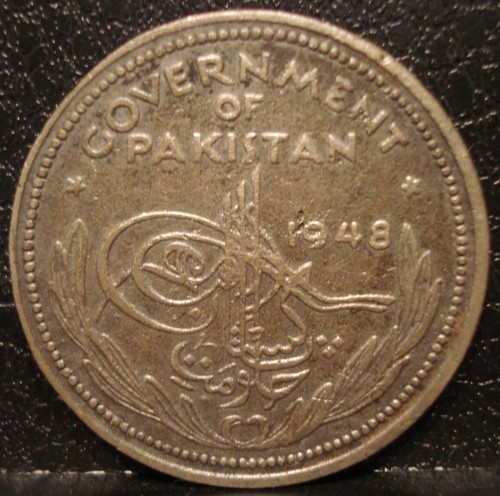
Pakistan One Rupee
An early coin of newly independent Pakistan, dated 1948, with the GOVERNMENT OF PAKISTAN legend framing an ornate Islamic geometric and floral design.
South Asia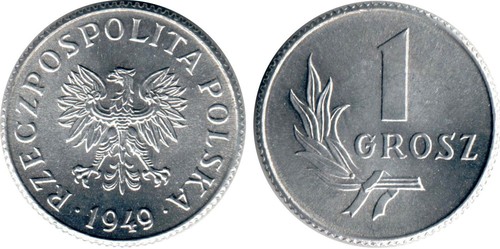
1 Grosz
A small 1949 Polish one-grosz coin bearing the crownless national eagle and RZECZPOSPOLITA POLSKA, with the value 1 GROSZ framed by grain on the reverse.
Modern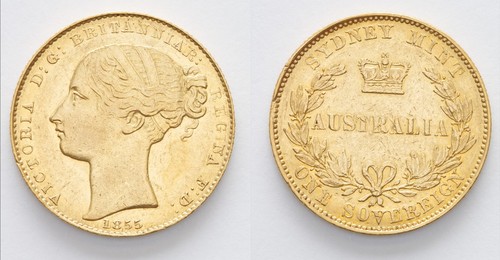
Australian Sovereign
22-carat gold sovereign struck at Australian branch mints; the 1855 Sydney Mint issue was the country's first gold coin.
Australian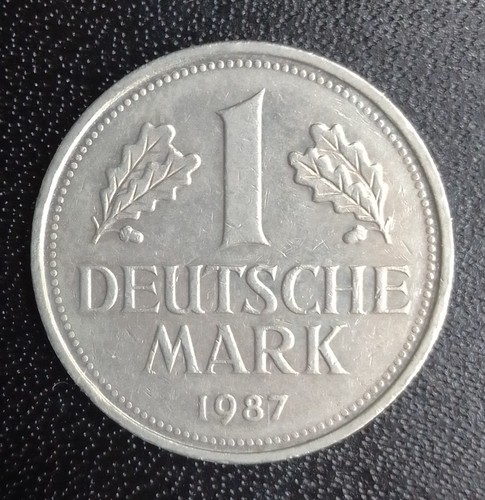
German 1 Deutsche Mark
The workhorse 1-Mark coin of West Germany and reunified Germany, showing a large numeral 1 framed by oak leaves and the words DEUTSCHE MARK.
Circulation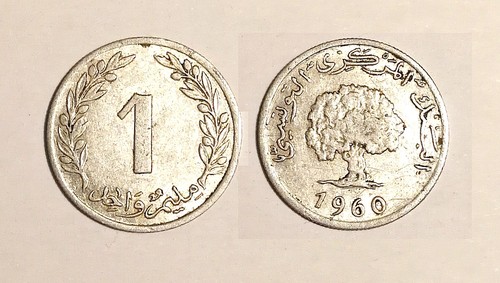
Tunisia 1 Millime
Tunisia's smallest post-independence coin, a tiny aluminum-bronze 1 millime of 1960 showing the value 1 framed by laurel and a numeral in profile.
World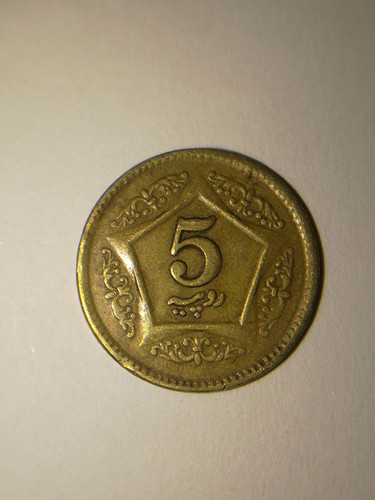
Pakistan 5 Rupees
A brass Pakistani five-rupee coin with a large numeral 5 set in an ornamental frame and Islamic-style Urdu calligraphy around both faces.
South Asia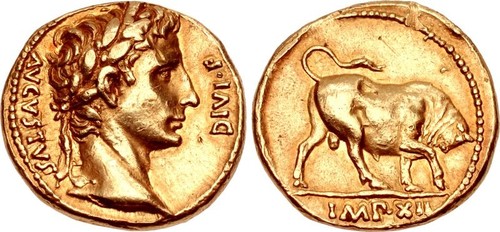
Aureus of Augustus
Roman imperial gold coin bearing the bare head of Augustus, first emperor of Rome, struck during his reign from 27 BC to 14 AD.
Ancient Coins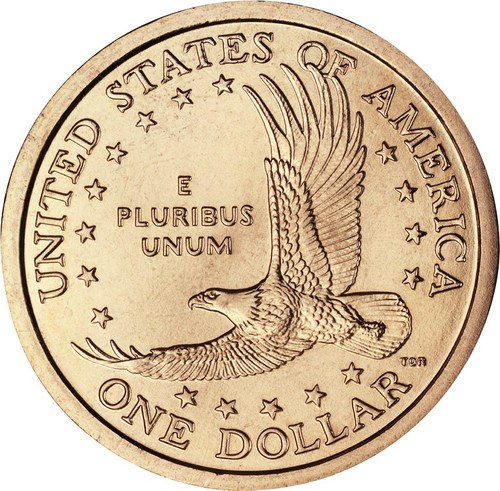
Sacagawea Dollar
U.S. golden-colored dollar coin showing Sacagawea and her infant son on the obverse and a soaring eagle on the reverse, struck 2000–2008.
Dollar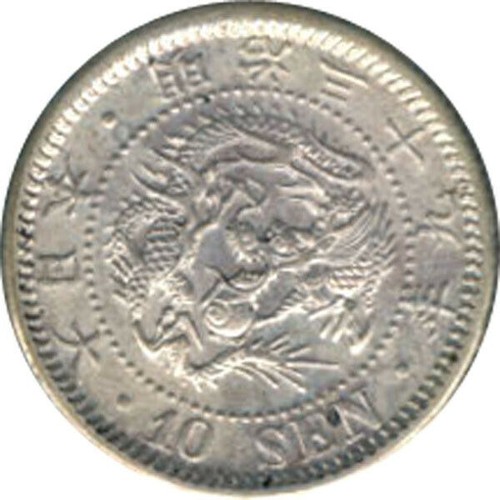
10 Sen
A small Meiji-era Japanese silver 10 Sen: a coiled dragon and characters on one face, a rayed sunburst framed by branches on the other.
Circulation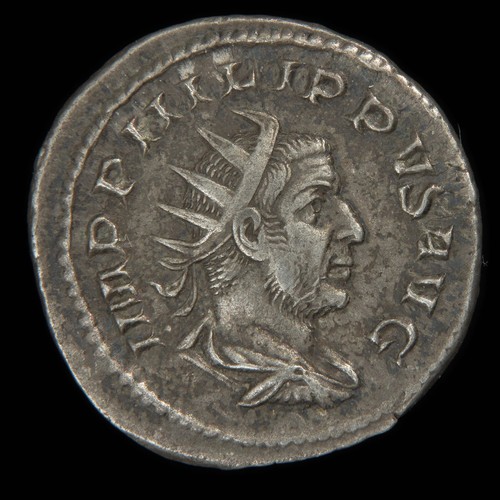
Antoninianus
Roman imperial coin of the crisis era, marked by a radiate (spiked) crown on the emperor's head; struck in debased silver-and-copper billon, c. 250-270 AD.
Ancient Coins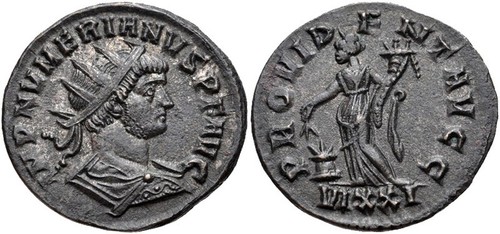
Antoninianus of Numerian
Late Roman radiate coin of the short-lived emperor Numerian (283-284 AD), showing his spiked crown and a Victory or standing deity on the reverse.
Ancient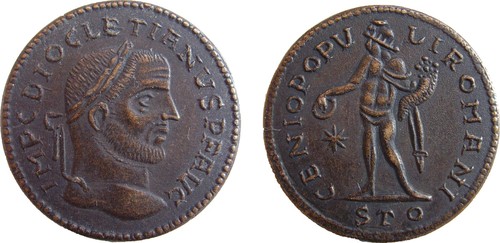
Follis of Diocletian
A large silver-washed bronze coin of the Tetrarchy, introduced by Diocletian's currency reform around AD 294 with a stern laureate portrait.
Ancient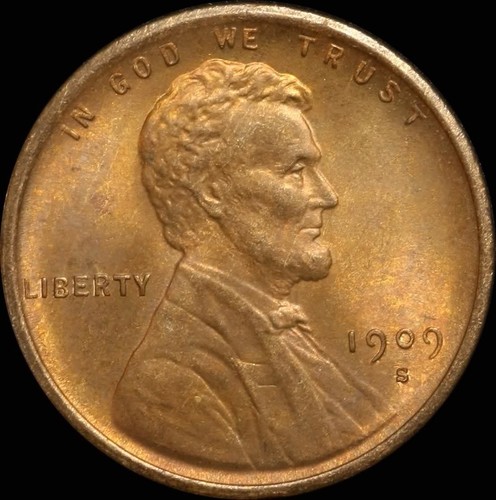
Lincoln Wheat Cent
U.S. one-cent coin struck 1909–1958 with Lincoln's profile and a pair of wheat ears framing ONE CENT; the 1909-S here is a scarce first-year San Francisco issue.
Small Cent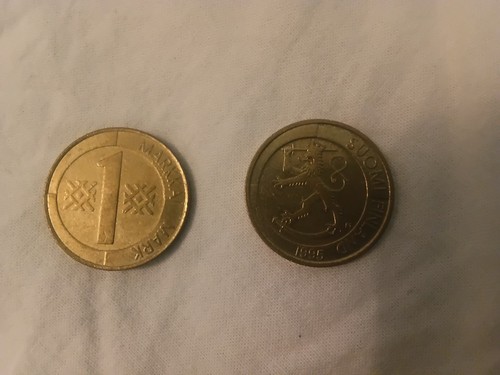
1 Markka
Finland's bimetallic one-markka coin (1993–2001), with a crowned heraldic lion on one face and a large numeral 1 on the other.
World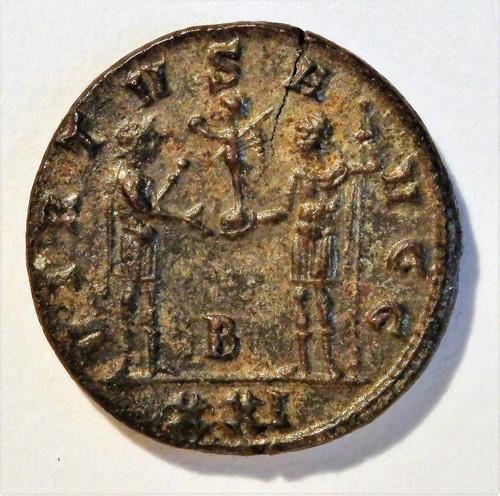
Antoninianus of Carinus
Bronze radiate coin of the emperor Carinus (283-285 AD), recognizable by his spiked crown and a standing or seated deity on the reverse.
Ancient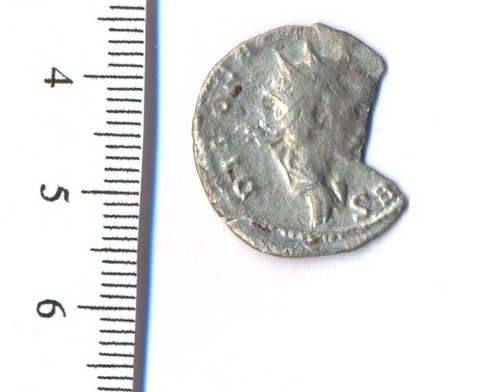
Antoninianus of Valerian II
Roman radiate coin of Valerian II, the young Caesar (c. 253-260 AD), showing his spiked crown and a standing figure on the reverse.
Ancient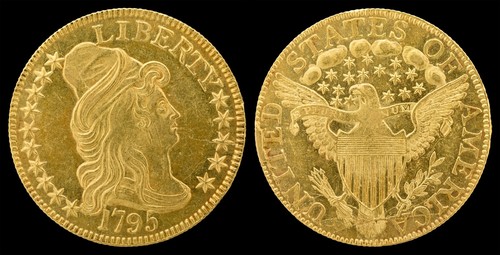
Turban Head Half Eagle
First U.S. gold $5 coin, 1795: Liberty in a soft cap facing right, with a heraldic shield-breasted eagle reverse struck in 22-karat gold.
Half Eagle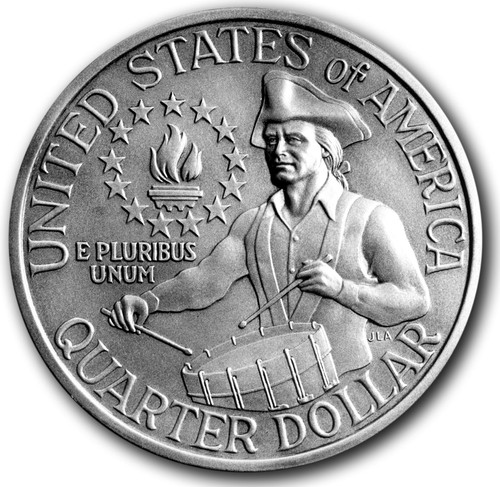
Bicentennial Quarter
U.S. 25-cent coin issued for the 1976 Bicentennial, pairing Washington's portrait with a Colonial drummer and the dual date 1776-1976.
Quarter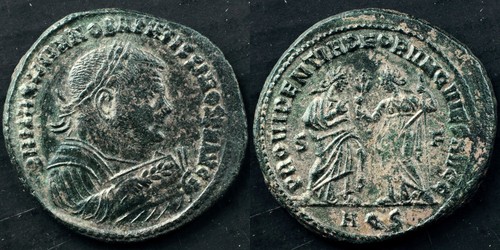
Follis of Maximian
A large silvered-bronze follis of the emperor Maximian, introduced with Diocletian's coin reform of the Tetrarchy around AD 294.
Ancient