
Coin Encyclopedia
Search and identify coins from around the world — with country, denomination, metal, mint, history, and how to tell them apart.
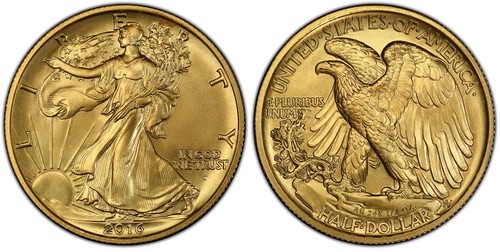
Walking Liberty Half Dollar Centennial Gold
A 2016-W gold collector coin marking the centennial of the 1916 Walking Liberty half dollar, struck in 1/2 oz of 24-karat gold at West Point.
Half Dollar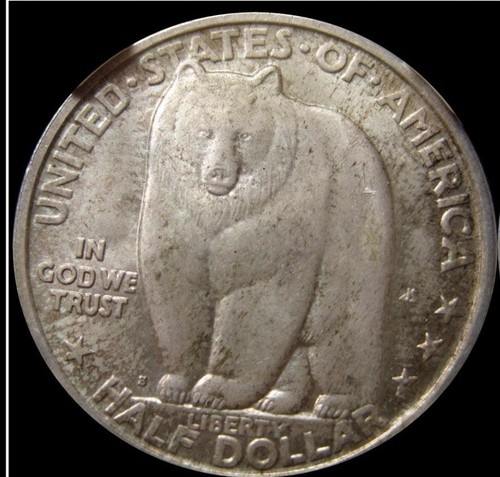
San Francisco-Oakland Bay Bridge Half Dollar
A 1936 U.S. silver commemorative half dollar celebrating the opening of the San Francisco-Oakland Bay Bridge, with a bridge span and a California grizzly bear.
Classic Commemorative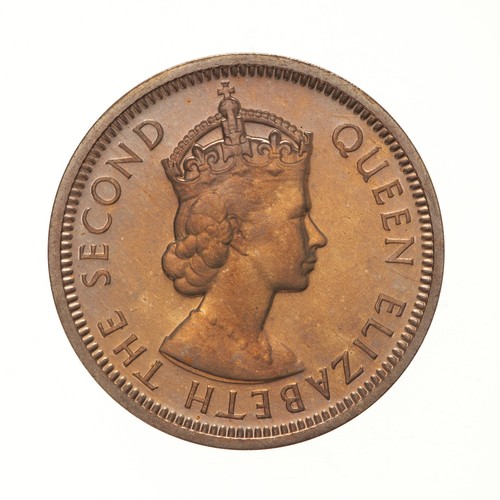
Belize 1 Cent
A small bronze one-cent coin from the Caribbean nation now called Belize, carrying a portrait of Queen Elizabeth II and dated 1954.
Circulation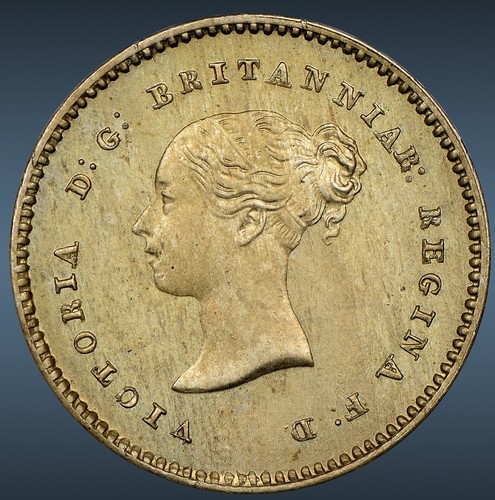
Quarter Farthing
Tiny copper coin of Queen Victoria worth one-sixteenth of a penny, struck for use in Ceylon; the smallest-value British denomination ever made.
British Isles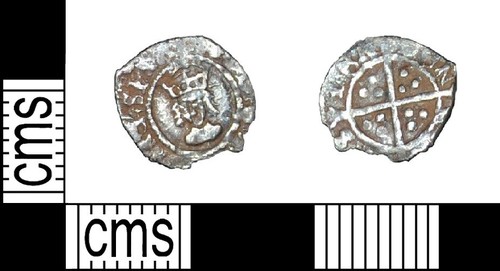
Halfpenny of Henry VIII
A tiny hand-struck Tudor silver halfpenny of Henry VIII, showing a crowned facing bust on the obverse and a long cross over a shield of arms on the reverse.
Hammered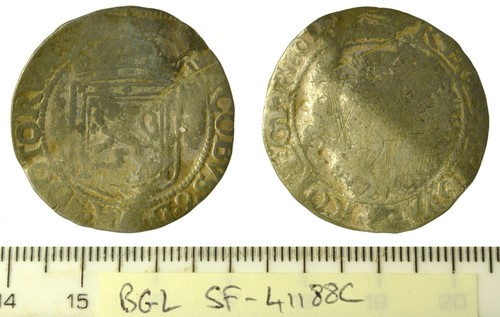
Thistle Merk
A hammered silver Scottish merk of James VI, showing a crowned heraldic shield of Scotland and a crowned thistle with a Latin legend.
Hammered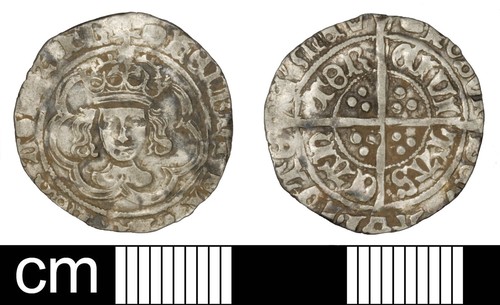
Medieval Halfgroat of Henry VII
Hammered silver twopence of England's first Tudor king, with a crowned royal portrait and a long-cross reverse over a shield.
British Isles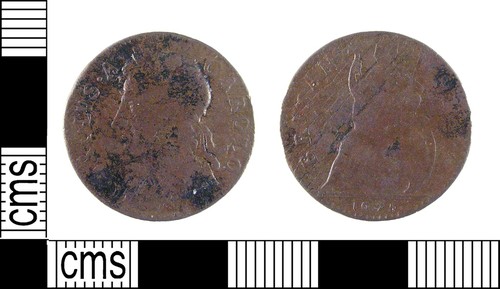
Charles II Halfpenny
A milled copper halfpenny of Charles II showing his laureate bust and a seated Britannia, part of the first regal copper coinage of England, dated 1675.
Milled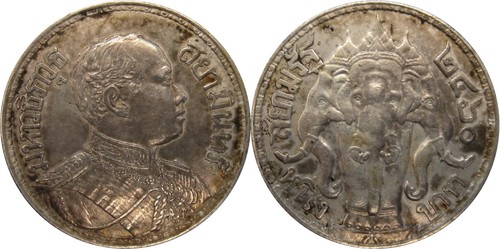
Thailand One Baht
A silver one-baht coin of Siam struck under King Rama VI, its obverse bearing the young king's uniformed profile within Thai royal inscriptions.
Southeast Asia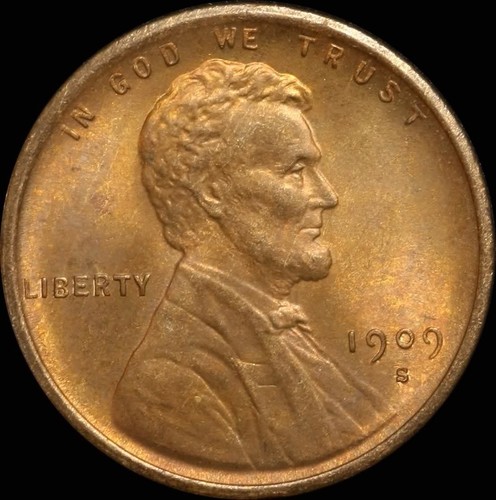
Lincoln Wheat Cent
U.S. one-cent coin struck 1909–1958 with Lincoln's profile and a pair of wheat ears framing ONE CENT; the 1909-S here is a scarce first-year San Francisco issue.
Small Cent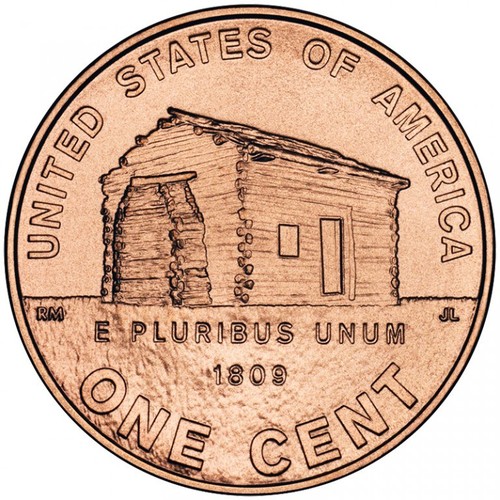
Lincoln Bicentennial Cent
A 2009 U.S. one-cent coin marking Lincoln's 200th birthday, keeping his classic profile while replacing the usual reverse with four scenes from his life.
Small Cent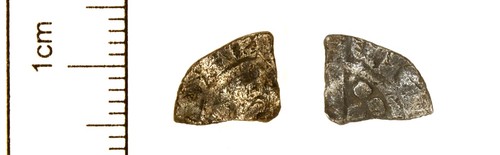
Medieval Silver Cut Farthing
A quarter of a medieval silver penny, physically cut along the reverse cross to make small change before round farthings became common.
British Isles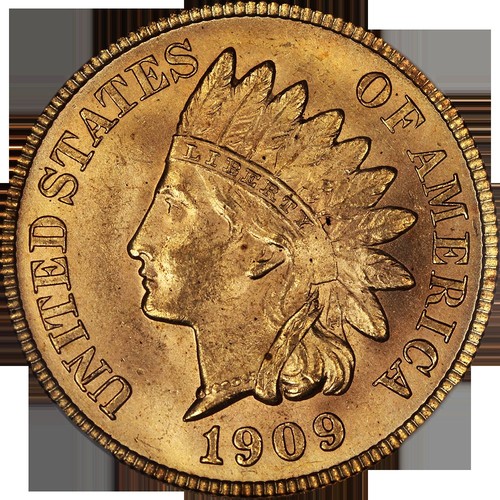
Indian Head Cent
Classic U.S. one-cent piece struck 1859–1909, showing Liberty in a feathered headdress; later dates like 1909 are bronze with an oak-wreath-and-shield reverse.
Small Cent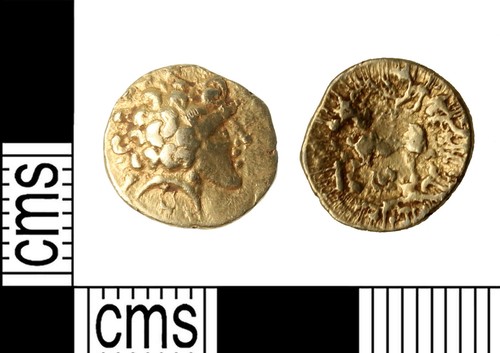
Celtic Gold Quarter Stater
A small Iron Age gold coin struck by the Celtic peoples of ancient Britain, valued at one-quarter of a full stater and marked by abstract, geometric designs.
Ancient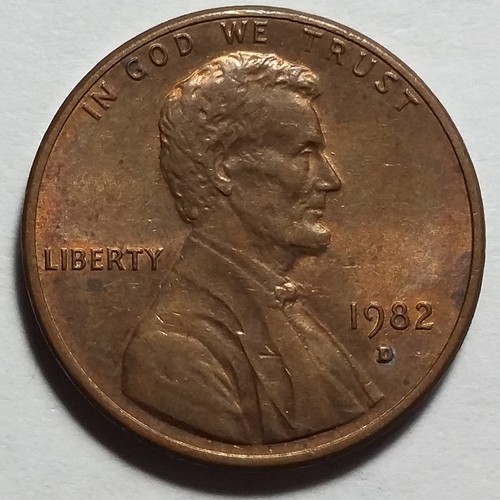
Lincoln Memorial Cent
U.S. one-cent piece struck 1959–2008 with Lincoln's profile and a Memorial reverse; 1982 is the split year between bronze and copper-plated zinc.
Small Cent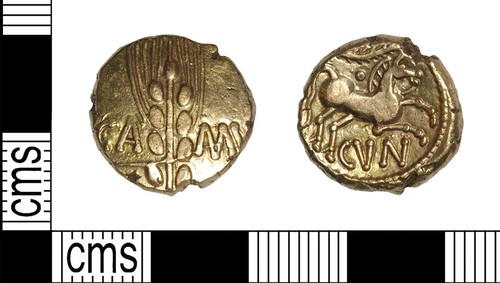
Gold Stater of the Catuvellauni and Trinovantes
An Iron Age British gold stater of the Catuvellauni and Trinovantes, showing stylized wheat/barley ears on one face and a dynamic horse on the other.
Ancient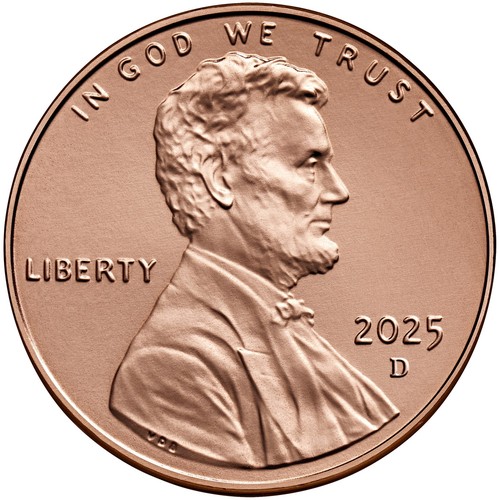
Lincoln Shield Cent
The current U.S. one-cent coin, struck since 2010, pairing Lincoln's profile with a Union Shield reverse on a copper-plated zinc planchet.
Small Cent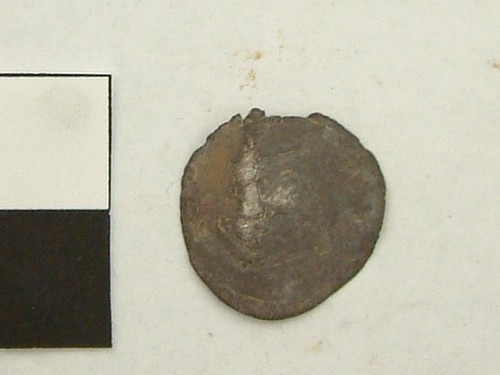
Quarter Merk
A small hammered silver coin of Scotland worth a quarter of a merk, showing a crowned heraldic shield with a cross and a Latin legend.
Hammered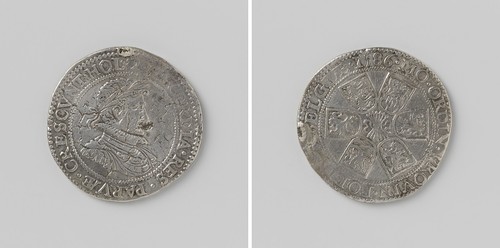
Halve Rijksdaalder van Leicester
Silver half rijksdaalder of the Leicester type, struck in the rebelling Dutch provinces, showing an armored bust and a split provincial shield.
Early Modern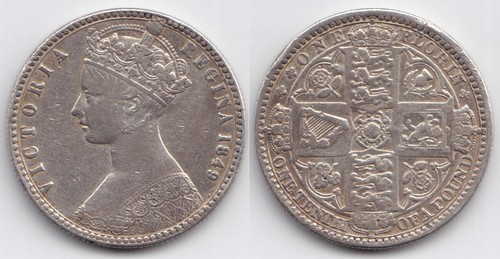
Godless Florin
Britain's first florin, struck only in 1849 and nicknamed "Godless" because it dropped "Dei Gratia" from Queen Victoria's titles.
British Isles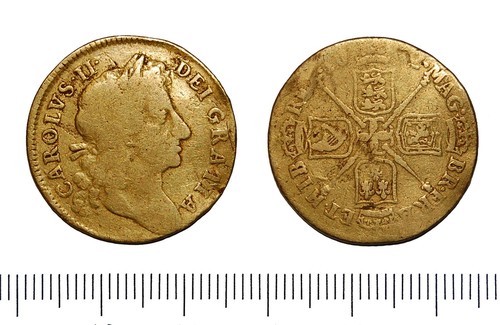
Gold Guinea
English gold coin of the Guinea denomination; the example shown bears the right-facing bust of Charles II with a crowned cruciform shield reverse dated 1668.
World Coins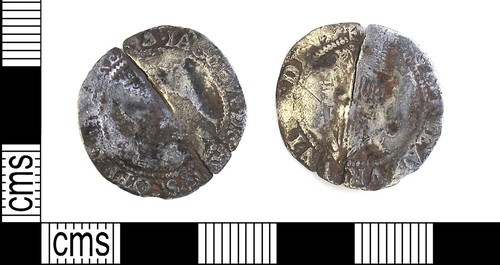
Sixpence of James I
A hammered silver sixpence of James I of England: crowned profile bust with VI value mark, and a dated garnished shield over a cross on the reverse.
Hammered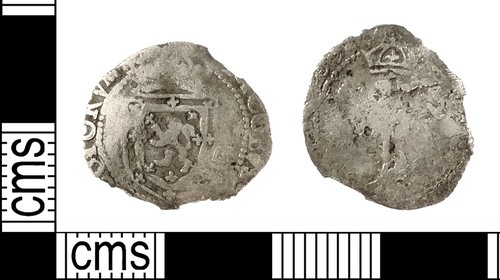
Eighth Thistle Merk
A small hammered silver Scottish coin of James VI, showing a crowned heraldic shield of arms on one side and a crowned thistle on the other.
Hammered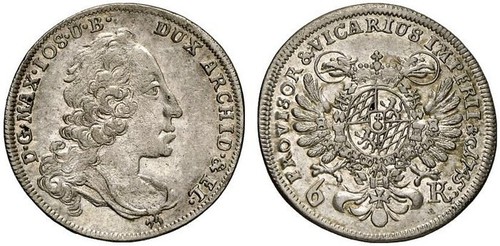
Bavaria 6 Kreuzer
A small silver 6 Kreuzer of the Electorate of Bavaria, showing the profile of Charles VII and a crowned double-headed imperial eagle marking the value.
German States