
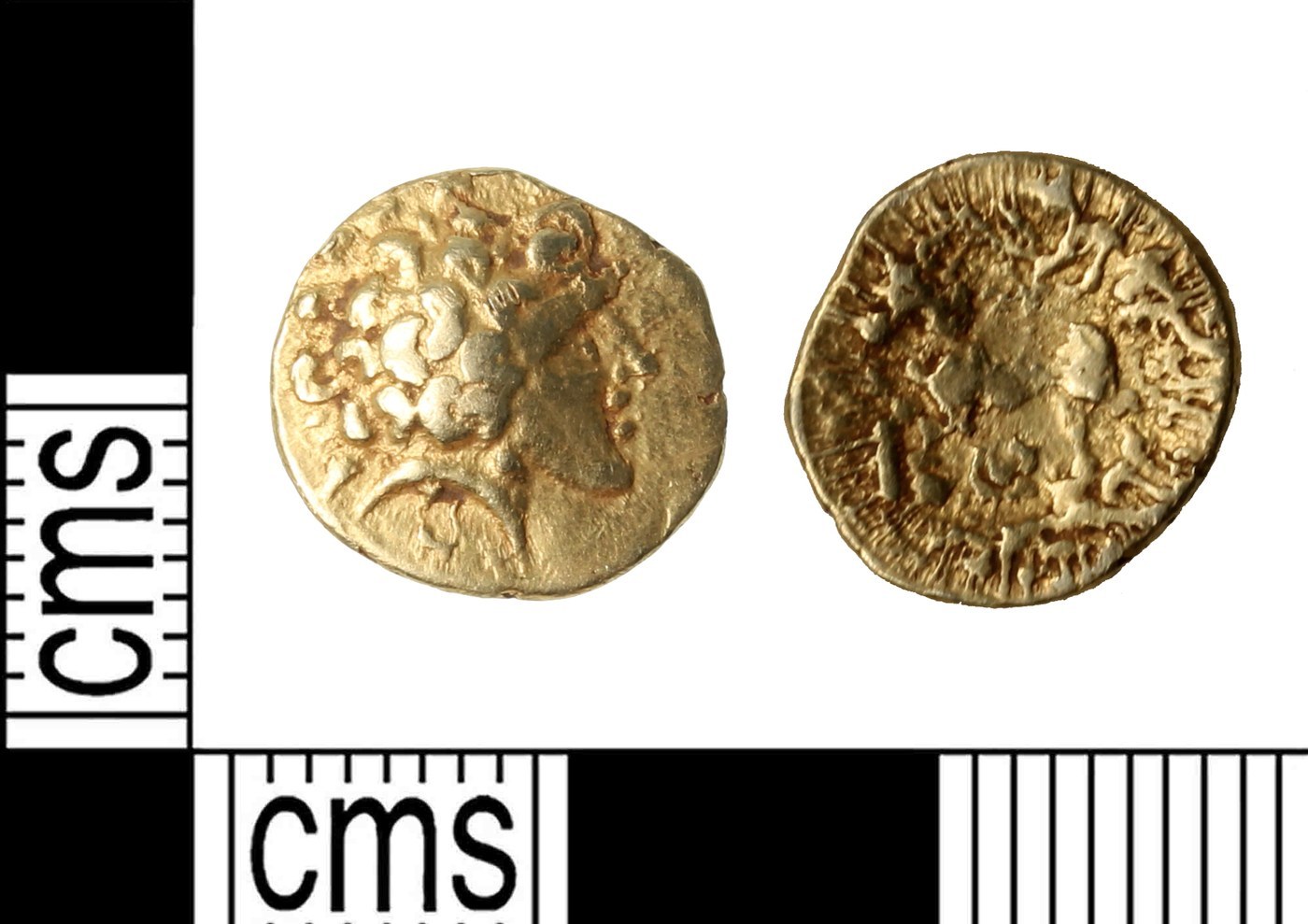
Celtic Gold Quarter Stater
A small Iron Age gold coin struck by the Celtic peoples of ancient Britain, valued at one-quarter of a full stater and marked by abstract, geometric designs.
- Country
- Ancient Britain
- Denomination
- Quarter Stater
- Metal
- Gold
Got a coin like this?
Identify any coin from a photo, free.
Overview
The Celtic gold quarter stater is a small ancient British coin worth one-quarter of the standard gold stater. Struck by Iron Age tribes across southern and eastern Britain, these coins circulated in the last two centuries BC and into the first century AD, before and around the time of the Roman conquest.
The example shown here displays the features typical of the series: an obverse with a stylized head facing right, its curled hair rendered as a pattern of locks, and a reverse carrying an abstract, geometric arrangement built up from pellets, crescents, and lines. These designs are highly schematic rather than realistic, a hallmark of Celtic coinage.
As a small-denomination gold coin, the quarter stater was more practical for everyday high-value transactions than the full stater. It represents one of the earliest native coinages of the British Isles and is prized today as a tangible link to pre-Roman Britain.
History & Background
British Celtic coinage descends from the gold stater of Philip II of Macedon, whose coins depicted the head of Apollo on the obverse and a two-horse chariot on the reverse. As these coins passed north and west through Gaul and into Britain over generations, native die-cutters progressively reinterpreted the Classical imagery. The realistic Apollo head dissolved into curls, wreath elements, and pellets, and the chariot broke apart into disjointed horses, wheels, and abstract ornament.
The result, seen on this coin, is a distinctively Celtic visual language: a head reduced to curling hair and scattered pellets on the obverse, and a geometric, almost decorative composition on the reverse. Different tribes, such as the Atrebates, Cantii, Trinovantes, Iceni, and others, produced their own quarter staters, and the designs vary from more figural to almost entirely abstract depending on region and date.
These coins were struck by hand from engraved dies onto small gold or gold-alloy blanks. The gold content of the alloy tended to decline over time as supplies were stretched, so later issues are often paler and more debased than early ones. Production continued until the Roman conquest of AD 43 brought Britain into the imperial monetary system.
How to Identify
Identify the coin first by size and metal. Quarter staters are small, typically around 10 to 15 mm across and light in weight, usually roughly 1 to 1.5 grams, and struck in gold or a gold alloy. The color can range from rich yellow gold to a paler, more silvery tone on debased later issues. The small module and gold fabric immediately separate a quarter stater from the larger full stater.
The obverse of this example shows a head facing right, its hair rendered as bold curls, often accompanied by pellets, crescents, or wreath-like elements rather than a naturalistic face. On many quarter staters the head is so abstracted that only the curling locks and a scatter of pellets survive of the original Apollo portrait. The reverse carries a geometric design built from pellets, lines, crescents, and sometimes fragments of a horse or wheel, arranged as an ornamental pattern rather than a legible scene.
Because tribal issues vary widely, precise attribution to a specific tribe or ruler depends on the exact arrangement of motifs and is best confirmed against a specialist reference such as Van Arsdell or the Ancient British series in standard catalogues. At a general level, the combination of small size, gold fabric, a curled head right, and an abstract pelleted reverse securely identifies the coin as an Ancient British gold quarter stater.
Value & Collectibility
Celtic gold quarter staters are collectible ancient coins, and as genuine Iron Age gold they command more than base-metal ancients. Values are driven by tribe, type, strike quality, centering, and how much of the design is present. Common types in average condition often trade in the low-to-mid hundreds of dollars, while sharp, well-centered, or rare tribal issues can reach substantially higher.
Condition and eye appeal matter greatly. A coin on a full flan with clear curls on the obverse and a crisp geometric reverse is far more desirable than an off-center or weakly struck example where much of the design runs off the edge. Provenance and secure attribution to a known tribe also add a premium.
The figures here are general context rather than an appraisal. Because Celtic gold is actively collected and also targeted by forgers, buyers should favor coins with clear provenance and, for higher-value pieces, independent authentication. The coin shown is representative of the series rather than tied to a specific valuation.
Frequently asked questions
What is a quarter stater?
It is a gold coin valued at one-quarter of a full stater, the standard gold unit of Iron Age Britain. Being smaller and lower in value than the stater, it was more practical for everyday high-value payments.
Why does the design look so abstract?
Celtic coinage descends from Greek and Macedonian gold coins that showed a head of Apollo and a chariot. Over generations, native die-cutters reinterpreted these into stylized curls, pellets, and geometric patterns, producing the abstract look seen here.
How old is a Celtic gold quarter stater?
These coins date to the British Iron Age, broadly the last two centuries BC into the first century AD, and production ended around the Roman conquest of Britain in AD 43.
Is it made of solid gold?
It is struck in gold or a gold alloy. The purity varies, and many later issues are debased, appearing paler because the gold was mixed with more silver and copper as supplies were stretched.
Can it be attributed to a specific tribe?
Sometimes. Different tribes struck their own quarter staters with distinctive motif arrangements. Precise attribution depends on the exact design and is best confirmed against a specialist reference for Ancient British coinage.
Celtic Gold Quarter Stater guides
In-depth guides for identifying, valuing, and collecting Celtic Gold Quarter Stater.
Other coins you may enjoy
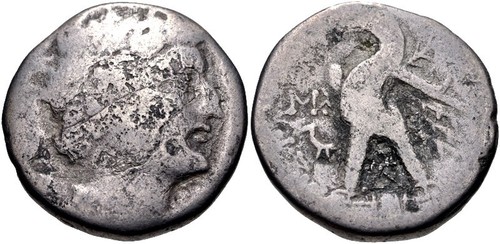
Tetradrachm of Ptolemy XII
80-51 BC
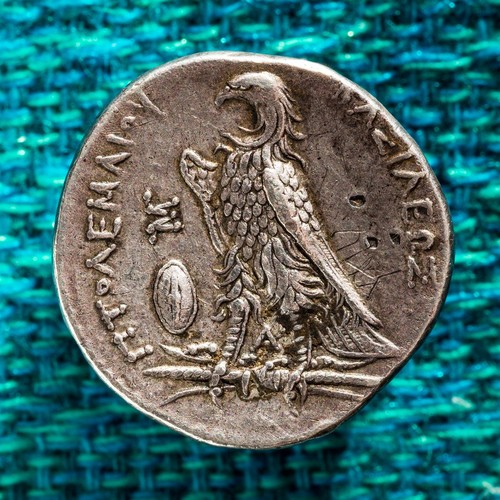
Tetradrachm of Ptolemy I
305-283 BC
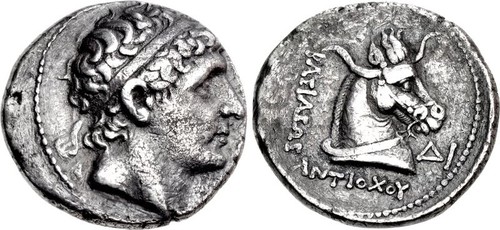
Tetradrachm of Antiochos I Soter
281-261 BC
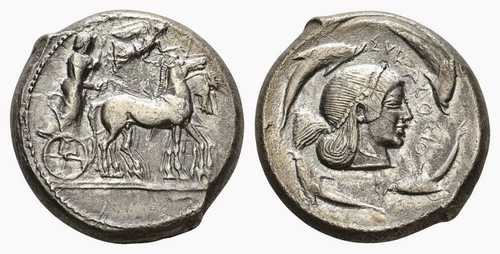
Syracuse Tetradrachm
c. 5th-4th century BC (Classical period)
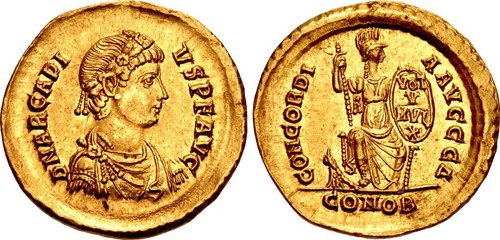
Solidus of Arcadius
AD 395-402
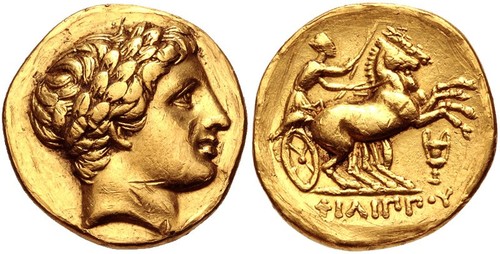
Philip III Gold Stater
323-317 BC
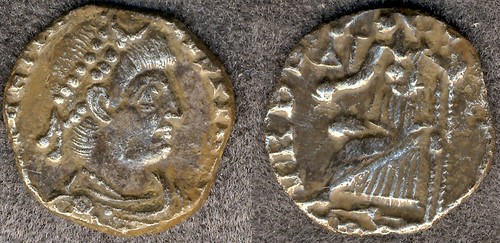
Siliqua of Gratian
AD 367-383
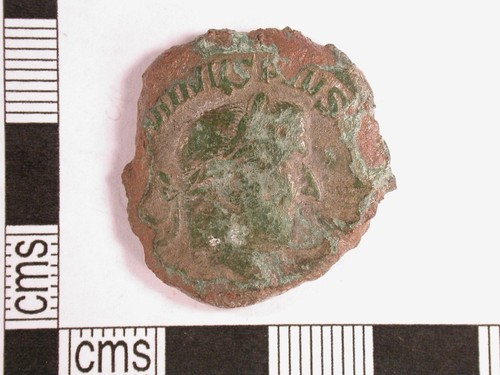
Sestertius of Maximinus Thrax
235-238 AD
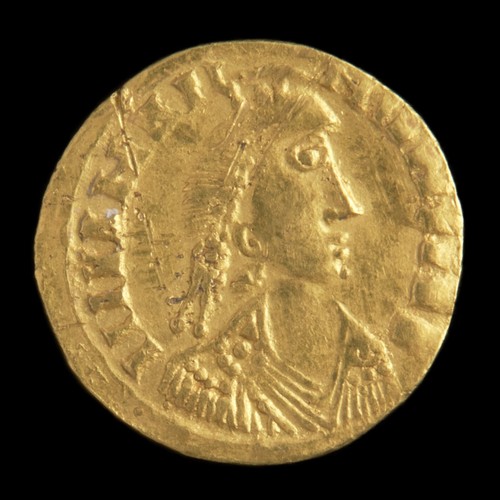
Solidus of Valentinian III
AD 425-455
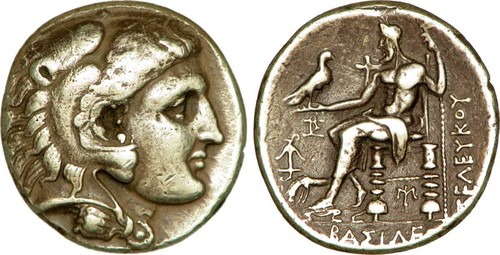
Seleucus I Nicator Tetradrachm
Late 4th-3rd century BC
Nummus of Magnentius
AD 350-353
Follis of Galerius
AD 308-310