
Coin Encyclopedia
Search and identify coins from around the world — with country, denomination, metal, mint, history, and how to tell them apart.
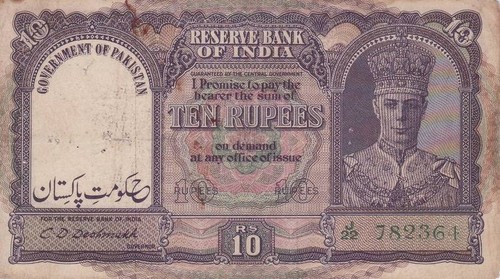
India 10 Rupees
A silver-era Indian coin carrying the profile of King George VI, struck during the final years of British India and the transition to the Republic.
Circulation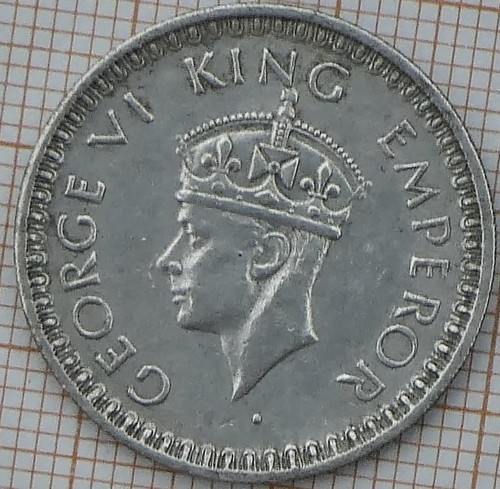
India 50 Paise
A George VI half-rupee of British India dated 1946 — the pale nickel-brass ancestor of the modern 50 paise, with a crowned royal bust and a rampant lion reverse.
Modern India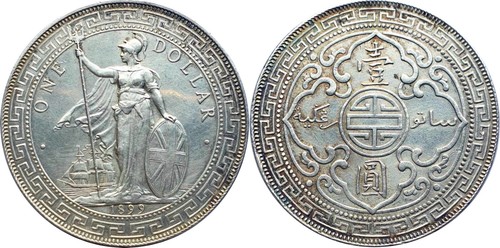
Hong Kong Trade Dollar
A large silver British Trade Dollar with standing Britannia on the obverse and a Chinese dragon reverse, made for commerce across the Far East.
Circulation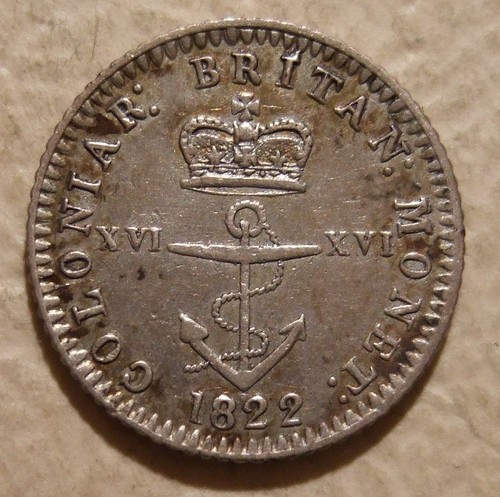
George IV One Sixteenth Spanish Dollar
A small George IV silver coin of the "Anchor Money" series, worth one-sixteenth of a Spanish dollar and marked with an anchor and Roman numeral XVI.
Colonial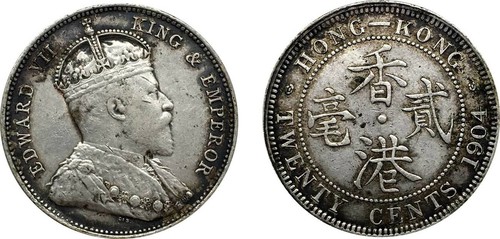
Hong Kong 20 Cents
A small British Hong Kong silver 20 Cents of Edward VII, with the crowned royal profile on one side and a Chinese dragon and value on the other.
Circulation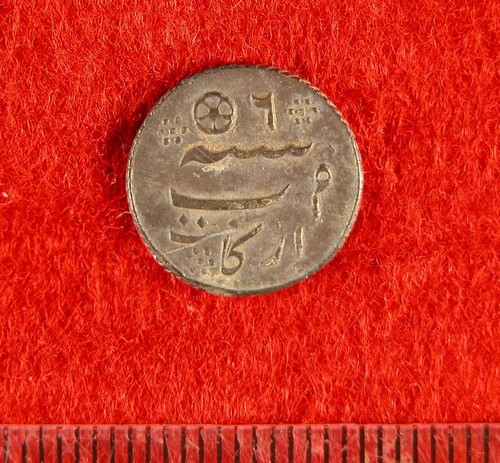
Indian Silver Coin
A silver coin of British India bearing Persian/Urdu calligraphy and a mint mark, in the Mughal-derived inscriptional style of Company-era coinage.
British India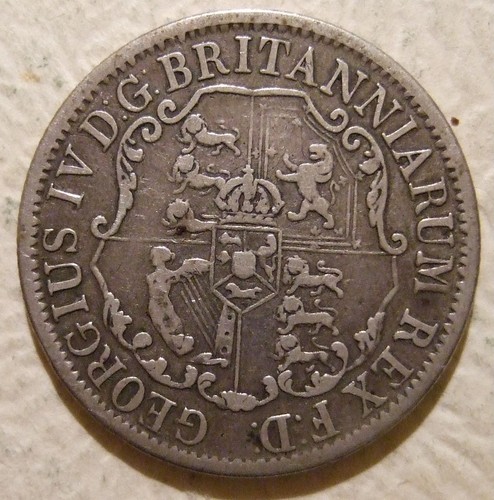
George IV One Quarter Spanish Dollar
An 1822 British colonial silver coin valued at one quarter of a Spanish dollar, part of the George IV "Anchor Money" issued for colonies in the Americas.
Colonial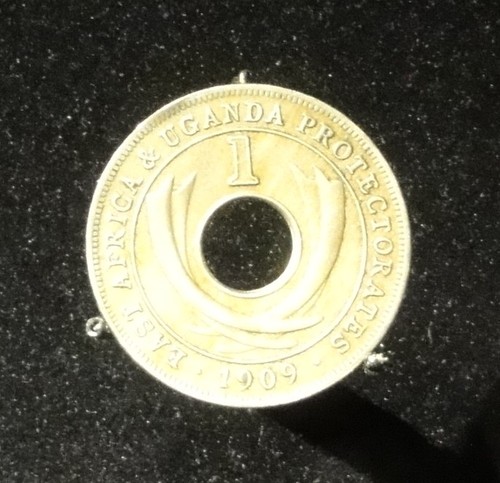
East Africa Protectorate 1 Cent
A small holed one-cent coin of the British East Africa Protectorate, struck in base metal with a crowned, portrait-free design around a central hole.
World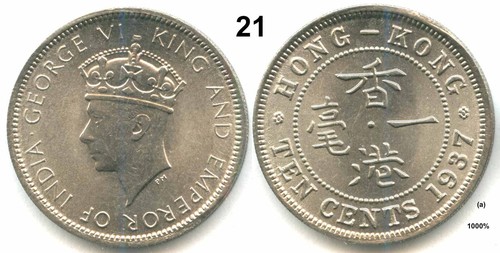
Hong Kong 10 Cents
A small silver 10-cent coin of British Hong Kong showing the crowned profile of King Edward VII, with 'HONG-KONG TEN CENTS' and Chinese characters on the reverse.
Circulation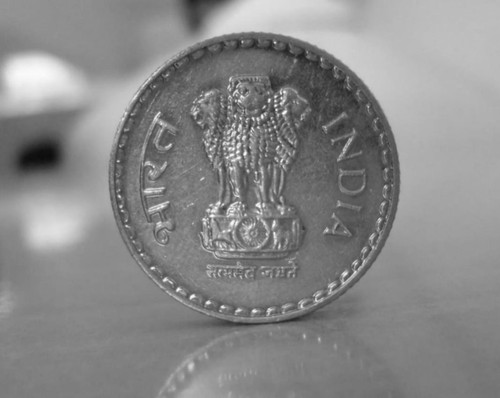
India One Rupee (Cupronickel)
A 1947 British India one rupee in cupro-nickel, its obverse bearing King George VI's crowned bust and its reverse a striding lion above ONE RUPEE INDIA.
Modern India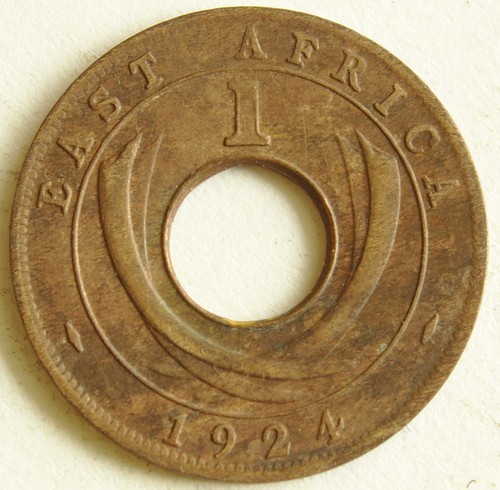
East African 1 Cent
A small holed copper 1 Cent of British East Africa dated 1924, with a crown and decorative rings on one face and the value framing the central hole on the other.
World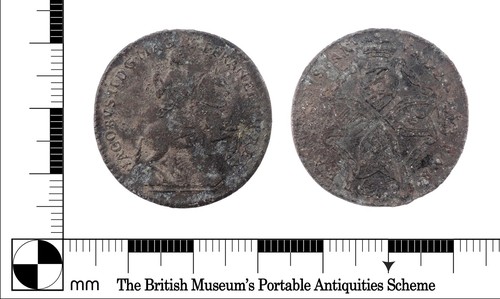
American Plantations Token
A 1688 tin token struck under James II for England's American colonies, valued at 1/24 of a Spanish real — the first regal-authorized coinage for British America.
Colonial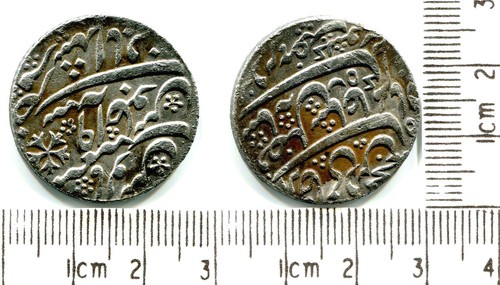
East India Company Rupee
British East India Company silver rupee struck to the Mughal pattern, carrying only Persian/Urdu calligraphy naming the reigning emperor.
British India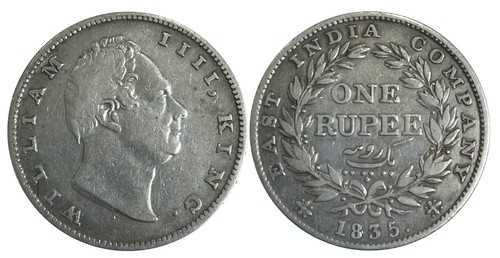
William IV One Rupee
Silver one-rupee coin of British India struck in 1835 under the East India Company, bearing the right-facing bust of King William IV.
British India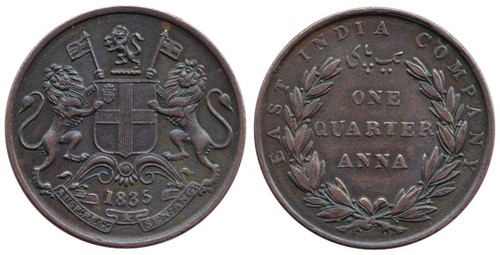
East India Company Quarter Anna
Large copper 1/4 anna of the East India Company dated 1835, with a heraldic lion-and-shield obverse and a laurel-wreath reverse.
British India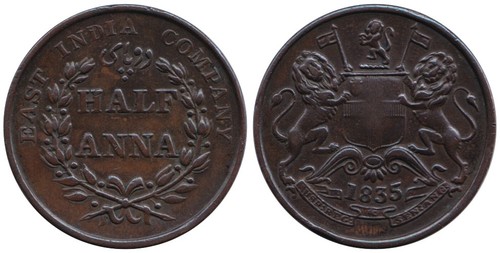
East India Company Half Anna
Large copper Half Anna of the East India Company, dated 1835, with laurel-wreath legend and the Company's heraldic lion-and-shield arms.
British India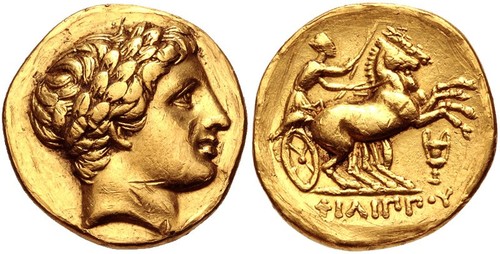
Philip III Gold Stater
A Macedonian gold stater struck under Philip III Arrhidaeus, half-brother of Alexander the Great, showing Heracles and an enthroned Zeus.
Ancient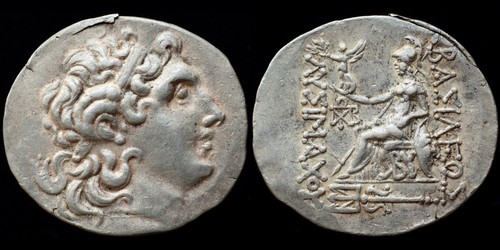
Lysimachos Gold Stater
Gold stater of Lysimachos, king in Thrace and Macedon c. 305-281 BC, with a deified head of Alexander the Great and an enthroned Athena reverse.
Ancient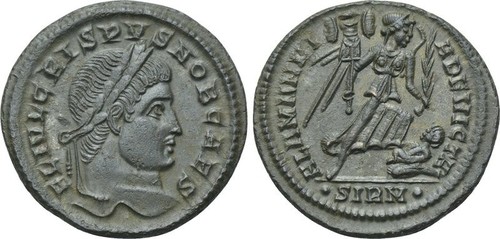
Follis of Crispus
A small bronze follis of Crispus, eldest son of Constantine the Great, with his diademed bust and a winged Victory reverse (317-326 AD).
Ancient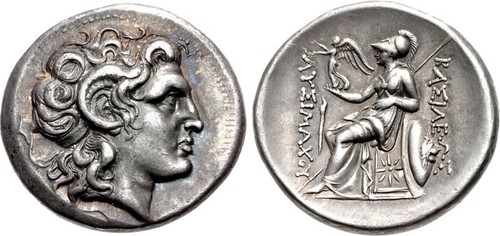
Lysimachos Tetradrachm
Silver tetradrachm of Lysimachos of Thrace, c. 297-282 BC, showing the deified head of Alexander the Great and Athena seated with a shield and spear.
Ancient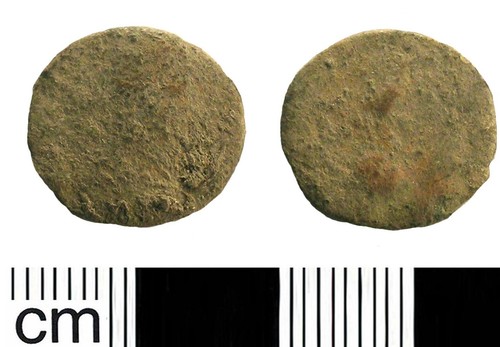
Half Centenionalis of Constans or Constantius II
A small mid-4th-century Roman bronze attributed to Constans or Constantius II, sons of Constantine the Great, worn but identifiable by its imperial portrait and era.
Ancient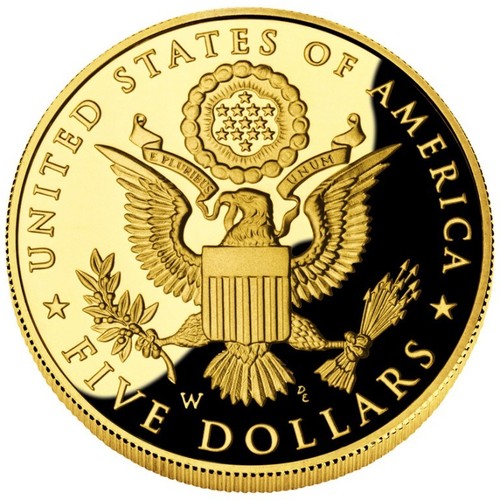
Bald Eagle Commemorative Half Eagle
A 2008 U.S. commemorative gold $5 half eagle honoring the recovery of the American bald eagle, featuring an eagle design and a heraldic Great Seal eagle.
Commemoratives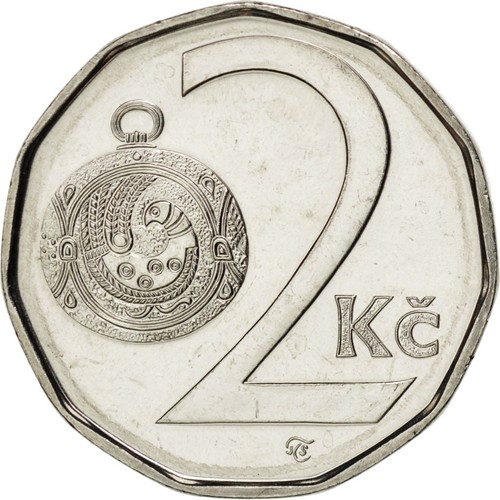
2 Koruny
A circulating Czech Republic coin introduced in 1993, known by its eleven-sided shape, the Czech heraldic lion, and a Great Moravian jewel motif beside 2 Kč.
Modern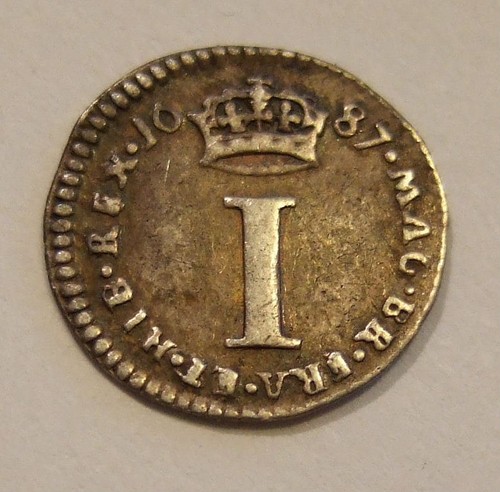
Maundy One Penny
The smallest British Maundy silver coin, bearing a crowned Roman numeral I; this example was struck in 1687 under James II.
Maundy