
Coin Encyclopedia
Search and identify coins from around the world — with country, denomination, metal, mint, history, and how to tell them apart.
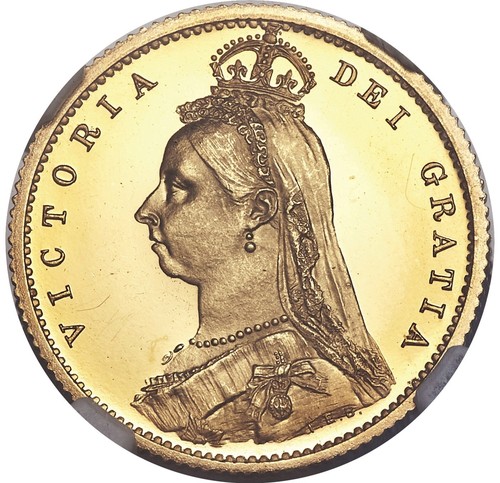
Half Sovereign
A small British 22-carat gold coin worth ten shillings; this example shows Queen Victoria's veiled, crowned Jubilee Head portrait and is dated 1887.
World Coins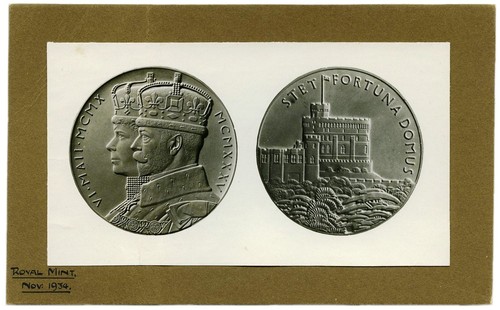
King's Silver Jubilee Medal
British 1935 commemorative medal with overlaid profiles of King George V and Queen Mary and a castle reverse marking the Silver Jubilee.
Medals & Tokens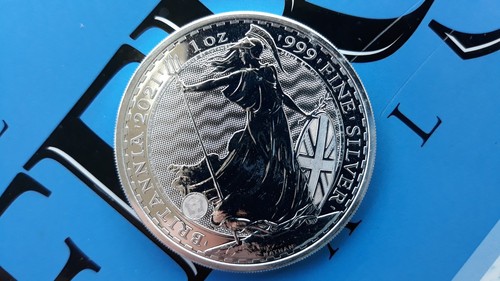
British Britannia Silver Coin
A modern UK bullion coin in fine silver, carrying a face value of 2 Pounds and the classic seated figure of Britannia with shield and trident.
Bullion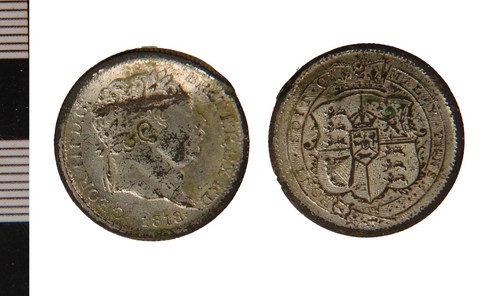
British Bank Token
Copper token of the late George III period bearing the king's left-facing bust and a quartered royal-arms reverse, dated 1819.
British Isles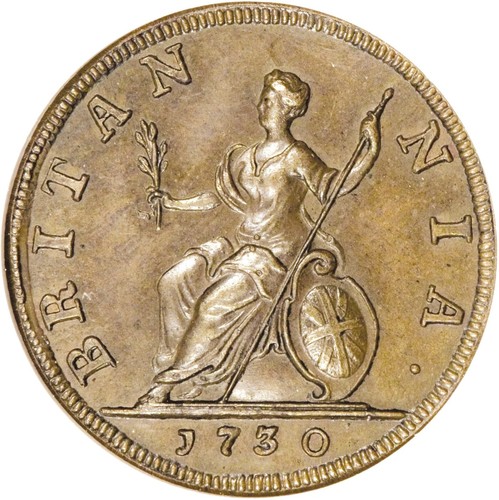
British Farthing
Small copper farthing of King George II, with his laureate bust facing left and a seated Britannia on the reverse; struck in the 1730s.
British Isles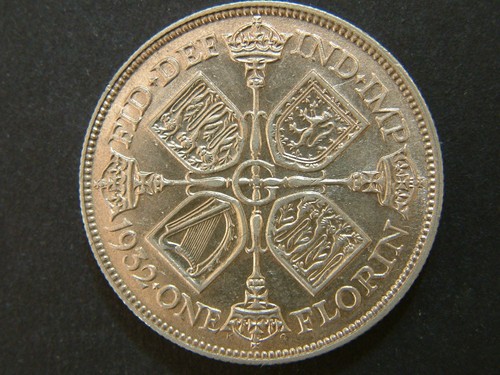
British Florin
A Victorian silver two-shilling florin with a crowned, veiled Victoria and a heraldic crowned-shields reverse; the pictured coin is dated 1890.
World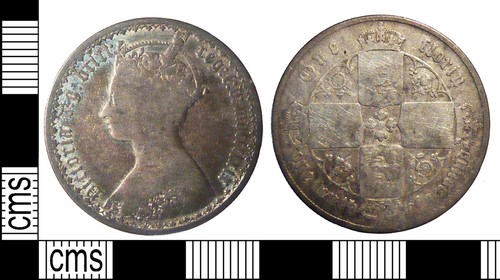
Gothic Florin
A silver two-shilling florin of Queen Victoria in the medieval-revival Gothic style, with an ornate crowned cruciform shield reverse dated 1869.
Milled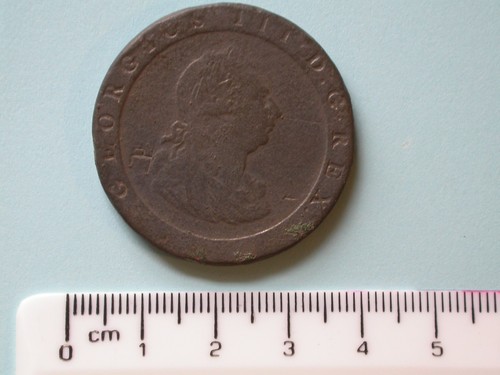
Cartwheel Penny
The heavy 1797 copper penny of George III, with a broad raised rim and sunken lettering, struck by steam power at Matthew Boulton's Soho Mint.
Milled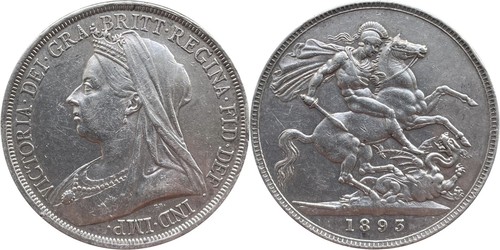
Victorian Crown
Large Victorian silver crown showing Queen Victoria's veiled "Old Head" portrait and Pistrucci's Saint George slaying the dragon, dated 1893.
World Coins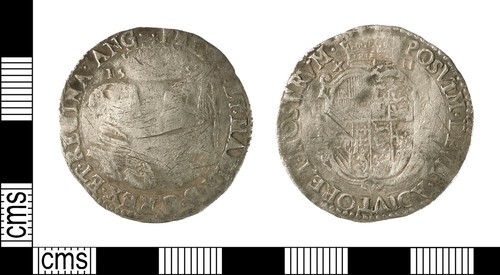
Philip and Mary Shilling
Hammered silver shilling of Philip II of Spain and Mary I (1554-1558), showing their paired royal busts and a crowned quartered shield of arms.
Hammered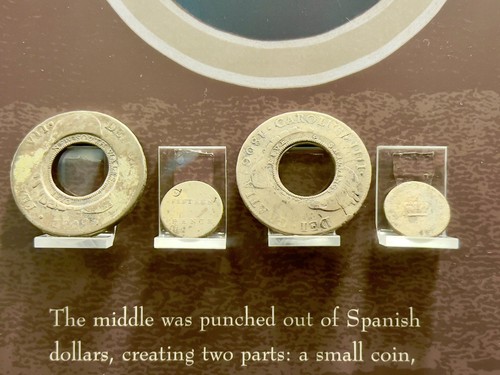
Holey Dollar
Australia's first struck coin: a Spanish silver dollar with its centre punched out, counterstamped NEW SOUTH WALES 1813 and revalued at five shillings.
Australian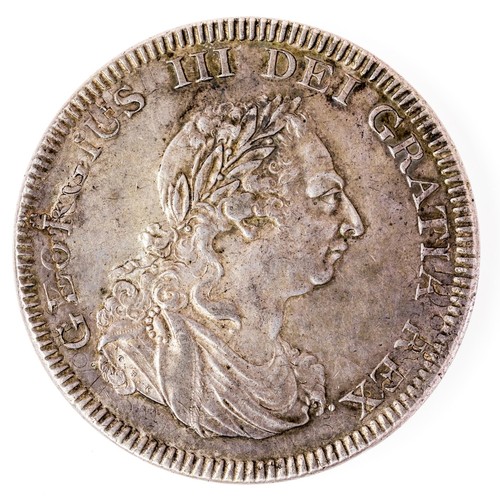
Bank of England Dollar
A George III silver dollar issued by the Bank of England in 1804, struck over Spanish eight-reales coins, with a laureate bust and a crowned shield reverse.
Milled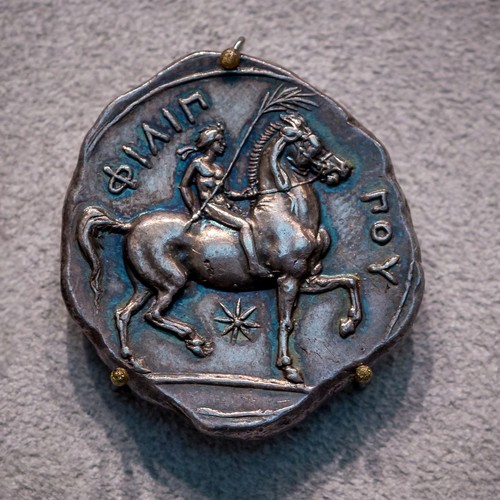
Philip II Tetradrachm
A large silver coin of the Macedonian kingdom showing the laureate head of Zeus and a youthful horseman, struck under and after Philip II.
Ancient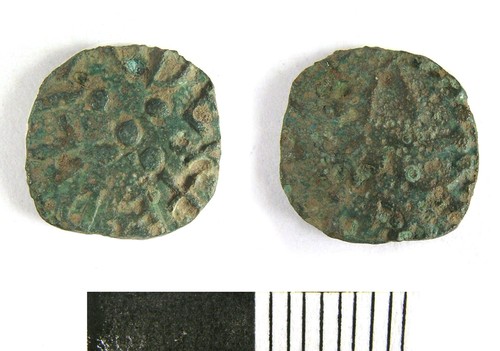
Anglo-Saxon Styca
A tiny base-metal coin of the Anglo-Saxon kingdom of Northumbria, struck in the 8th-9th century with a head and inscription on one side and a cross on the other.
Medieval Coins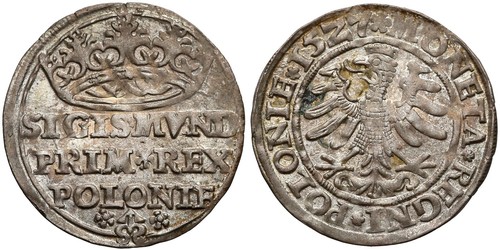
Grosz Koronny
A silver Crown grosz of the Kingdom of Poland, dated 1527, with a royal crown above a shield on one side and the Polish Eagle on the other.
Early Modern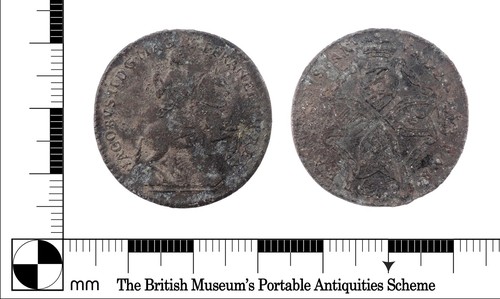
American Plantations Token
A 1688 tin token struck under James II for England's American colonies, valued at 1/24 of a Spanish real — the first regal-authorized coinage for British America.
Colonial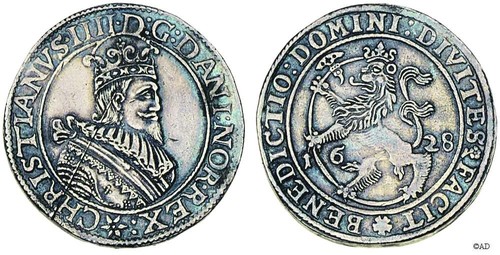
Speciedaler
Large early-modern Norwegian silver crown of the Dano-Norwegian kingdom, showing a crowned royal bust and the Norwegian lion shield, dated 1628.
Early Modern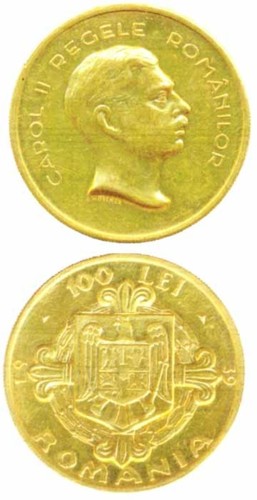
100 Lei
A scarce Kingdom of Romania gold 100 Lei of 1939, showing King Carol II in profile on the obverse and the crowned Romanian coat of arms on the reverse.
Modern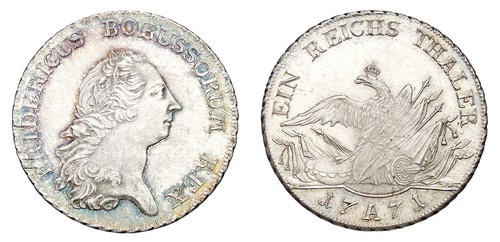
Prussian Taler
A large silver taler of the Kingdom of Prussia showing the crowned profile of Frederick II and a heraldic coat of arms, struck through the mid-to-late 1700s.
German States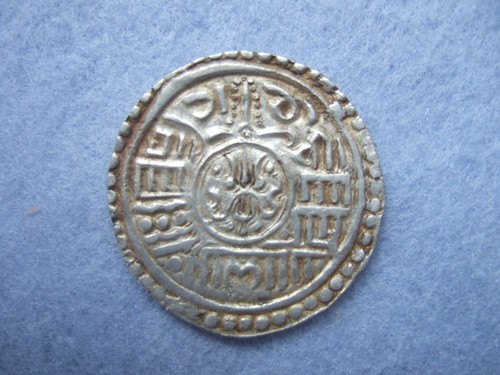
Nepalese Mohar
Silver mohar of the Nepalese Shah kingdom, with ornate Devanagari legends and auspicious symbols arranged around a mandala-style central design on both faces.
Himalayan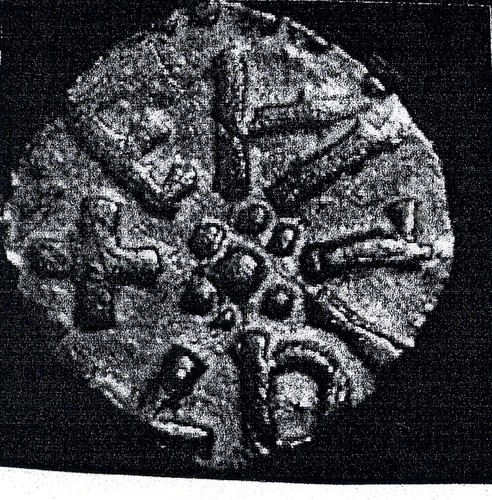
Styca of Aethelred
Small base-metal coin of the Anglo-Saxon kingdom of Northumbria, naming King Aethelred, with a central device and legend on one face and a cross on the other.
Medieval Coins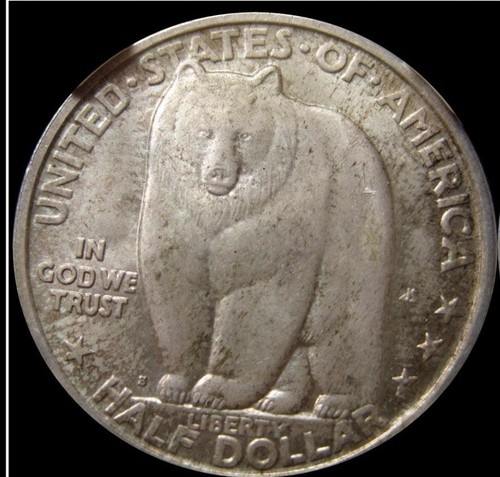
San Francisco-Oakland Bay Bridge Half Dollar
A 1936 U.S. silver commemorative half dollar celebrating the opening of the San Francisco-Oakland Bay Bridge, with a bridge span and a California grizzly bear.
Classic Commemorative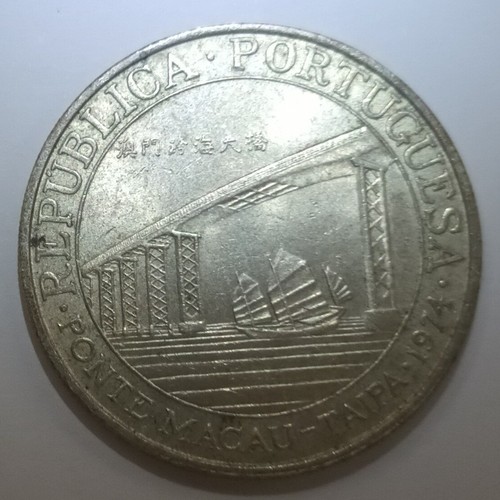
Macao Silver Coin (1974)
A 1974 Macau silver coin marking the Macau-Taipa Bridge: a spanning bridge with a Chinese junk below, ringed by REPUBLICA PORTUGUESA and PONTE MACAU-TAIPA.
Circulation