
Coin Encyclopedia
Search and identify coins from around the world — with country, denomination, metal, mint, history, and how to tell them apart.
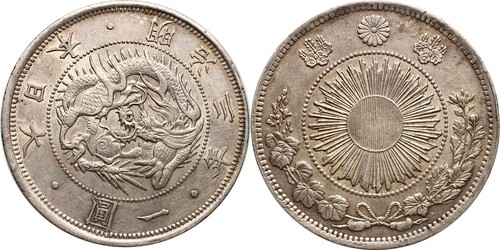
1 Yen (Silver)
An early Meiji silver 1 Yen struck in Meiji 3 (1870), showing a coiled dragon with a radiant sun on one side and a wreathed imperial crest on the other.
Circulation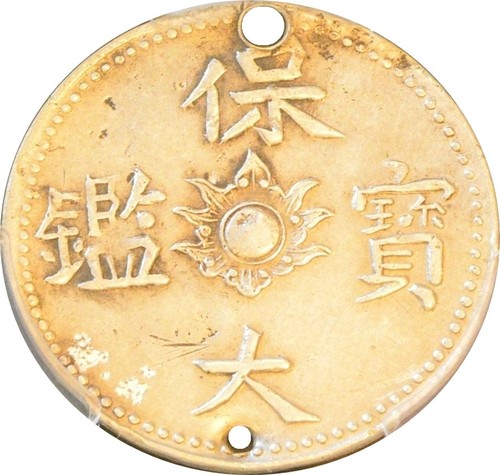
Vietnam 2 Tien - Bao Dai
A gold 2 Tien of Vietnam's last emperor, Bao Dai (1926-1945), its face bearing a radiant sun motif and Chinese-Vietnamese court inscriptions.
Southeast Asia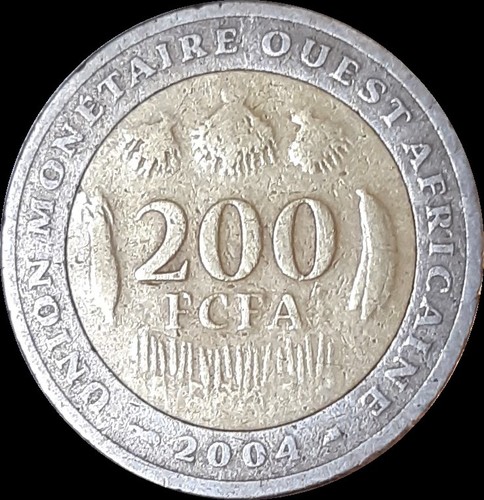
200 CFA Francs
A modern West African CFA coin worth 200 francs, showing a bold '200 FCFA' with decorative border on one face and a crossed emblem on the other.
World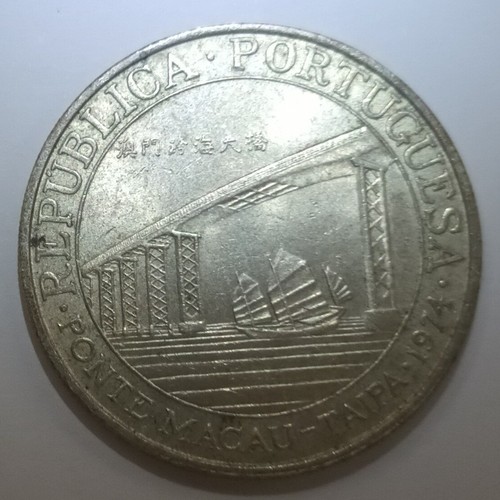
Macao Silver Coin (1974)
A 1974 Macau silver coin marking the Macau-Taipa Bridge: a spanning bridge with a Chinese junk below, ringed by REPUBLICA PORTUGUESA and PONTE MACAU-TAIPA.
Circulation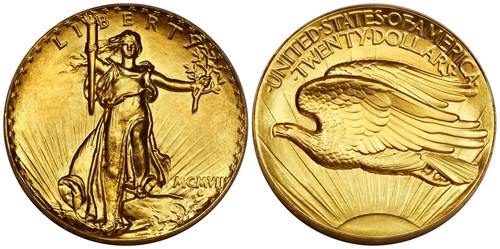
Ultra High Relief Double Eagle
Augustus Saint-Gaudens' 1907 $20 gold pattern struck in sculptural ultra high relief, with striding Liberty and a soaring eagle.
Gold Type Coin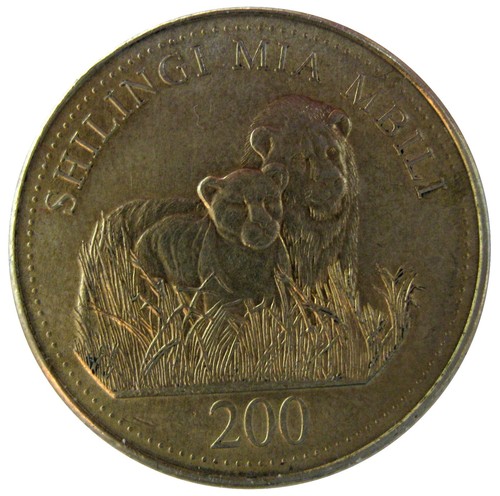
Tanzania 200 Shillings
A golden-brass circulating coin of the United Republic of Tanzania, showing a large African animal in grass with a bold 200 and a Swahili shilling legend.
World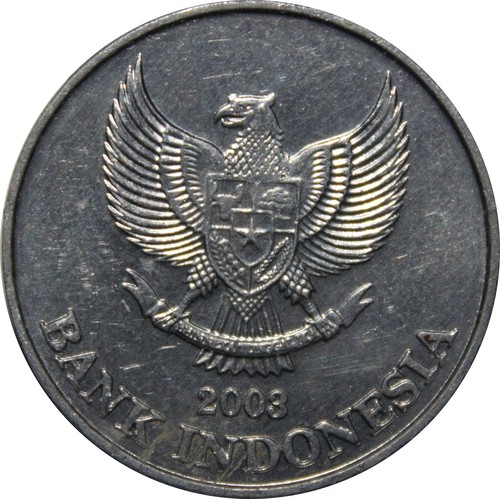
Indonesia 200 Rupiah
A lightweight aluminium Indonesian 200-rupiah coin: the Garuda Pancasila emblem on one side and a perched Bali Starling (Jalak Bali) with the value 200 on the other.
Southeast Asia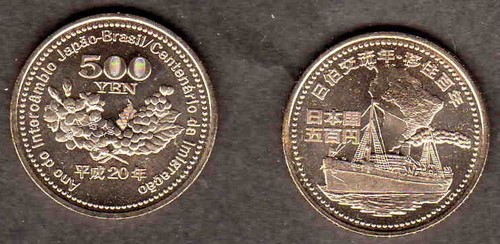
500 Yen Japanese Immigration Commemorative
A 2008 Japanese 500 yen commemorative marking 100 years of Japanese immigration to Brazil, with two figures on one side and a ship on the other.
Commemorative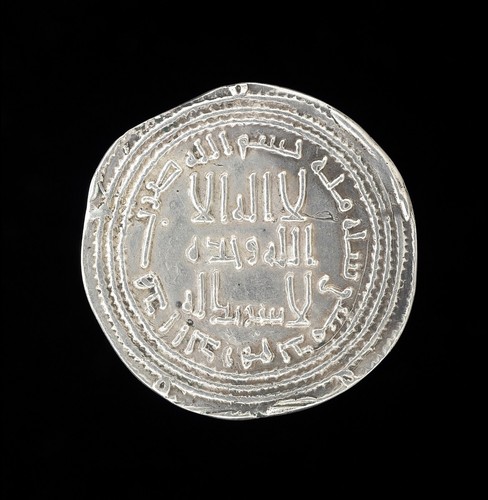
Silver Dirham (LACMA M.2002.1.437)
A thin, broad 8th-century Islamic silver dirham covered in Kufic Arabic inscriptions, with no portrait or image — only religious legends and decorative flourishes.
Islamic (Medieval)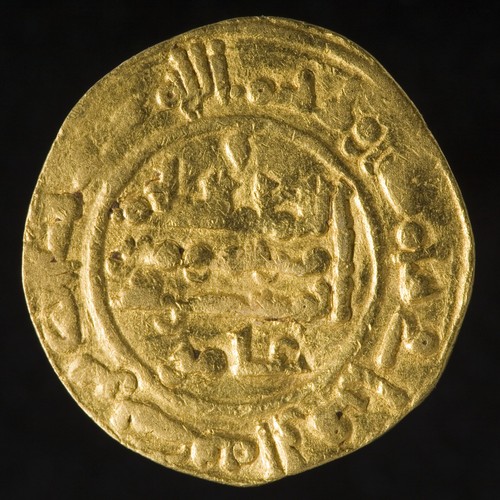
Islamic Gold Dinar (LACMA M.2006.143.8)
A medieval Islamic gold dinar in the LACMA collection, struck with purely calligraphic Arabic legends and a decorative border — the classic imageless coin of the caliphates.
Islamic (Medieval)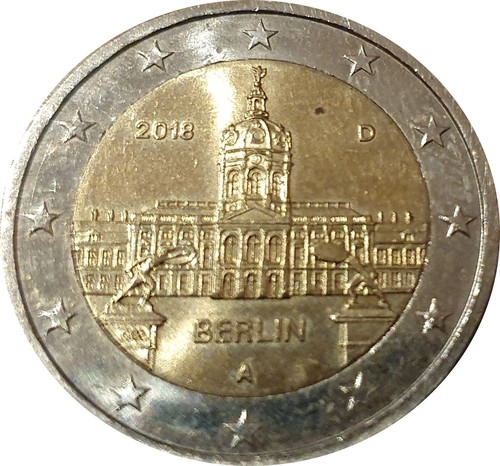
Germany 2 Euro Berlin 2018 Commemorative
Germany's 2018 bi-metallic 2 euro from the Federal States series honouring Berlin, showing a monumental Berlin building paired with the shared European reverse.
Commemorative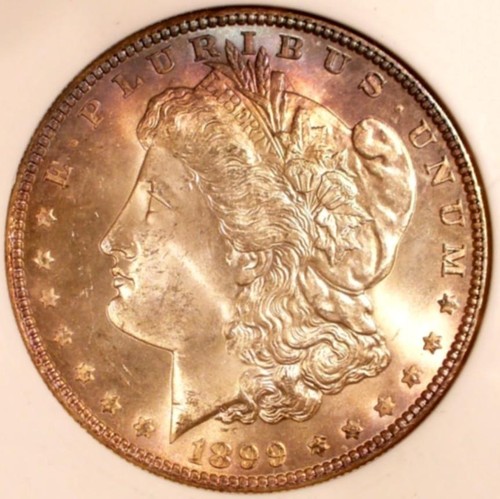
French Silver Franc
A small Third Republic silver 1-franc coin with an allegorical Marianne head and a REPUBLIQUE FRANCAISE reverse; the pictured piece is dated 1899.
World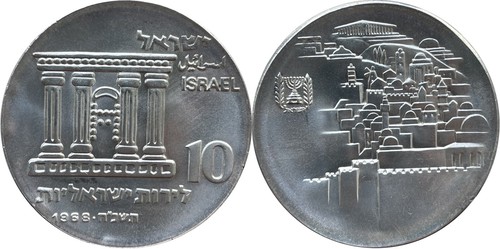
Israel 10 Lirot
Israel's 1968 silver 10 Lirot, struck for the 20th anniversary of independence, pairing a menorah emblem with a view of Jerusalem.
World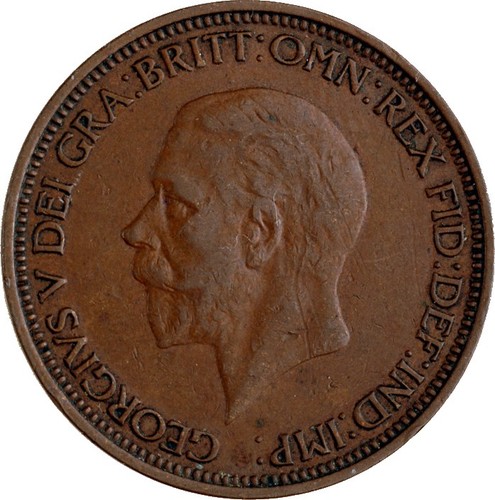
British Pre-Decimal Halfpenny
Bronze British halfpenny worth 1/480 of a pound. The George V type shows the king's profile and a seated Britannia with trident.
British Isles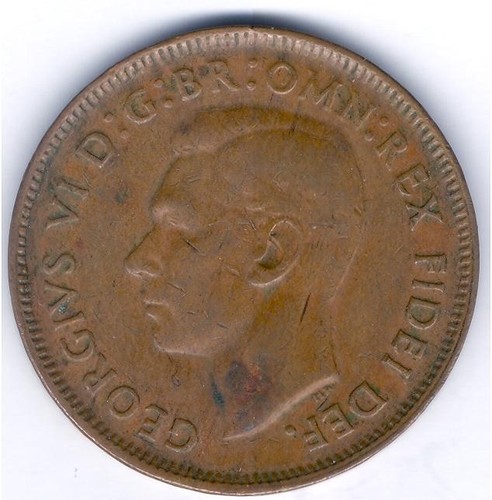
Australian Halfpenny
Small bronze pre-decimal Australian half penny; the George VI kangaroo type shown here was struck through the early 1950s.
Australian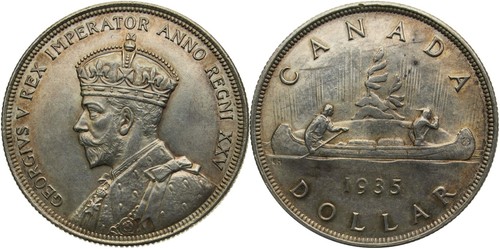
Canadian Silver Dollar
Canada's first circulating silver dollar, the 1935 Voyageur type, showing George V and a canoe with paddlers on the reverse.
Canadian & Provincial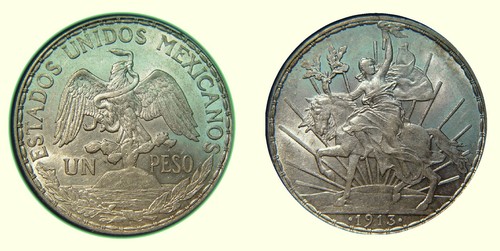
Mexican 1 Peso
Large silver Mexican peso, the famed "Caballito" type, with a winged Victory on horseback and the eagle-and-snake coat of arms.
World Coins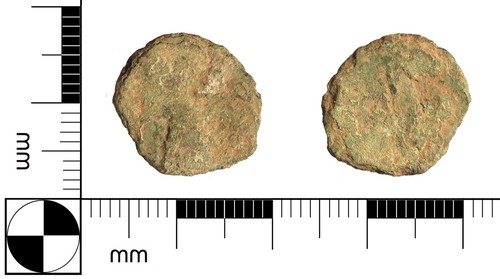
Unidentified Ancient Coin
A worn ancient bronze coin whose exact type is not yet identifiable — a right-facing profile portrait on one side and a faded design on the other.
Ancient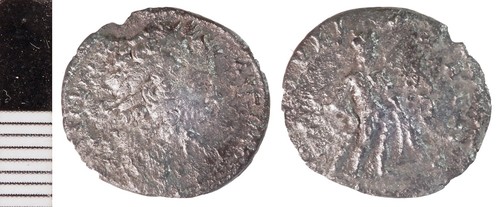
Roman Imperial Denarius (Unidentified)
A silver denarius of the Roman Empire, 2nd century AD, showing an emperor's right-facing curly-haired portrait and a standing imperial reverse type.
Ancient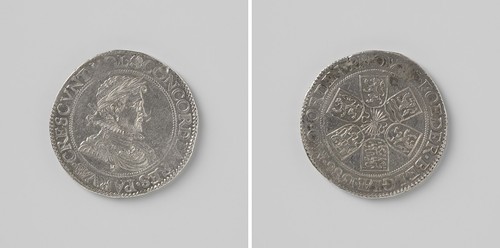
Rijksdaalder van Leicester
A large silver Dutch rijksdaalder of the Leicester type, with a helmeted armored bust and ruff on the obverse and a compartmented heraldic shield on the reverse.
Early Modern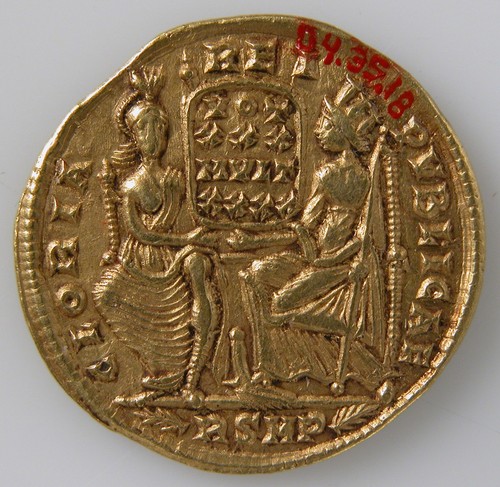
Solidus of Constantine II
Late Roman gold solidus of Constantine II, showing his ornately crowned bust and a seated figural reverse type.
Ancient Coins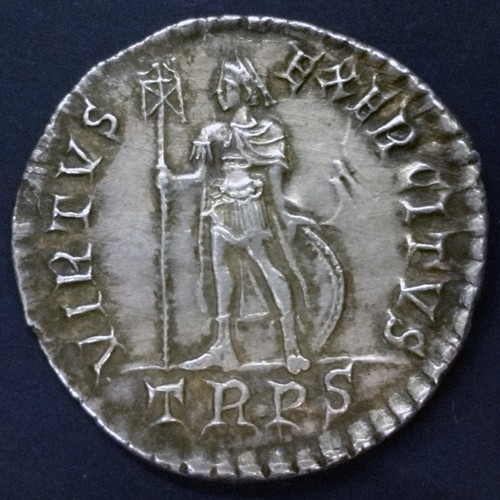
Hoxne Hoard Siliqua
A small late-Roman silver siliqua of the type found in Britain's Hoxne Hoard, with an imperial portrait and a standing figure or personified virtue.
Ancient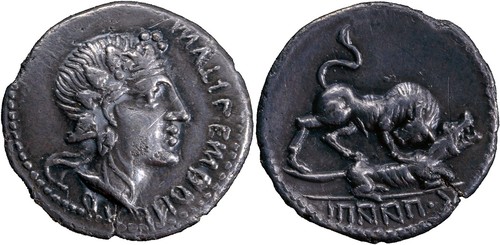
Denarius of C. Papius Mutilus
Silver denarius bearing the name C PAPIUS MUTILUS, a Social War-era Italic type of c. 90 BC with a portrait bust and a horseman or chariot reverse.
Ancient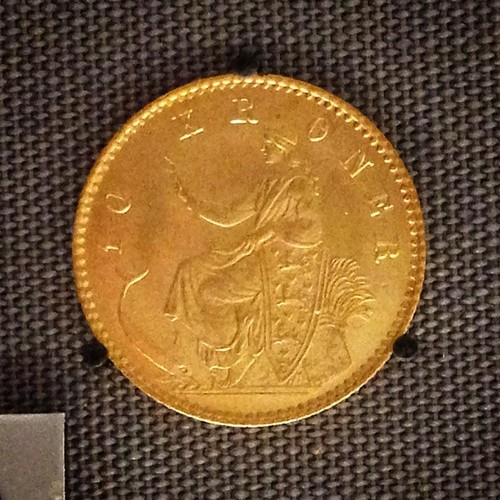
10 Kroner
A small Danish gold 10 kroner dated 1873, the first year of the type, with the bearded profile of King Christian IX and a seated allegorical figure of Denmark on the reverse.
Modern