
Coin Encyclopedia
Search and identify coins from around the world — with country, denomination, metal, mint, history, and how to tell them apart.
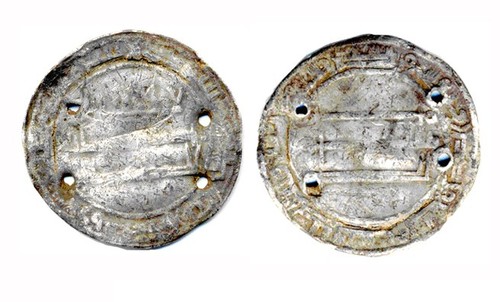
Imitation Abbasid Dirham
A thin, broad silver coin that copies an Abbasid dirham but was struck in northern Europe, with blundered pseudo-Kufic script and a piercing for wear.
Islamic (Medieval)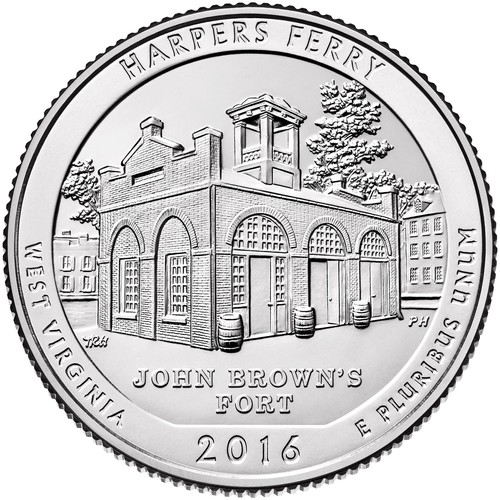
Harpers Ferry Quarter
U.S. 25-cent coin from the 2016 America the Beautiful series, showing John Brown's Fort at Harpers Ferry National Historical Park, West Virginia.
Quarter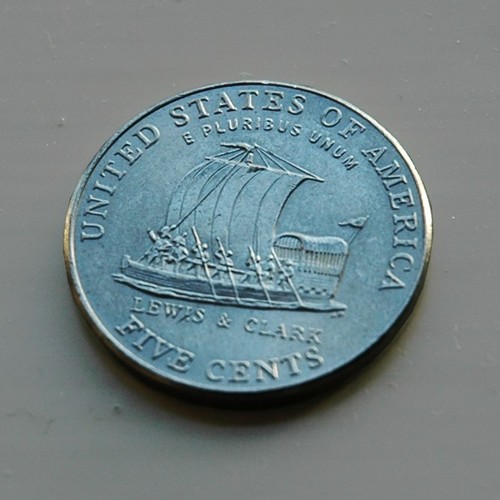
Westward Journey Nickel - Lewis and Clark Keelboat
A 2004 Jefferson five-cent piece from the Westward Journey series, its reverse showing the keelboat that carried the Lewis and Clark expedition upriver.
Nickel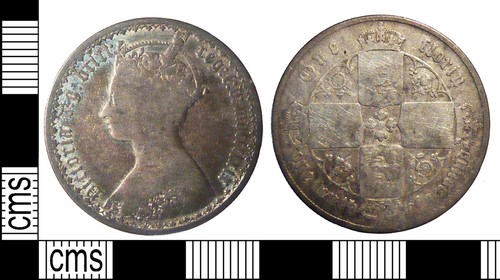
Gothic Florin
A silver two-shilling florin of Queen Victoria in the medieval-revival Gothic style, with an ornate crowned cruciform shield reverse dated 1869.
Milled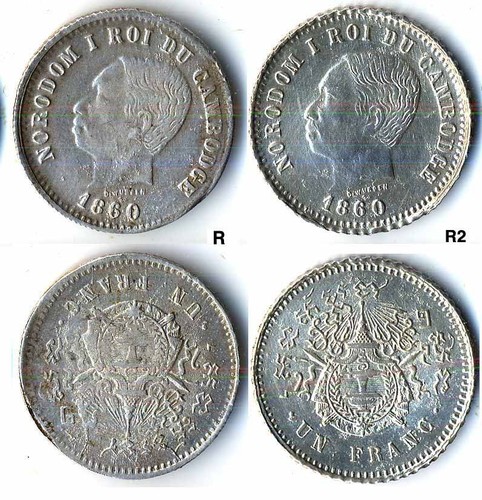
Cambodia One Franc
A mid-20th-century one-franc coin of the Kingdom of Cambodia, its obverse bearing a royal Norodom profile and its reverse a heraldic coat of arms.
Southeast Asia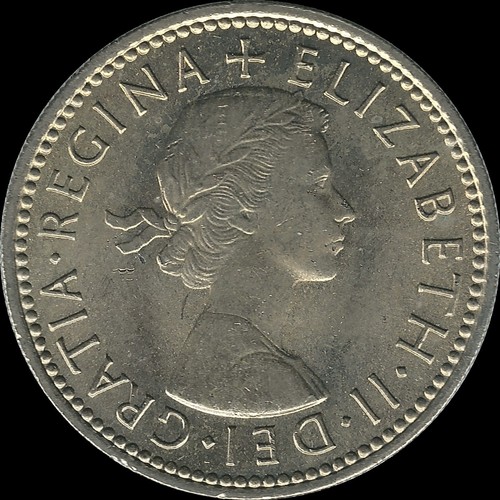
British Shilling
Small Victorian silver shilling showing Queen Victoria's crowned, veiled Jubilee portrait and a crowned heraldic shield reverse.
World Coins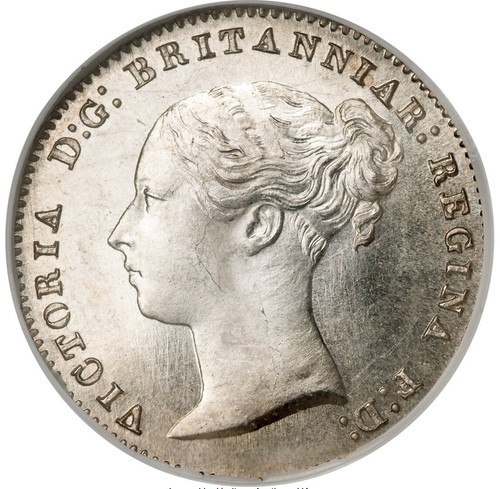
British Silver Threepence
Tiny sterling-silver threepence of Queen Victoria; the young-head type shown here dates to 1858 and is one of Britain's smallest circulating coins.
British Isles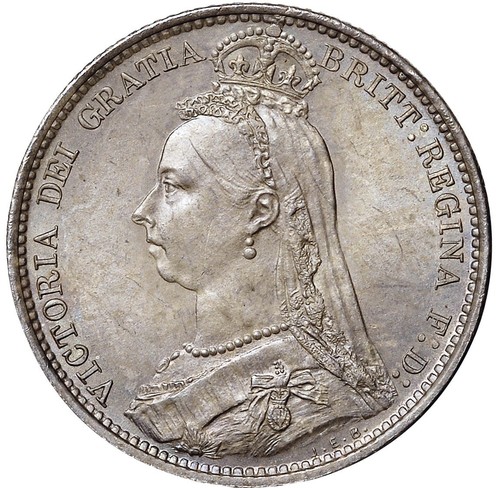
British Sixpence
Small British silver sixpence (6d); this example is an 1888 Queen Victoria 'Jubilee head' with the crowned, veiled bust.
British Isles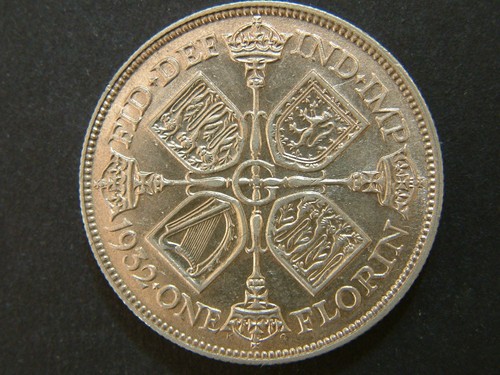
British Florin
A Victorian silver two-shilling florin with a crowned, veiled Victoria and a heraldic crowned-shields reverse; the pictured coin is dated 1890.
World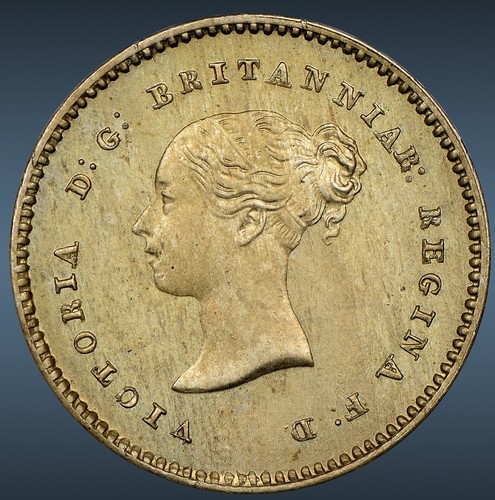
Quarter Farthing
Tiny copper coin of Queen Victoria worth one-sixteenth of a penny, struck for use in Ceylon; the smallest-value British denomination ever made.
British Isles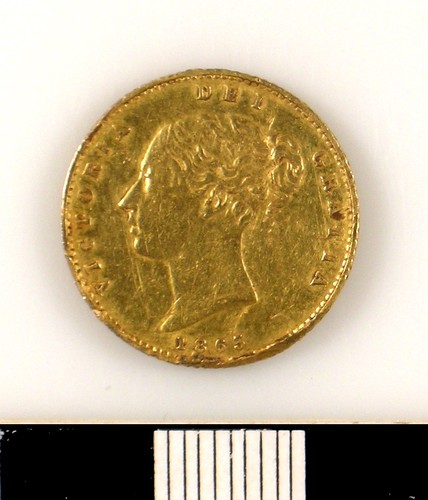
British Half Sovereign
A small 22-carat British gold coin worth ten shillings; the pictured example shows Queen Victoria's left-facing Young Head portrait, dated 1863.
British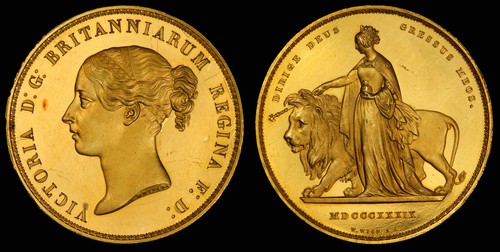
Una and the Lion Five Pounds
William Wyon's 1839 gold Five Pounds pairs a young Queen Victoria with Una guiding a lion — widely praised as one of the most beautiful British coins ever struck.
British Isles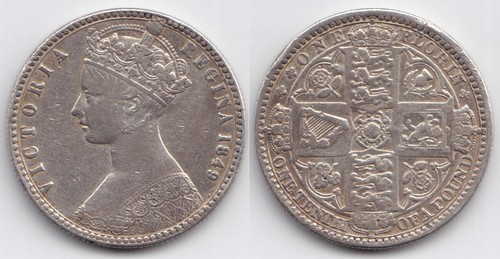
Godless Florin
Britain's first florin, struck only in 1849 and nicknamed "Godless" because it dropped "Dei Gratia" from Queen Victoria's titles.
British Isles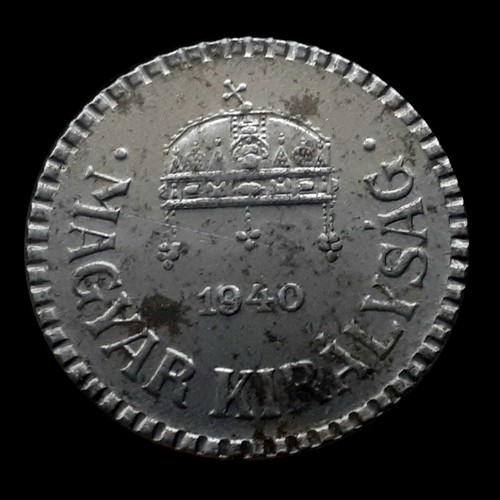
2 Fillér
A small early-20th-century Hungarian 2 fillér in copper-based bronze, showing the crowned Hungarian coat of arms on the obverse and the value with date on the reverse.
Modern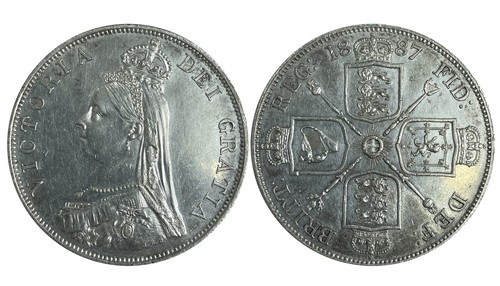
British Double Florin
Large Victorian silver four-shilling piece with the Jubilee Head of Queen Victoria and a cross of four crowned shields on the reverse.
World Coins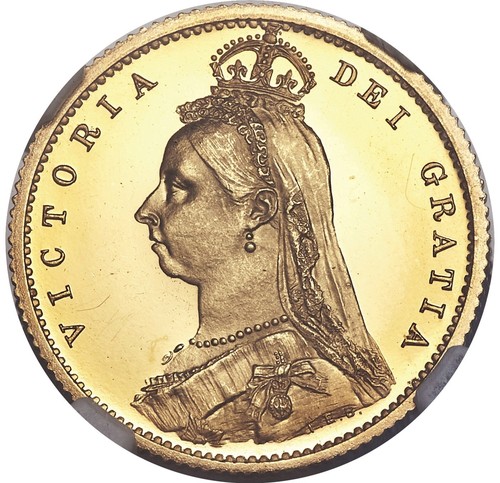
Half Sovereign
A small British 22-carat gold coin worth ten shillings; this example shows Queen Victoria's veiled, crowned Jubilee Head portrait and is dated 1887.
World Coins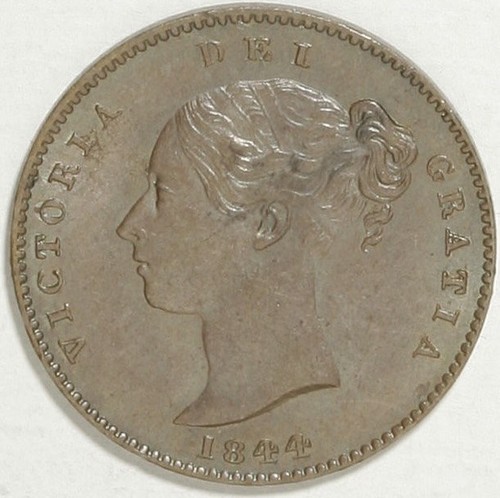
British Third Farthing
A tiny 1844 Victoria copper coin: young left-facing queen's bust obverse, crowned value reverse. One of Britain's smallest denominations, struck for Malta.
Circulation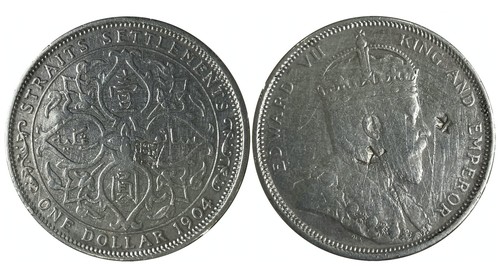
Straits Settlements Dollar
A 1904 silver dollar of the British Straits Settlements, one face showing an emblem and ONE DOLLAR, the other a right-facing portrait of King Edward VII.
Southeast Asia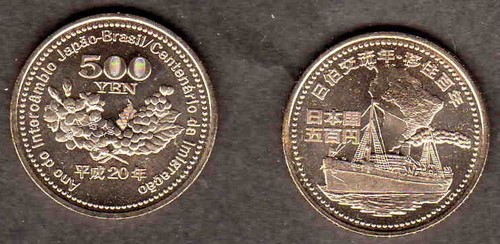
500 Yen Japanese Immigration Commemorative
A 2008 Japanese 500 yen commemorative marking 100 years of Japanese immigration to Brazil, with two figures on one side and a ship on the other.
Commemorative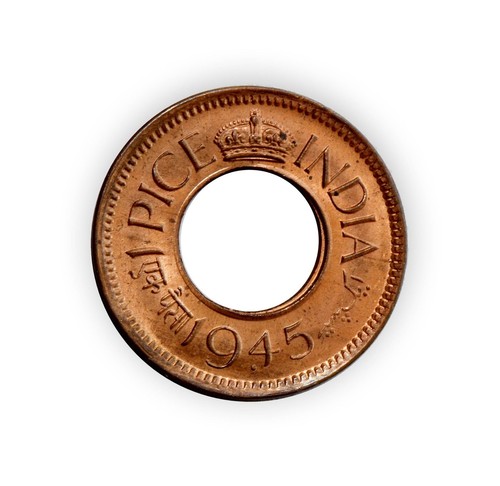
British India One Pice
A small holed copper-bronze One Pice of British India under George VI, dated 1945, its obverse crowned and lettered INDIA and PICE around a central hole.
British India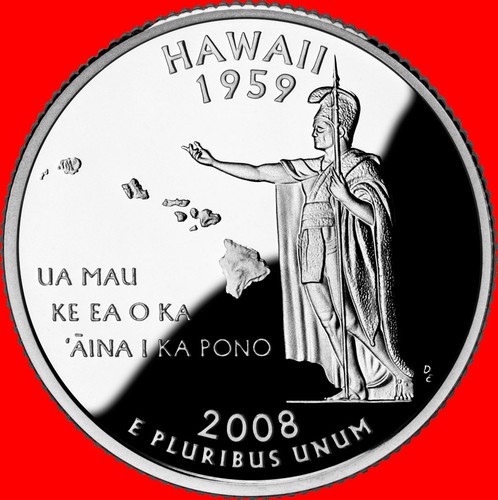
Hawaii State Quarter
The 2008 Hawaii State Quarter, final coin in the 50 State Quarters series, showing King Kamehameha I reaching over the islands.
Quarter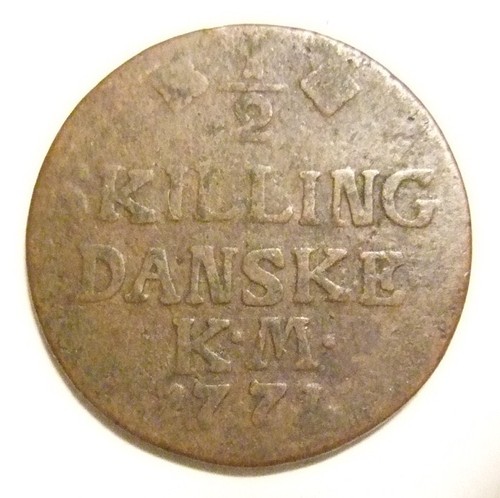
½ Skilling
A small copper Danish half skilling of 1771, showing a royal crown over the king's cipher and the value ½ SKILLING DANMARK K:M on the reverse.
Early Modern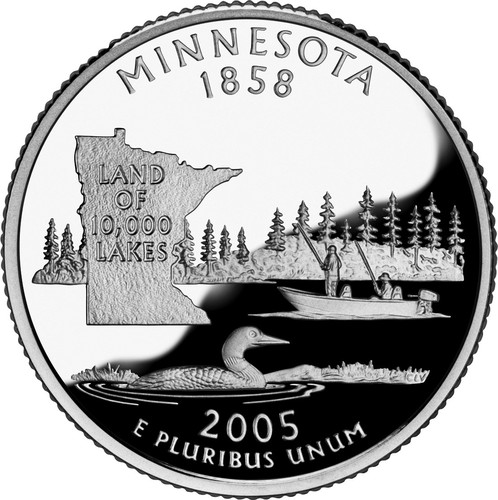
Minnesota State Quarter
2005 U.S. 25-cent coin in the 50 State Quarters series, showing Minnesota's outline, a common loon, anglers in a boat, and pines above 1858.
Quarter
Qianlong Tongbao (An Nam)
A bronze round cash coin with a square center hole bearing the four characters Qianlong Tongbao, cast in An Nam (Vietnam) in the imitative Chinese style.
Cash Coin