
Coin Encyclopedia
Search and identify coins from around the world — with country, denomination, metal, mint, history, and how to tell them apart.
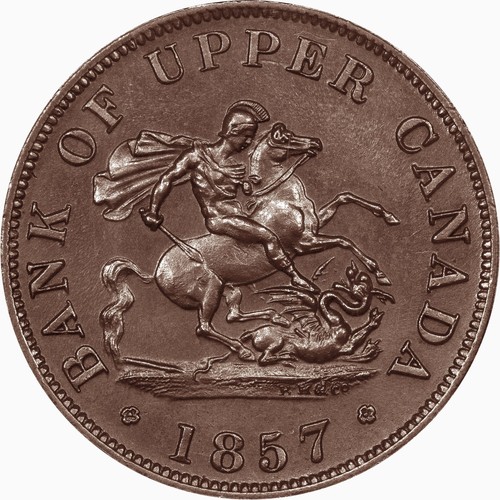
Bank of Upper Canada Half-Penny Token
Copper half-penny token of the Bank of Upper Canada, with St. George slaying the dragon and the bank's crowned heraldic arms, dated 1857.
Canadian & Provincial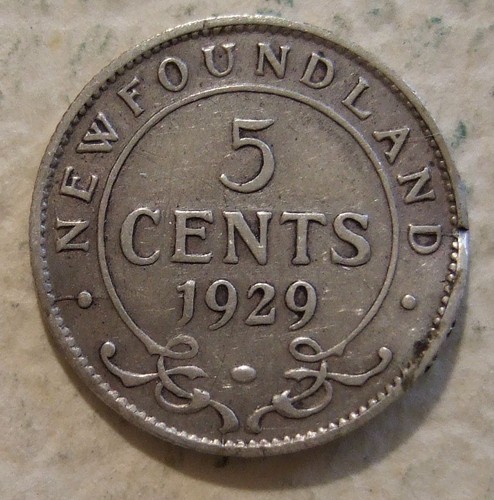
Newfoundland Five Cents
Tiny sterling-silver 5-cent piece of the Dominion of Newfoundland; the 1929 issue bears King George V and a crowned denomination reverse.
Canadian & Provincial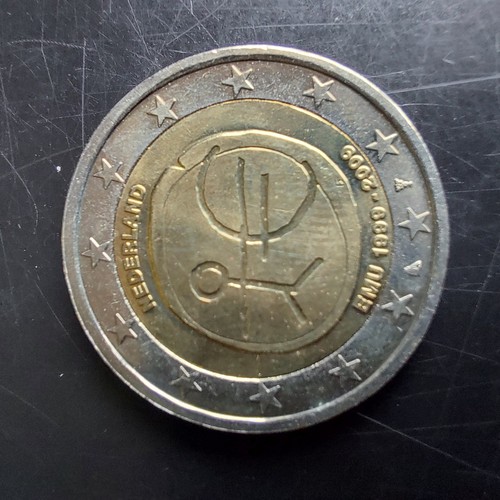
1 Euro (10 Years EMU)
Dutch bi-metallic 1 Euro marking ten years of Economic and Monetary Union, with a stylized integration design and the twin dates 1999 and 2009.
Commemorative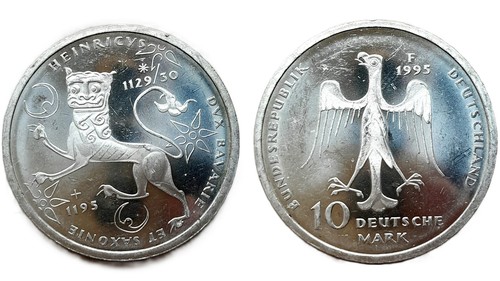
German 10 Deutsche Mark Commemorative
A West/unified German silver 10 Deutsche Mark commemorative; this 1995 issue honors Heinrich der Loewe (Henry the Lion) with the Federal Eagle reverse.
Commemorative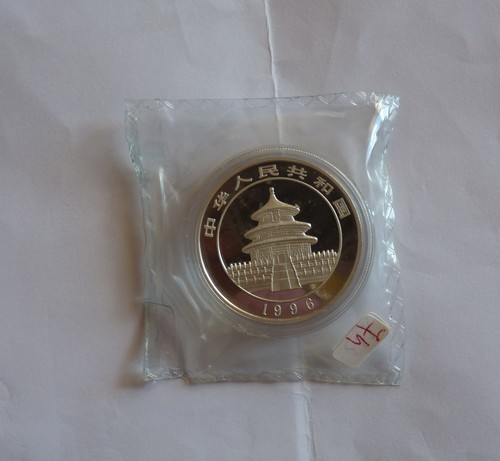
China 10 Yuan Temple of Heaven
A modern Chinese silver 10 Yuan commemorative bearing the Temple of Heaven's Hall of Prayer for Good Harvests, dated 1996.
World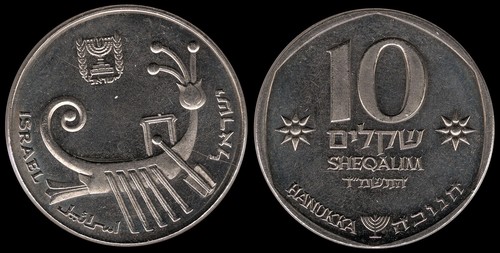
Israel 10 Sheqalim Hanukka Commemorative
A silver Bank of Israel commemorative from the annual Hanukka series, showing a historic Hanukka lamp with stars, dated 1983 and valued at 10 Sheqalim.
World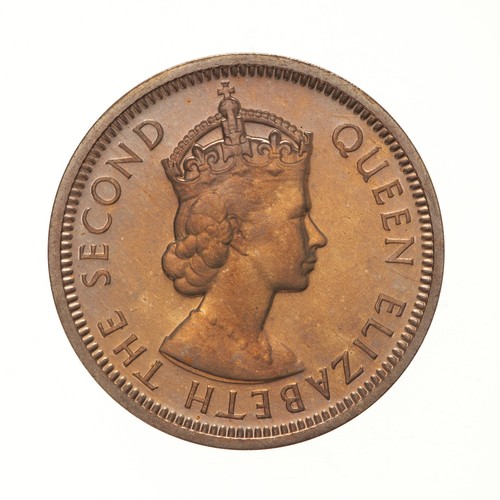
Belize 1 Cent
A small bronze one-cent coin from the Caribbean nation now called Belize, carrying a portrait of Queen Elizabeth II and dated 1954.
Circulation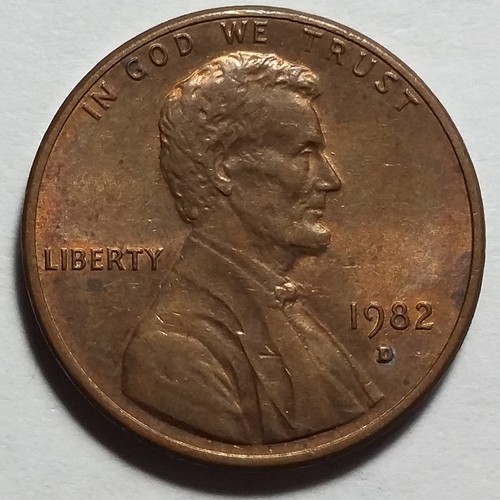
Lincoln Memorial Cent
U.S. one-cent piece struck 1959–2008 with Lincoln's profile and a Memorial reverse; 1982 is the split year between bronze and copper-plated zinc.
Small Cent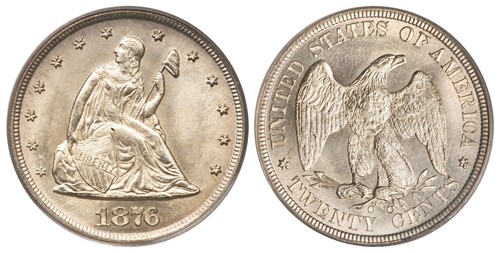
Twenty Cent Piece
A short-lived U.S. silver coin worth twenty cents, showing a seated Liberty and a soaring eagle, struck only from 1875 to 1878.
Twenty Cent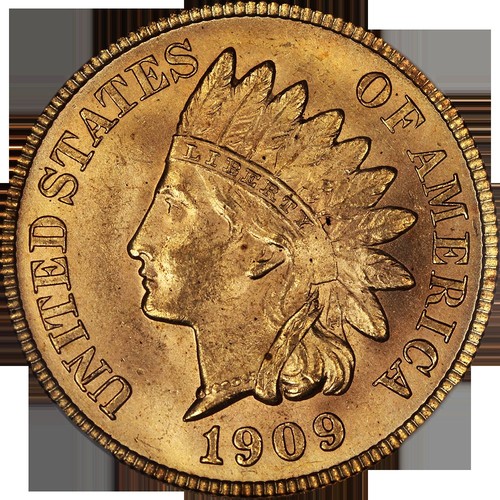
Indian Head Cent
Classic U.S. one-cent piece struck 1859–1909, showing Liberty in a feathered headdress; later dates like 1909 are bronze with an oak-wreath-and-shield reverse.
Small Cent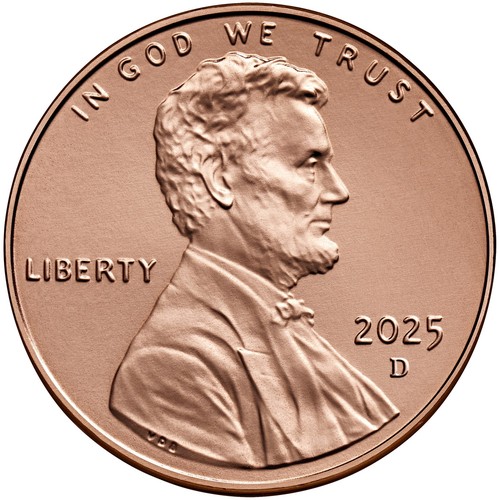
Lincoln Shield Cent
The current U.S. one-cent coin, struck since 2010, pairing Lincoln's profile with a Union Shield reverse on a copper-plated zinc planchet.
Small Cent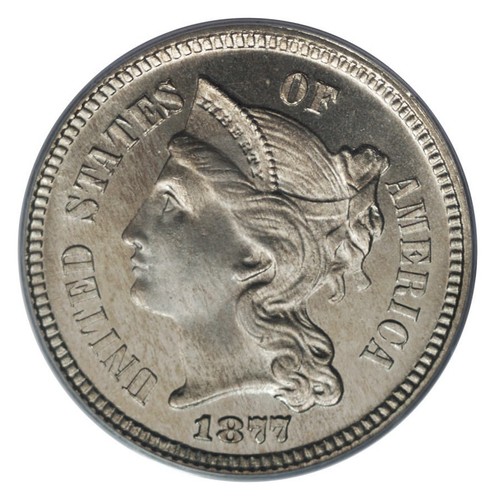
Three Cent Nickel
A small copper-nickel three-cent coin with a Liberty head obverse and a Roman numeral III inside a wreath; struck at Philadelphia from 1865 to 1889.
Three Cent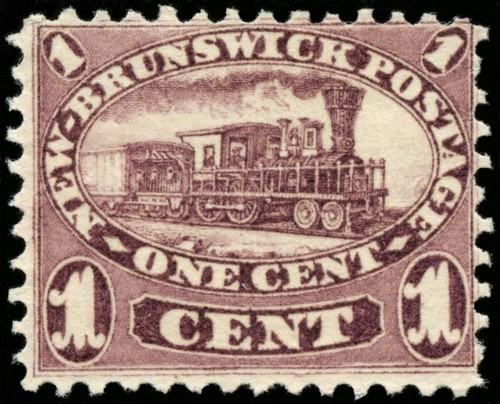
New Brunswick One Cent
A bronze one-cent piece dated 1860 showing a steam locomotive with NB and ONE CENT — a New Brunswick locomotive-type token distinct from the official 1861/1864 cent.
Canadian & Provincial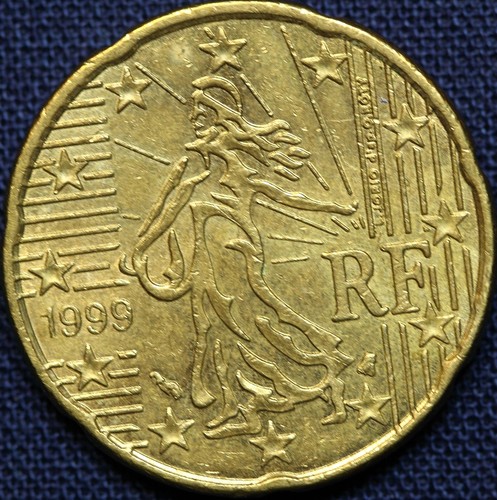
France 50 Cent Euro
France's gold-coloured 50 euro cent coin, showing the striding Sower (Marianne) among the EU stars on one side and the value 50 on the other.
Circulation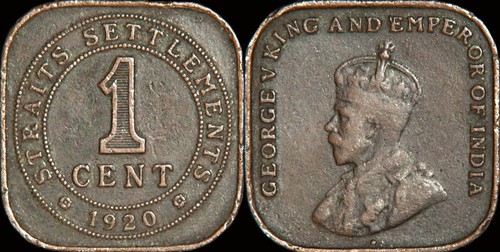
Straits Settlements One Cent
A round bronze one-cent coin of the British Straits Settlements bearing the crowned profile of King George V, dated 1920.
Colonial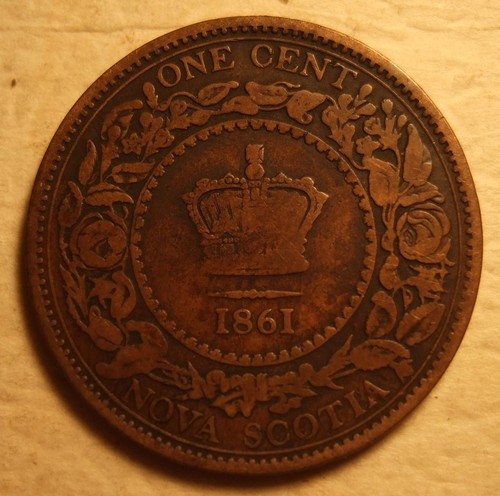
Nova Scotia One Cent
Bronze one-cent coin of the colony of Nova Scotia, with a crowned Queen Victoria obverse and a crown-and-maple-leaves reverse.
Canadian & Provincial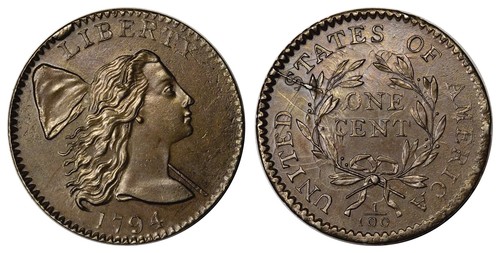
Flowing Hair Large Cent
An early U.S. copper cent showing Liberty with flowing hair and a liberty cap, ONE CENT in a wreath on the reverse; the photographed piece is dated 1794.
Large Cent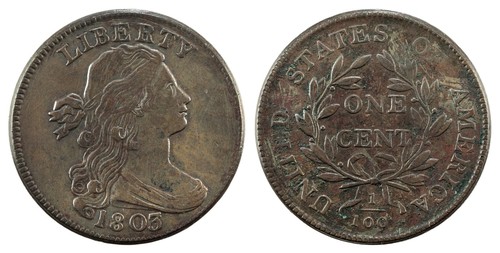
Draped Bust Large Cent
An early U.S. copper one-cent coin (1796–1807) showing a right-facing Liberty with flowing hair and drapery, larger and heavier than a modern cent.
United States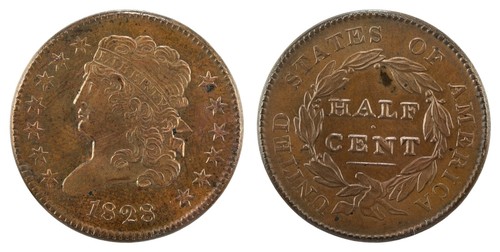
Classic Head Half Cent
A small U.S. copper half cent of 1809–1836 showing Liberty in a beaded headband ringed by stars, with a plain wreath and HALF CENT on the reverse.
Half Cent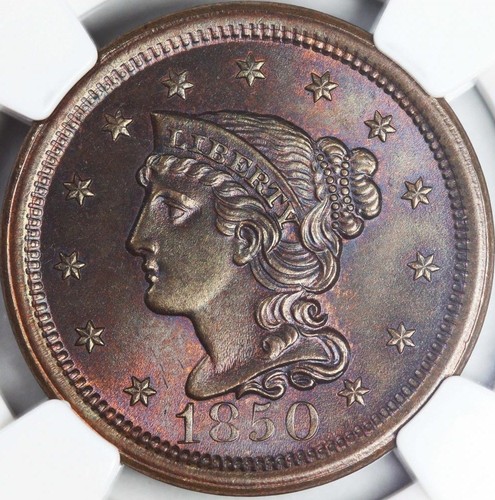
Braided Hair Large Cent
The last U.S. large copper cent: Liberty in a beaded coronet with braided hair, ringed by stars, over a laurel-wreath ONE CENT reverse.
Large Cent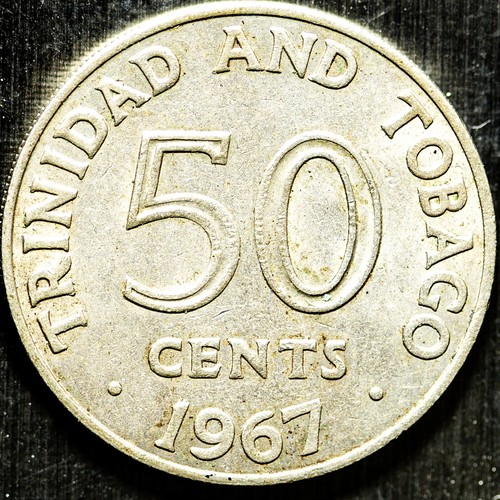
Trinidad and Tobago 50 Cents
A large copper-nickel Caribbean circulation coin; the 1967 example carries the national coat of arms and country name on the obverse and the 50-cent value on the reverse.
Circulation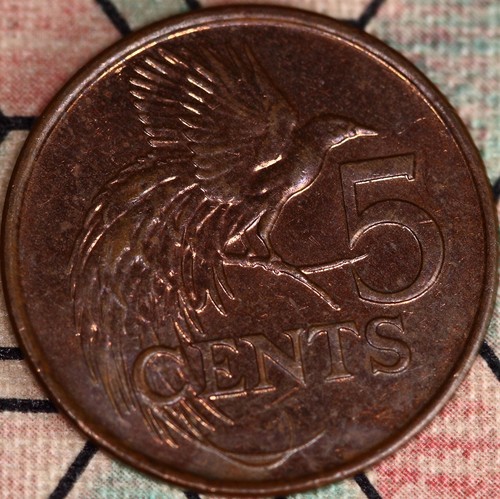
Trinidad and Tobago 5 Cents
A bronze five-cent coin of Trinidad and Tobago showing a perched bird — the Greater Bird of Paradise, often mistaken for a parrot — with FIVE CENTS on the reverse.
Circulation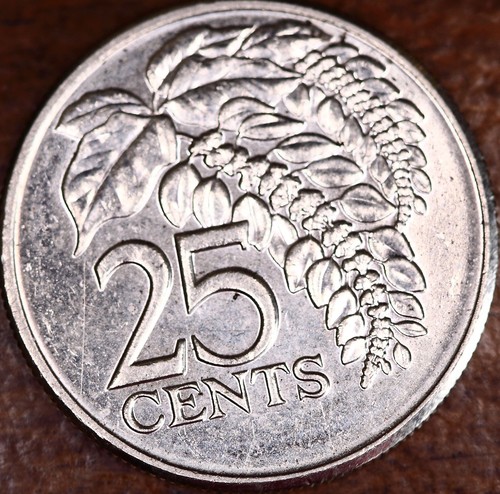
Trinidad and Tobago 25 Cents
A copper-nickel 25-cent coin of Trinidad and Tobago: a leafy national-flower plant design on one face and the value TWENTY FIVE CENTS on the other.
Circulation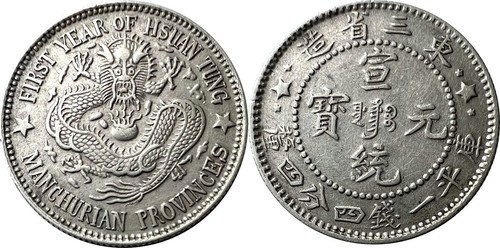
Xuantong Yuanbao 20 Cents
A small late-Qing silver 20-cent coin with a Western-style dragon, the English legend FIRST YEAR OF HSUAN TUNG, and Chinese characters reading Xuantong Yuanbao.
Circulation