Braided Hair Large Cent
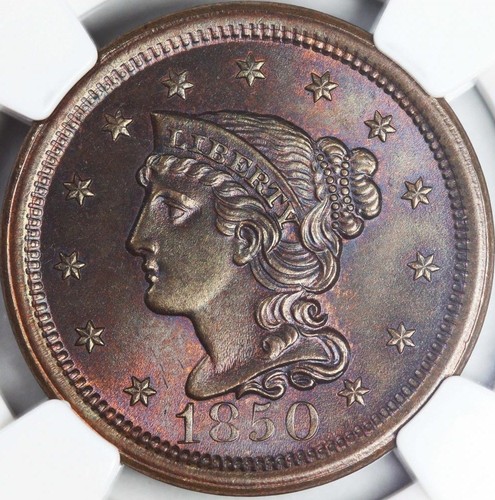
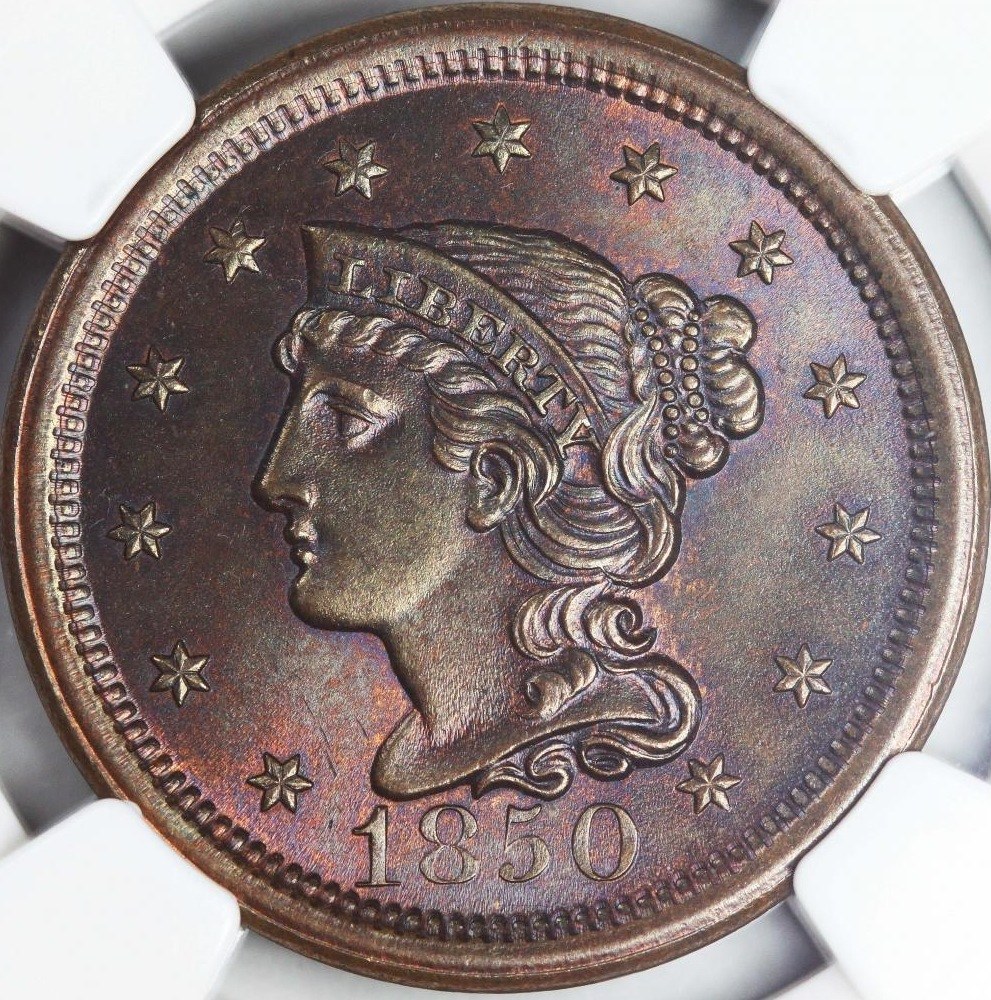
The last U.S. large copper cent: Liberty in a beaded coronet with braided hair, ringed by stars, over a laurel-wreath ONE CENT reverse.
- Country
- United States
- Denomination
- 1 Cent
- Metal
- Copper
Got a coin like this?
Identify any coin from a photo, free.
Overview
The Braided Hair large cent is the final design in America's series of big copper one-cent pieces, struck from 1839 until the denomination was retired in 1857. The obverse shows Liberty facing right wearing a beaded coronet inscribed LIBERTY, her hair drawn back in a tight braid and surrounded by thirteen stars, with the date below. The reverse displays the words ONE CENT enclosed in a laurel wreath, framed by UNITED STATES OF AMERICA.
The photographed example is dated 1850, a middle-period date squarely within the type's most available years. As a large cent it is a substantial coin of pure copper, noticeably bigger and heavier than the small cents that replaced it. Collectors value the series for its handsome classical portrait, its long run of collectible dates, and its status as the end of an era for U.S. copper coinage.
History & Background
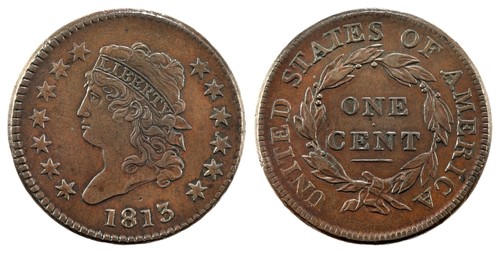
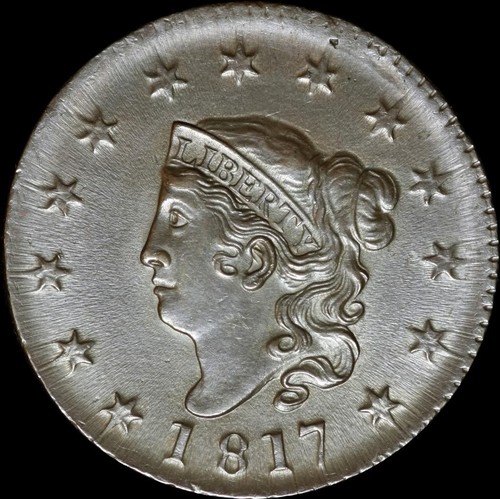
The large cent was authorized under the Mint Act of 1792 and struck continuously from 1793 onward in a succession of designs. The Braided Hair type, engraved by Christian Gobrecht, replaced the earlier Coronet (Matron Head) cent in 1839 and refined Liberty into a more youthful, neatly braided portrait. Minor portrait variations across the run are collected as the 'Petite Head' (earlier years) and 'Mature Head' (later years).
Throughout the 1840s and into the 1850s the design changed little, giving a stable run of dates including the 1850 example shown here. By the mid-1850s the rising price of copper made the heavy cent increasingly costly to produce. Congress responded with the Coinage Act of 1857, which ended the large cent and introduced the smaller Flying Eagle cent in a copper-nickel alloy. All Braided Hair large cents were struck at the Philadelphia Mint and therefore carry no mint mark.
How to Identify
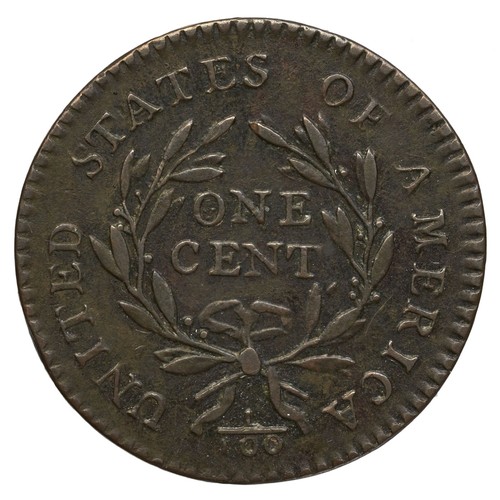
Look first at the obverse: a right-facing Liberty head wearing a beaded coronet lettered LIBERTY, with hair gathered into a distinct braid, encircled by thirteen stars and with the four-digit date at the bottom. The reverse must read ONE CENT inside a closed laurel wreath, with UNITED STATES OF AMERICA around the rim. This wreath-and-legend reverse distinguishes it from earlier large cents that used a different wreath or lettering arrangement.
Size and metal are decisive. A large cent is pure copper, roughly 27–29 mm across (about the diameter of a modern U.S. quarter to half dollar) and much larger than the small cents introduced in 1857. If the coin is that big, copper-brown, and shows the braided coronet head over a laurel wreath, it is a Braided Hair large cent. The date and any die variety are read directly from the coin; there is no mint mark to find.
Value & Collectibility
Braided Hair large cents are among the more affordable 19th-century U.S. type coins because millions were struck across the 1840s and 1850s and many survive. Common dates in worn but honest grades (Good to Fine) typically trade in the low tens of dollars, with clean problem-free examples and higher grades commanding progressively more. An 1850 like the one pictured is a plentiful date, so condition, surfaces, and eye appeal drive the price more than rarity.
Premiums rise sharply for high-grade Mint State pieces with original color, for scarce dates and die varieties, and for certified examples. Conversely, corrosion, cleaning, porosity, or heavy rim damage—common on old copper—substantially reduce value. Any specific price should be checked against a current price guide or recent auction results, as copper markets and grade premiums shift over time.
Frequently asked questions
Why is it called a 'large' cent?
It is nearly the size of a modern quarter to half dollar and made of solid copper, far bigger than the small cents that replaced the denomination in 1857. 'Large cent' distinguishes these early coppers from the smaller cents that followed.
Does my 1850 Braided Hair cent have a mint mark?
No. Every Braided Hair large cent was struck at the Philadelphia Mint, which used no mint mark in this era. A blank field where a mint mark might go is normal and expected.
Is an 1850 large cent rare?
No. The 1850 is one of the more common dates of the type, produced in large numbers. Value comes mainly from grade, surface quality, and eye appeal rather than scarcity.
What is the difference between the 'Petite Head' and 'Mature Head'?
They are minor portrait variations of the same Braided Hair design. Earlier years show a smaller 'Petite Head' Liberty, while later years use a fuller 'Mature Head.' Both share the coronet, braid, stars, and laurel-wreath reverse.
Braided Hair Large Cent guides
In-depth guides for identifying, valuing, and collecting Braided Hair Large Cent.