Flowing Hair Large Cent
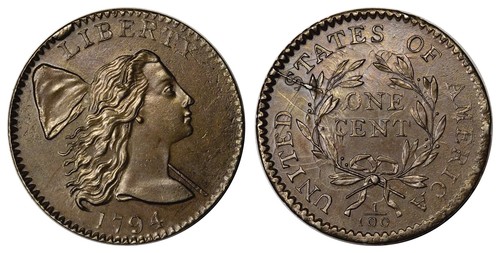
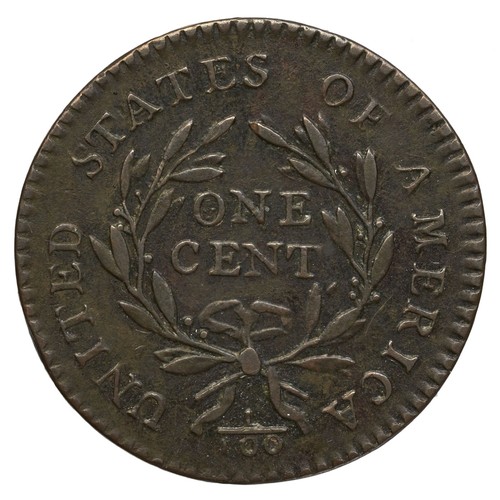
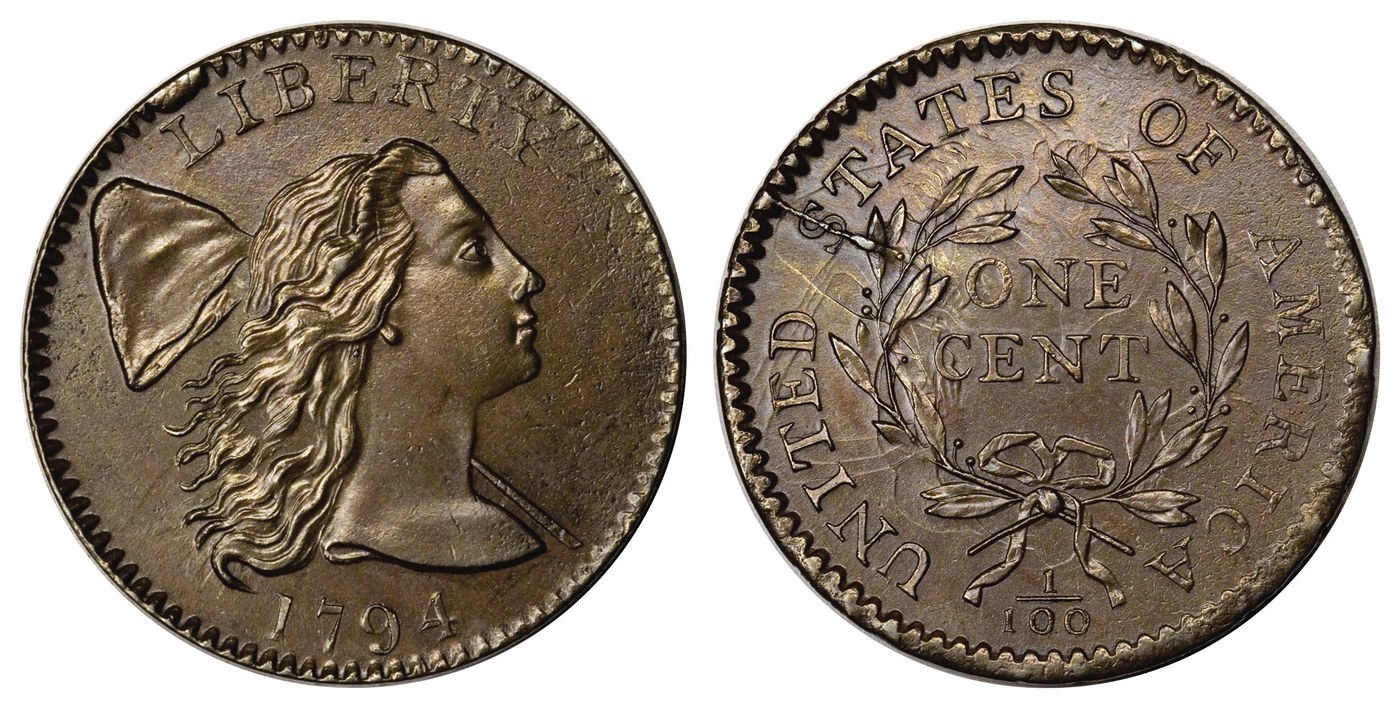
An early U.S. copper cent showing Liberty with flowing hair and a liberty cap, ONE CENT in a wreath on the reverse; the photographed piece is dated 1794.
- Country
- United States
- Denomination
- 1 Cent
- Metal
- Copper
Got a coin like this?
Identify any coin from a photo, free.
Overview
The Flowing Hair large cent is one of the earliest coins struck by the young United States Mint, a large copper piece worth one cent. The obverse shows the head of Liberty facing right with long, loose flowing hair and a liberty (Phrygian) cap, with LIBERTY inscribed above and the date below. The reverse carries the words ONE CENT inside a laurel wreath, ringed by the legend UNITED STATES OF AMERICA.
These are big, heavy coins compared to a modern cent — roughly the diameter of a U.S. quarter or larger — struck entirely from copper with no silver or gold content. The example photographed here is dated 1794, one of the busiest early years for the denomination.
Because each die was engraved and paired by hand, the type is studied in dozens of distinct die varieties, and even well-worn survivors are prized as tangible relics of the Mint's first years of operation.
History & Background
The United States Mint in Philadelphia began striking copper cents in 1793, and the design evolved quickly. The 1793–1796 issues place a flowing-hair Liberty wearing a liberty cap on the obverse, a motif meant to symbolize freedom in the new republic. The piece shown here belongs to that early group and is dated 1794.
Early cents were produced under difficult conditions: the Mint was small, dies wore out or cracked, and copper planchets were sourced under changing arrangements. As a result, coinage of this era exists in many hand-made die pairings, and quality of strike and planchet varies widely from coin to coin.
The flowing-hair-with-cap design gave way to the Draped Bust cent in 1796, and the large cent denomination itself continued in various designs until 1857. Because the early dates were made in modest numbers and circulated heavily, surviving examples — especially the 1793–1796 issues — are among the most sought-after U.S. copper coins.
How to Identify
Look first at the obverse: Liberty faces right with long, unbound hair and a soft cap set on or behind her head, LIBERTY arched above, and the four-digit date beneath the bust. The reverse shows ONE CENT spelled out within a wreath, encircled by UNITED STATES OF AMERICA; many pieces also show the fraction 1/100 below the wreath. There is no mint mark — all were struck at Philadelphia.
The coin is solid copper, brown to reddish-brown in color, and physically large and thick, far bigger than a modern one-cent piece. The edge on early cents is often decorated (for example with a lettered or vine-and-bars pattern) rather than plain or reeded, which is a useful authenticity clue.
Exact attribution to a specific year and die variety depends on the date, the placement of the letters and hair details, and edge type. Because wear is common, identification usually relies on the overall design layout even when fine detail is soft.
Value & Collectibility
Values for the 1793–1796 flowing-hair-and-cap cents are driven by date, die variety, grade, and the quality of the copper surface. Even heavily worn, corroded, or damaged examples of the 1794 typically trade in the low-to-mid hundreds of dollars because of their age and demand, while problem-free coins with clear detail command substantially more.
Condition matters enormously with early copper: smooth chocolate-brown surfaces, sharp devices, and original (non-cleaned, non-corroded) planchets bring strong premiums, and rare die varieties can multiply the price. Scarcer dates and rare varieties in high grade can reach into the thousands or far beyond.
Because counterfeits and altered dates exist and grading is subtle for early copper, high-value pieces are usually best confirmed by a professional grading service. Treat any single figure as a starting point rather than a fixed price.
Frequently asked questions
Is the Flowing Hair large cent made of real silver?
No. It is struck from copper, not silver or gold. Its color ranges from brown to reddish-brown, and it has no precious-metal content.
Why is it so much bigger than a modern penny?
Early U.S. cents were 'large cents,' roughly the size of a quarter or larger and much thicker. The smaller cent used today was not adopted until 1857.
Does it have a mint mark?
No. All early large cents were struck at the Philadelphia Mint, which used no mint mark, so a genuine piece will not carry one.
How much is an 1794 cent worth?
It depends heavily on grade, die variety, and surface quality. Even worn examples often bring several hundred dollars, while sharp, original pieces and rare varieties can be worth much more.
How can I tell the year and variety?
Read the date below the bust and compare letter spacing, hair detail, and edge design. Precise variety attribution for early copper is specialized and often needs reference guides or an expert.
Flowing Hair Large Cent guides
In-depth guides for identifying, valuing, and collecting Flowing Hair Large Cent.