
How to Identify the Flowing Hair Large Cent
A field guide to spotting the early U.S. large cent with Liberty's flowing hair and cap, ONE CENT in a wreath, and its telltale copper size and edge.
Read the full Flowing Hair Large Cent encyclopedia entry →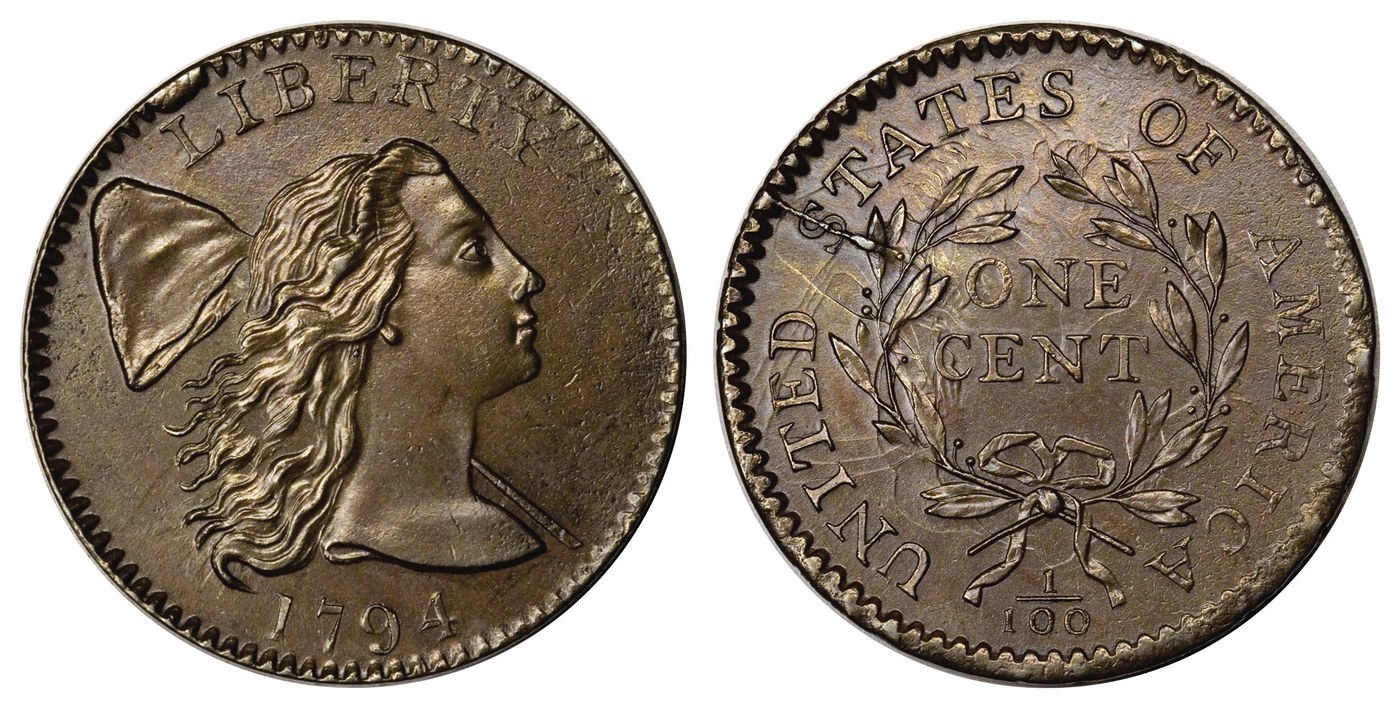
Start with size and metal. This is a large copper coin — noticeably bigger and heavier than a modern cent, about the diameter of a quarter or larger — with a brown to reddish-brown color and no silver or gold sheen. If a coin claiming to be an early cent is small, magnetic, or bright white, that is an immediate red flag.
Read the obverse. You should see Liberty's head facing right with long, loose flowing hair and a soft liberty cap, the word LIBERTY curved above, and a four-digit date beneath the bust (1794 on the photographed example). The design sits on an open field with no stars or additional legends on this side.
Check the reverse layout. The value is spelled out as ONE CENT inside a laurel/olive wreath, with UNITED STATES OF AMERICA around the rim; a 1/100 fraction often appears below the wreath. Confirming this exact arrangement helps separate the type from later large cents that use different wreaths and lettering.
Inspect the edge and mint mark. Early cents commonly have a decorated edge (such as lettering or a vine-and-bars pattern) rather than a plain or reeded modern edge, which is a helpful authenticity indicator. There is no mint mark on any genuine early large cent — all came from Philadelphia — so a mint letter would suggest a problem.
Be cautious with authentication. Because these coins are valuable and old, they attract counterfeits, altered dates, tooled surfaces, and harshly cleaned examples. Corrosion, porosity, and re-engraved detail are common. For any coin of real value, weigh and measure it, compare it against trusted references, and consider professional certification before buying, selling, or insuring.
Frequently asked questions
What is the quickest way to distinguish it from a modern cent?
Size and material. The early large cent is much larger and thicker, made entirely of copper, and spells out ONE CENT within a wreath rather than showing a portrait like Lincoln.
What edge should a genuine early large cent have?
Many carry a decorated edge such as lettering or a vine-and-bars device rather than a plain or reeded edge. A wrong or plain edge on a supposed early cent warrants caution.
Where do I find the date and mint mark?
The date is below Liberty's bust on the obverse. There is no mint mark; every genuine early large cent was struck at Philadelphia without one.
How do I know if mine is authentic?
Check size, weight, color, edge, and design layout against references, and watch for altered dates, tooling, or cleaning. For valuable pieces, submit to a professional grading service for verification.