
Coin Encyclopedia
Search and identify coins from around the world — with country, denomination, metal, mint, history, and how to tell them apart.
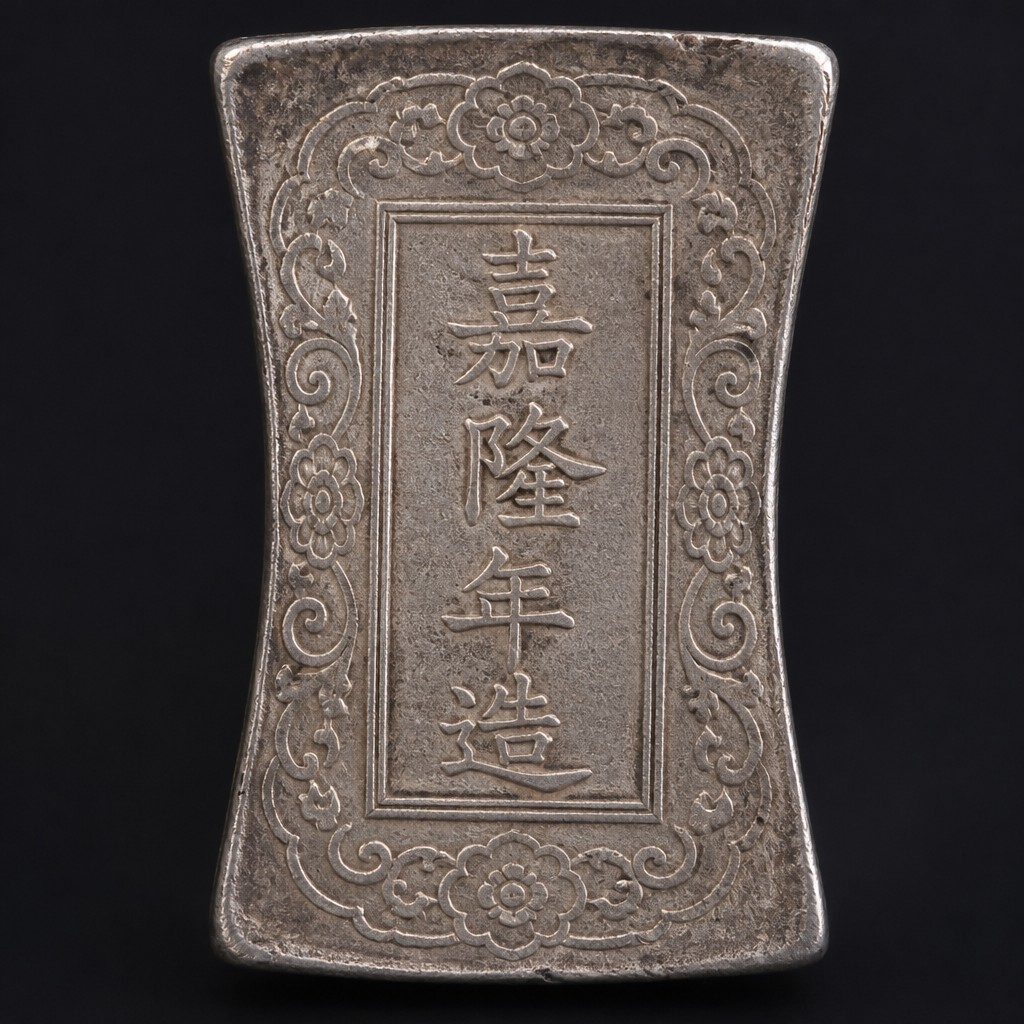
Vietnamese Silver Bar (Lang / Thoi Bac)
Traditional Vietnamese ingot currency from the Nguyen Dynasty, cast or hammered silver bars denominated in lang (tael) rather than struck as round coins.
Asian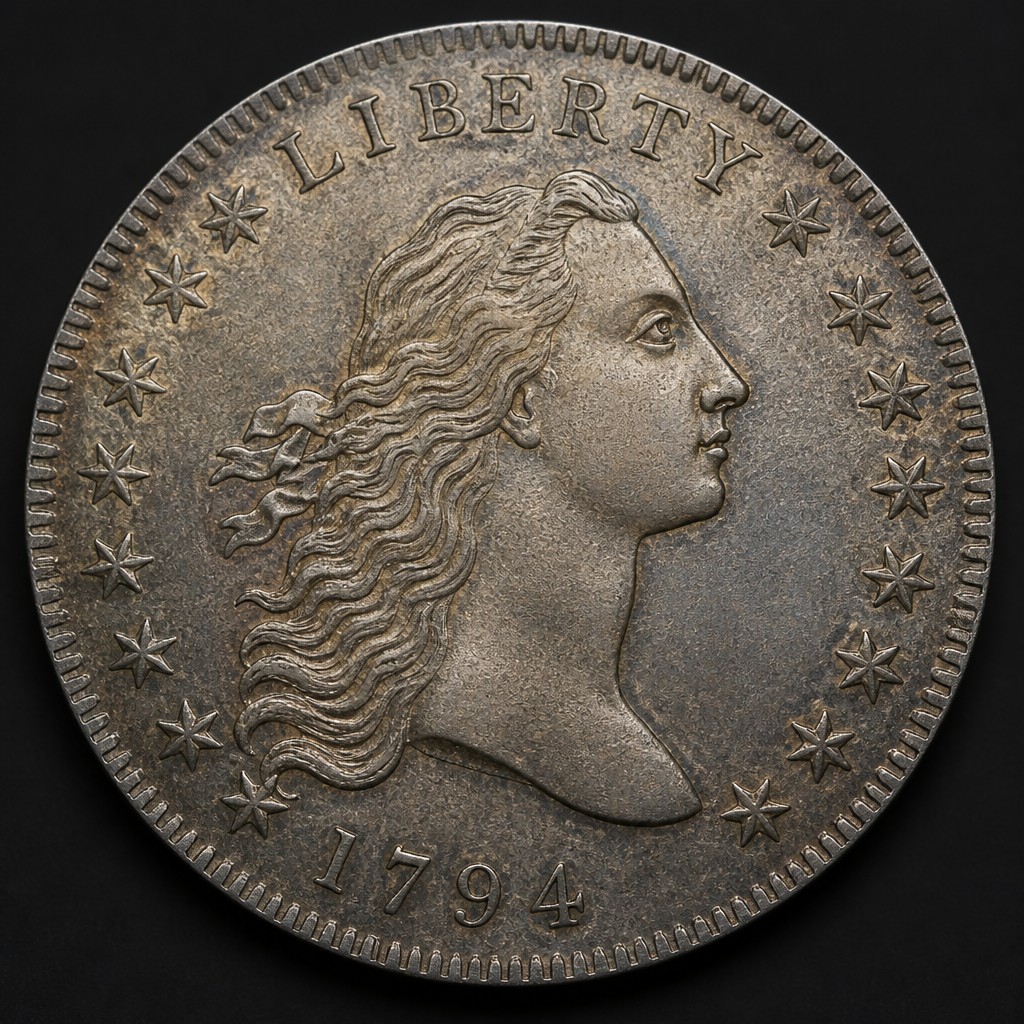
1794 Flowing Hair Half Dollar
The first half dollar ever struck by the United States Mint, produced in tiny numbers and ranking among the most desirable early American silver coins.
United States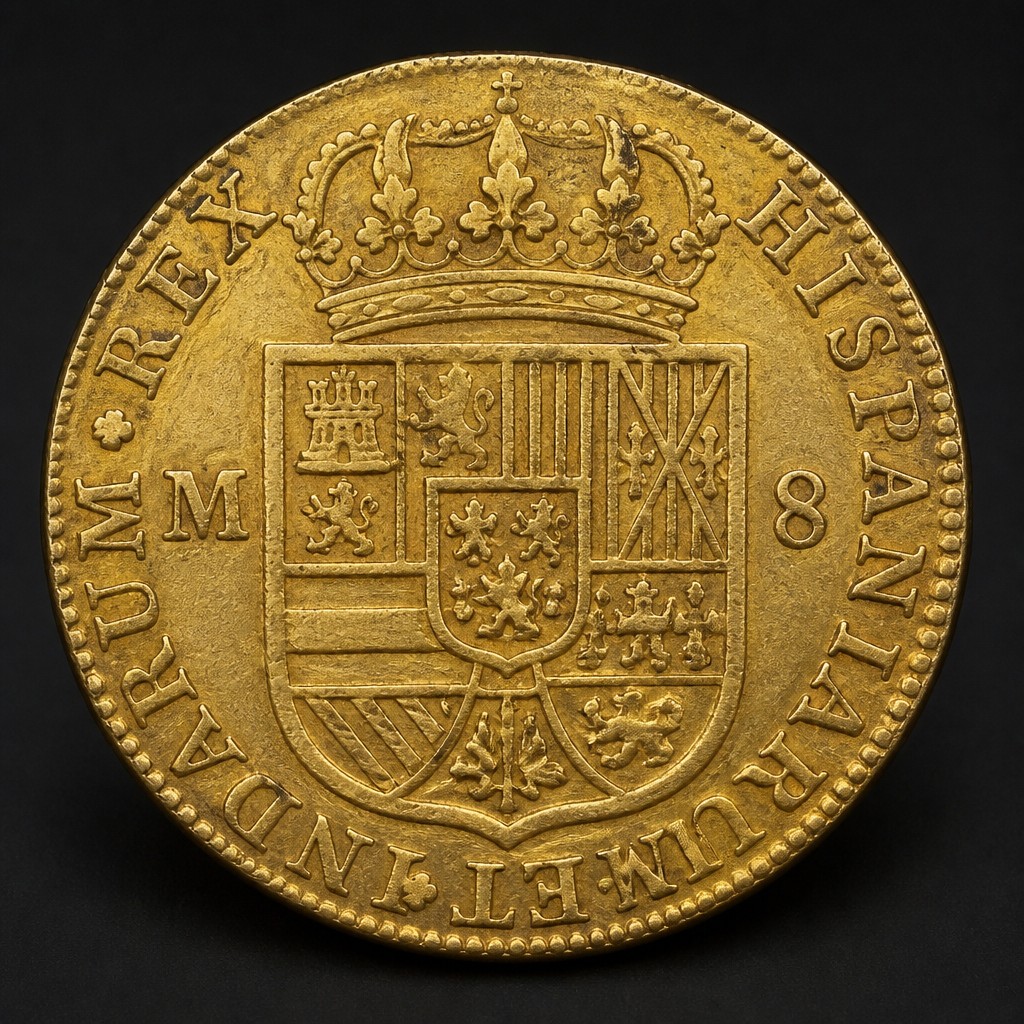
Spanish Gold Doubloon
A popular name for large Spanish colonial gold coins, typically two, four, or eight escudos, forever associated with pirate treasure and sunken Spanish galleons.
World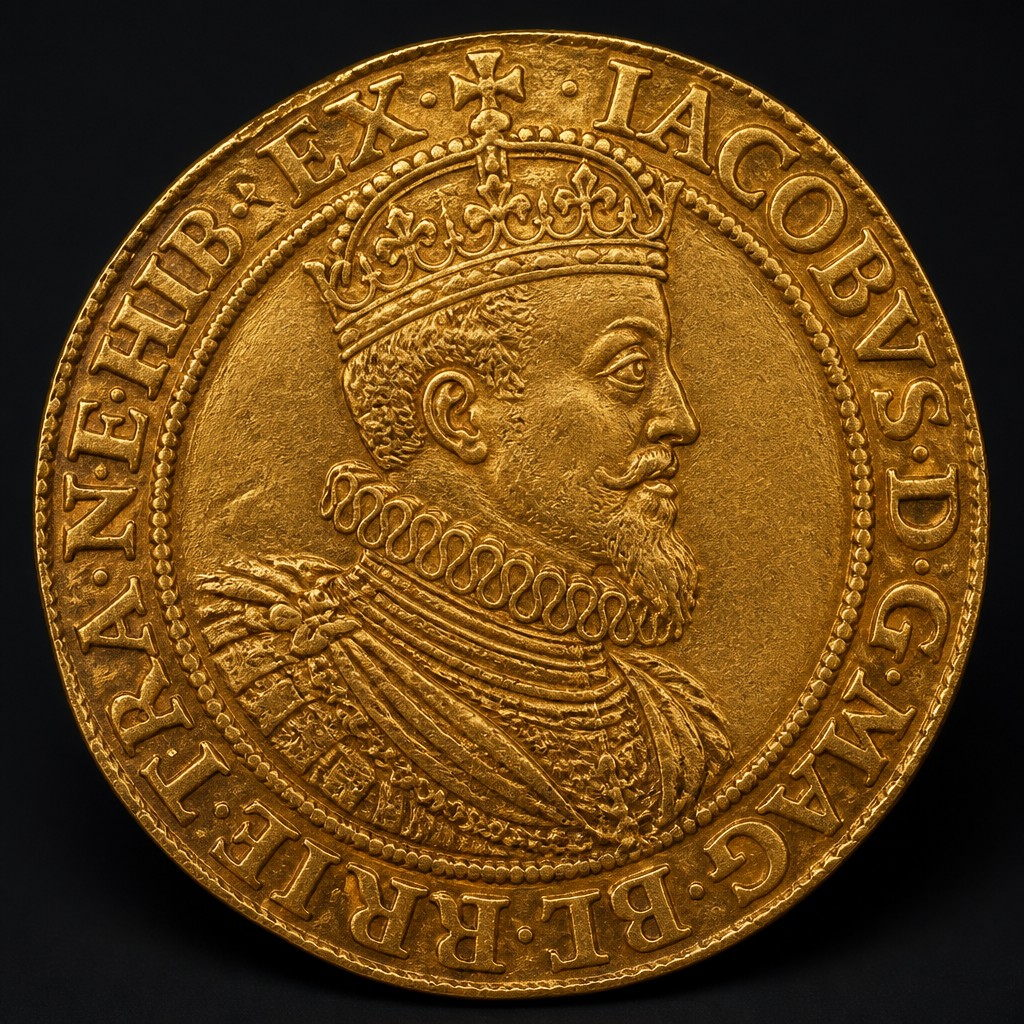
Half Crown Gold
A small gold coin worth half a gold crown, struck from the reign of Henry VIII through the English Civil War, distinct from the far more familiar silver half crown that circulated for centuries afterward.
British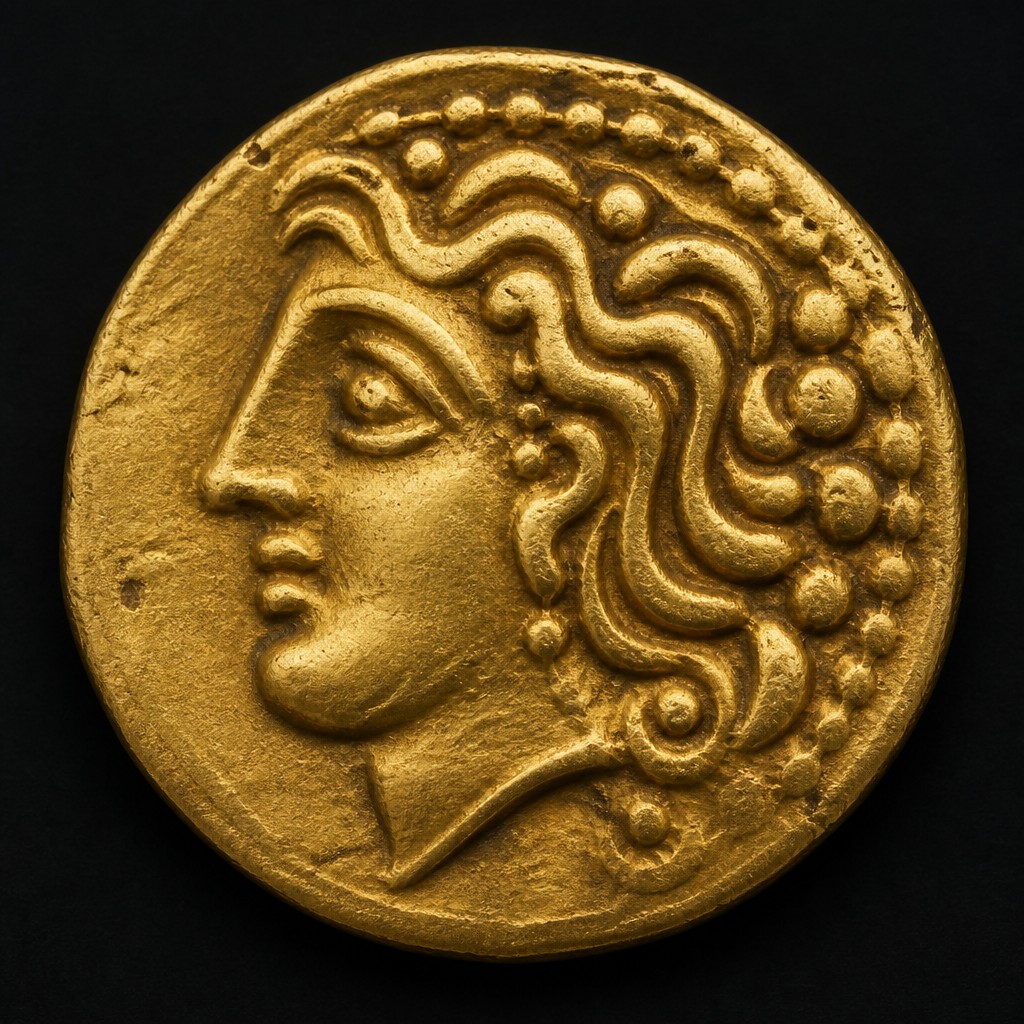
Celtic Gold Stater
Iron Age gold coins struck by Celtic tribes across Gaul and Britain, evolving from close imitations of Macedonian staters into strikingly abstract, stylized designs.
Ancient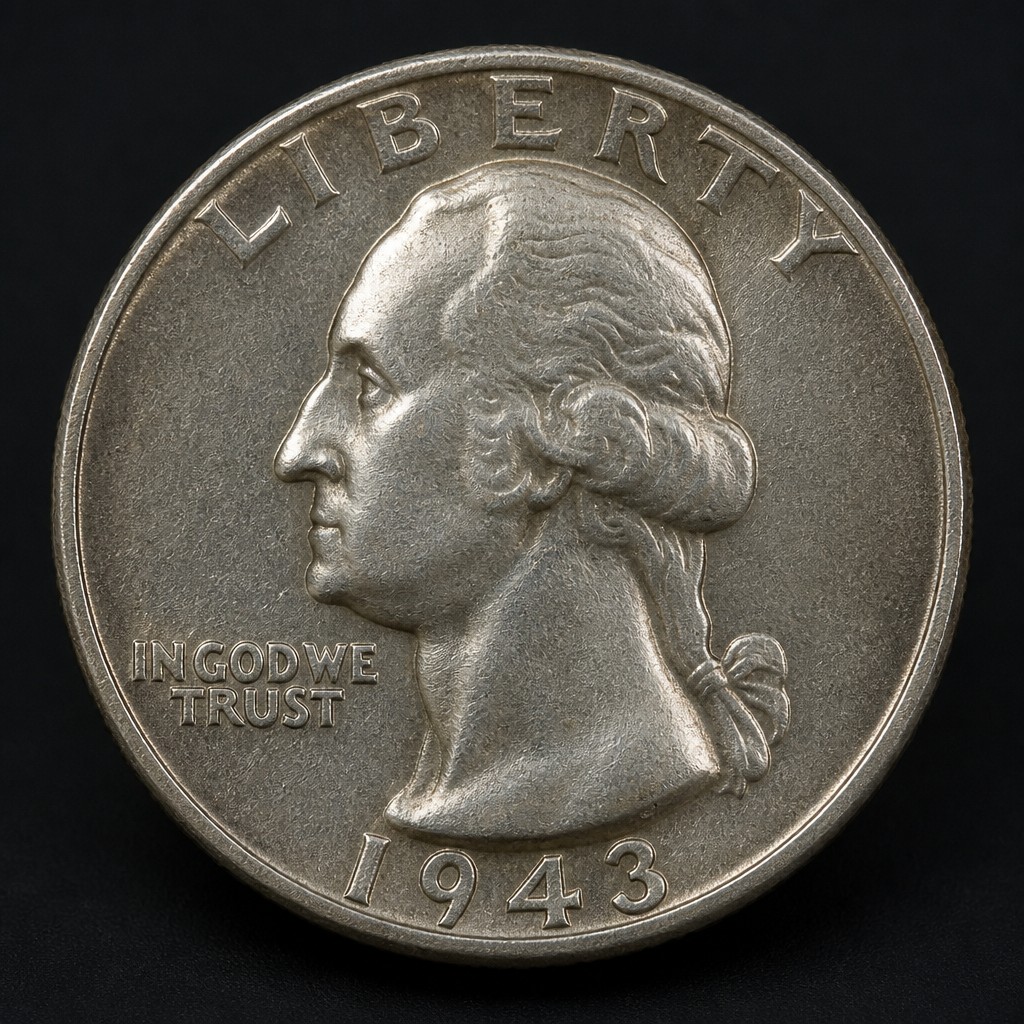
1943 Washington Quarter Doubled Die Obverse
A wartime-era doubled die variety of the Washington quarter showing clear doubling on obverse design elements, popular among collectors of Mint error and variety coins.
Errors & Varieties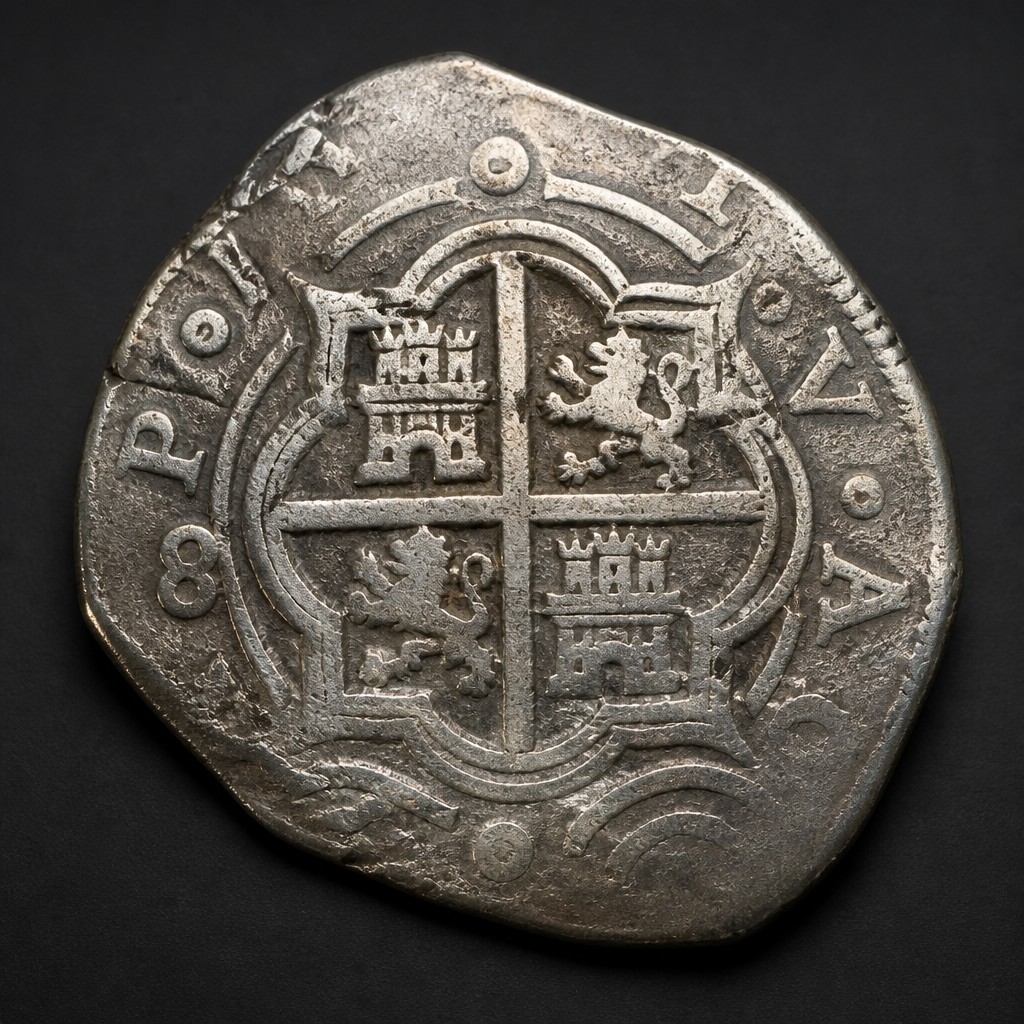
Spanish Colonial Cob (Macuquina)
Crude, irregularly shaped hand-struck coins produced at Spanish colonial mints in the Americas for over two centuries, forming the basis of the famous 'pieces of eight' that circulated worldwide.
Latin American
Maundy Fourpence
The largest of the four Royal Maundy coins, a small silver fourpence descended in value from the medieval groat, struck annually for the monarch's ceremonial Maundy Thursday alms distribution.
British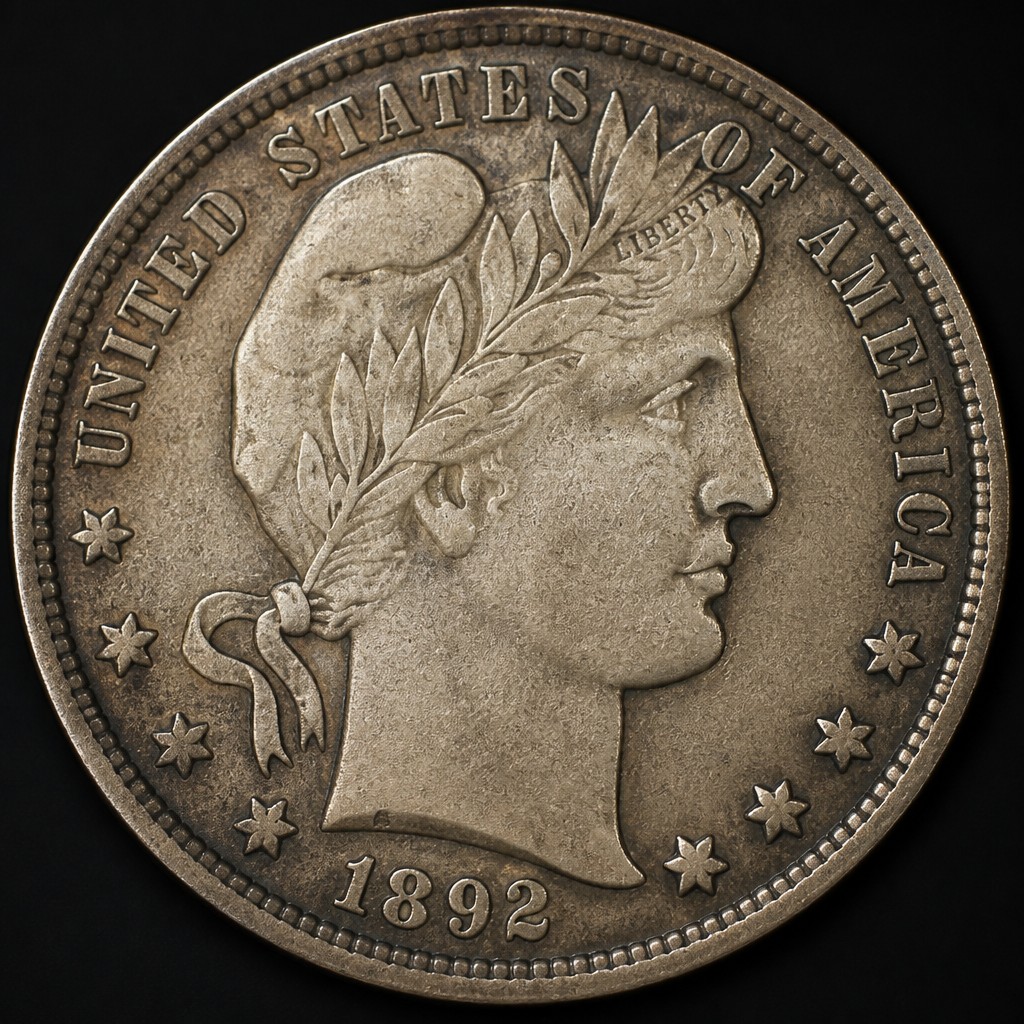
1892 Barber Half Dollar
First-year issue of Charles Barber's Liberty Head half dollar, with the 1892-O and 1892-S branch mint coins notably scarcer than the Philadelphia strike.
United States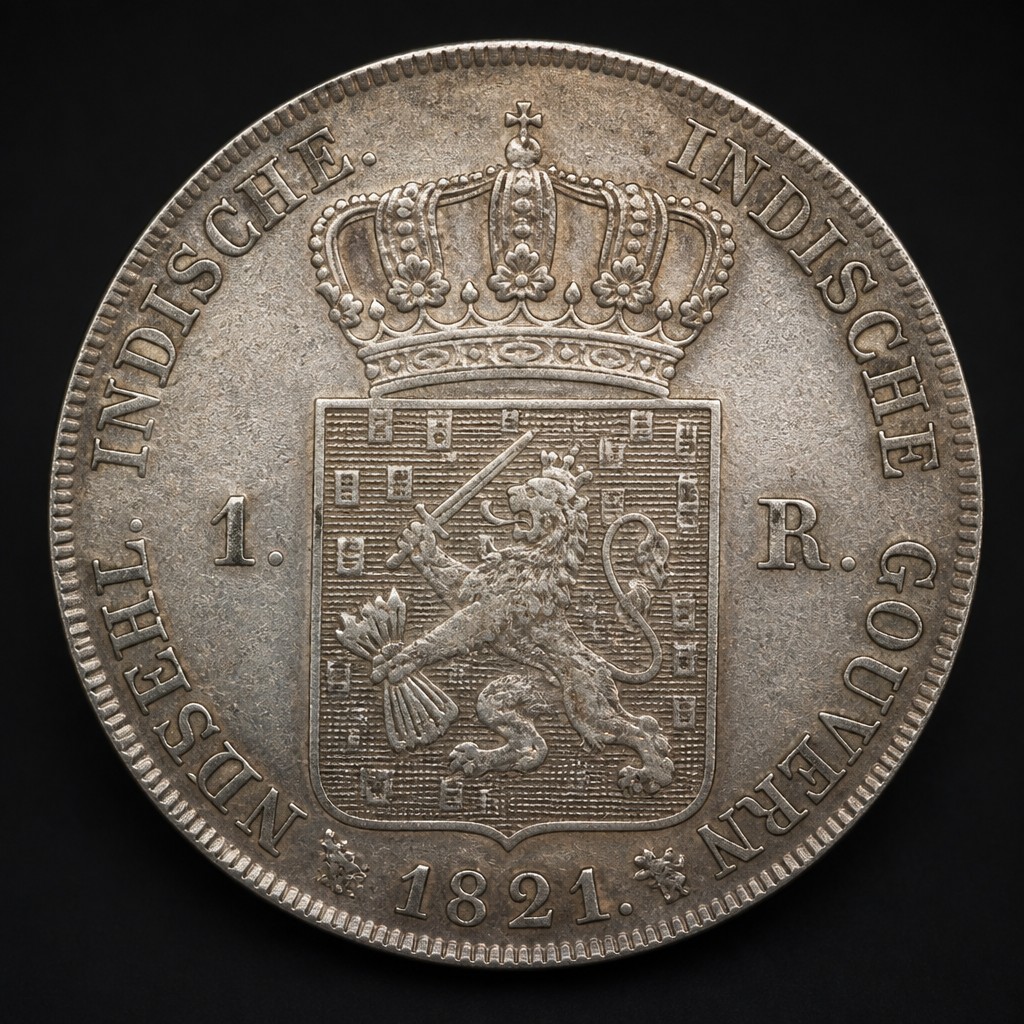
Netherlands East Indies Java Rupee
A Dutch colonial silver rupee struck specifically for the island of Java, issued to standardize local currency amid the many foreign trade coins circulating in the Dutch East Indies.
Asian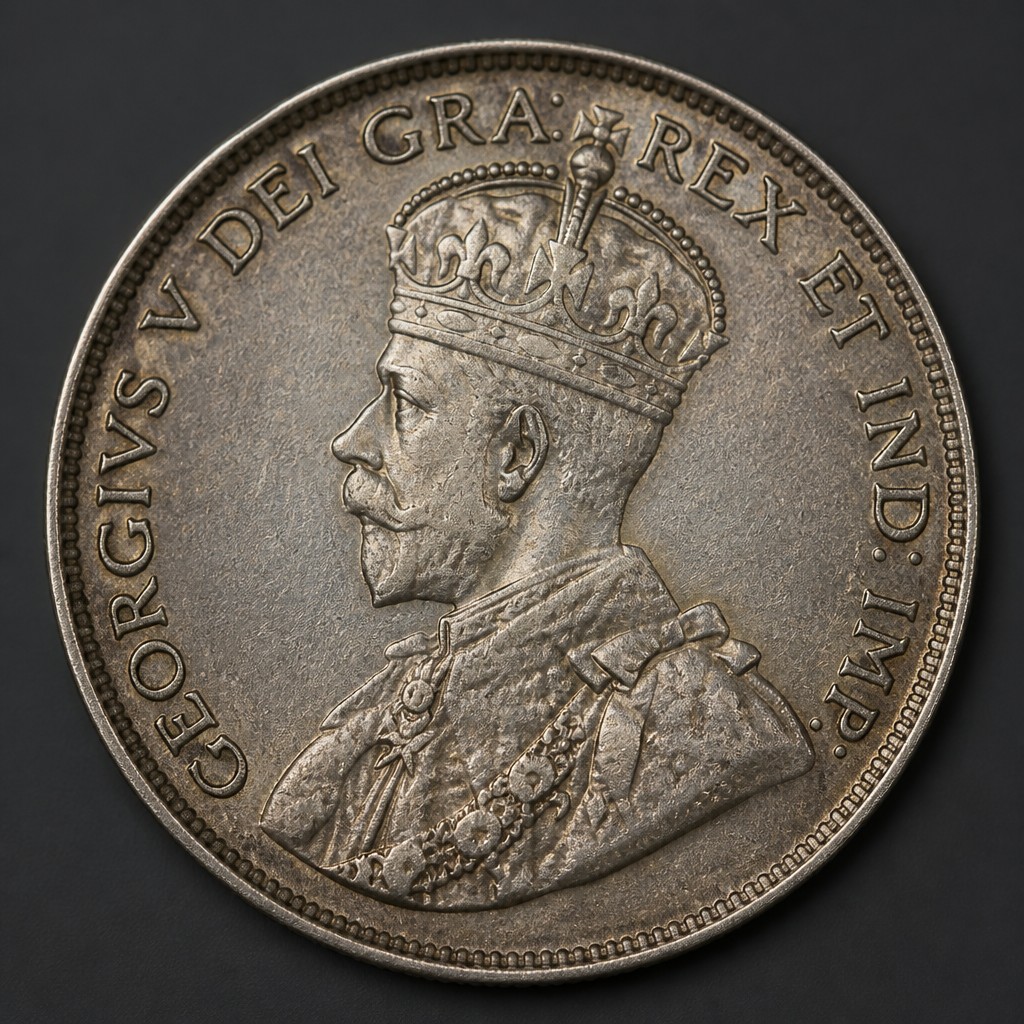
George V Five Cents (silver)
The last era of Canadian silver five-cent coins, struck under King George V until nickel replaced silver in 1922, including the legendary rarity of the 1921 date.
Canadian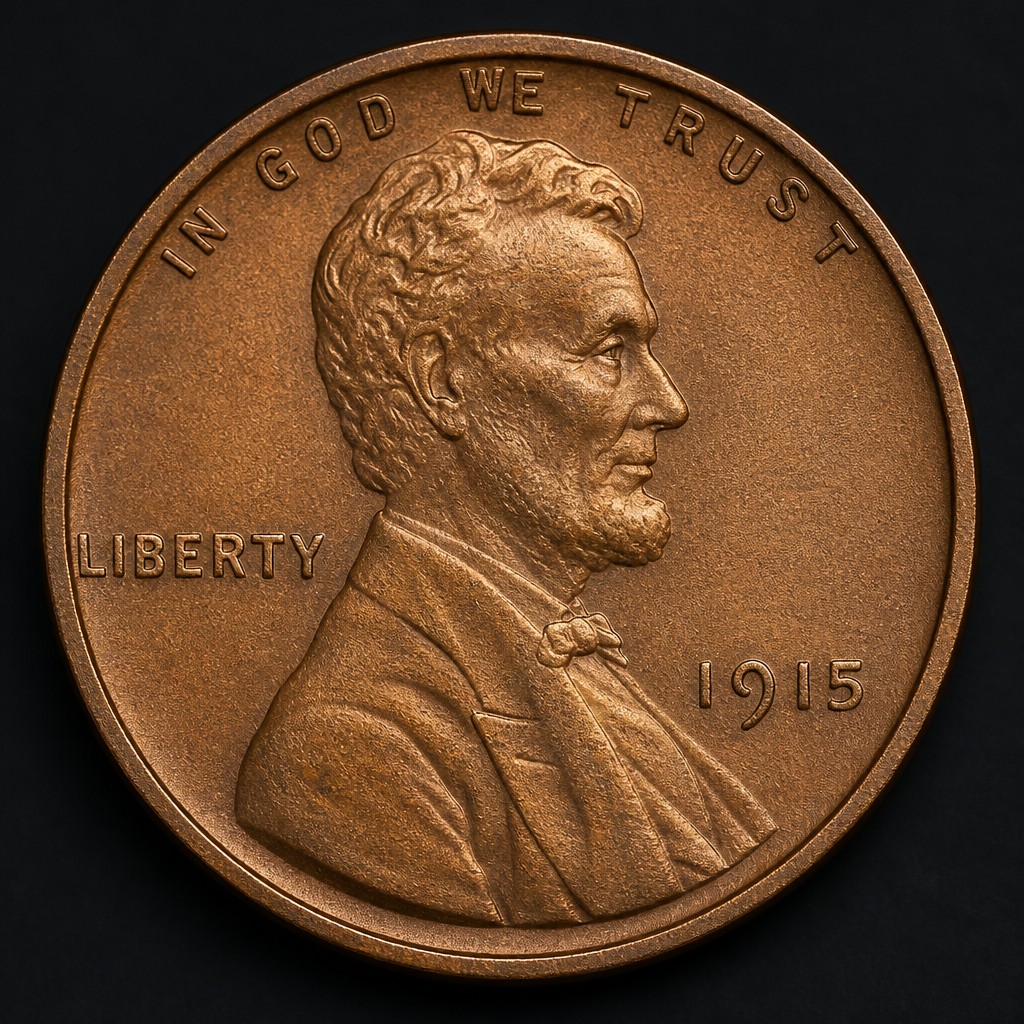
Matte Proof Lincoln Cent
A special proof finish used on Lincoln cents from 1909 to 1916, featuring a fine, sandy, non-reflective surface instead of the mirror-like brilliance of earlier proof coins.
United States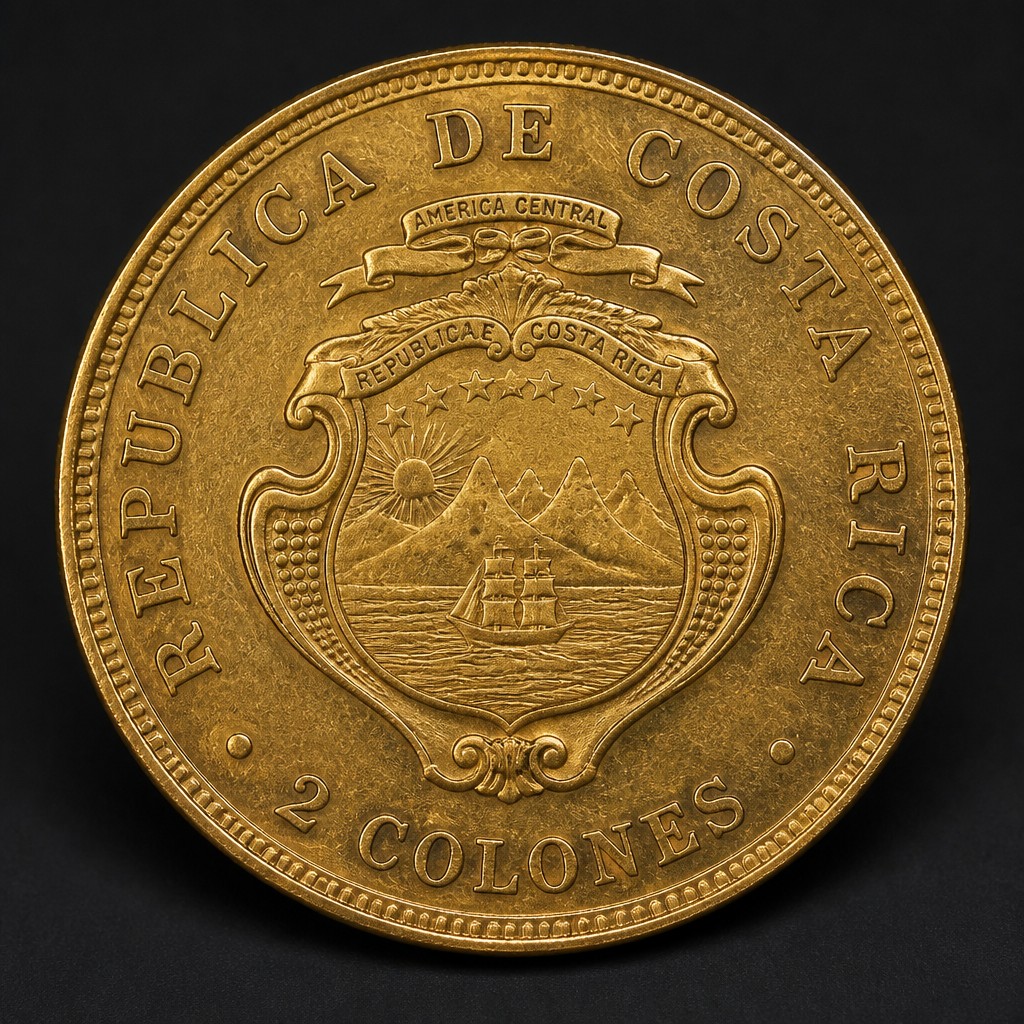
Costa Rica 2 Colones Gold
A small gold denomination from Costa Rica's early colon-era coinage, part of a family of gold coins (2, 5, 10, and 20 colones) struck around the turn of the twentieth century.
Latin American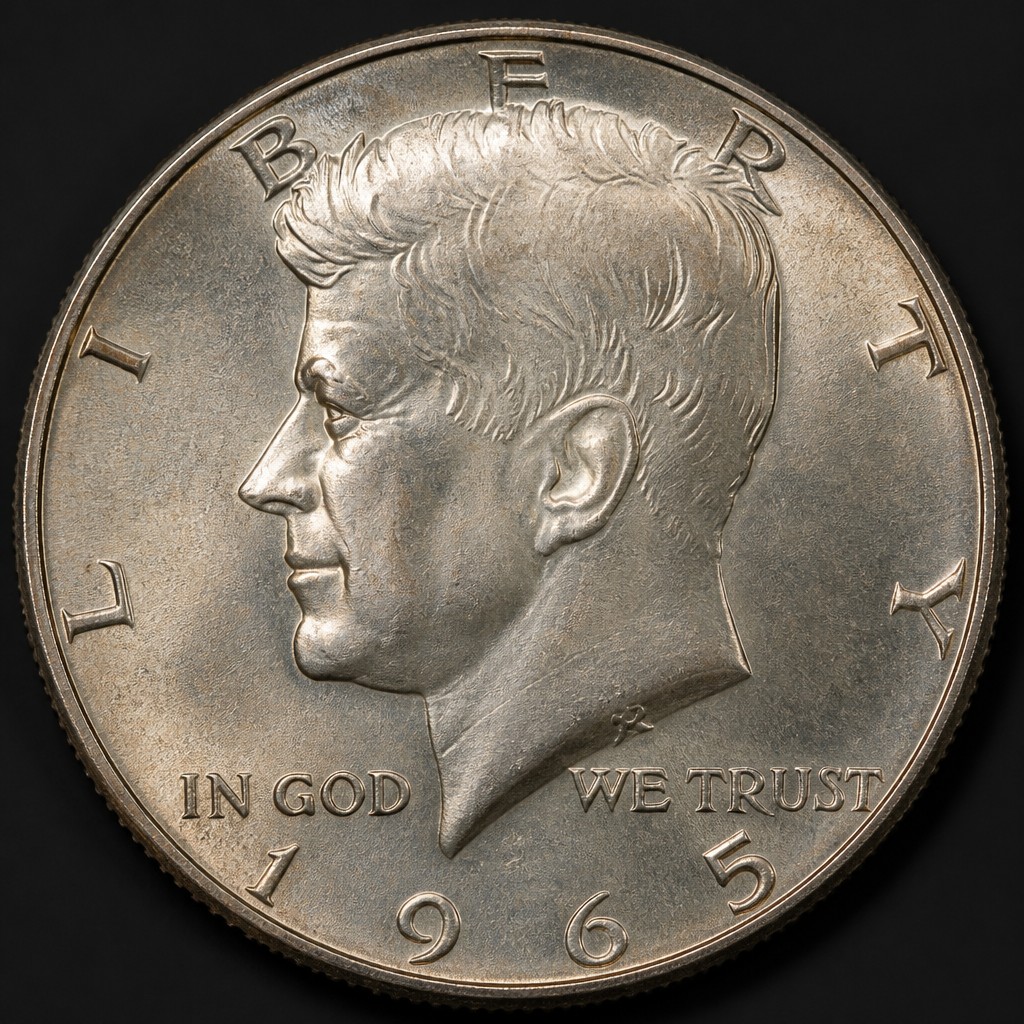
1965-1970 Kennedy Half Dollar (40% Silver)
Kennedy half dollars struck with a reduced 40% silver clad composition after the Coinage Act of 1965, bridging the gap between full silver coinage and today's copper-nickel clad coins.
United States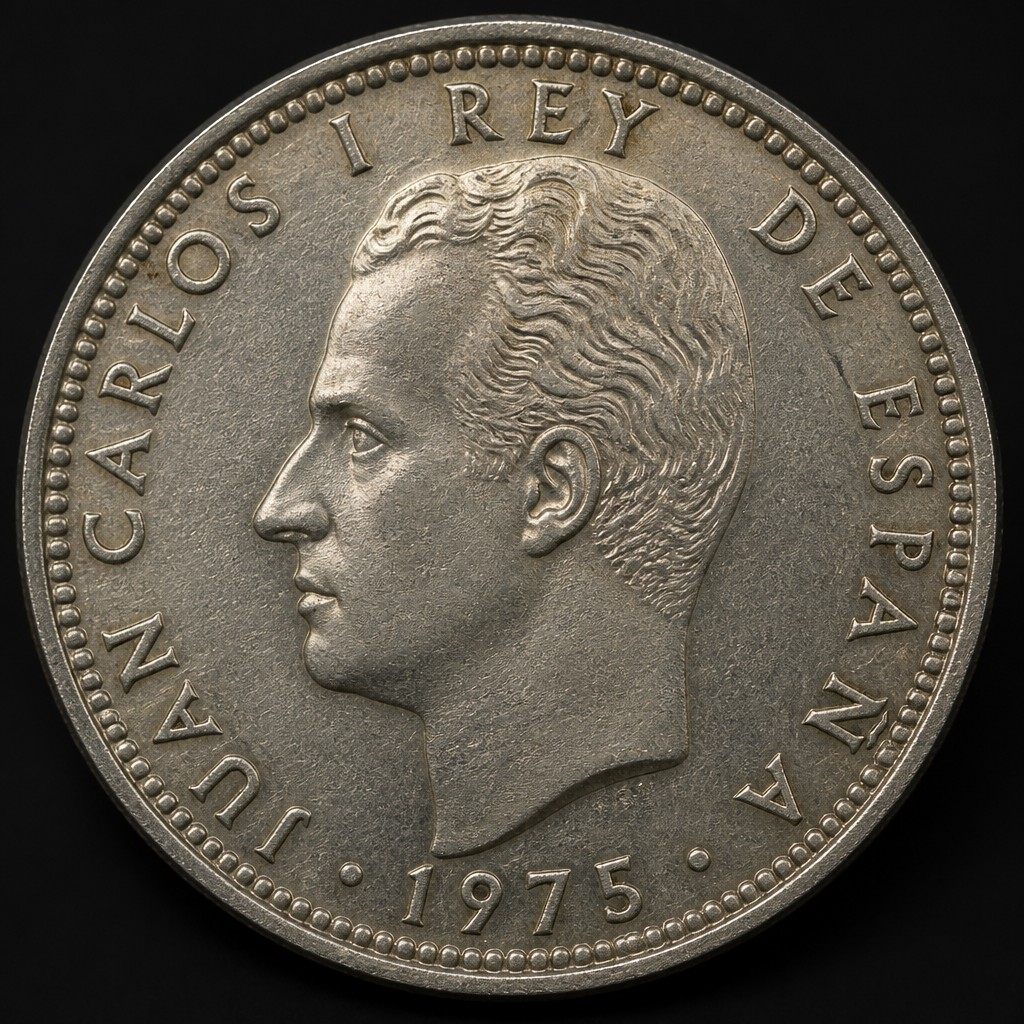
Spanish Peseta
The peseta was Spain's national currency for over 130 years, evolving from silver coinage under a provisional 19th-century government to copper-nickel coins used until the euro replaced it in 2002.
European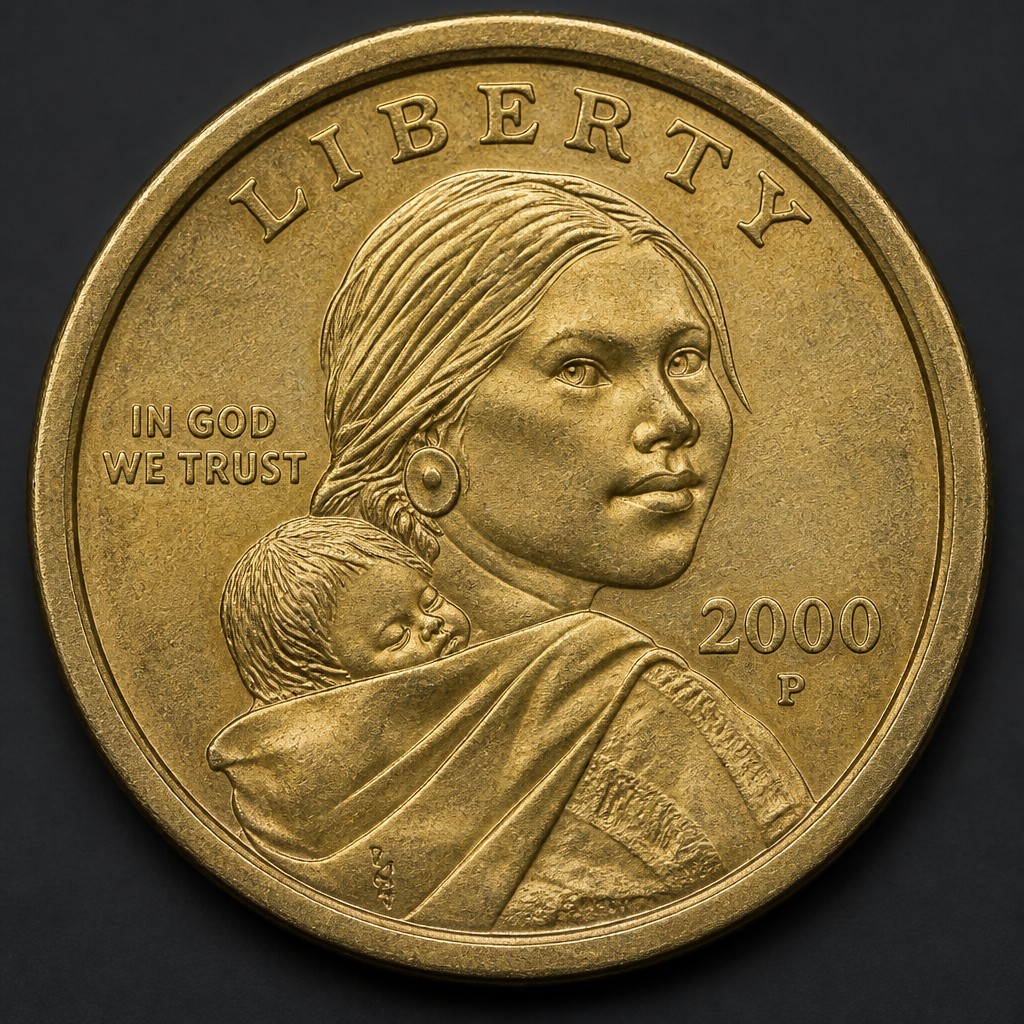
2000-P Sacagawea Cheerios Dollar
A famous modern rarity: early-production 2000-P Sacagawea dollars included in Cheerios cereal boxes as a promotion, some showing enhanced eagle tail feather detail not found on later coins.
Errors & Varieties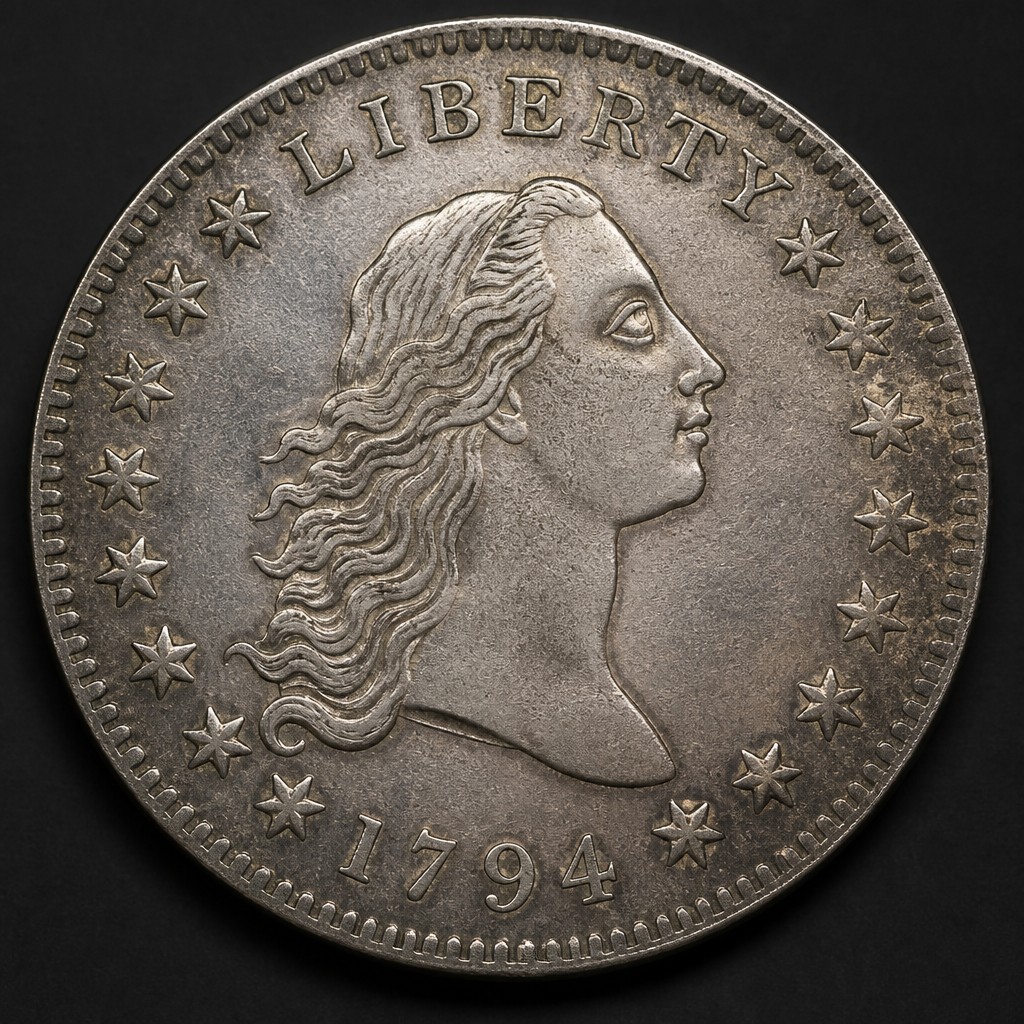
Flowing Hair Dollar
The first silver dollar struck by the United States Mint, issued in 1794-1795 with a flowing-haired Liberty and small eagle reverse; the 1794 date is among the rarest and most valuable U.S. coins.
United States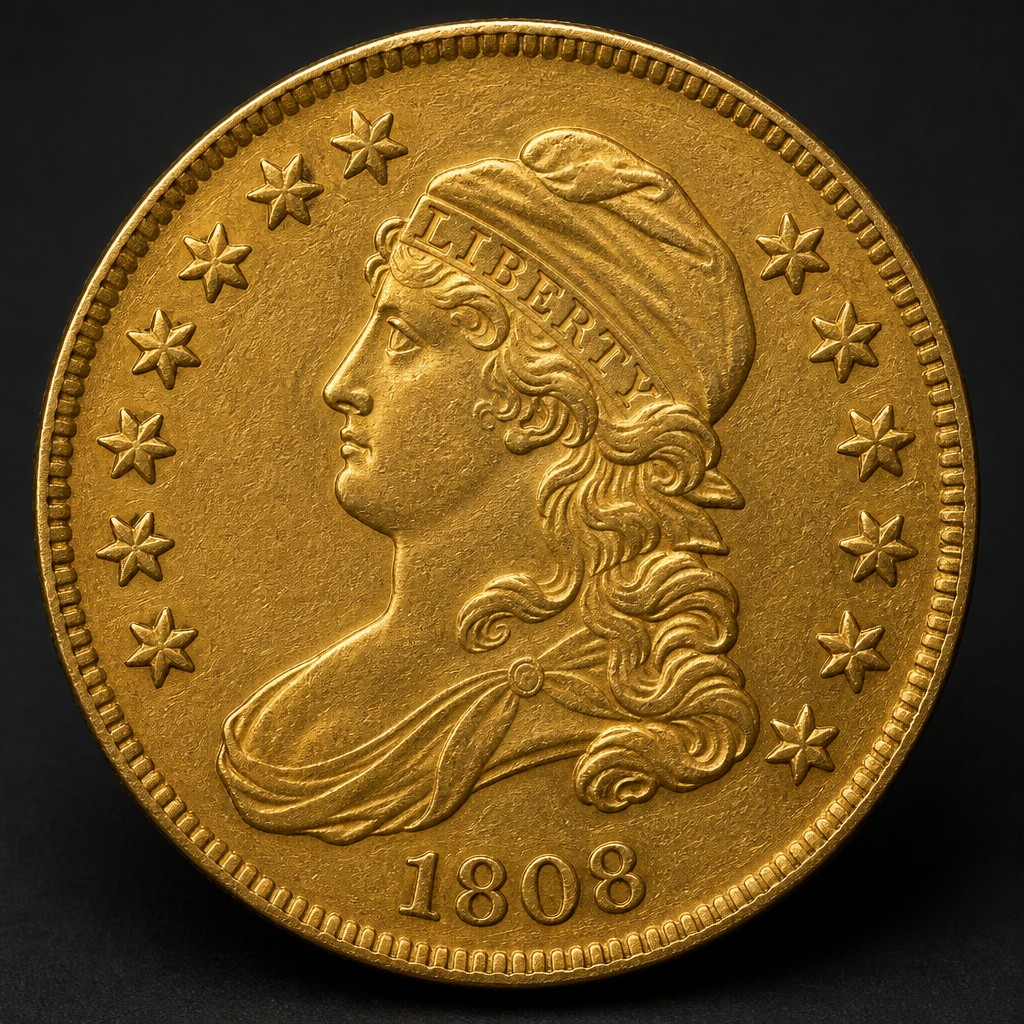
Capped Bust Quarter Eagle
An umbrella term for the earliest U.S. $2.50 gold coins (1796-1834), whose Liberty-in-a-cap portrait evolved through several sub-types, including the famous single-year 1808 issue.
United States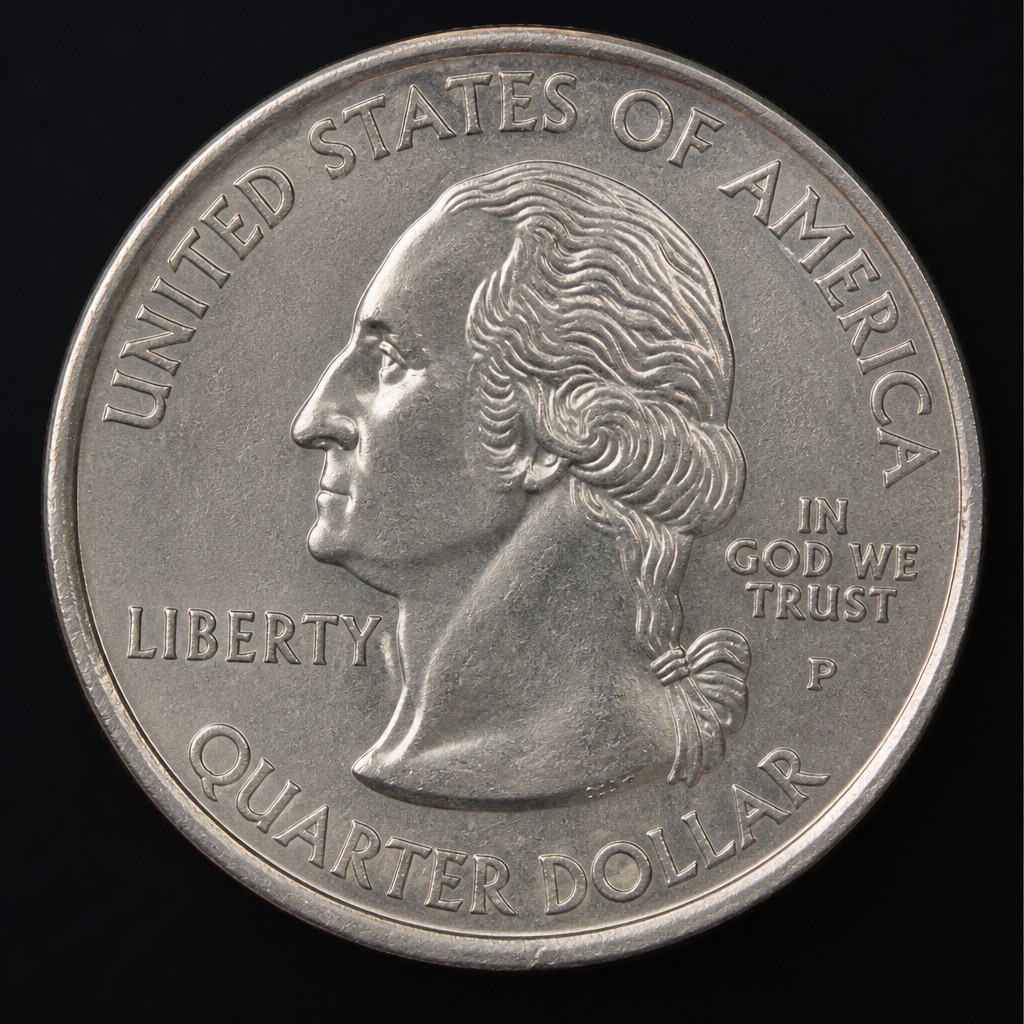
2004 Wisconsin State Quarter Extra Leaf
A famous modern variety of the 2004 Wisconsin state quarter showing an unexplained extra leaf on the corn cob, found in both 'low leaf' and 'high leaf' forms.
Errors & Varieties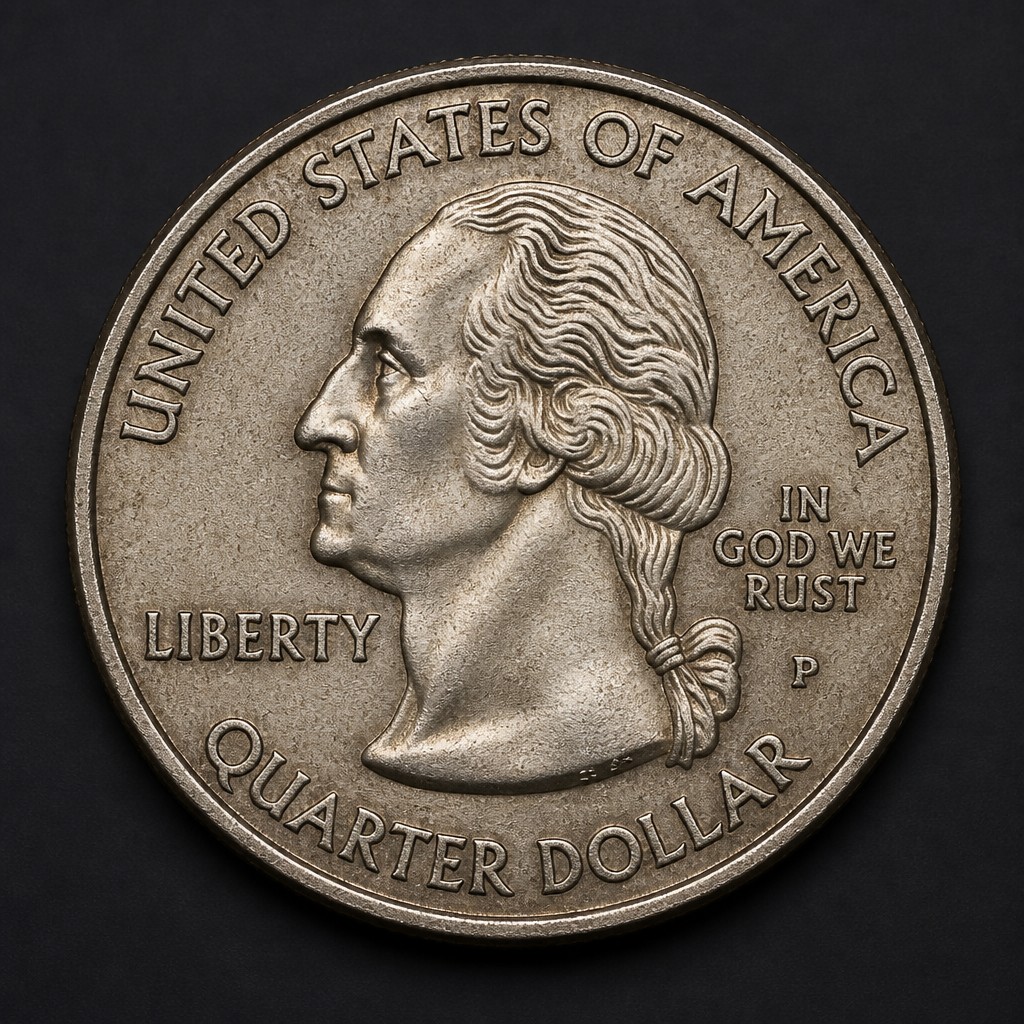
2005 Kansas State Quarter In God We Rust
A popularly nicknamed error on the 2005 Kansas state quarter in which a filled or damaged die caused the T in TRUST to appear missing, making the motto read 'IN GOD WE RUST.'
Errors & Varieties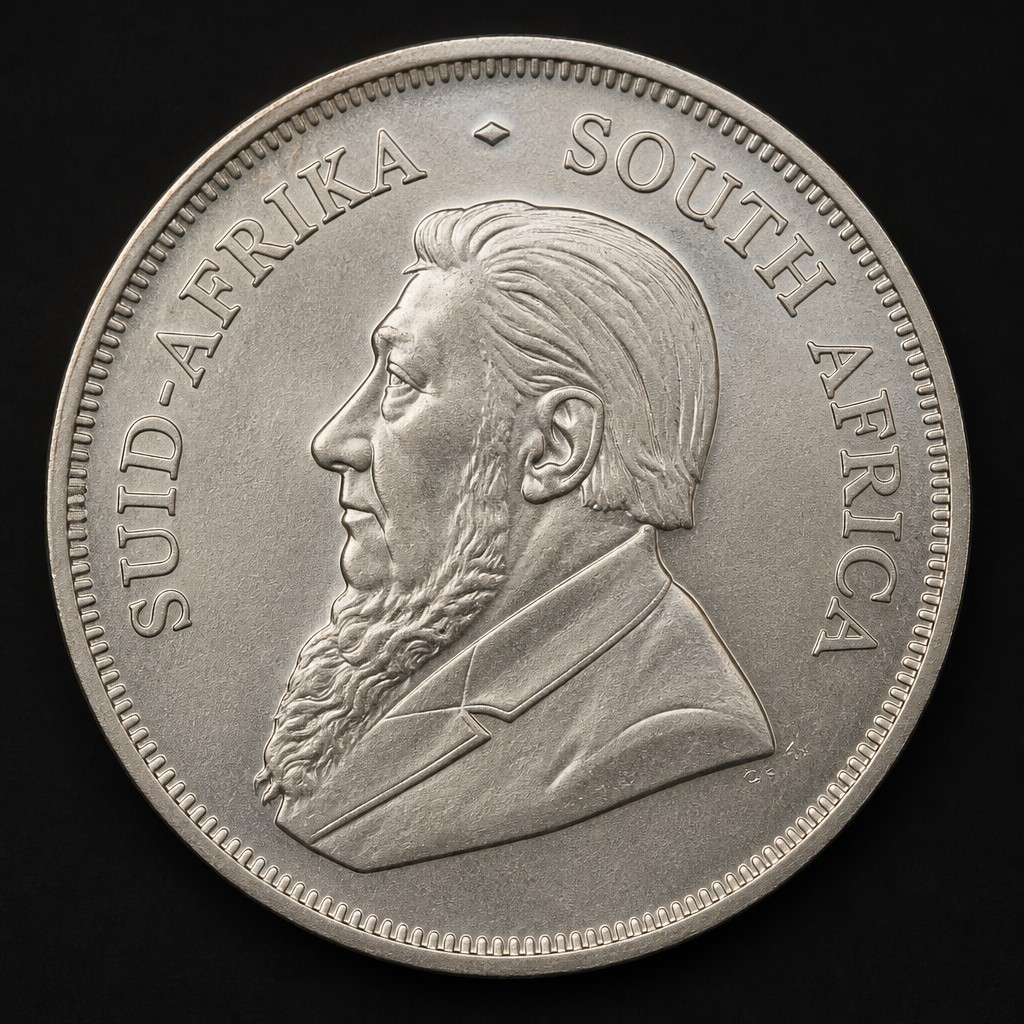
South African Silver Krugerrand
The silver version of the world-famous Krugerrand, launched in 2017 to mark the gold coin's 50th anniversary, using the same Kruger and springbok design.
Bullion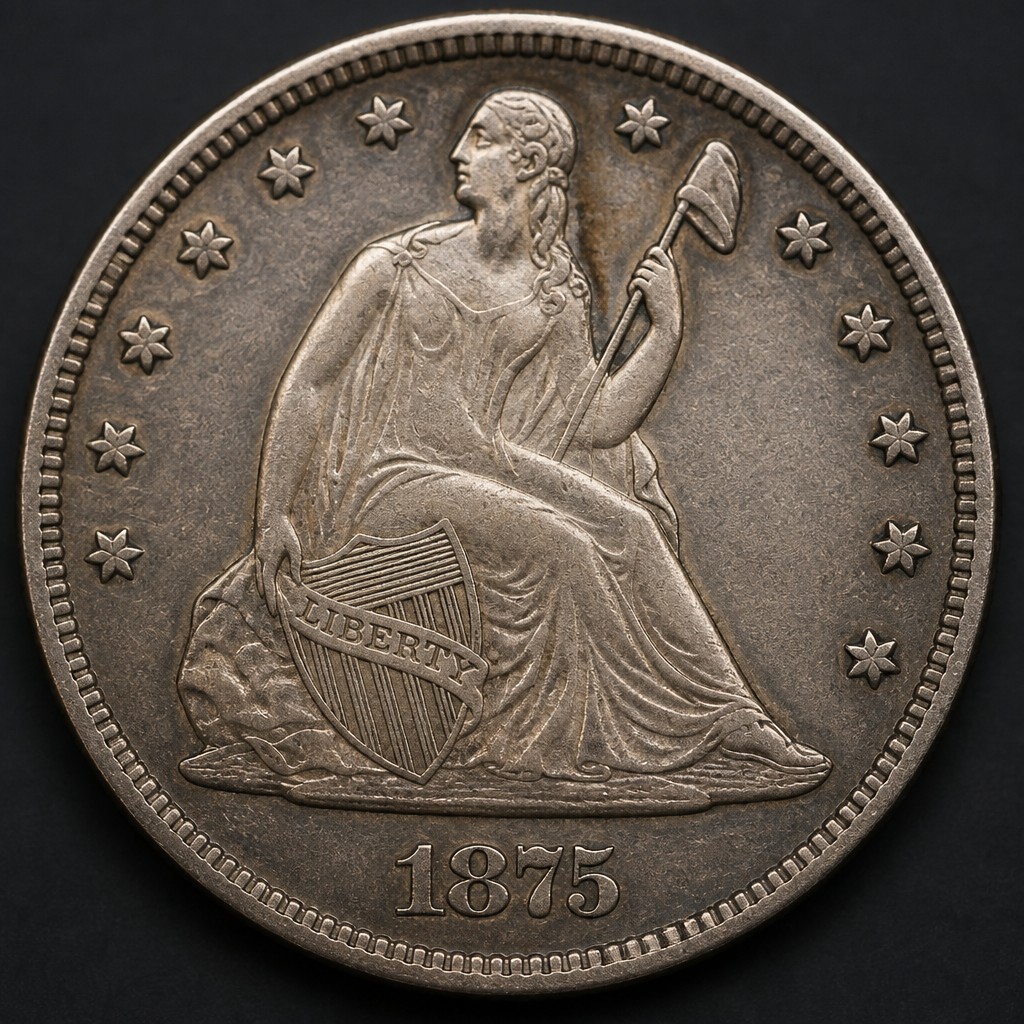
1875-S Twenty-Cent Piece
The most commonly encountered date in the short-lived US twenty-cent piece series, struck in large numbers at San Francisco in the coin's debut year.
United States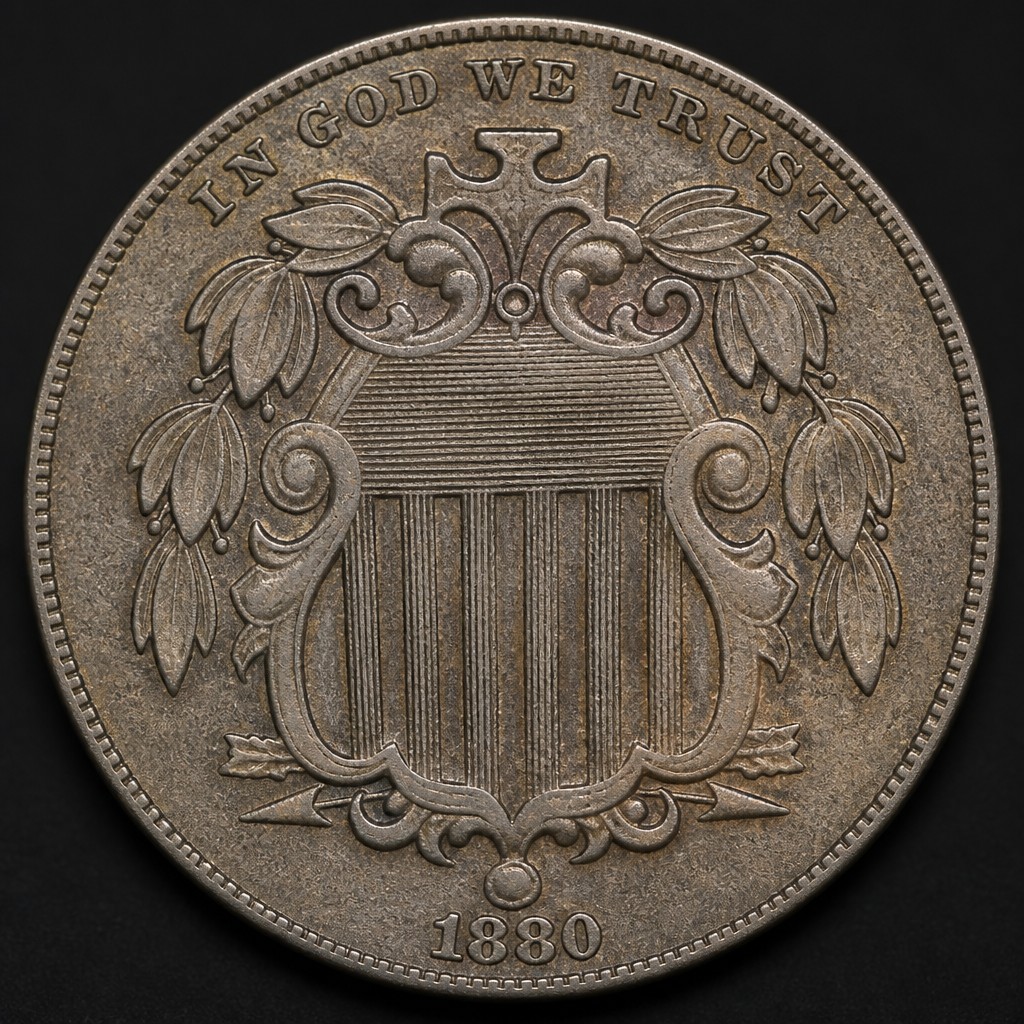
1880 Shield Nickel
A major key date of the Shield Nickel series with an extremely low business-strike mintage, making genuine circulated examples much scarcer than the coin's proofs.
United States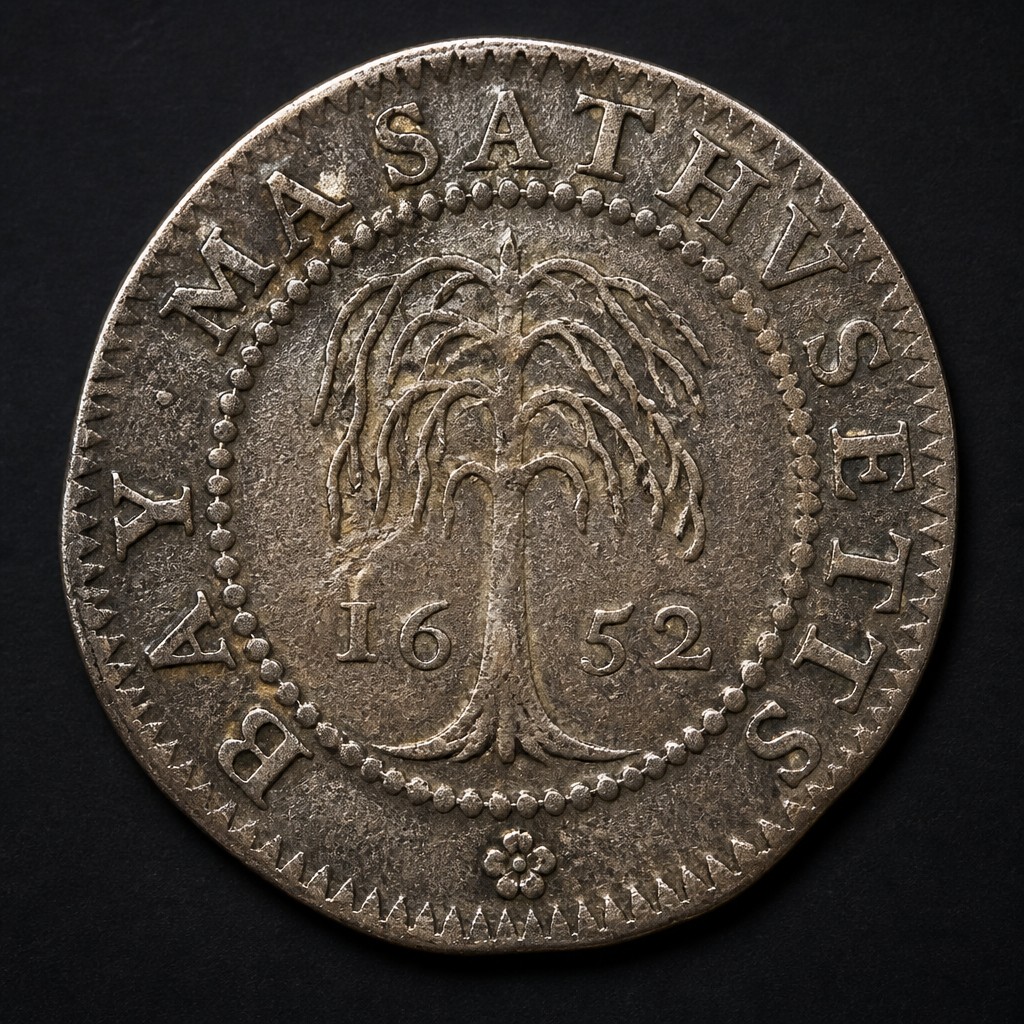
Massachusetts Willow Tree Shilling
The rarest of Massachusetts Bay's tree-series colonial shillings, struck in secret defiance of English law and all frozen with the date 1652 regardless of actual striking year.
United States