
Coin Encyclopedia
Search and identify coins from around the world — with country, denomination, metal, mint, history, and how to tell them apart.
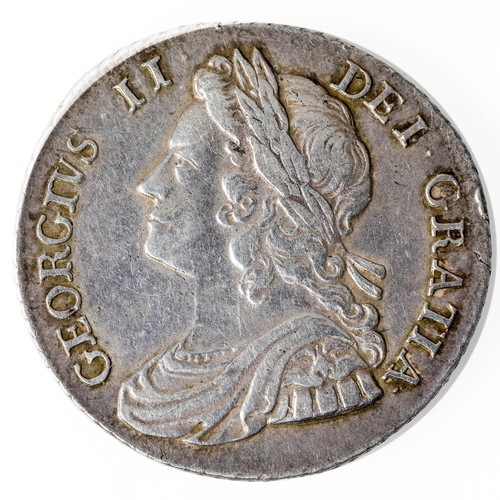
Shilling of George II
A milled silver shilling of George II, with a left-facing bust reading GEORGIVS II DEI GRATIA and a crowned cruciform-shields reverse; this one is a 1736 roses and plumes issue.
Milled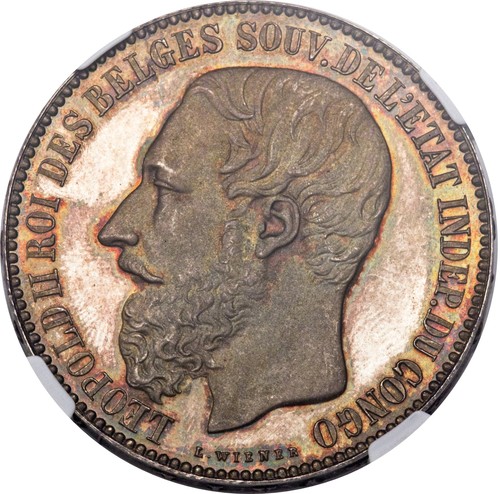
Belgian Congo 5 Francs (Copper)
A copper 5 Francs piece dated 1887 with a radiant star obverse and a crowned heraldic reverse reading CONGO BELGE, widely regarded as a fantasy or novelty type.
World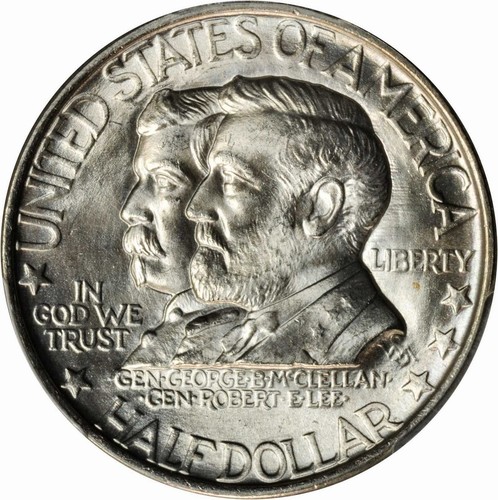
Battle of Antietam Half Dollar
A 1937 U.S. silver half dollar marking 75 years since the Civil War Battle of Antietam, with jugate busts of Lee and McClellan and Burnside Bridge on the reverse.
Classic Commemorative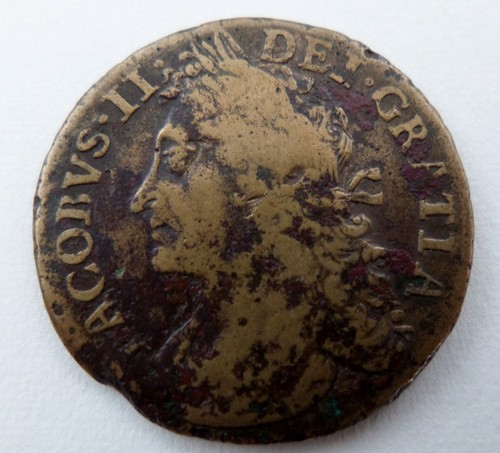
Irish Gun Money Halfcrown (30 Pence)
Emergency base-metal halfcrown struck for James II in Ireland during 1689–1690, valued at 30 pence and carrying his portrait and, on many issues, the month of striking.
Emergency Coinage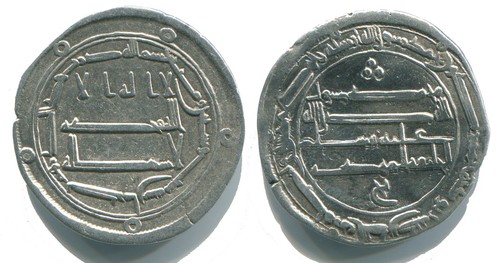
Dirham of al-Mahdi
A silver Abbasid dirham struck under Caliph al-Mahdi in AH 166 (783 CE), its faces filled with linear Kufic Arabic legends declaring the Islamic faith.
Islamic (Medieval)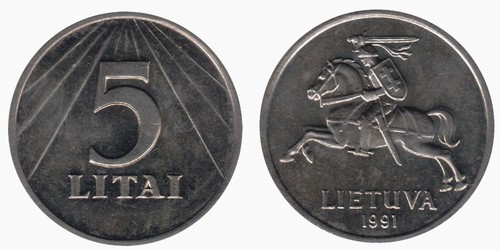
5 Litai
A nickel-alloy 5 litai of newly independent Lithuania dated 1991, showing the value with radiating lines on one side and the armored knight Vytis on horseback on the other.
Modern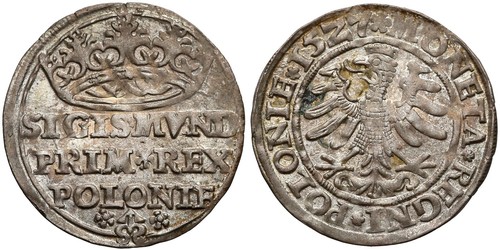
Grosz Koronny
A silver Crown grosz of the Kingdom of Poland, dated 1527, with a royal crown above a shield on one side and the Polish Eagle on the other.
Early Modern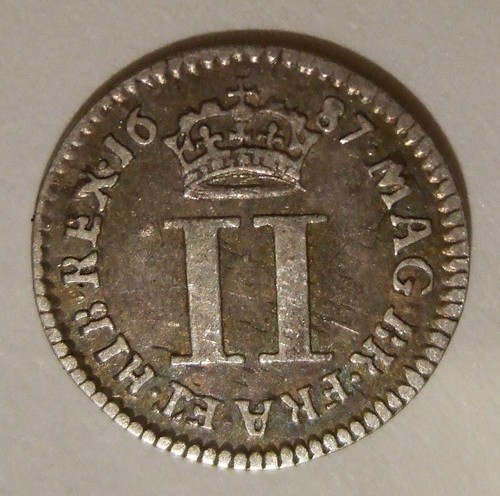
Maundy Money Twopence
A tiny sterling-silver British twopence with a crowned Roman numeral II reverse; this example bears the profile of King James II, dated 1687.
Maundy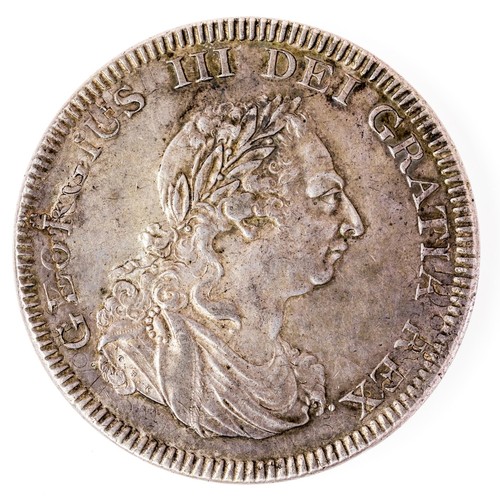
Bank of England Dollar
A George III silver dollar issued by the Bank of England in 1804, struck over Spanish eight-reales coins, with a laureate bust and a crowned shield reverse.
Milled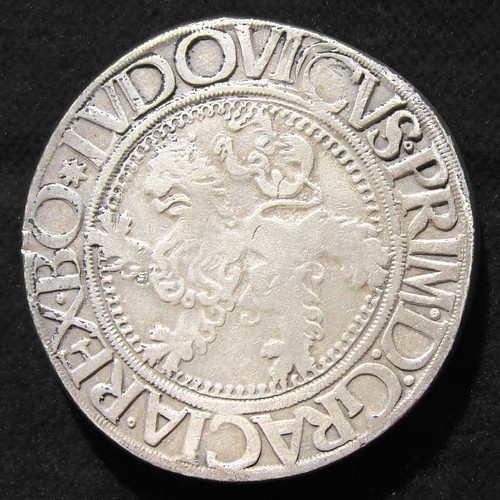
Joachimsthaler (Thaler)
A large early-16th-century Bohemian silver thaler from Joachimsthal, dated 1525; the coin whose name gave rise to the words 'thaler' and 'dollar'.
Early Modern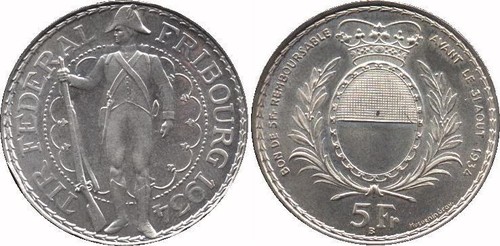
Swiss Shooting Thaler
A silver Swiss 5-franc shooting thaler dated 1934, struck for a federal shooting festival, with a standing female Helvetia figure and a heraldic shield.
Commemorative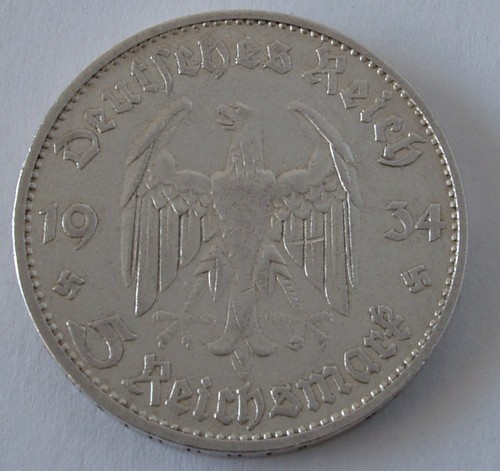
German 5 Reichsmark Garrison Church Commemorative
A 1934 German silver 5 Reichsmark commemorative with a spread-winged Reichsadler and 'Deutsches Reich' on the obverse and the Potsdam Garrison Church reverse.
Commemorative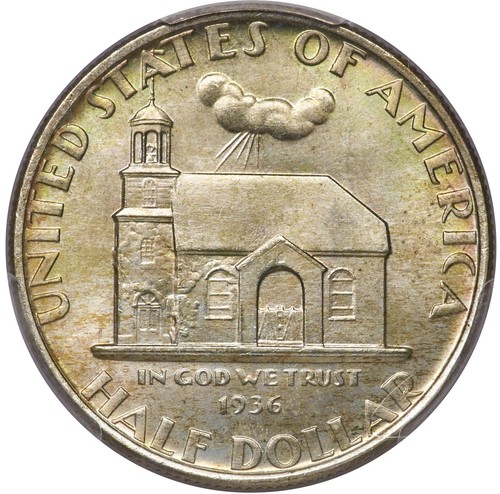
Delaware Tercentenary Half Dollar
A 1936 U.S. silver half dollar marking 300 years since Swedish colonists landed in Delaware, showing Old Swedes Church on one side and the ship Kalmar Nyckel on the other.
Classic Commemorative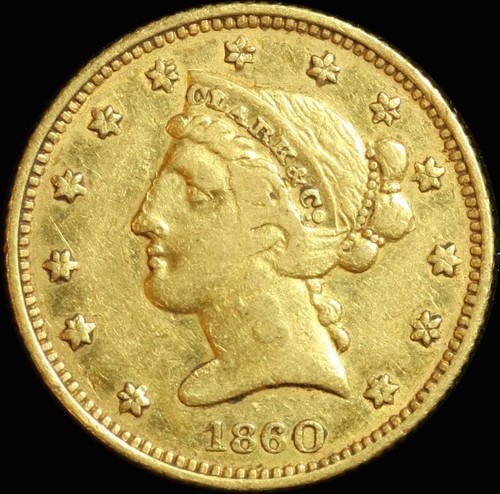
Clark & Co Territorial Gold Half Eagle
An 1860 privately struck $5 gold piece from Clark, Gruber & Co. of Denver, coined from Pikes Peak gold during the Colorado gold rush.
Half Eagle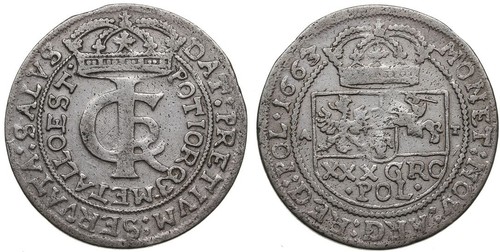
Tymf
A debased Polish silver coin of 1663 tariffed at 30 groszy, famous for a Latin motto declaring the state's safety worth more than the metal.
Early Modern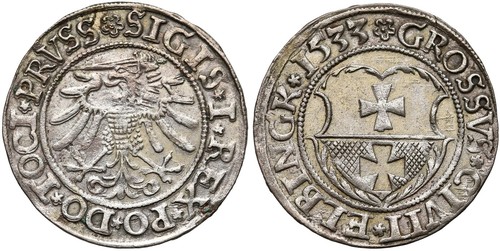
Grosz Miejski
A silver city grosz struck at Elbląg in 1533, pairing the town's crowned coat of arms with an eagle and civic inscriptions under the Polish crown.
Early Modern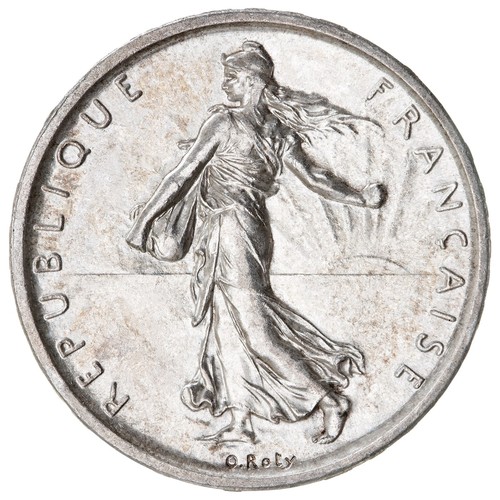
French Semeuse 5 Francs
A silver French 5-franc coin of the Fifth Republic showing the Sower (Semeuse) striding left, with a flowered wreath around the value on the reverse.
Circulation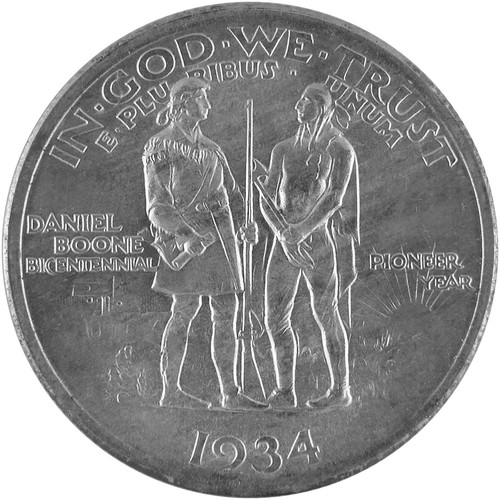
Daniel Boone Bicentennial Half Dollar
A 90% silver U.S. classic commemorative struck 1934–1938 for Daniel Boone's bicentennial, showing his portrait and a frontier scene with Chief Black Fish.
Classic Commemorative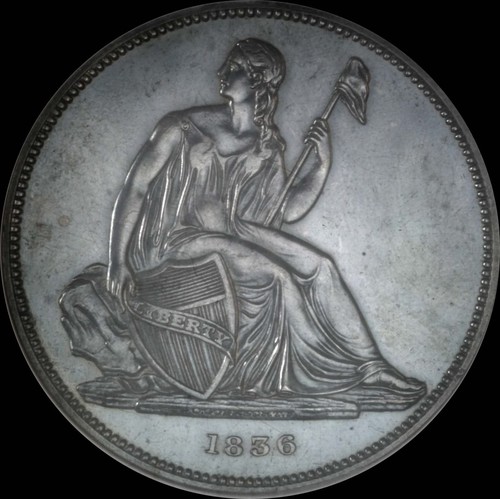
Gobrecht Dollar
U.S. silver dollar of 1836 by engraver Christian Gobrecht, pairing a Seated Liberty obverse with a flying-eagle reverse; a rare pattern-era issue.
Dollar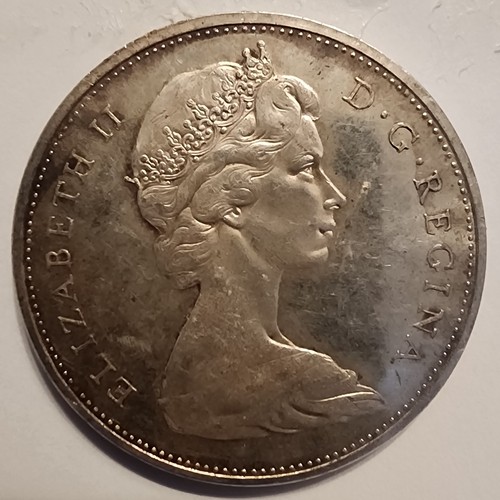
Voyageur Dollar
Canada's first circulating silver dollar, struck in 1935 for King George V's Silver Jubilee, showing a voyageur and guide paddling a canoe.
World Coins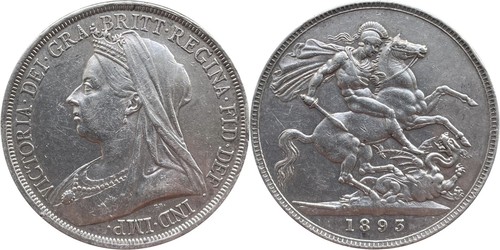
Victorian Crown
Large Victorian silver crown showing Queen Victoria's veiled "Old Head" portrait and Pistrucci's Saint George slaying the dragon, dated 1893.
World Coins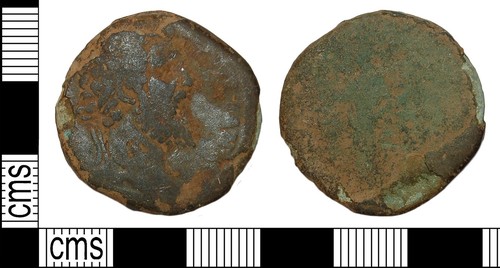
Sestertius of Didius Julianus
A large bronze/orichalcum sestertius of Didius Julianus, the emperor who reigned only weeks in 193 AD — rare, historically charged, and much sought after.
Ancient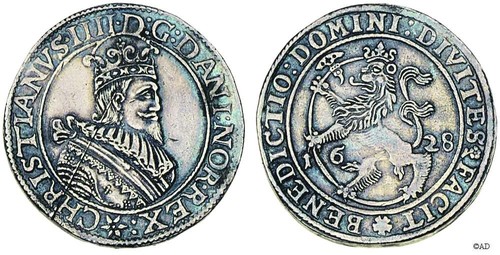
Speciedaler
Large early-modern Norwegian silver crown of the Dano-Norwegian kingdom, showing a crowned royal bust and the Norwegian lion shield, dated 1628.
Early Modern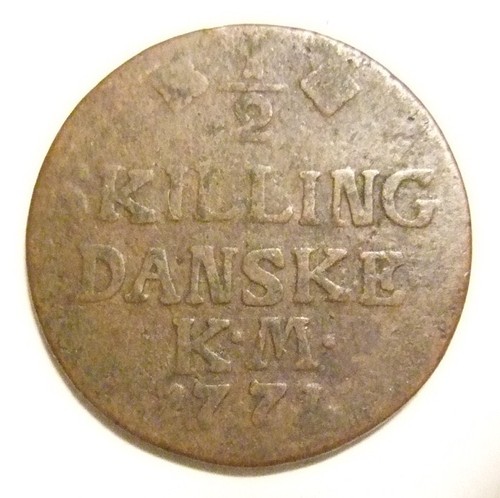
½ Skilling
A small copper Danish half skilling of 1771, showing a royal crown over the king's cipher and the value ½ SKILLING DANMARK K:M on the reverse.
Early Modern