
Coin Encyclopedia
Search and identify coins from around the world — with country, denomination, metal, mint, history, and how to tell them apart.
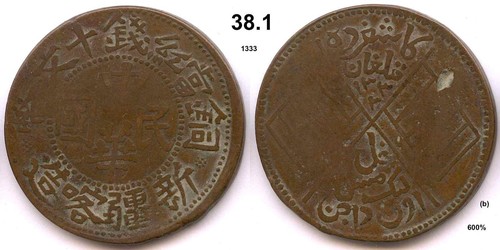
Aksu Mint 10 Cash
A struck copper 10 cash coin from the Aksu mint in Xinjiang, with Chinese characters and a denomination mark in a circular layout, without a central hole.
Cash Coin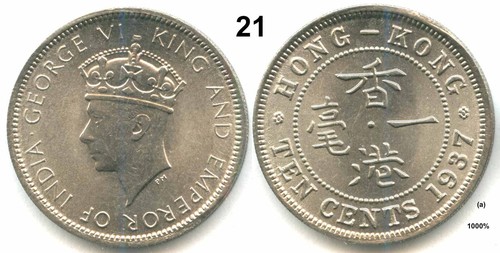
Hong Kong 10 Cents
A small silver 10-cent coin of British Hong Kong showing the crowned profile of King Edward VII, with 'HONG-KONG TEN CENTS' and Chinese characters on the reverse.
Circulation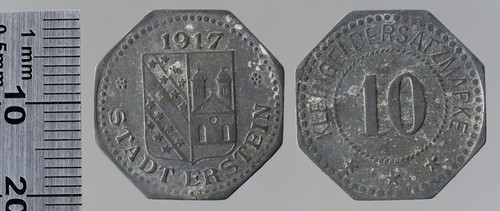
Erstein Notgeld 10 Pfennigs
A 1917 German emergency coin (Notgeld) for 10 Pfennigs from the town of Erstein, with the city coat of arms on one side and a large 10 on the other.
Token/notgeld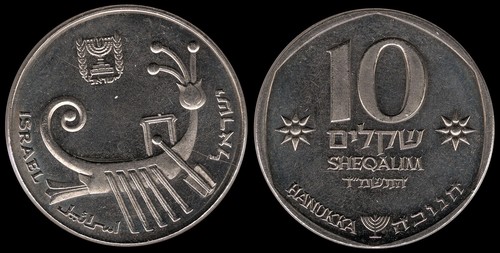
Israel 10 Sheqalim Hanukka Commemorative
A silver Bank of Israel commemorative from the annual Hanukka series, showing a historic Hanukka lamp with stars, dated 1983 and valued at 10 Sheqalim.
World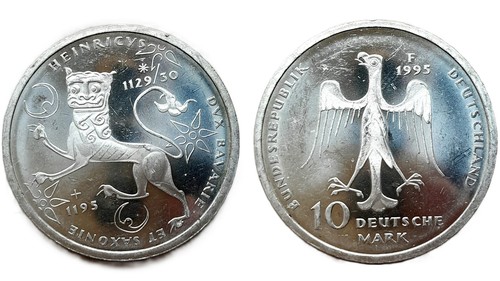
German 10 Deutsche Mark Commemorative
A West/unified German silver 10 Deutsche Mark commemorative; this 1995 issue honors Heinrich der Loewe (Henry the Lion) with the Federal Eagle reverse.
Commemorative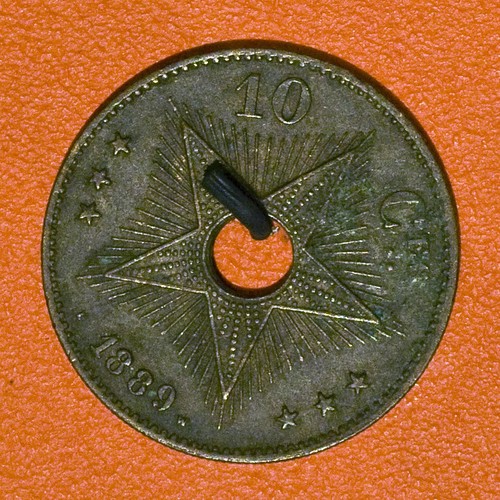
Congolese Commemorative Coin
An 1889 holed copper 10-centime coin of the Congo Free State, with a radiant five-pointed star, the value 10 C, and a ring of small stars.
World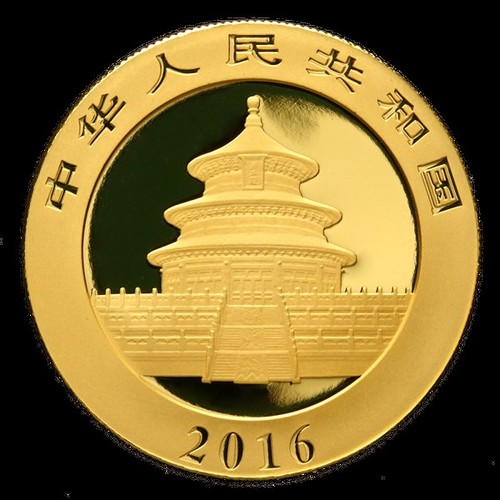
China Panda Gold Coin
A modern Chinese gold bullion coin with the Temple of Heaven on one side and a giant panda on the other; this 2016 issue is a 30-gram gold piece.
Bullion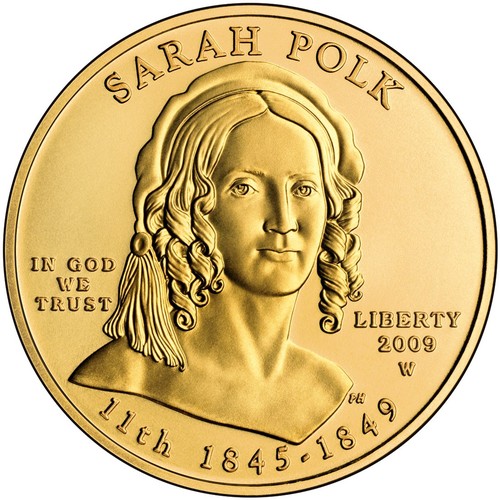
First Spouse Gold Coin (Alice Paul)
A 2012 half-ounce 24-karat gold coin from the U.S. Mint's First Spouse series honoring suffragist Alice Paul and the woman-suffrage movement.
Commemorative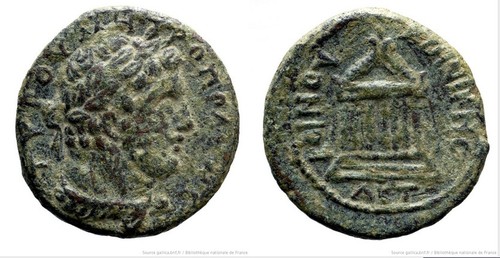
Bronze Coin of Septimius Severus (Tyre)
Roman provincial bronze struck at Tyre (Phoenicia) under Septimius Severus, 193-211 AD, with the emperor's bust on the obverse and a temple or deity reverse.
Ancient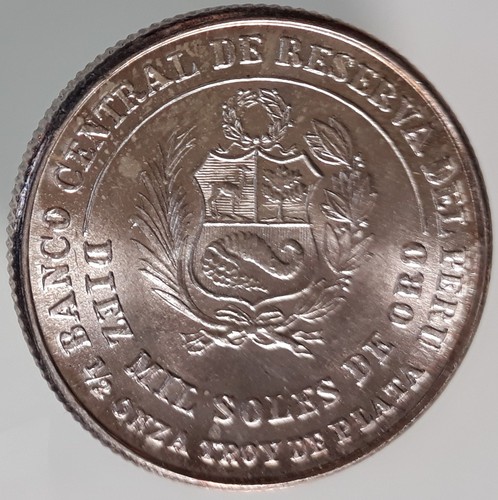
10,000 Soles de Oro
A large Peruvian silver coin of 10,000 soles de oro, its obverse bearing the national coat of arms with the vicuna, cinchona tree and cornucopia.
Circulation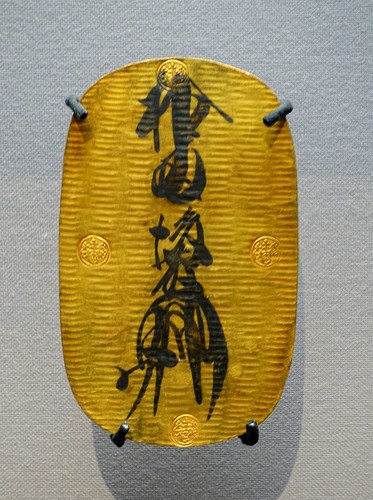
Keicho Oban
A large, thin oval Japanese gold oban of the Keicho era, hammer-marked with horizontal striations and bearing brush-inked ink signatures and paulownia crests.
Historic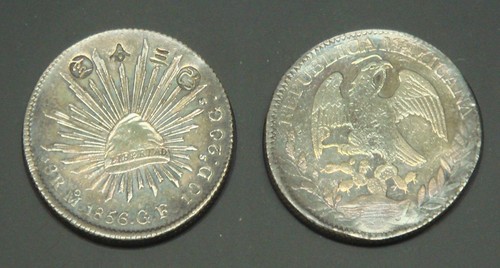
Aratame Sanbu Sadame
A round silver-colored coin with a coiled dragon and the inscription Aratame Sanbu Sadame on one face and a radiating sun on the other, dated 1859.
Historic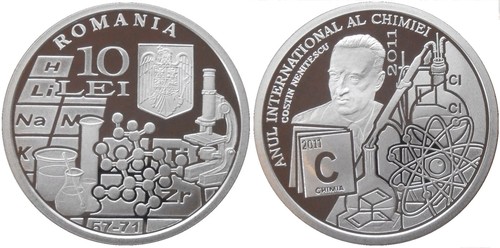
Romania International Year of Chemistry Commemorative
Romanian silver 10 lei commemorative dated 2011, issued for the International Year of Chemistry with molecular, laboratory and scientist imagery.
Commemorative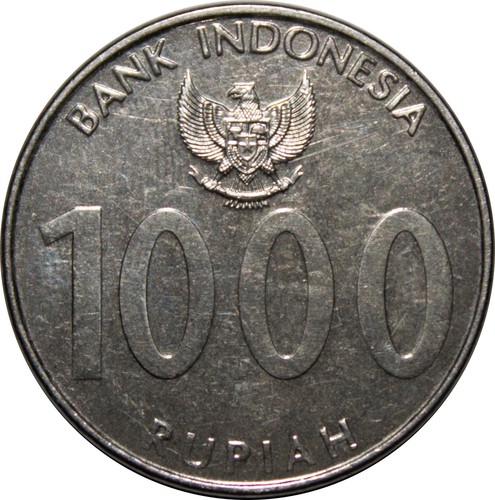
Indonesia 1000 Rupiah
A 2010 Indonesian 1000-rupiah circulation coin, its obverse bearing the Garuda Pancasila emblem and Bank Indonesia legend, its reverse a traditional monument design.
Southeast Asia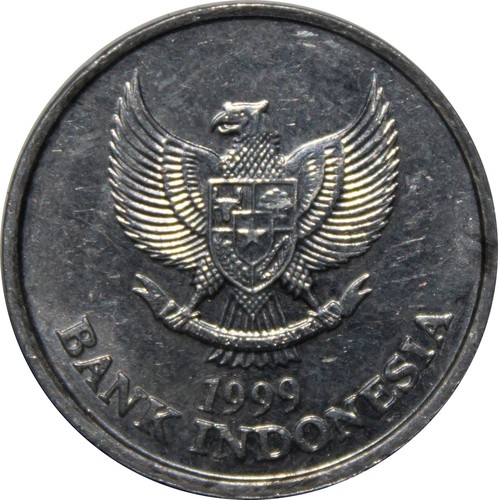
Indonesia 100 Rupiah
A modern lightweight aluminium 100 Rupiah of Indonesia, carrying the Garuda Pancasila national emblem, the BANK INDONESIA legend and the 100 denomination.
Southeast Asia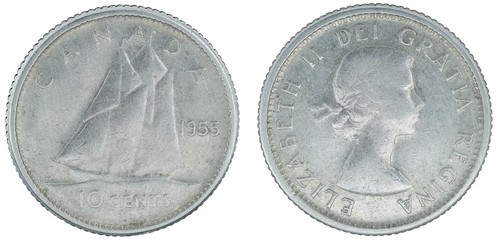
Canadian Ten Cents
Small silver Canadian dime with the Bluenose schooner reverse and an early Queen Elizabeth II portrait; the pictured coin is dated 1955.
Canadian & Provincial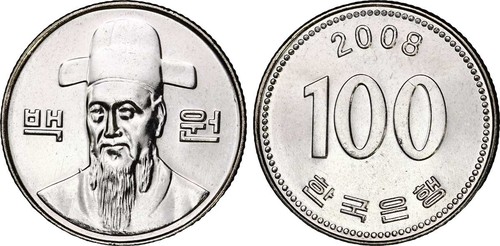
100 Won
South Korea's everyday nickel 100 won coin, showing Admiral Yi Sun-sin in his winged helmet on the obverse and a large numeral 100 on the reverse.
Circulation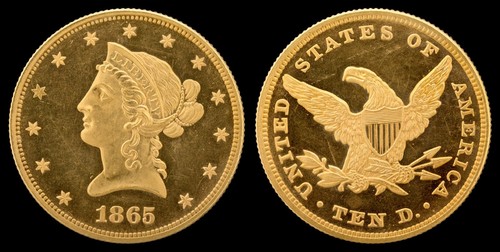
Liberty Head Eagle
A United States $10 gold coin struck 1838-1907, with Christian Gobrecht's coronet-crowned Liberty head and a shielded eagle. The example shown is dated 1839.
Eagle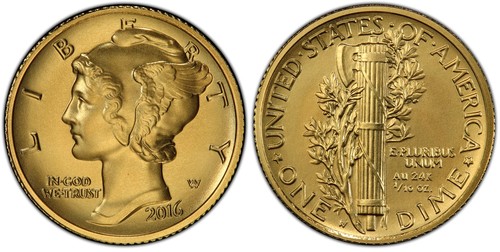
Mercury Dime Centennial Gold
A 2016-W gold collector coin marking the centennial of the 1916 Mercury dime, struck in 1/10 oz of 24-karat gold at West Point.
Dime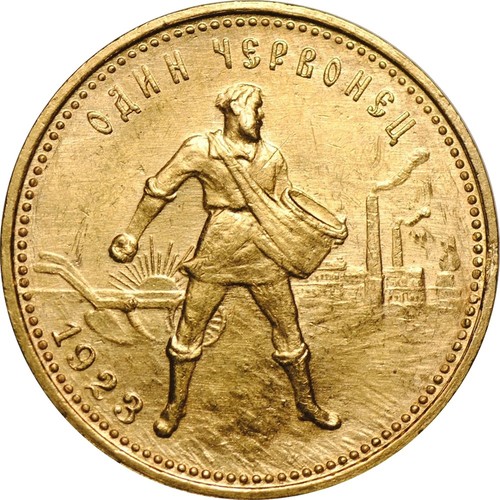
Gold Chervonets
Soviet gold coin of 1923 worth one chervonets (10 rubles), showing a peasant sowing before a rising sun and factories, with the Soviet state emblem.
World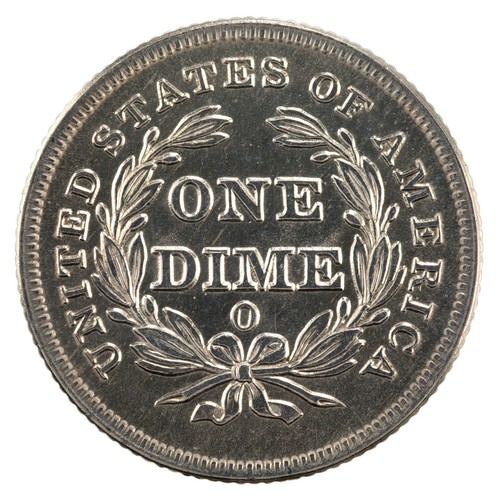
Seated Liberty Dime
A U.S. silver ten-cent coin showing Liberty seated with a pole and shield; the early No Stars type has a plain obverse and a laurel-wreath ONE DIME reverse.
Dime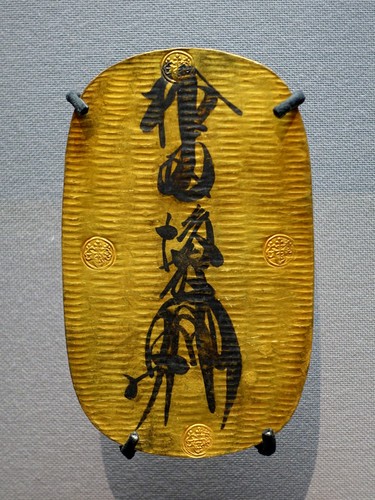
Keicho Koban
A thin oval Japanese gold coin worth one ryo, its surface covered in fine parallel striations with stamped cartouches and Goto mint marks.
Historic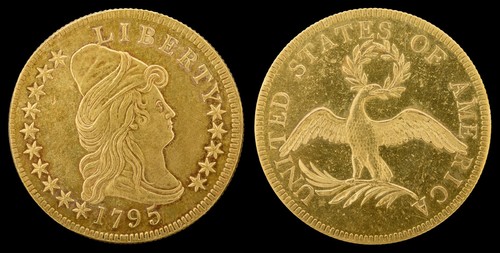
Turban Head Eagle
The first U.S. ten-dollar gold coin, struck 1795–1804, with a right-facing Liberty in a soft cap and an eagle reverse.
Eagle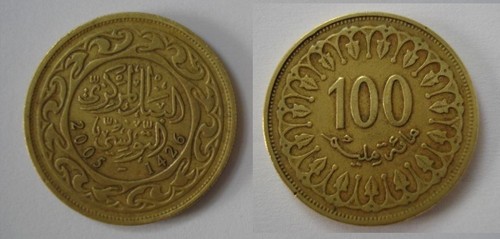
Tunisia 100 Millimes
A brass Tunisian coin worth 100 millimes, with flowing Arabic calligraphy inside an ornate border on one side and a large 100 on the other.
World