
Coin Encyclopedia
Search and identify coins from around the world — with country, denomination, metal, mint, history, and how to tell them apart.
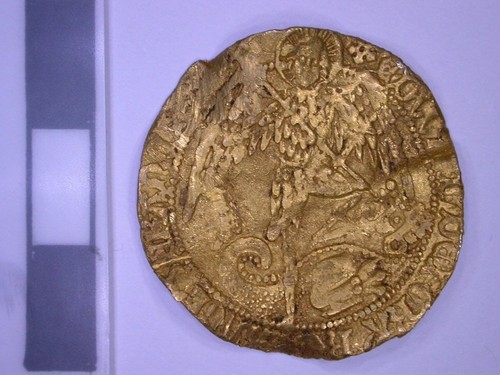
Edward V Angel
Gold angel struck in the brief 1483 reign of Edward V, showing Saint Michael the archangel spearing a demon, with a royal shield of arms on the reverse.
Medieval Coins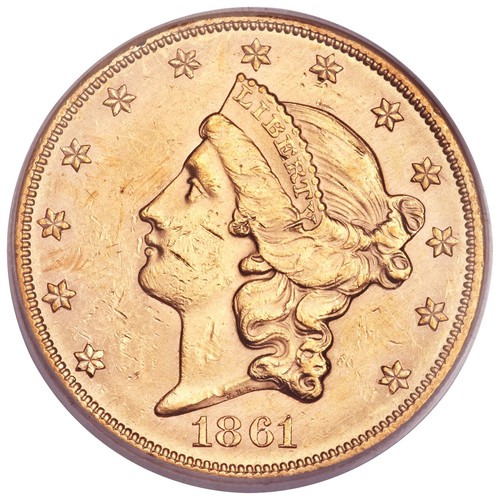
Paquet Double Eagle
An 1861 U.S. $20 gold piece with the standard Liberty Head obverse paired with Anthony Paquet's rare tall-letter reverse variety.
Gold Type Coin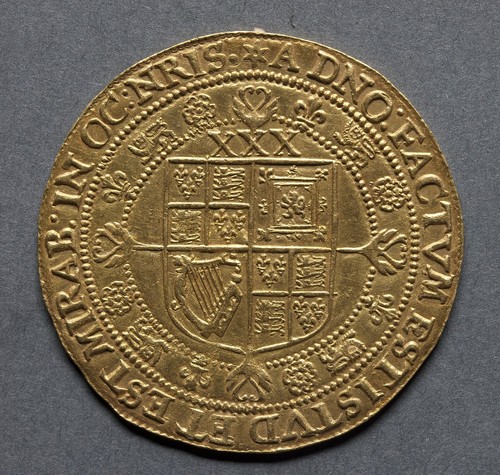
Edward IV Ryal
English medieval gold coin of Edward IV showing the king armored in a ship with a shield, and a radiant rose-on-sun design on the reverse.
Medieval Coins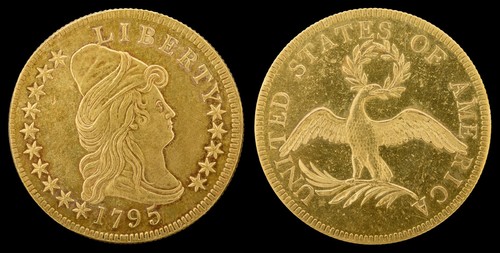
Turban Head Eagle
The first U.S. ten-dollar gold coin, struck 1795–1804, with a right-facing Liberty in a soft cap and an eagle reverse.
Eagle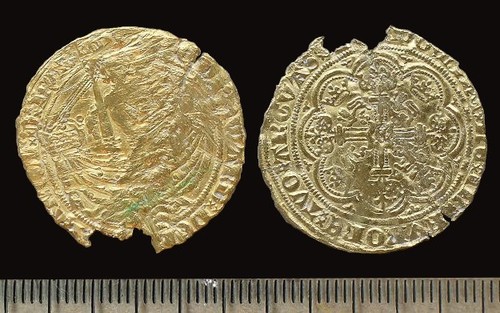
Edward III Half Noble
Medieval English gold coin worth half a noble, this example showing King Edward III crowned with heraldic devices and a shielded, ornamented reverse.
Medieval Coins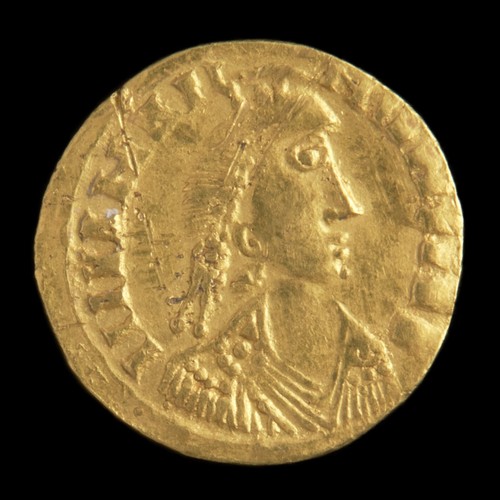
Solidus of Valentinian III
A gold solidus of the Western Roman emperor Valentinian III (AD 425-455), with his diademed profile and an imperial or military reverse.
Ancient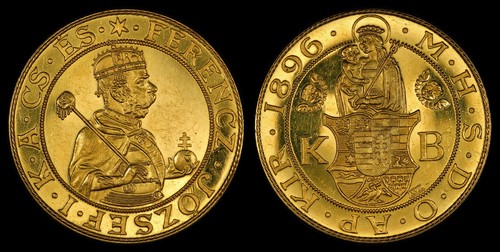
Hungarian 9 Ducats
A large gold multiple-ducat piece of Hungary dated 1896, showing a bearded crowned figure with sword and shield and the crowned Hungarian arms.
Bullion/gold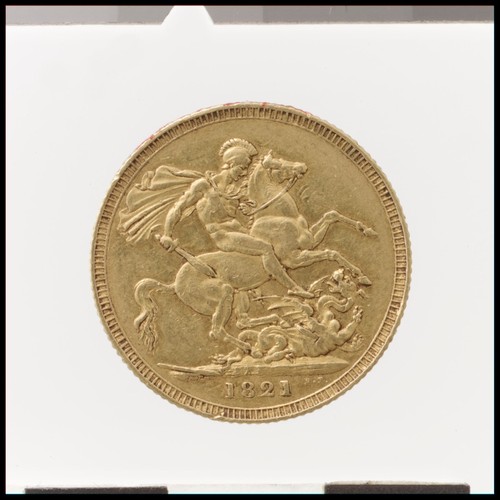
Sovereign of George IV
A milled gold sovereign of Great Britain struck under George IV, with the king's laureate head and Pistrucci's St George slaying the dragon reverse, dated 1821.
Milled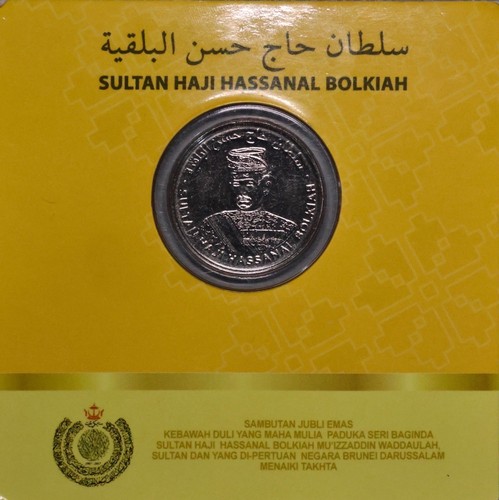
Brunei Golden Jubilee 50 Cents
A copper-nickel 50-cent coin from Brunei's 2017 Golden Jubilee, showing a palm-leaf design with Arabic text and a reverse with the value and a floral motif.
Southeast Asia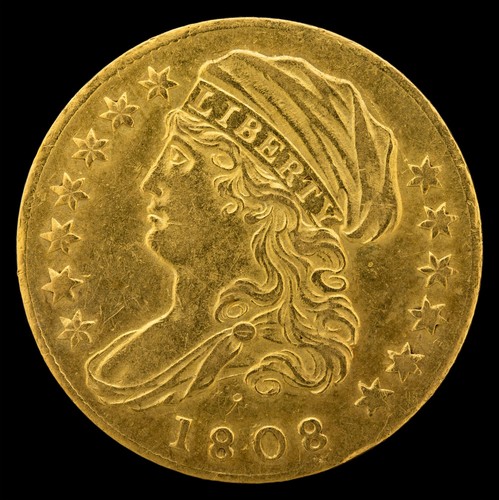
Capped Bust Quarter Eagle
A one-year U.S. gold $2.50 piece struck only in 1808, with John Reich's capped Liberty obverse and a heraldic eagle reverse. A classic rarity.
Quarter Eagle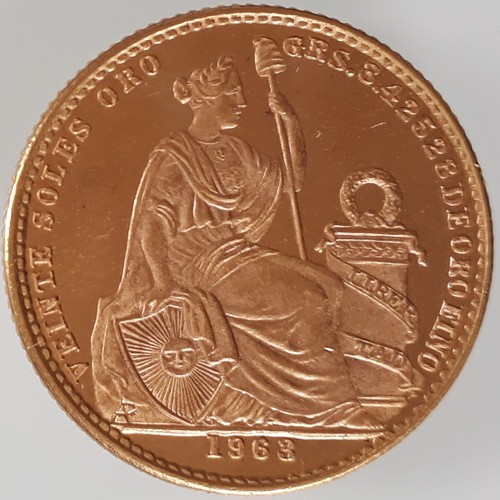
20 Soles de Oro
A Peruvian gold 20 soles de oro showing a seated Liberty with crown, torch and radiant sun, part of Peru's mid-20th-century gold coinage.
Circulation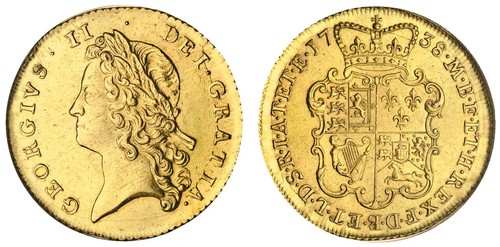
Two Guineas of George II
A large milled gold two-guinea piece of George II, with his left-facing laureate head and a crowned garnished shield of the royal arms; the pictured coin is dated 1738.
Milled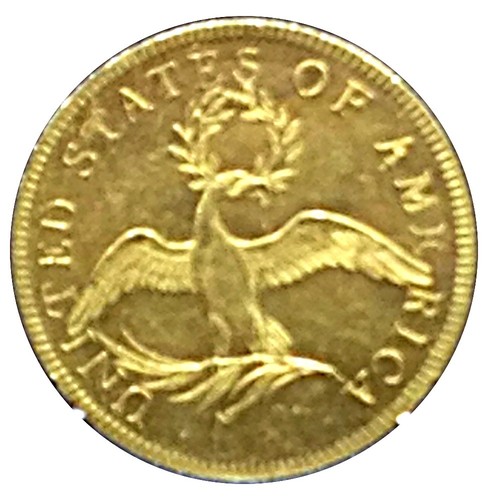
Capped Bust Eagle
The first United States gold ten-dollar coin, struck 1795–1804 with a capped Liberty bust and, in later years, a heraldic eagle bearing a shield and E PLURIBUS UNUM.
United States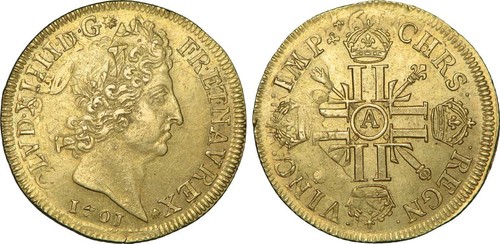
Double Louis d'Or
A large gold coin of Louis XIV dated 1701: the king's laureate profile and 'LUDOVICUS MAGNUS' obverse, an ornate cross of arms reverse.
Royal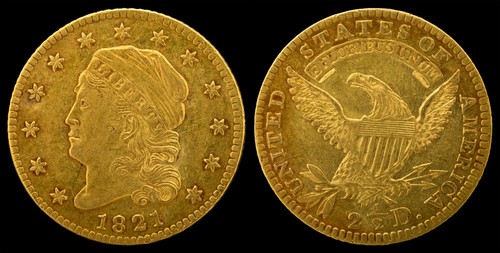
Capped Head Quarter Eagle
A rare early U.S. $2.50 gold coin struck 1821–1834, showing a left-facing capped Liberty head amid stars and a heraldic eagle with shield and E PLURIBUS UNUM.
United States
Escudo (Joanna and Charles V, contemporary copy)
A contemporary gilded copper-alloy copy imitating a Spanish gold escudo of Joanna and Charles V, made to pass as the real Habsburg gold coin.
Early Modern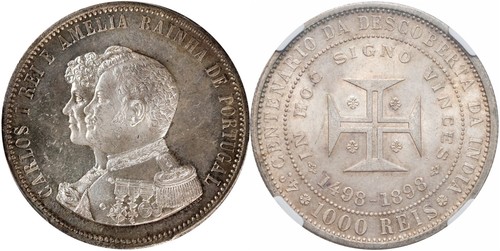
1000 Reis (Discovery of India)
A late Kingdom of Portugal 1000 Reis of the Carlos I period, showing a king's right-facing profile and the crowned Portuguese royal arms on the reverse.
Modern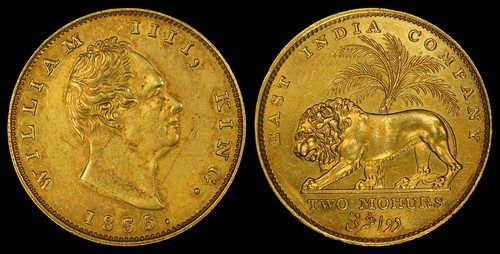
East India Company Two Mohurs
An 1835 East India Company gold two mohurs, showing William IV facing left and a lion before a palm tree above 'TWO MOHURS'.
British India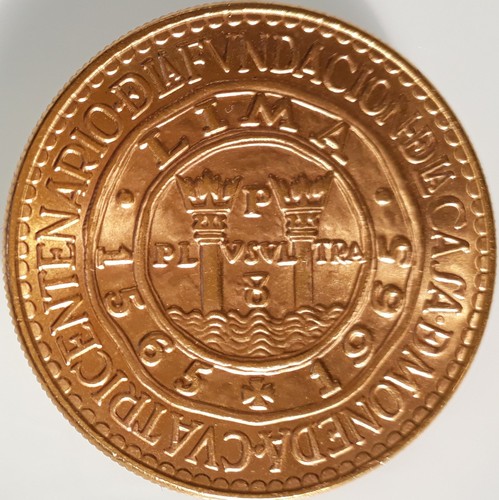
100 Soles de Oro
Peru's largest gold Sol de Oro—a heavy .900 gold coin of the Lima Mint. This reverse-only 1965 example shows a fortress emblem and CASA DE MONEDA DE LIMA.
Circulation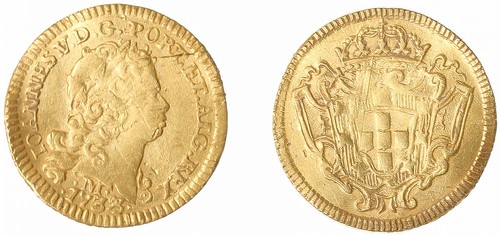
Half Escudo (800 Reis) of Joao V
A small Portuguese gold coin of King Joao V, valued at half an escudo (800 reis), with his laureate bust and a crowned Portuguese shield.
Colonial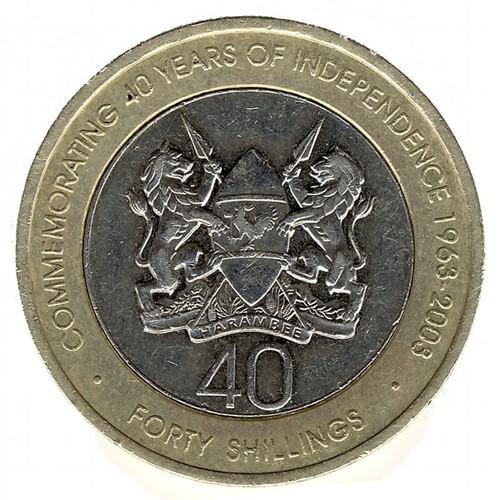
Kenya 40 Shillings
A bimetallic Kenyan commemorative coin denominated 40 shillings, pairing a presidential portrait with the national coat of arms.
World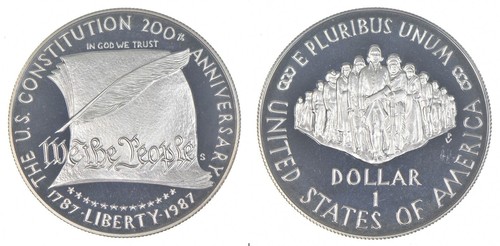
U.S. Constitution Bicentennial Silver Dollar
A 1987 U.S. Mint 90% silver commemorative dollar marking the 200th anniversary of the Constitution, with a quill-pen obverse.
Modern Commemorative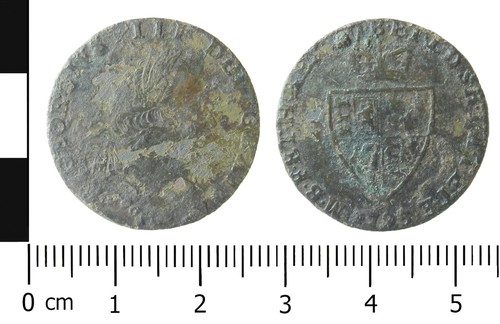
Counterfeit Guinea
A base-metal (copper or brass) imitation of a George III gold guinea, struck or cast to deceive, showing a right-facing bust and a heraldic shield reverse.
Counterfeit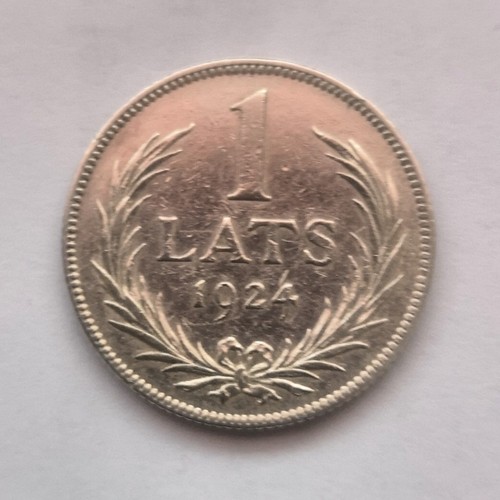
1 Lats (Christmas Bells)
Latvian 2012 commemorative 1 Lats showing Christmas bells with decorative ornament, paired with the national coat of arms on the obverse.
Commemorative