
Coin Encyclopedia
Search and identify coins from around the world — with country, denomination, metal, mint, history, and how to tell them apart.
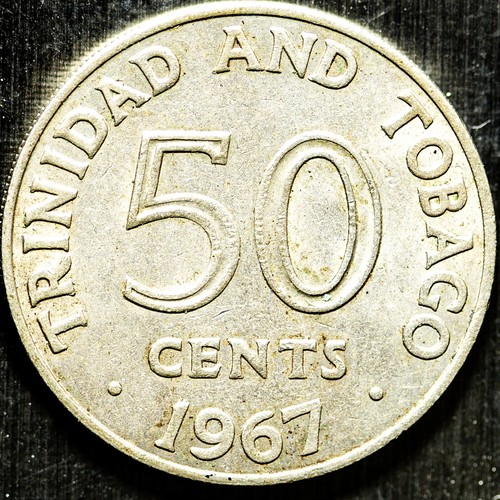
Trinidad and Tobago 50 Cents
A large copper-nickel Caribbean circulation coin; the 1967 example carries the national coat of arms and country name on the obverse and the 50-cent value on the reverse.
Circulation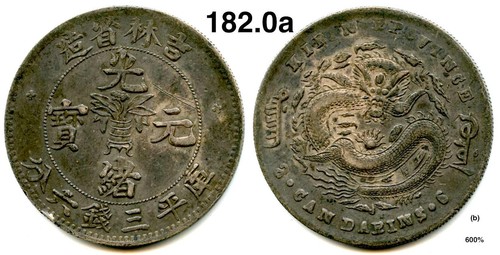
Guangxu Yuanbao 50 Cents
A Qing-dynasty silver half-dollar bearing the legend Guangxu Yuanbao and a coiled dragon, struck by Chinese provincial mints during the Guangxu Emperor's reign.
Circulation
Canadian 50 Cents
Canada's mid-century silver 50-cent piece bearing King George VI, struck in 80% silver with the Canadian coat of arms.
World Coins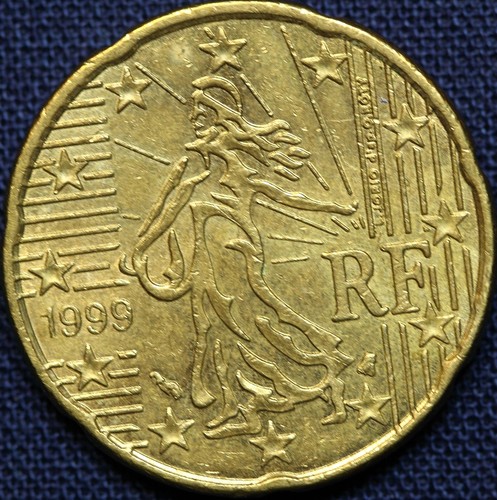
France 50 Cent Euro
France's gold-coloured 50 euro cent coin, showing the striding Sower (Marianne) among the EU stars on one side and the value 50 on the other.
Circulation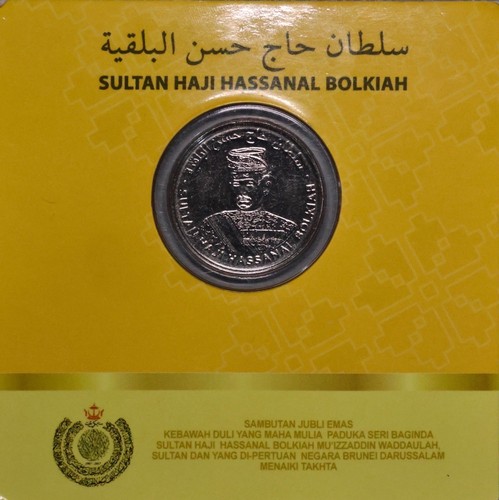
Brunei Golden Jubilee 50 Cents
A copper-nickel 50-cent coin from Brunei's 2017 Golden Jubilee, showing a palm-leaf design with Arabic text and a reverse with the value and a floral motif.
Southeast Asia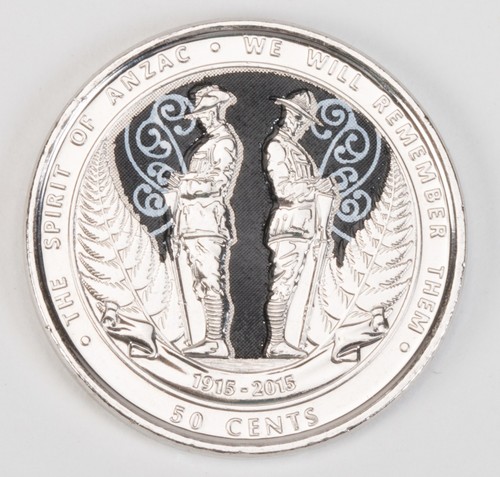
Spirit of ANZAC Commemorative 50 Cents
A 2015 Australian silver-finish 50-cent commemorative marking the centenary of ANZAC, with soldier imagery and 1915-2015 dating.
Commemoratives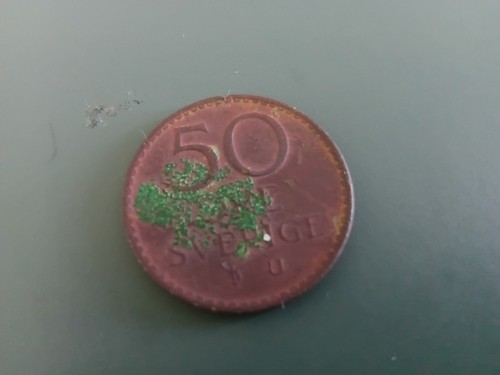
50 Öre (Silver)
A small Swedish silver 50 ore of the Oscar II era, dated 1898, with the value and date in a laurel wreath on one side and the crowned Swedish arms on the other.
Modern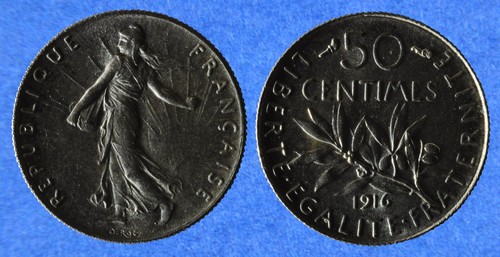
50 Centimes Semeuse
A small silver French 50 centimes with Roty's striding Semeuse (sower) on the obverse and the value within the national motto on the reverse.
Circulation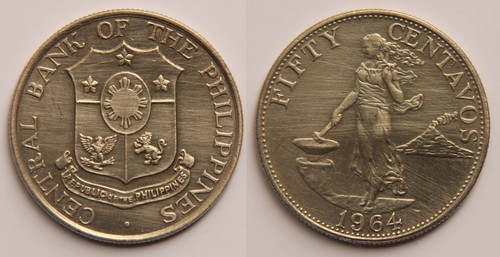
Philippines 50 Centavos
A 1960s Philippine 50-centavos coin in copper-nickel, its obverse showing an allegorical woman with a torch and its reverse the national coat of arms.
Southeast Asia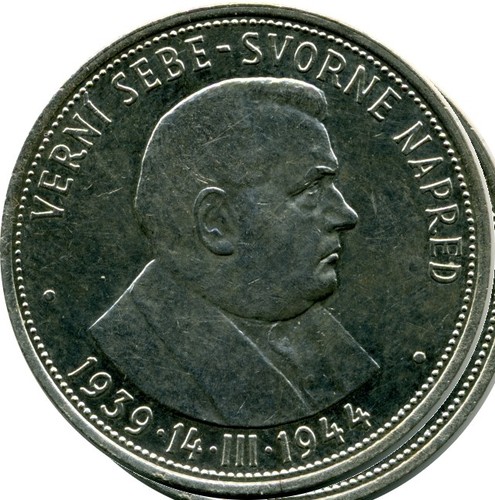
50 Korun
A 1944 silver 50 korun of the wartime Slovak State, showing the profile of Jozef Tiso and a shield with a double cross, struck for the state's fifth anniversary.
Modern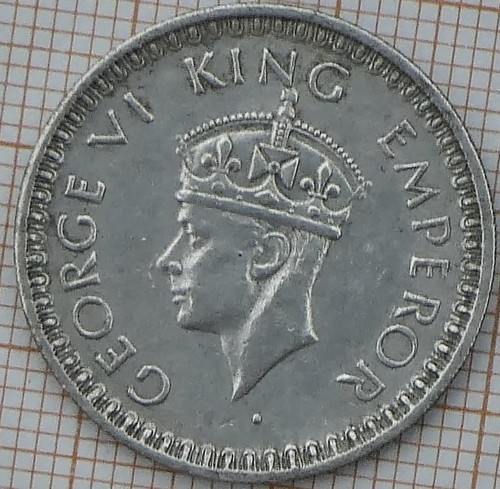
India 50 Paise
A George VI half-rupee of British India dated 1946 — the pale nickel-brass ancestor of the modern 50 paise, with a crowned royal bust and a rampant lion reverse.
Modern India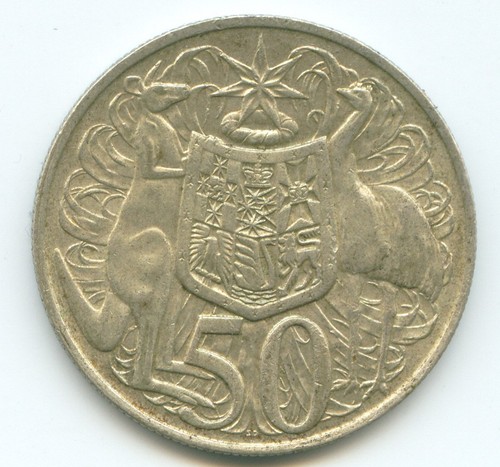
Australian Fifty Cents
Australia's 50 cent coin bearing the national coat of arms. The 1966 round issue shown here was struck in silver; later 12-sided coins are cupronickel.
Australian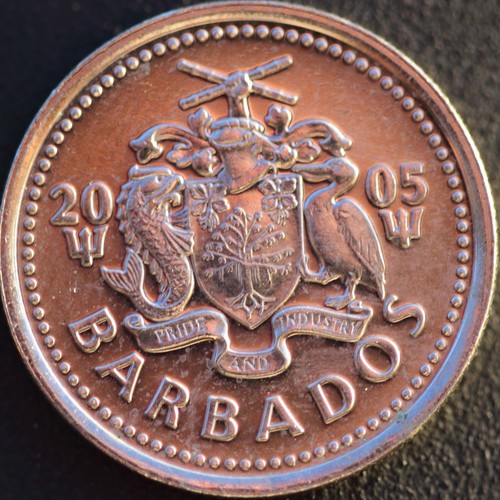
Barbados 10 Cents
A small copper-nickel Barbadian 10-cent coin showing the national coat of arms on one side and the value and country name on the other.
Circulation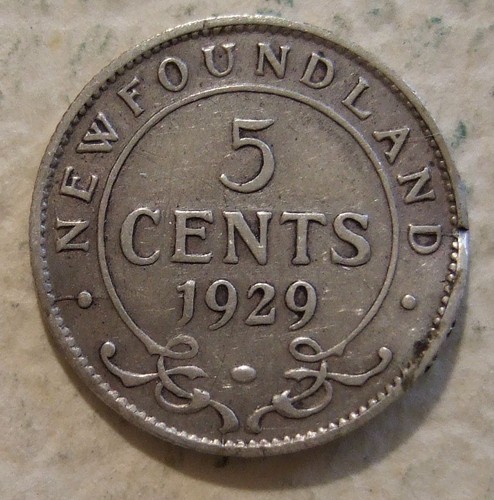
Newfoundland Five Cents
Tiny sterling-silver 5-cent piece of the Dominion of Newfoundland; the 1929 issue bears King George V and a crowned denomination reverse.
Canadian & Provincial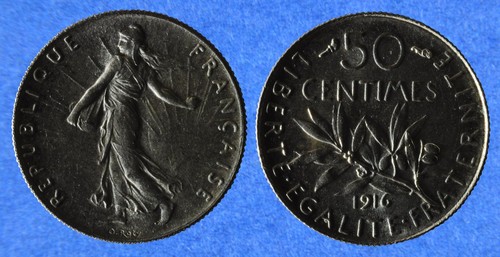
French Semeuse 50 Centimes
A small French silver coin showing the striding Semeuse (Sower) with a liberty cap; the reverse frames the value 50 CENTIMES in an oak-and-olive wreath.
Circulation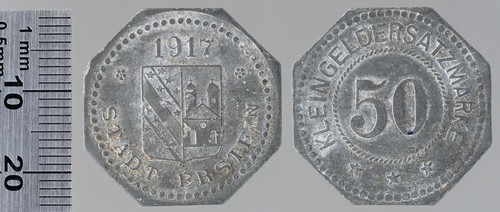
Erstein Notgeld 50 Pfennigs
A 1917 German emergency-money token for 50 Pfennigs from Erstein in Alsace, with the town coat of arms on the obverse and a large 50 on the reverse.
Token/notgeld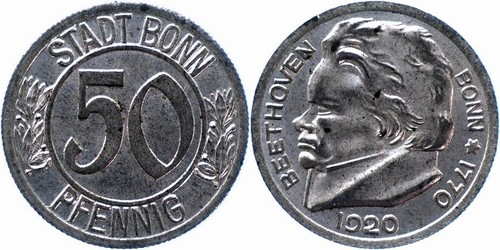
Bonn Notgeld 50 Pfennig
A German emergency-money (Notgeld) 50 Pfennig of the city of Bonn, dated 1920, with the civic arms on the obverse and a Beethoven profile on the reverse.
Token/notgeld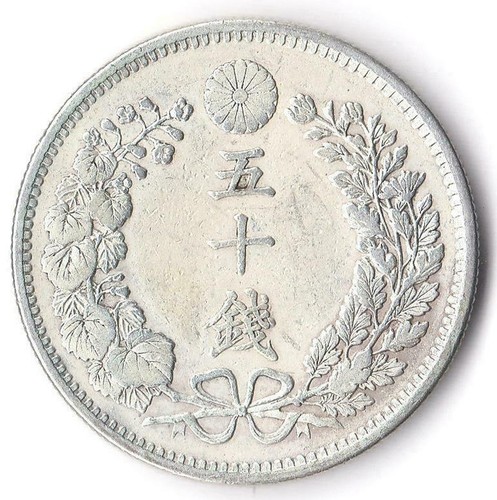
50 Sen (Dragon Type)
A Meiji-era Japanese silver 50 sen: a coiled dragon on one face, a sunburst-and-wreath value design on the other, dated Meiji 4 (1871).
Circulation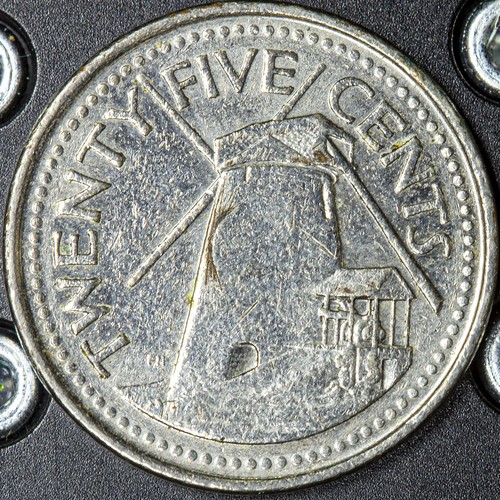
Barbados 25 Cents
A copper-nickel Caribbean circulation coin of Barbados; the 1998 example shows the national coat of arms on the obverse and the 25-cent value on the reverse.
Circulation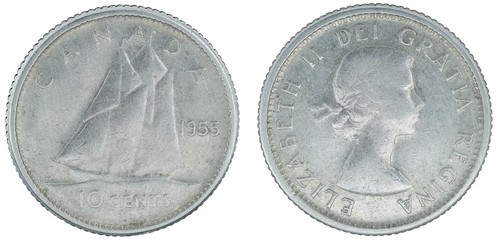
Canadian Ten Cents
Small silver Canadian dime with the Bluenose schooner reverse and an early Queen Elizabeth II portrait; the pictured coin is dated 1955.
Canadian & Provincial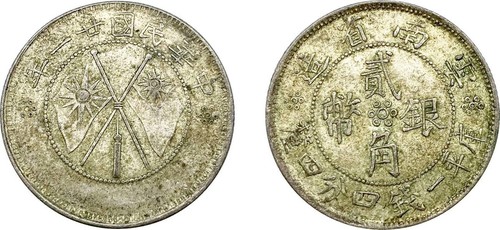
Yunnan 20 Cents
A 1932 provincial silver 20 Cents from Yunnan, China, with a radiant sun and rays on one face and central Chinese value characters framed by ornament on the other.
Circulation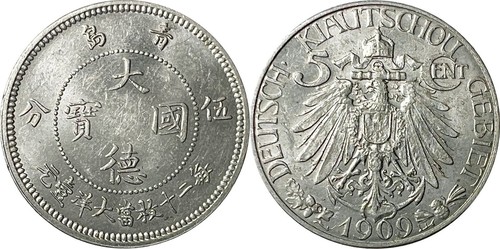
Kiautschou 5 Cents
A 1909 nickel 5 Cent coin of the German-leased Kiautschou Bay territory in China, pairing Chinese characters with the German imperial eagle.
Colonial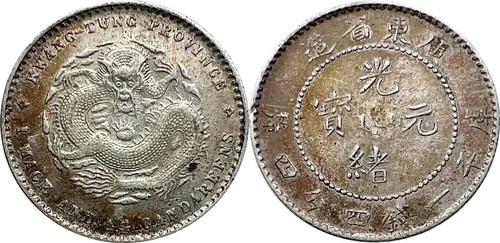
Guangdong 20 Cents
A silver 20-cent coin of Kwangtung (Guangdong) province, struck under the Guangxu Emperor with a coiled dragon on one side and Chinese legends on the other.
Circulation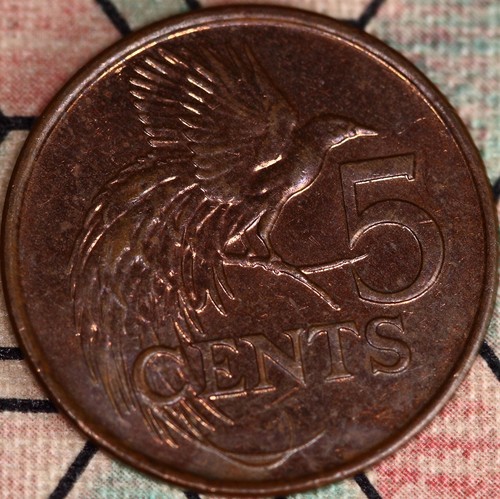
Trinidad and Tobago 5 Cents
A bronze five-cent coin of Trinidad and Tobago showing a perched bird — the Greater Bird of Paradise, often mistaken for a parrot — with FIVE CENTS on the reverse.
Circulation