
Coin Encyclopedia
Search and identify coins from around the world — with country, denomination, metal, mint, history, and how to tell them apart.
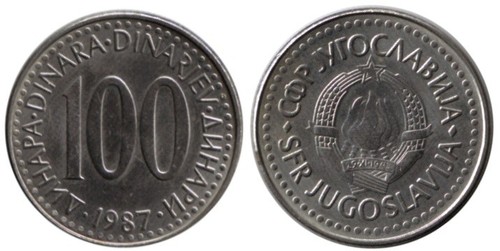
100 Dinara
A copper-nickel 100 Dinara circulation coin of socialist Yugoslavia dated 1987, with a big numeral 100 on one face and the Yugoslav state emblem on the other.
Modern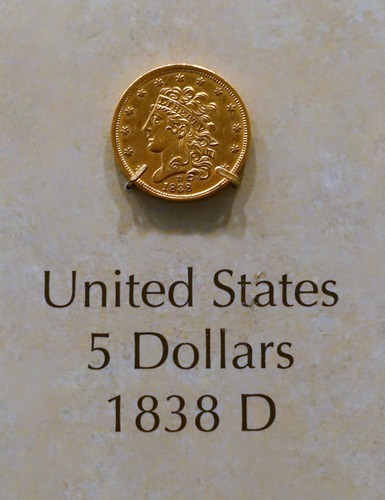
Liberty Head Half Eagle
United States $5 gold coin with a left-facing Liberty head ringed by stars and a spread-winged eagle reverse; the pictured piece is dated 1838.
United States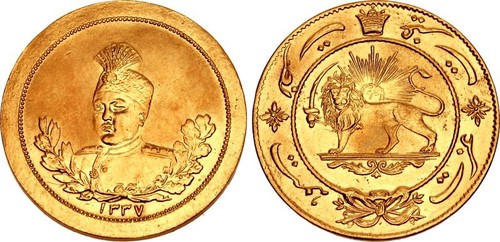
Qajar 5 Tomans Commemorative
A late Qajar gold 5 Tomans of Persia showing Ahmad Shah Qajar in a laurel wreath and the national Lion emblem, dated 1299.
Persia / Iran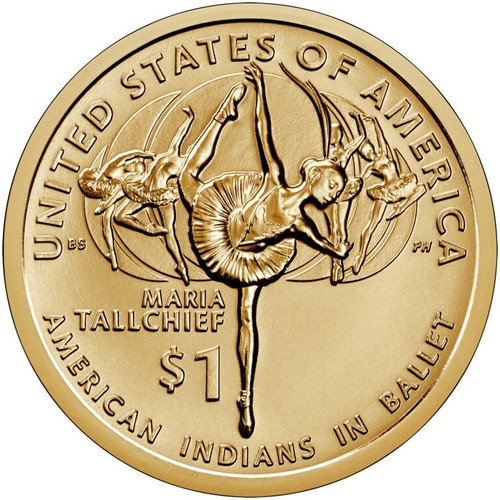
Native American Dollar - Tallchief
2023 Native American $1 Coin whose reverse honors Maria Tallchief and the five Osage ballerinas, struck in golden manganese brass.
Dollar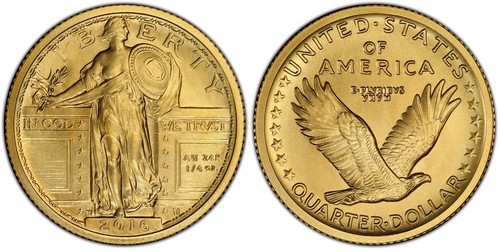
Standing Liberty Quarter Centennial Gold
A 2016 U.S. quarter-dollar struck in 1/4 oz of .9999 fine gold, reviving Hermon MacNeil's Standing Liberty design for its 100th anniversary.
Quarter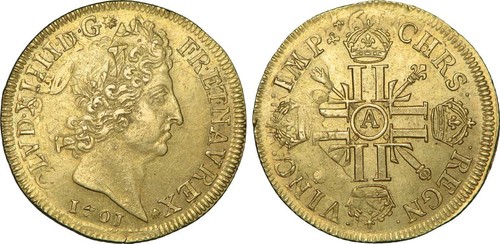
Double Louis d'Or
A large gold coin of Louis XIV dated 1701: the king's laureate profile and 'LUDOVICUS MAGNUS' obverse, an ornate cross of arms reverse.
Royal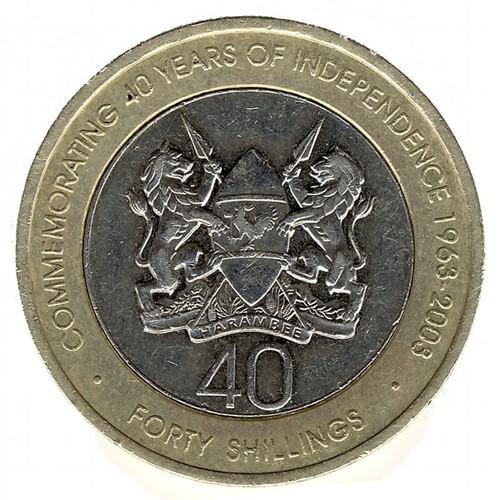
Kenya 40 Shillings
A bimetallic Kenyan commemorative coin denominated 40 shillings, pairing a presidential portrait with the national coat of arms.
World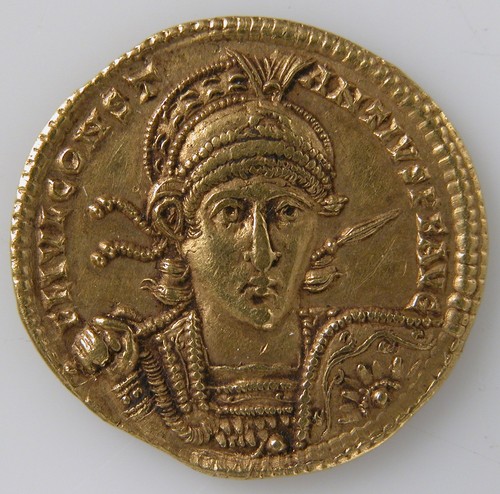
Solidus of Constantius II
Late Roman gold solidus of Emperor Constantius II (337-361 AD), showing his diademed bust facing right paired with a seated-figure reverse.
Ancient Coins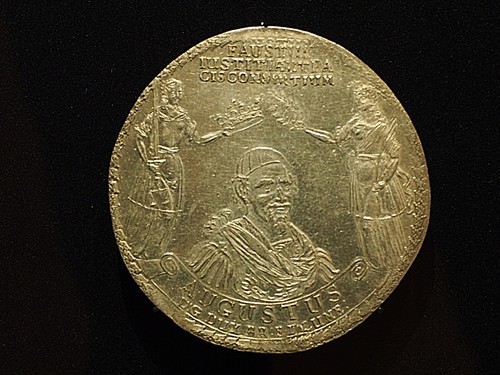
Schaummünze 4 Thaler
A silver Schaummünze struck to a 4-Thaler weight, dated 1666, with elaborate heraldic and figural imagery referencing August der Jüngere.
Medal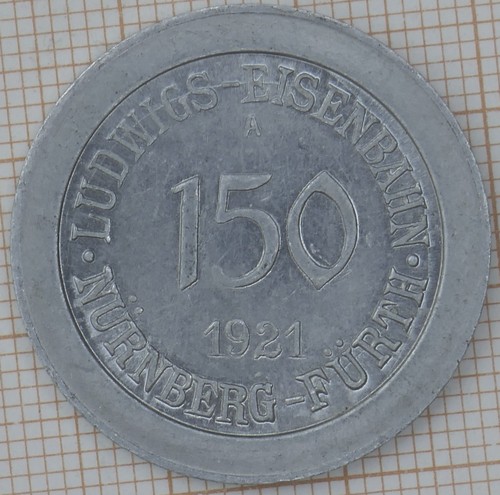
Ludwigs-Eisenbahn Nürnberg-Fürth 150 Pfennig
A 1921 German emergency-money 150 Pfennig piece from Nürnberg-Fürth, struck in zinc-iron and showing an ornamental Kunstbrunnen fountain monument.
Token/notgeld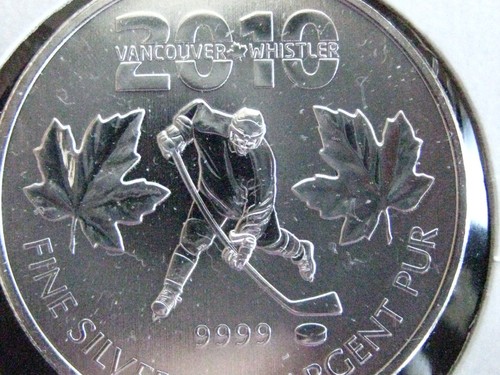
Olympic Hockey Commemorative Dollar
Silver-colored commemorative dollar for the 2010 Vancouver Winter Olympics, showing an ice hockey player, maple leaves, and the Olympic rings.
Canadian & Provincial
Canadian 50 Cents
Canada's mid-century silver 50-cent piece bearing King George VI, struck in 80% silver with the Canadian coat of arms.
World Coins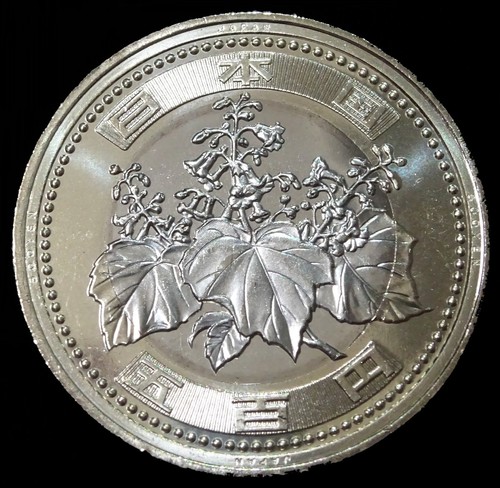
500 Yen Bicolor Clad
Japan's large two-tone 500 yen circulation coin, with a floral blossom design and pearl-like beading on one face and bold value numerals on the other.
Circulation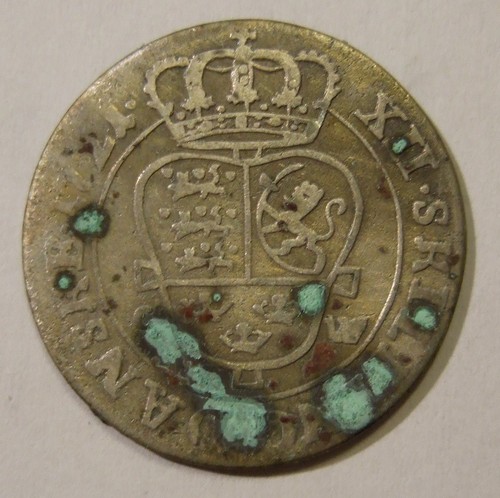
12 Skilling
An early-modern Danish 12 skilling dated 1721, showing a crowned shield with a lion on one face and ornamental legend and value on the other.
Early Modern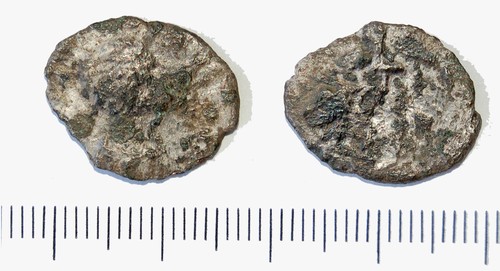
Denarius of Faustina the Elder
A silver Roman denarius honoring Faustina the Elder, wife of Antoninus Pius, with her draped bust and a seated Fortuna reverse, struck c. 141–161 AD.
Ancient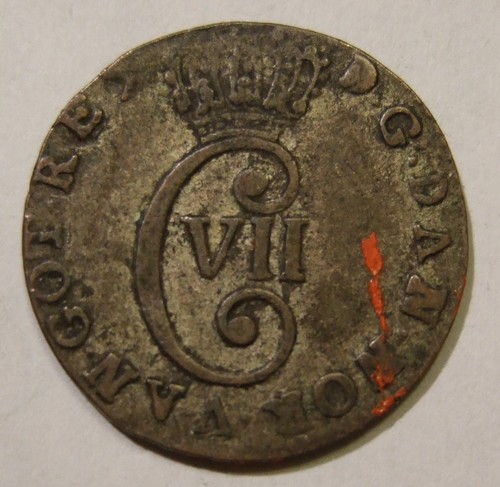
4 Skilling
A Danish copper 4 skilling of 1783, with a crown above a numeral on one face and an ornamental circular pattern framing the date on the other.
Early Modern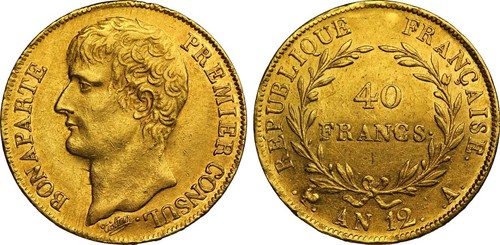
French 40 Francs Gold (Napoleon I)
A large early French gold coin showing Napoleon Bonaparte's left-facing profile and a wreathed reverse, struck in the opening years of his rule.
Bullion/gold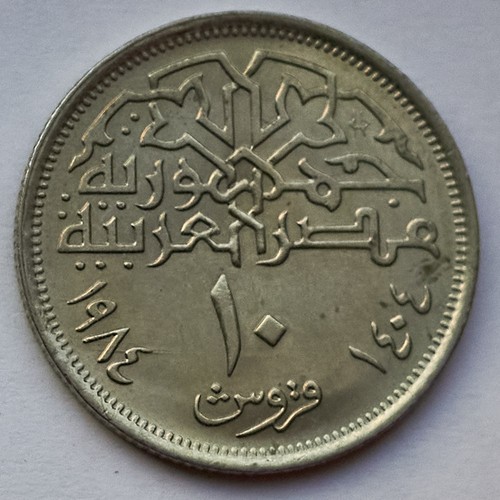
Egyptian 10 Piastres Commemorative
A cupro-nickel Egyptian 10 piastres commemorative dated 1984, showing a domed mosque on one face and Arabic legends throughout.
World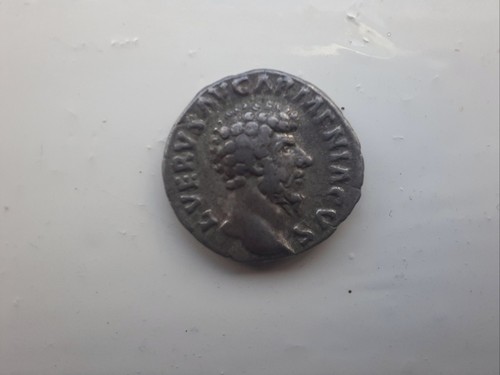
Denarius of Lucius Verus
A silver Roman denarius of the emperor Lucius Verus (161–169 AD), showing his curly-haired, bearded portrait facing right with a Latin legend.
Ancient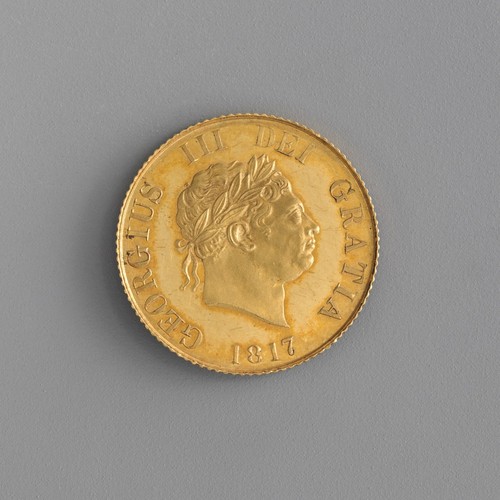
Half Sovereign of George III
British 22-carat gold half sovereign of George III, introduced in 1817 with a laureate bust and a crowned shield of arms; face value ten shillings.
Milled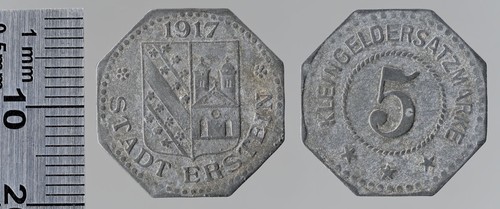
Erstein Notgeld 5 Pfennigs
A World War I emergency small-change coin issued by the town of Erstein in 1917, with the civic coat of arms on one side and a large 5 on the other.
Token/notgeld
India Half Rupee (Copper)
Copper coin bearing a lion design with the English legend 'HALF RUPEE INDIA' and the date 1947, dated to the year of Indian independence.
Modern India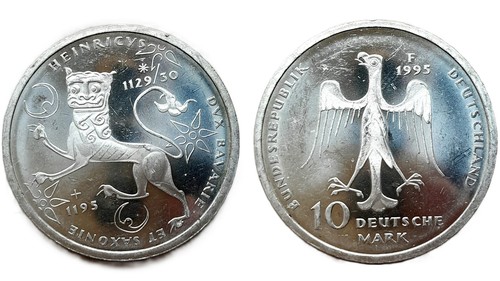
German 10 Deutsche Mark Commemorative
A West/unified German silver 10 Deutsche Mark commemorative; this 1995 issue honors Heinrich der Loewe (Henry the Lion) with the Federal Eagle reverse.
Commemorative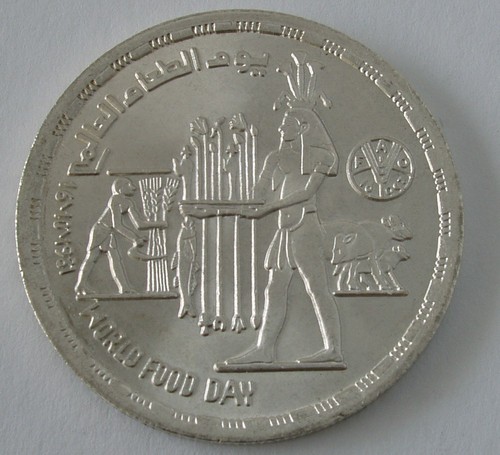
Egyptian 1 Pound
An Egyptian cupro-nickel 1 Pound commemorative marking World Food Day 1981, its reverse showing standing figures with wheat sheaves.
World