
Egyptian 1 Pound
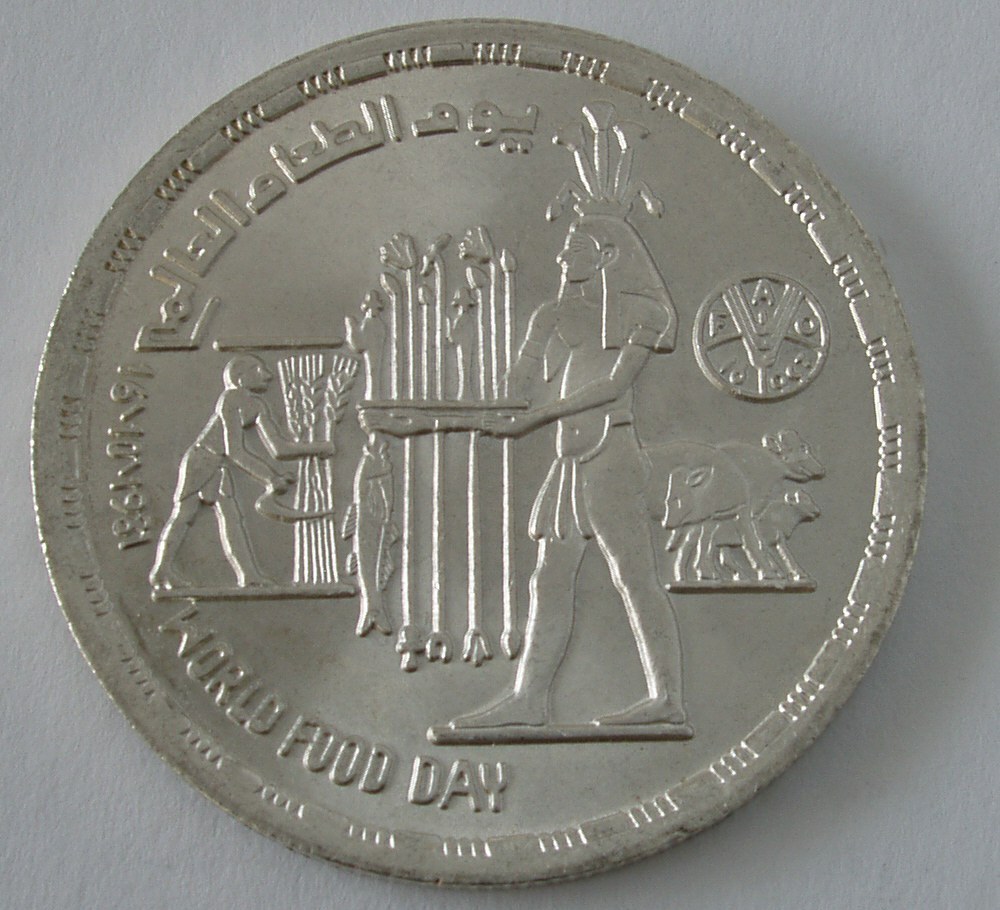
An Egyptian cupro-nickel 1 Pound commemorative marking World Food Day 1981, its reverse showing standing figures with wheat sheaves.
- Country
- Egypt
- Denomination
- 1 Pound
- Metal
- Cupro-nickel
Got a coin like this?
Identify any coin from a photo, free.
Overview
This is an Egyptian 1 Pound coin struck in cupro-nickel to mark World Food Day in 1981. It belongs to a series of commemorative Egyptian issues tied to the United Nations and the Food and Agriculture Organization (FAO), whose coin-programs encouraged member states to release pieces on agricultural and food-security themes.
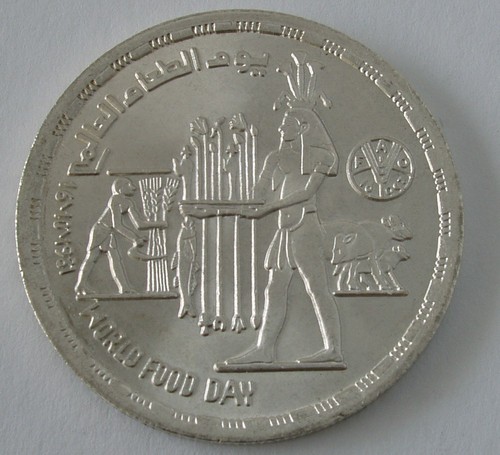
The reverse seen here carries the English inscription 'WORLD FOOD DAY' together with standing human figures and sheaves of wheat, an agricultural motif chosen to reflect the day's focus on farming and nutrition. The obverse (not shown in these photos) follows the usual Egyptian pattern of Arabic legends giving the country name, the denomination, and the dual date in both the Islamic (Hijri) and Gregorian calendars.
As a base-metal commemorative rather than a heavily circulated everyday coin, it was made in part for collectors and for marking the occasion, and it survives today mainly in collector hands rather than worn from daily use.
History & Background
During the 1970s and 1980s Egypt issued a steady stream of commemorative pounds and smaller denominations honoring anniversaries, institutions, and international campaigns. World Food Day, observed on 16 October and promoted by the FAO from 1981 onward, prompted commemorative coins in numerous countries, and Egypt participated with issues dated 1981 / AH 1401.
Egyptian commemoratives of this era were struck in several metals. Silver versions of the 1 Pound were produced for premium collector sale, while cupro-nickel pieces such as this one offered a lower-cost base-metal alternative on the same or related themes. The wheat-and-figures agricultural imagery ties the design directly to the food-security message the FAO programs were intended to spread.
Egypt's modern pound coinage sits within a currency reformed over the 20th century, and by the early 1980s the 1 Pound was the country's highest standard denomination, making it a natural choice for commemorative designs of this kind.
How to Identify
The quickest identifier on the reverse shown is the English legend 'WORLD FOOD DAY' paired with standing figures and wheat sheaves; this ties the coin to the 1981 FAO commemorative theme. The date 1981, usually accompanied by the Hijri year AH 1401, confirms the issue.
The obverse (not visible in these photographs) normally carries Arabic script naming the Arab Republic of Egypt and stating the value of one pound, again with the dual date. The coin is struck in cupro-nickel, so it shows a silvery-gray, non-magnetic base-metal surface rather than the brighter white and greater heft of a silver strike. Cupro-nickel examples are lighter and less lustrous than their silver counterparts.
Because Egypt released related commemoratives in silver as well, weight and metal are the key checks: a silver 1 Pound of this era is noticeably heavier and 'rings' differently, while the cupro-nickel piece is the base-metal version. Confirm the denomination from the Arabic obverse rather than assuming, since Egypt struck several denominations on similar agricultural themes.
Value & Collectibility
As a base-metal cupro-nickel commemorative, this 1 Pound is an affordable collector coin rather than a bullion piece. Typical examples change hands for modest sums, commonly in the low tens of dollars, with condition and eye appeal driving most of the difference.
Uncirculated, well-struck pieces with full detail and no spotting bring the higher end of that range, while worn or discolored examples sell for less. The parallel silver version of Egypt's early-1980s commemorative pounds is a separate, generally more valuable coin because of its precious-metal content, so the two should not be priced together.
Values shift with demand for FAO and world-commemorative material and with overall coin-market conditions, so treat any single figure as a general guide rather than a fixed price. Original packaging or certification, where present, can add a premium.
Frequently asked questions
What does the 'WORLD FOOD DAY' inscription mean?
It marks World Food Day, an international observance promoted by the UN Food and Agriculture Organization from 1981. Egypt, like several countries, issued commemorative coins on this food-security theme, using agricultural imagery such as wheat sheaves and working figures.
Is this coin made of silver?
This example is cupro-nickel, a base-metal alloy with a silvery-gray look but no precious-metal content. Egypt also struck silver versions of its early-1980s commemorative pounds, which are heavier and more valuable; check weight and metal to tell them apart.
What year is on the coin?
It is dated 1981, typically shown alongside the Islamic (Hijri) year AH 1401. Egyptian coins of this period commonly carry both the Gregorian and Hijri dates.
What is on the side not shown in these photos?
The obverse normally carries Arabic legends naming the Arab Republic of Egypt and stating the value of one pound, along with the dual date. The reverse shown here carries the World Food Day design.
Is it valuable?
As a cupro-nickel commemorative it is generally affordable, often trading in the low tens of dollars depending on condition. The related silver issues are worth more because of their metal content.
Egyptian 1 Pound guides
In-depth guides for identifying, valuing, and collecting Egyptian 1 Pound.
Other coins you may enjoy
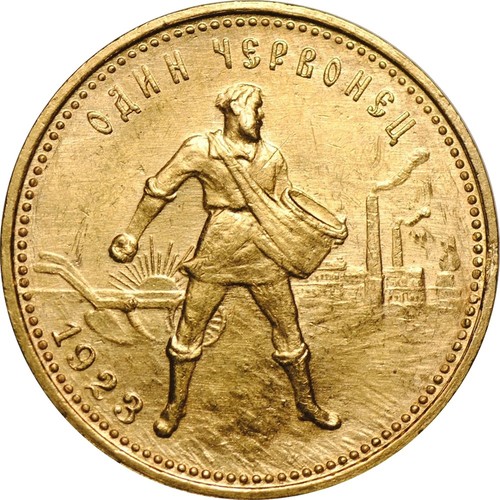
Gold Chervonets
1923
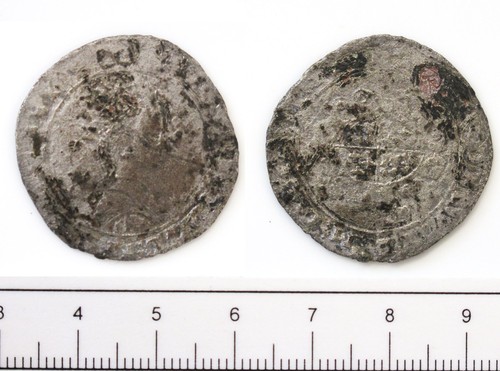
Shilling of Edward VI
1547–1553 (reign of Edward VI)
French Silver Franc
c. 1871–1920 (example dated 1899)
Ghana 20 Pesewas
1967
200 CFA Francs
2003–present
Tunisia 100 Millimes
1983–2005 (this brass type)
Israel Half Lira (25th Anniversary)
1973 (5733)
Israel 100 Sheqalim Hanukka Commemorative
1985
British West Africa 2 Shillings
1936–1952 (George VI type)
British Florin
Victorian issues c. 1849–1901 (example dated 1890)
Swiss 5 Francs
1888–1916 (this design)
North Yemen 1 Rial
1963 (AH 1382)