
Coin Encyclopedia
Search and identify coins from around the world — with country, denomination, metal, mint, history, and how to tell them apart.
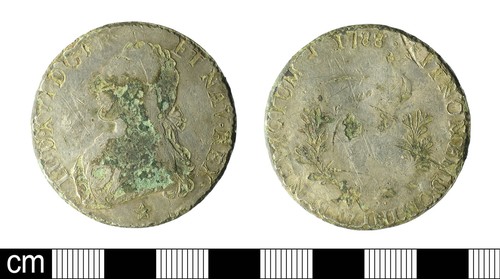
Contemporary Forgery of Louis XVI Ecu
A period-style counterfeit imitating a Louis XVI silver ecu: a copied royal portrait obverse and a copied standing-figure reverse dated about 1792.
Forgery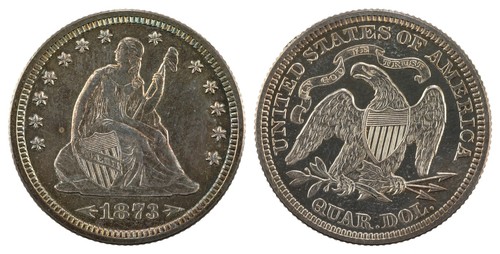
Seated Liberty Quarter
U.S. twenty-five-cent silver coin struck 1838–1891, showing Liberty seated with shield and staff on the obverse and a shield-breasted eagle on the reverse.
Quarter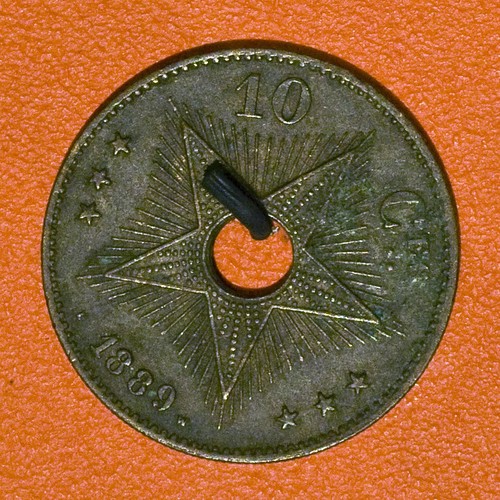
Congolese Commemorative Coin
An 1889 holed copper 10-centime coin of the Congo Free State, with a radiant five-pointed star, the value 10 C, and a ring of small stars.
World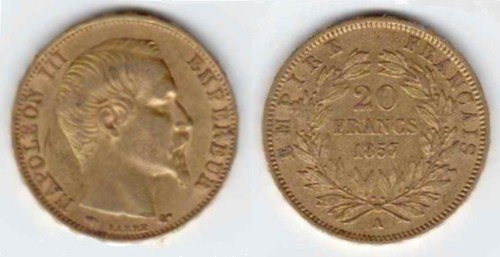
20 Francs Napoleon
A small 21 mm French gold coin bearing Napoleon III's profile and a wreathed 20 FRANCS reverse — the classic gold Napoleon, here dated 1857.
Bullion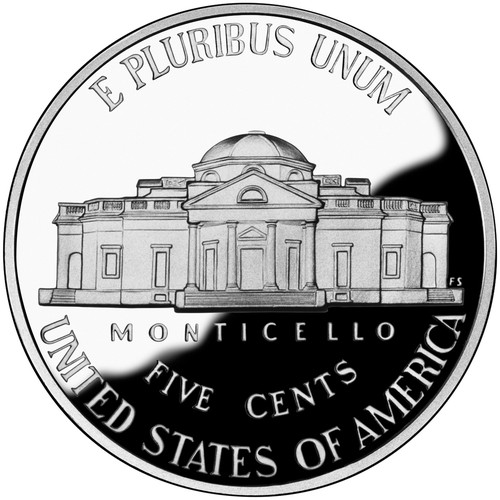
Jefferson Nickel
U.S. five-cent piece introduced in 1938, showing Thomas Jefferson on the obverse and his Monticello home on the reverse. 1942–1945 issues are 35% silver.
Nickel Five Cent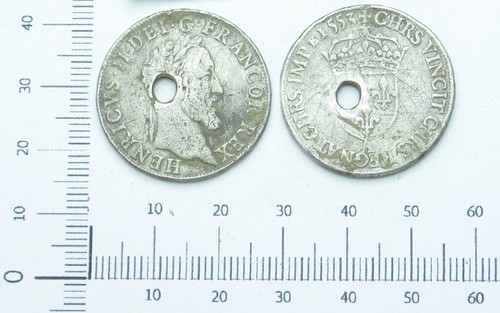
Teston of Henri II
A French Renaissance silver teston of Henri II (1547-1559): the king's realistic profile bust right, a crowned fleur-de-lis coat of arms on the reverse.
Renaissance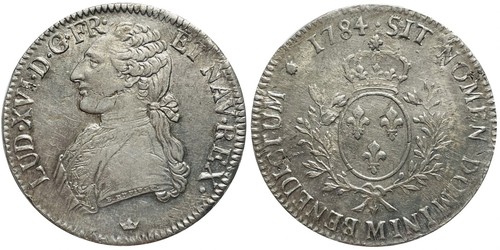
Ecu of Louis XVI
A large French silver ecu of Louis XVI dated 1784: left-facing royal bust obverse, crowned arms of France and Navarre framed by laurel on the reverse.
Royal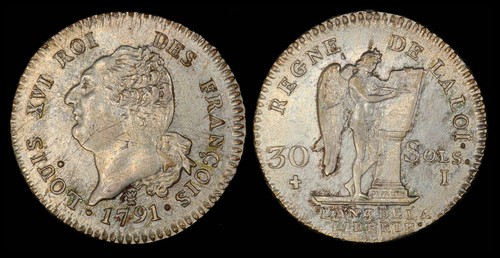
30 Sols (Half Ecu)
A French Revolutionary silver 30 sols of 1791: profile of Louis XVI as 'Roi des Francais' obverse, standing Liberty reverse dated 'L'An 4 de la Liberte'.
Revolutionary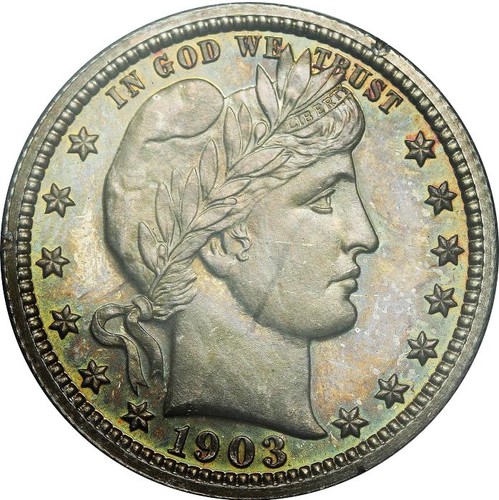
Barber Quarter
U.S. twenty-five-cent silver coin struck 1892–1916, with a left-facing Liberty head and a heraldic shield-eagle reverse.
Quarter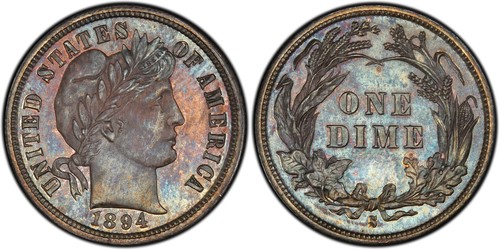
Barber Dime
U.S. ten-cent silver coin struck 1892–1916, showing a right-facing Liberty head and a wreath enclosing "ONE DIME" on the reverse.
Dime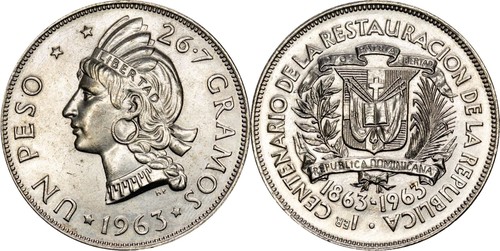
Restoration Anniversary Peso
A silver Dominican one-peso commemorative dated 1963, marking the centennial of the Restoration, with a Liberty head obverse and the national arms.
Commemorative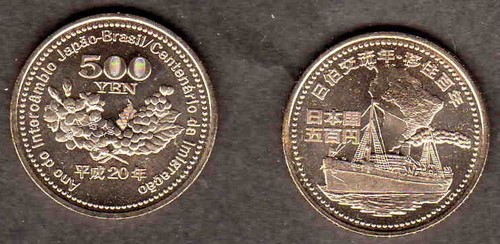
500 Yen Japanese Immigration Commemorative
A 2008 Japanese 500 yen commemorative marking 100 years of Japanese immigration to Brazil, with two figures on one side and a ship on the other.
Commemorative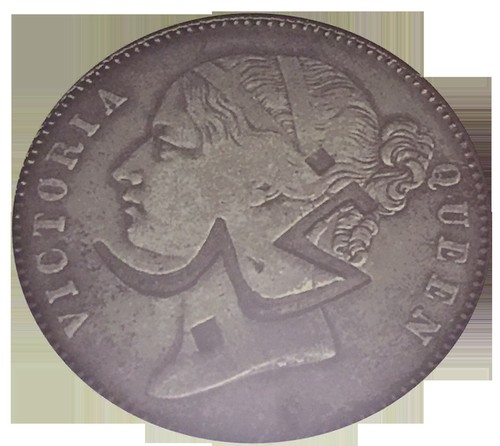
Najd Silver Coin
Silver trade coin catalogued to Najd, central Arabia, bearing a left-facing Victoria Queen bust and an 1862 date in the British India rupee style.
Arabia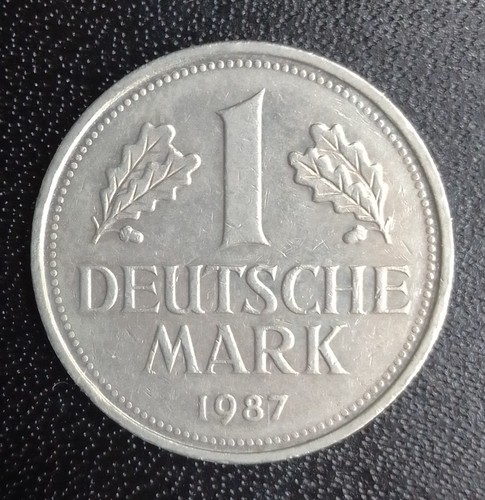
German 1 Deutsche Mark
The workhorse 1-Mark coin of West Germany and reunified Germany, showing a large numeral 1 framed by oak leaves and the words DEUTSCHE MARK.
Circulation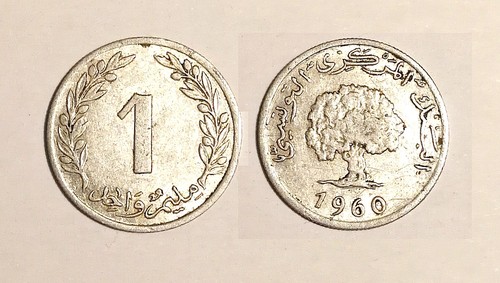
Tunisia 1 Millime
Tunisia's smallest post-independence coin, a tiny aluminum-bronze 1 millime of 1960 showing the value 1 framed by laurel and a numeral in profile.
World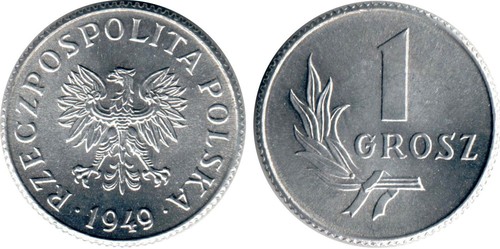
1 Grosz
A small 1949 Polish one-grosz coin bearing the crownless national eagle and RZECZPOSPOLITA POLSKA, with the value 1 GROSZ framed by grain on the reverse.
Modern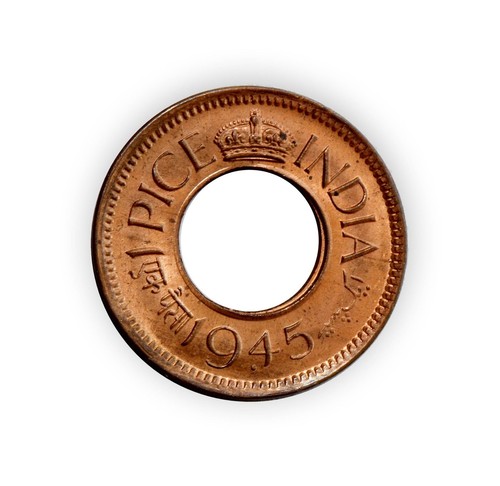
British India One Pice
A small holed copper-bronze One Pice of British India under George VI, dated 1945, its obverse crowned and lettered INDIA and PICE around a central hole.
British India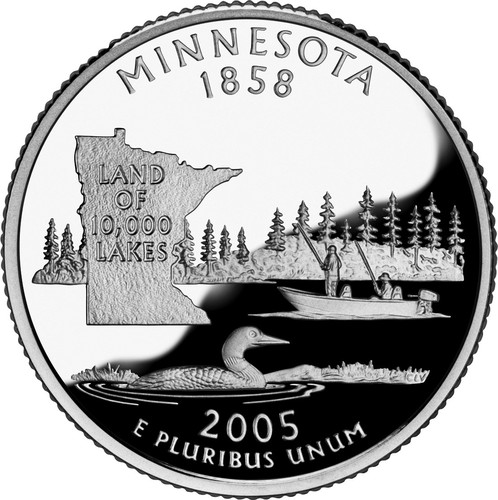
Minnesota State Quarter
2005 U.S. 25-cent coin in the 50 State Quarters series, showing Minnesota's outline, a common loon, anglers in a boat, and pines above 1858.
Quarter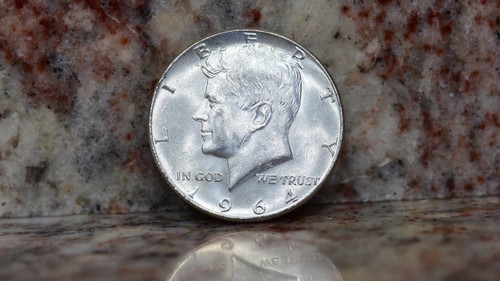
Kennedy Half Dollar
U.S. fifty-cent piece introduced in 1964 to honor President John F. Kennedy; the first-year 1964 coins were struck in 90% silver.
United States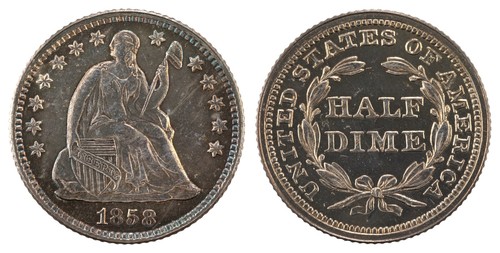
Seated Liberty Half Dime
A tiny 90% silver five-cent piece showing Liberty seated with a shield and Liberty pole; the reverse wreath frames HALF DIME. First struck 1837.
Half Dime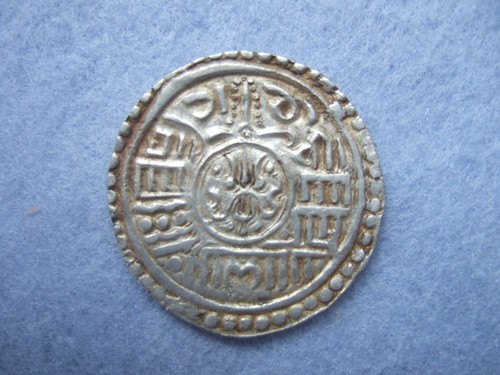
Nepalese Mohar
Silver mohar of the Nepalese Shah kingdom, with ornate Devanagari legends and auspicious symbols arranged around a mandala-style central design on both faces.
Himalayan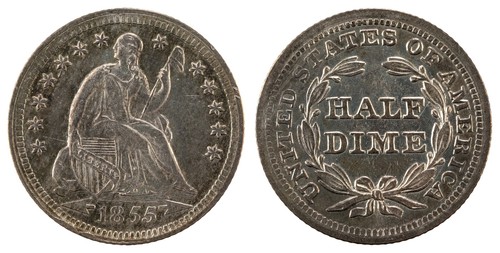
Seated Liberty Half Dime with Arrows
A tiny silver five-cent piece: Liberty seated with a shield, small arrows flanking the date to mark a reduced weight, over a wreath reverse.
Half Dime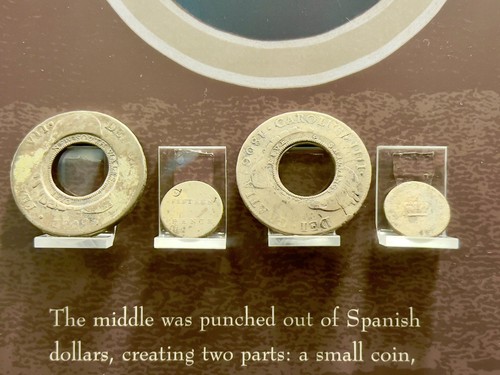
Holey Dollar
Australia's first struck coin: a Spanish silver dollar with its centre punched out, counterstamped NEW SOUTH WALES 1813 and revalued at five shillings.
Australian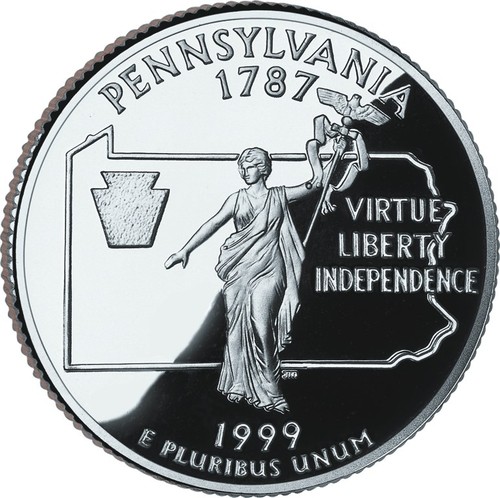
Pennsylvania State Quarter
1999 U.S. 25-cent piece, second in the 50 State Quarters series, showing the Commonwealth statue, state outline, and a keystone for Pennsylvania.
Quarter