
Coin Encyclopedia
Search and identify coins from around the world — with country, denomination, metal, mint, history, and how to tell them apart.
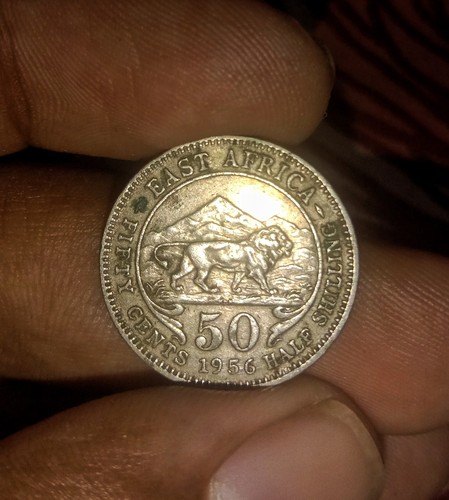
British East Africa Half Shilling
A small low-fineness silver coin of British East Africa bearing King George VI; the half shilling equalled fifty cents in the East African system.
World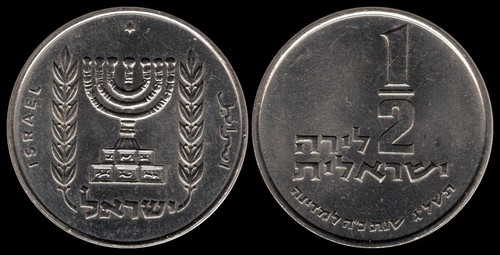
Israel Half Lira (25th Anniversary)
A silver Israeli half lira dated 1973, the year the young state marked 25 years of independence, carrying a menorah-and-sprigs emblem and a Hebrew value.
World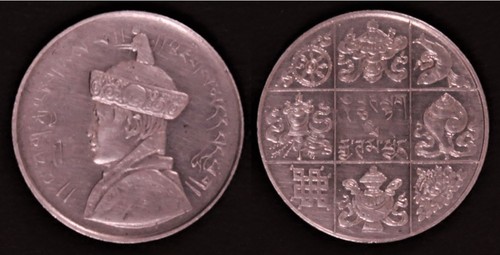
India Half Rupee (Copper)
Copper coin bearing a lion design with the English legend 'HALF RUPEE INDIA' and the date 1947, dated to the year of Indian independence.
Modern India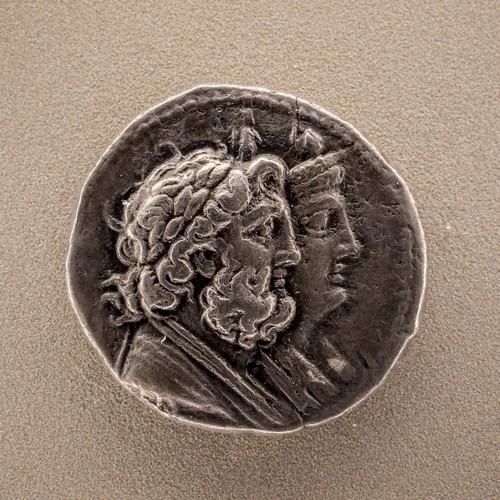
Gold Tetradrachm of Ptolemy II and Arsinoe II
Ptolemaic gold of Egypt, c. 260-240 BC, with paired busts of Ptolemy II and Arsinoe II on one side and Ptolemy I and Berenike I on the other.
Ancient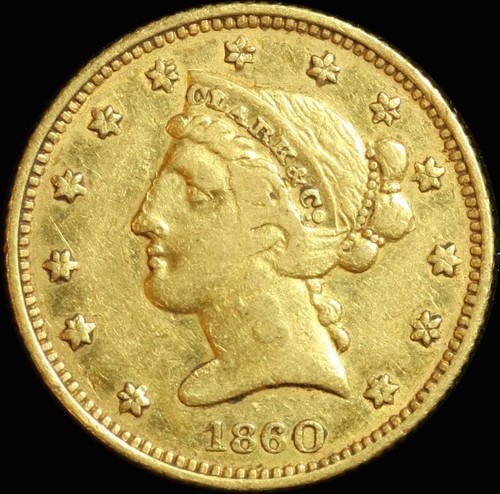
Clark & Co Territorial Gold Half Eagle
An 1860 privately struck $5 gold piece from Clark, Gruber & Co. of Denver, coined from Pikes Peak gold during the Colorado gold rush.
Half Eagle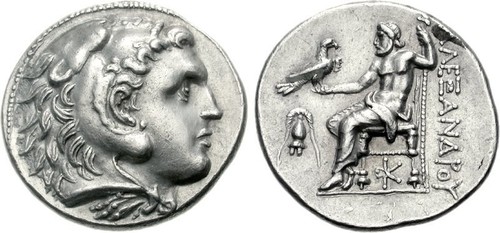
Antigonos II Gonatas Tetradrachm
Silver tetradrachm of the Macedonian king Antigonos II Gonatas, c. 275-270 BC, with a bearded royal head and a seated Nike holding a wreath.
Ancient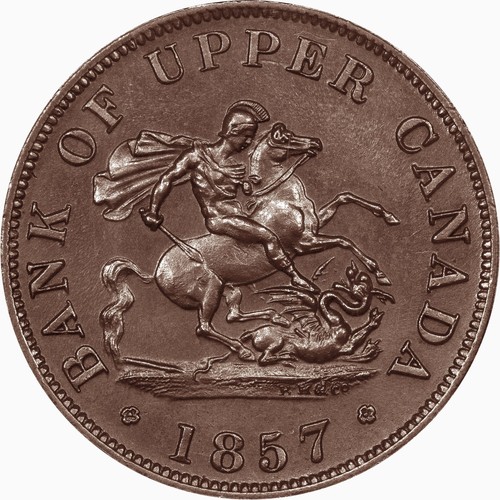
Bank of Upper Canada Half-Penny Token
Copper half-penny token of the Bank of Upper Canada, with St. George slaying the dragon and the bank's crowned heraldic arms, dated 1857.
Canadian & Provincial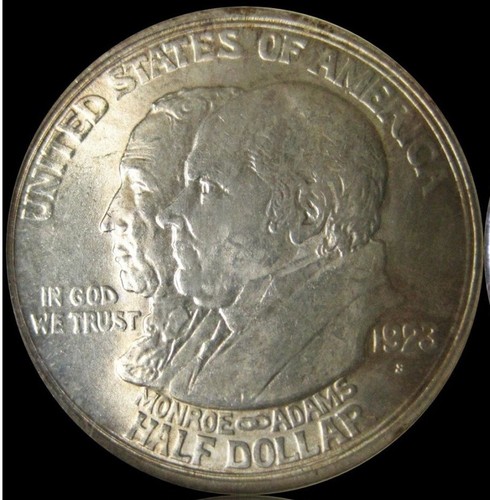
Monroe Doctrine Centennial Half Dollar
A 1923 U.S. silver commemorative half dollar marking the centennial of the Monroe Doctrine, with jugate portraits of James Monroe and John Quincy Adams.
Classic Commemorative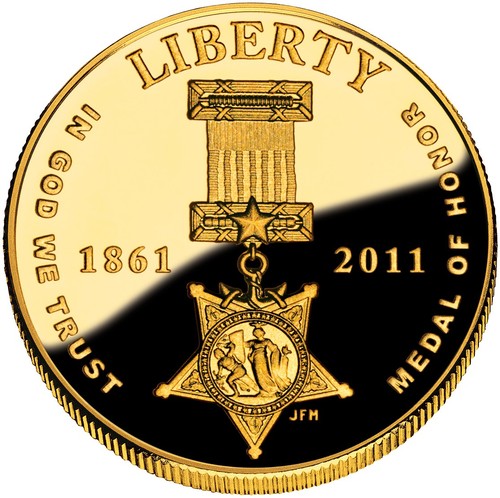
Medal of Honor Commemorative Half Eagle
US 2011 gold $5 commemorative honoring the Medal of Honor, showing the Army version of the medal above a Corinthian column.
Commemoratives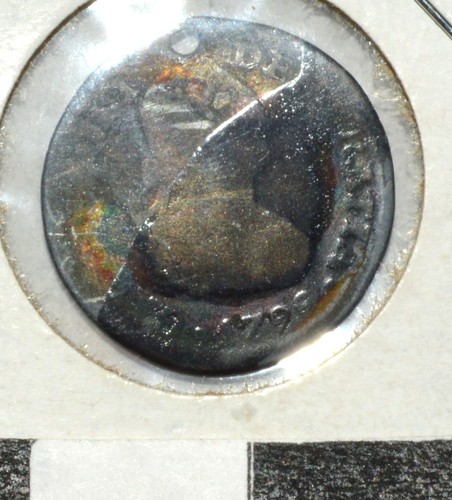
Spanish Colonial Half Real
The smallest milled silver coin of Spain's American empire: a tiny 1/2 real with a royal bust and the crowned arms between pillars.
Colonial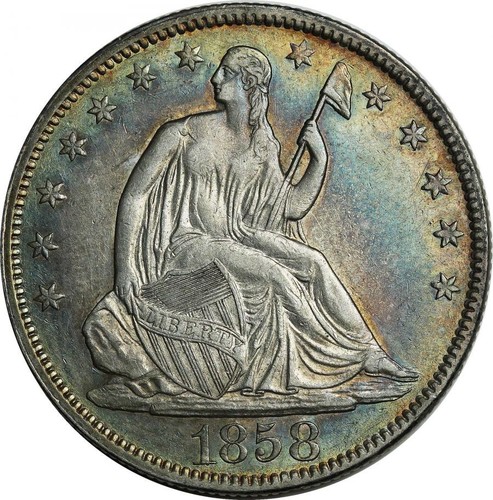
Seated Liberty Half Dollar
U.S. 90% silver fifty-cent piece struck 1839–1891, with a seated figure of Liberty by Christian Gobrecht and a heraldic eagle reverse.
Half Dollar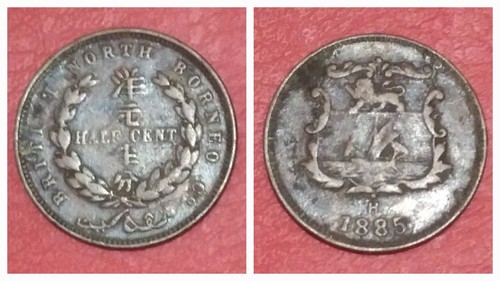
British North Borneo Half Cent
An 1885 copper half cent of British North Borneo: a bust in a laurel wreath on the obverse and the company arms with a heraldic supporter on the reverse.
Colonial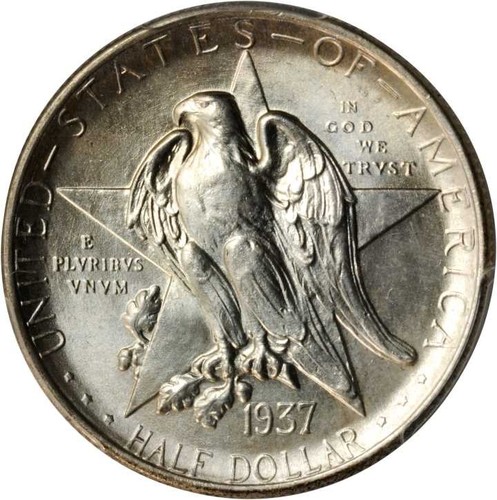
Texas Centennial Half Dollar
A U.S. silver commemorative half dollar (1934–1938) marking a century of Texas independence, with a spread-winged eagle over a large star on the obverse.
Classic Commemorative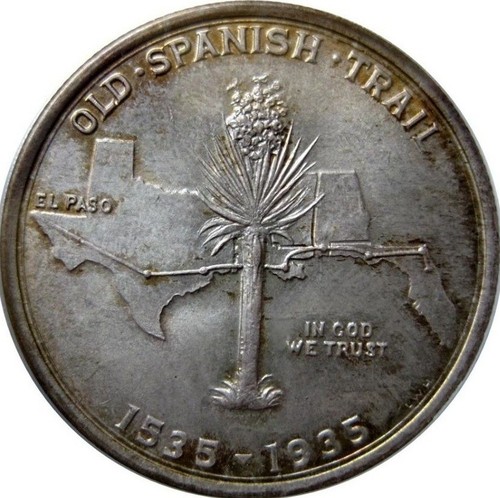
Old Spanish Trail Half Dollar
A 1935 U.S. silver commemorative half dollar marking 400 years of the Old Spanish Trail, with a longhorn cow's head punning on explorer Cabeza de Vaca.
Classic Commemorative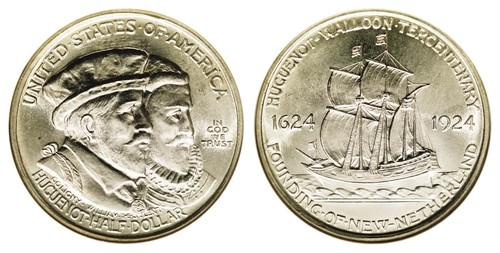
Huguenot-Walloon Tercentenary Half Dollar
A 1924 U.S. silver commemorative half dollar marking 300 years of Huguenot and Walloon settlement in America, with two settler profiles and a sailing ship.
Classic Commemorative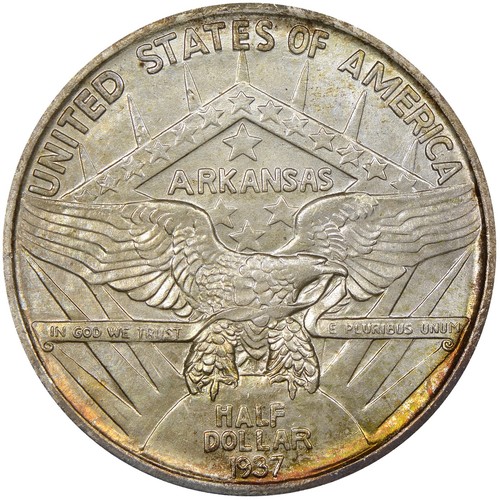
Arkansas Centennial Half Dollar (Robinson)
A 1936 U.S. silver commemorative half dollar pairing a portrait of Senator Joseph T. Robinson with the Arkansas Centennial eagle; a scarce one-year Philadelphia issue.
Classic Commemorative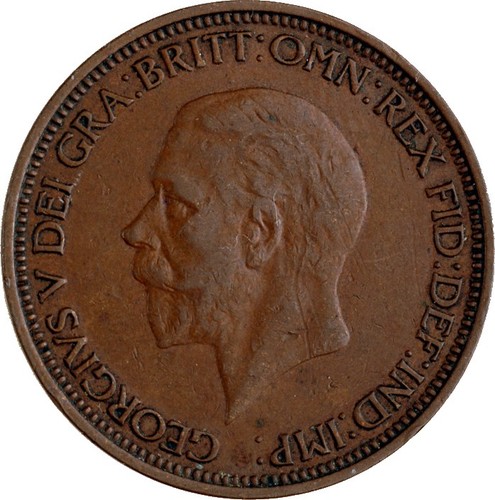
British Pre-Decimal Halfpenny
Bronze British halfpenny worth 1/480 of a pound. The George V type shows the king's profile and a seated Britannia with trident.
British Isles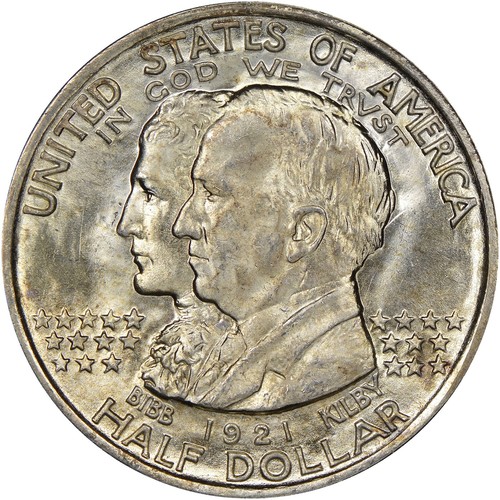
Alabama Centennial Half Dollar
A 1921 U.S. silver half dollar marking a century of Alabama statehood, with jugate governor busts and a state eagle; issued in plain and scarcer 2×2 varieties.
Classic Commemorative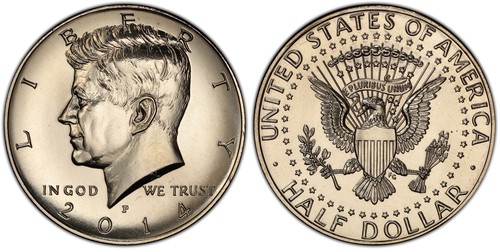
Kennedy Half Dollar 50th Anniversary High Relief
U.S. 90% silver half dollar issued in 2014 for the 50th anniversary of the Kennedy design, with a restored high-relief JFK portrait.
Half Dollar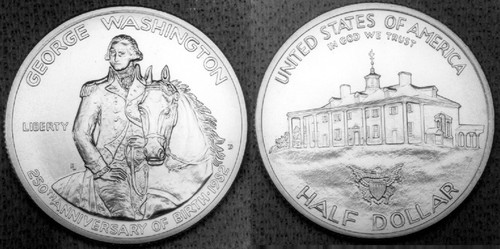
George Washington 250th Anniversary Half Dollar
A 1982 U.S. silver half dollar honoring the 250th anniversary of George Washington's birth; it revived both the commemorative program and 90% silver coinage.
Modern Commemorative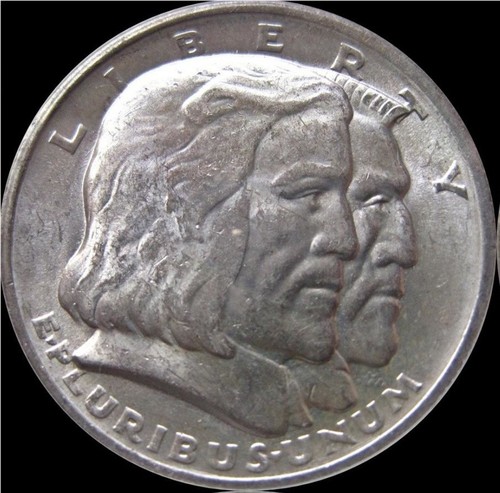
Long Island Tercentenary Half Dollar
A 1936 U.S. silver half dollar marking 300 years of settlement on Long Island, with accolated settler and Native American heads and a Dutch sailing ship.
Classic Commemorative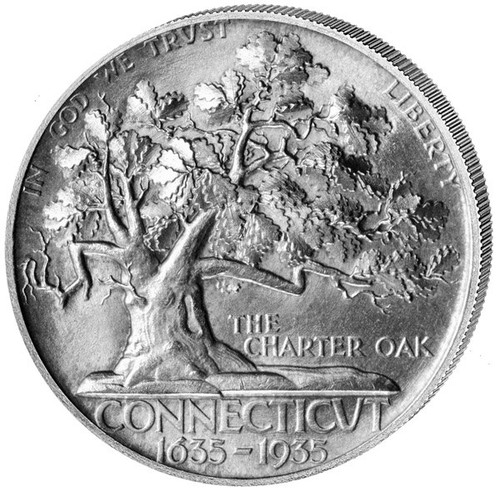
Connecticut Tercentennial Half Dollar
A 1935 U.S. silver half dollar marking 300 years of Connecticut, with a standing eagle on the obverse and the storied Charter Oak on the reverse.
Classic Commemorative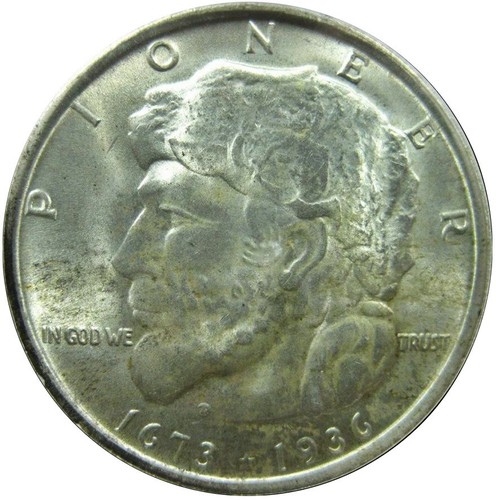
Elgin Illinois Centennial Half Dollar
A 1936 U.S. silver half dollar marking the centennial of Elgin, Illinois, with a bearded pioneer head and a pioneer-family memorial group on the reverse.
Classic Commemorative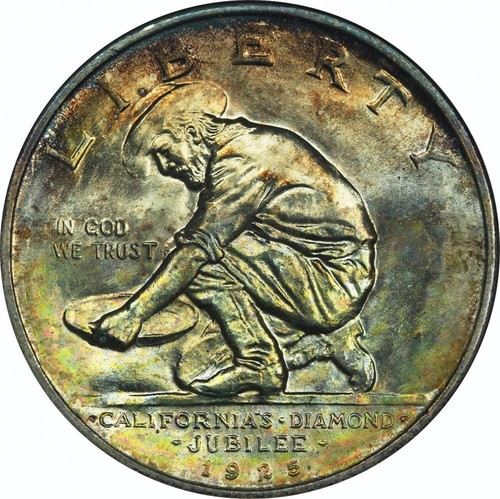
California Diamond Jubilee Half Dollar
A 1925 U.S. silver commemorative half dollar marking California's 75th year of statehood, designed by Jo Mora with a gold miner and a grizzly bear.
Classic Commemorative