
Huguenot-Walloon Tercentenary Half Dollar
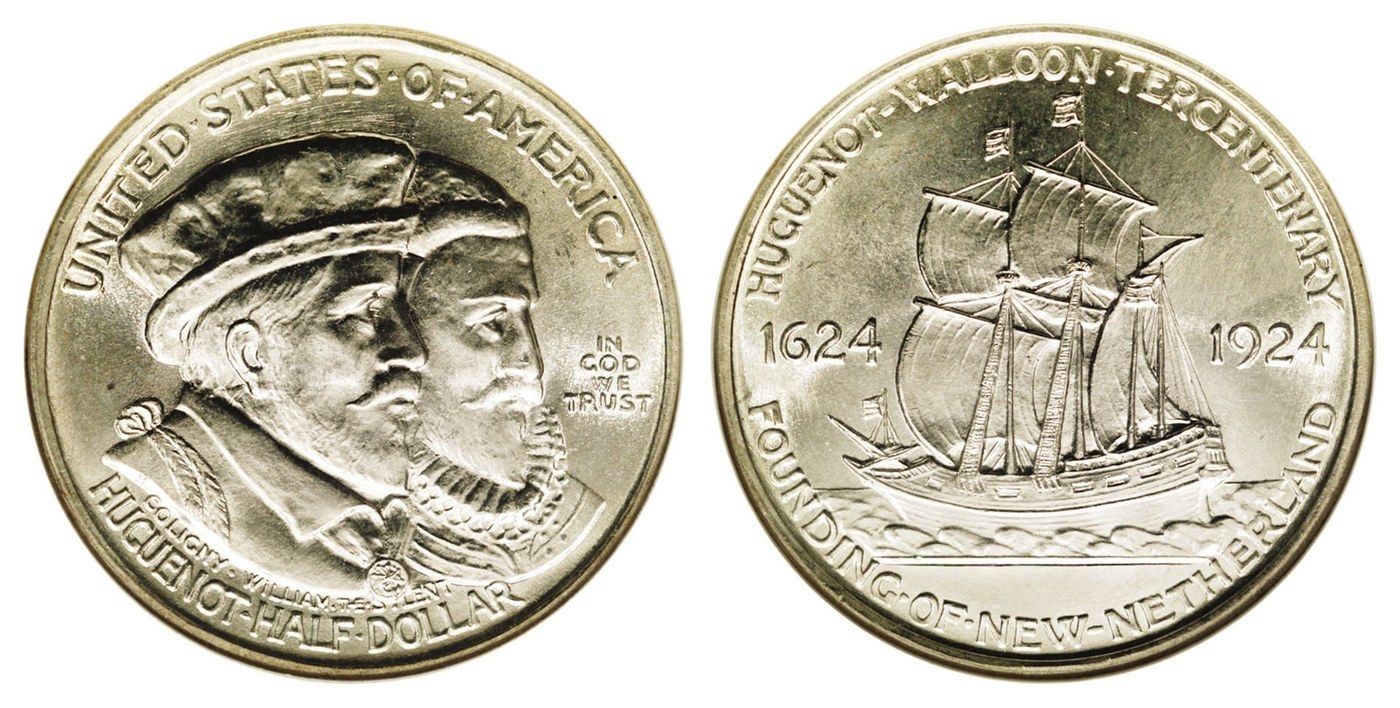
A 1924 U.S. silver commemorative half dollar marking 300 years of Huguenot and Walloon settlement in America, with two settler profiles and a sailing ship.
- Country
- United States
- Denomination
- 50¢
- Metal
- Silver
Got a coin like this?
Identify any coin from a photo, free.
Overview
The Huguenot-Walloon Tercentenary Half Dollar is a United States silver commemorative fifty-cent piece issued in 1924. It marks the three-hundredth anniversary of the settlement of New Netherland by Huguenot and Walloon colonists, French- and Belgian-speaking Protestants who arrived in 1624. The obverse shows two overlapping profiles facing right, while the reverse depicts a historic sailing ship in full sail.
Like other classic U.S. commemorative half dollars of the era, the coin was struck in the standard 90% silver alloy and dimensions of a circulating half dollar but was never intended to circulate. It was sold at a premium to the public to raise money for anniversary celebrations.
All examples are dated 1924 and were struck at a single mint, making this a one-year, one-mint type that collectors typically pursue as a single coin within a broader classic commemorative set.
History & Background
The coin commemorates the 1624 voyage that brought Huguenot and Walloon settlers to the New World, an event tied to the founding of New Netherland and the early settlement of what became New York. The 1924 tercentenary was promoted by Protestant church organizations, and Congress authorized a commemorative half dollar to help fund the observances.
The two profiles on the obverse are generally identified as Admiral Gaspard de Coligny and William the Silent (William of Orange), leaders associated with the Protestant cause in France and the Low Countries, rather than portraits of specific settlers. The reverse ship represents the vessel that carried the colonists, styled after the ship associated with the 1624 crossing.
The issue was produced in a single year at the Philadelphia Mint. As with many commemoratives of the 1920s, coins were distributed to the public at a premium over face value, and unsold pieces were a recurring concern for the era's commemorative programs. Surviving examples entered collections rather than everyday circulation.
How to Identify
Identify the type by its two design elements together. The obverse carries two conjoined right-facing profiles of bearded men, the foremost overlapping the one behind, surrounded by lettering naming the Huguenot-Walloon Tercentenary. The reverse shows a single historic sailing ship under full sail on the water. The date 1924 appears on the coin.
Physically it matches a standard classic-era U.S. half dollar: 90% silver and 10% copper, about 30.6 mm in diameter, and roughly 12.5 grams. The edge is reeded. Because it was struck only at Philadelphia, there is no mint mark, so the absence of a D or S is normal for this issue and not a sign of trouble.
Use the specific subjects to separate it from other silver commemorative halves of the 1920s—the paired male profiles plus a full-rigged ship are distinctive to this type. Confirm the commemorative wording rather than relying on the portraits alone, since many period commemoratives share a similar size and silver color.
Value & Collectibility
As a classic commemorative struck in modest numbers, the Huguenot-Walloon half dollar is worth well above both its face value and its silver content. Circulated and lightly handled examples generally trade in the low-to-moderate collector range for classic commemoratives, while choice and gem uncirculated pieces command higher, condition-driven premiums.
Value is driven mainly by grade, eye appeal, and originality. Bright, well-struck, problem-free coins and those certified by major grading services (PCGS, NGC) bring the strongest prices; cleaned, damaged, or heavily toned coins bring less.
Because commemorative prices move with the collector market and with the silver price, any specific coin should be checked against recent auction results and current dealer listings for its grade rather than a fixed figure.
Frequently asked questions
What does the Huguenot-Walloon half dollar commemorate?
It marks the 300th anniversary of the 1624 settlement of New Netherland by Huguenot and Walloon colonists, French- and Belgian-speaking Protestants, celebrated in 1924.
Who are the two people on the obverse?
The paired right-facing profiles are generally identified as Admiral Gaspard de Coligny and William the Silent (William of Orange), Protestant leaders, rather than portraits of individual settlers.
What is the ship on the reverse?
The reverse shows a historic sailing ship in full sail, representing the vessel associated with the 1624 crossing that brought the settlers to the New World.
Is it made of silver?
Yes. It is a standard classic commemorative half dollar struck in 90% silver and 10% copper, about 30.6 mm across and roughly 12.5 grams, with a reeded edge.
Does it have a mint mark?
No. It was struck only at the Philadelphia Mint, which used no mint mark on this issue, so a plain field with no D or S is correct for the type.
Huguenot-Walloon Tercentenary Half Dollar guides
In-depth guides for identifying, valuing, and collecting Huguenot-Walloon Tercentenary Half Dollar.
Other coins you may enjoy
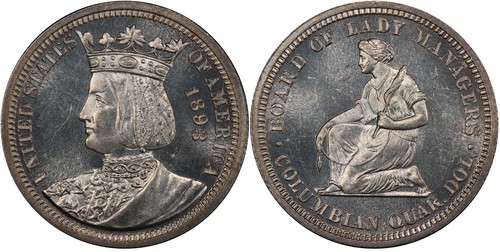
Isabella Quarter
1893
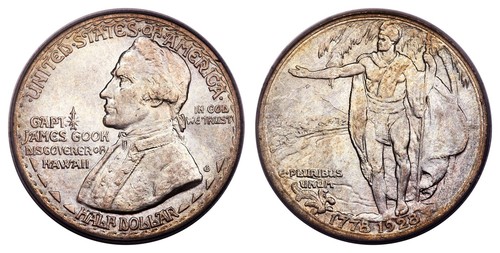
Hawaiian Sesquicentennial Half Dollar
1928
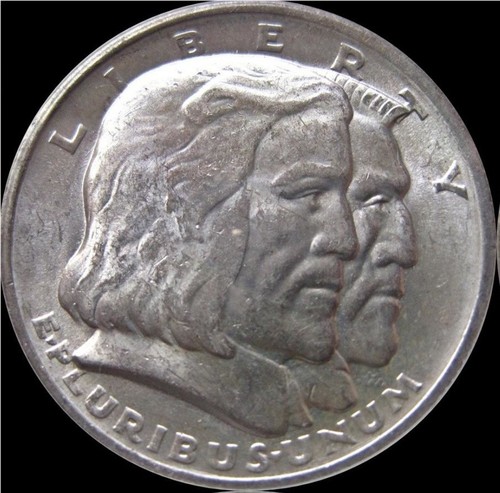
Long Island Tercentenary Half Dollar
1936
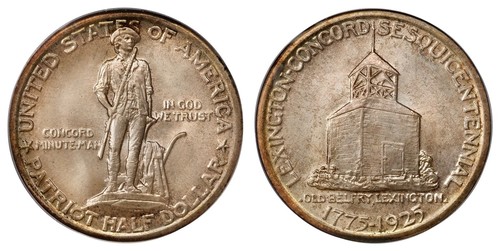
Lexington-Concord Sesquicentennial Half Dollar
1925
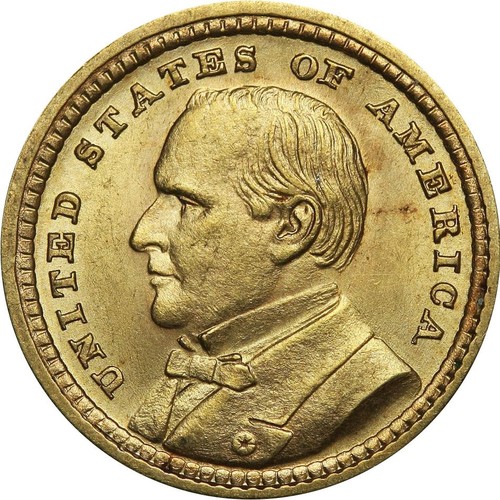
Louisiana Purchase Exposition Dollar (Jefferson)
1903
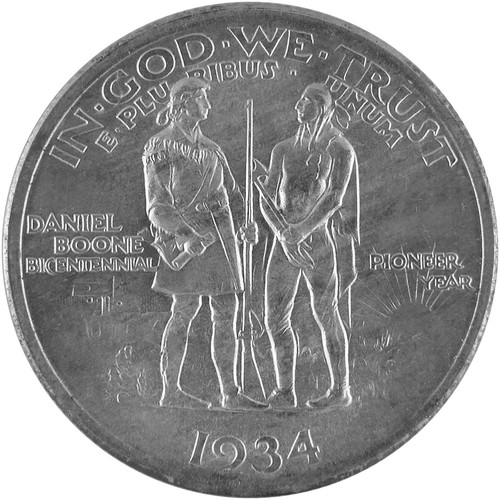
Daniel Boone Bicentennial Half Dollar
1934–1938
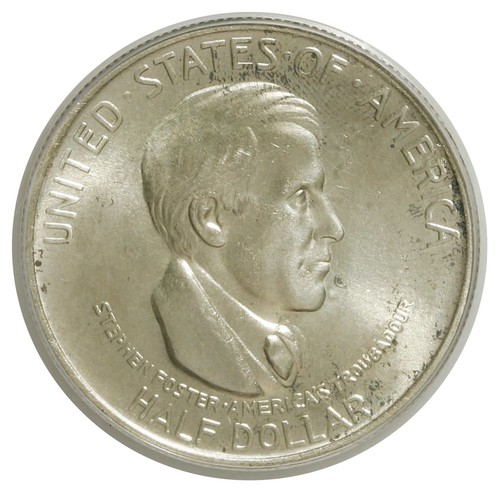
Cincinnati Music Center Half Dollar
1936
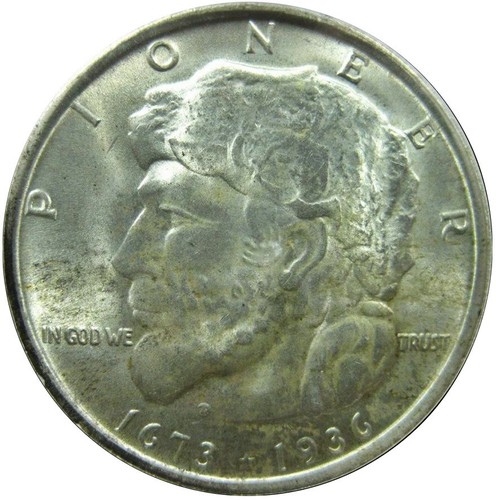
Elgin Illinois Centennial Half Dollar
1936
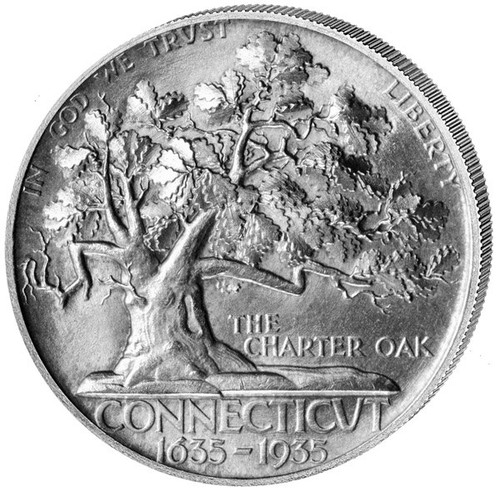
Connecticut Tercentennial Half Dollar
1935
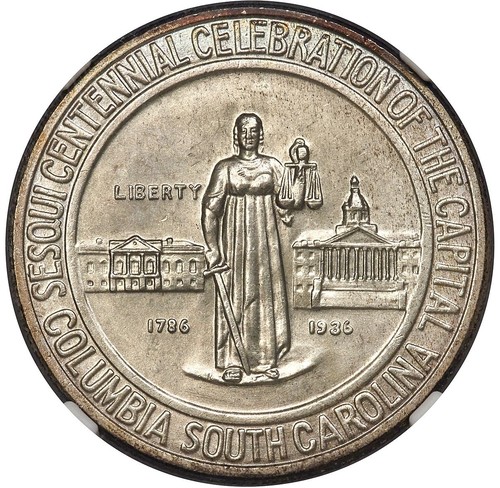
Columbia South Carolina Sesquicentennial Half Dollar
1936
Sesquicentennial of American Independence Quarter Eagle
1926
Pilgrim Tercentenary Half Dollar
1920-1921